
How to Keep a Border Collie From Slipping in the Bathtub

Quick Answer
To keep a Border Collie from slipping in the bathtub, place a properly fitted non-slip rubber mat on a clean tub floor, test that it stays put, and provide traction outside the tub too. Use lukewarm water, keep the dog standing calmly, and avoid pulling or forcing them when they feel unsteady. If slipping continues despite secure footing, stop and check for pain, weakness, or another mobility problem.
A Border Collie can be agile on grass yet struggle to balance on a wet, smooth bathtub. Once the paws begin sliding, the dog may spread its legs, scramble toward the edge, or try to jump out. The solution starts with reliable traction, but the way you introduce the tub and control the bathing process matters just as much.
Make the Bathtub Floor Secure Before Your Dog Steps In
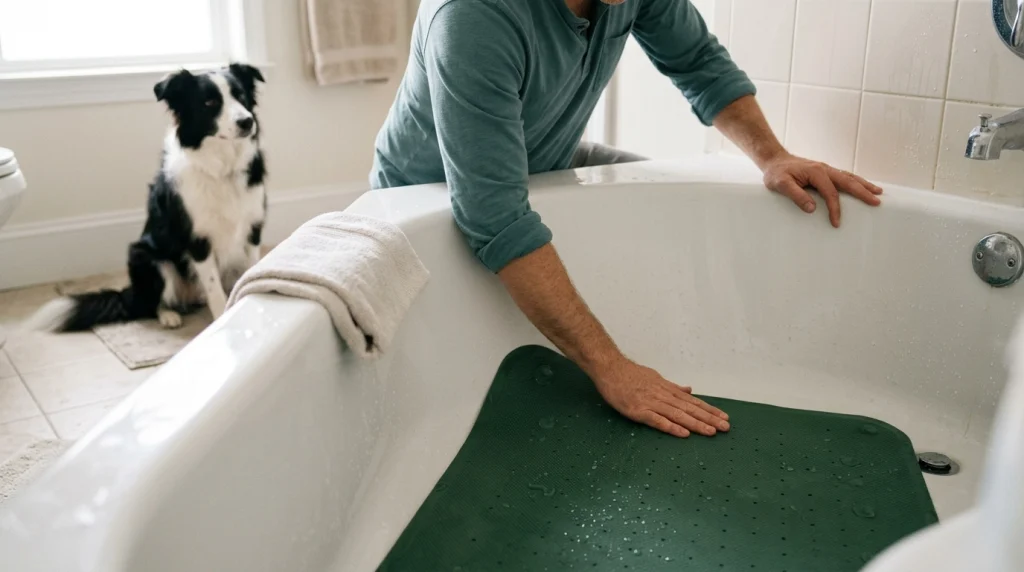
A non-slip rubber bath mat is the simplest practical starting point. It creates a grippier surface between the paws and the slippery tub. The British Small Animal Veterinary Association specifically illustrates rubber mats as a way to prevent dogs from slipping in baths and on examination tables.
Choose a mat large enough for your Border Collie to place all four paws on it while turning or shifting weight. A tiny mat under only the front paws may leave the hind feet sliding whenever your dog adjusts its stance.
Check the mat, not just its label
- Fit: The mat should cover the actual standing area without bunching against the tub sides.
- Top surface: Look for a textured finish that offers grip when wet, not only when dry.
- Bottom grip: Suction cups work only when they form a secure hold on a compatible, clean, smooth surface.
- Drainage: Water should escape rather than pool over the mat and shampoo.
- Cleanability: A mat that can be washed and dried between baths is easier to keep free of residue.
Some bathtub floors are pebbled or textured, preventing suction cups from sealing properly. In that case, do not assume a suction-cup mat will work because its packaging says “non-slip.” Use a product explicitly compatible with your tub, or change to a safer bathing location.
Run a stability test before every bath
- Remove hair, old soap film, and debris from the tub floor.
- Install the mat according to its instructions, pressing each suction area firmly if applicable.
- Use your hand to push the mat gently in several directions, including at its edges.
- Wet the surface and test it again. If it slides, curls, or lifts, reposition or replace it.
- Check again during washing if the mat begins moving beneath your dog.
A bath mat is only protective while it remains anchored. A loose mat can shift suddenly and make the dog less stable than expected.
Set Up a Safe Path Into and Out of the Tub
The highest-risk moment may be getting into or out of the bathtub rather than standing still while washing. A Border Collie may leap onto a hard, wet bathroom floor, especially after a stressful rinse. Prepare that landing area before bringing the dog in.
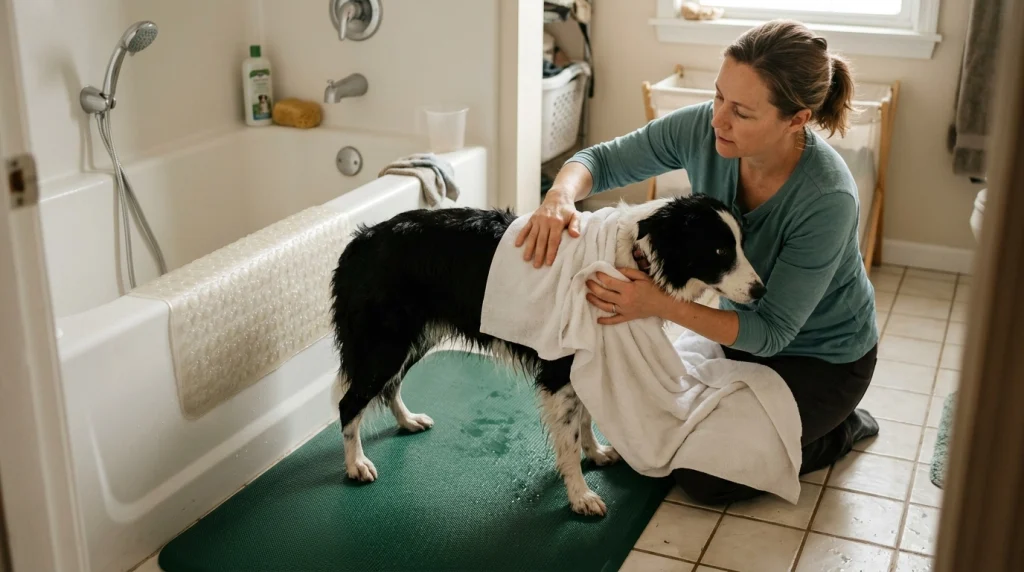
Place a secured, absorbent, non-slip floor mat beside the tub. Clear bottles, cords, stools, and other objects that could catch a paw. Keep towels within reach so you do not need to leave your dog unattended.
If your dog can safely step into a low-sided shower, that may be easier than asking them to clear a high bathtub wall. For a high-sided tub, provide calm, controlled assistance suited to your dog’s size and ability. Never lift by the collar, pull the front legs, or drag the dog over the rim.
Small dogs may be lifted with full body support, but an adult Border Collie may be too large or unwilling to lift safely without help. If the entry or exit feels awkward, choose another bathing setup or seek help from a professional groomer.
Safety warning
Never leave your Border Collie alone in the tub, even with a mat. Do not rely on a neck restraint or leash to catch a dog that slips or jumps; this can create additional injury risks.
Use a Calm, Low-Slip Bathing Routine
Even excellent flooring cannot compensate for frantic movement. A dog that turns rapidly, braces against the wall, or jumps backward can lose footing. Keep the routine predictable and avoid sudden surprises.
- Brush and prepare first. Remove loose hair and gather shampoo, rinsing supplies, towels, and treats before your dog enters. For the full cleaning sequence, see this Border Collie bathing guide.
- Start on a dry, stable mat. Let the dog pause and find its footing before turning on the water.
- Introduce lukewarm water slowly. Begin near the paws or lower body using a gentle stream rather than startling the dog with a strong spray.
- Keep the water shallow or draining. Avoid letting slippery shampoo water accumulate around the paws.
- Wash in manageable sections. Stay close and support calm positioning without forcing the dog into a strained stance.
- Rinse the paws and mat. Leftover shampoo can make contact surfaces slick. Remove residue before asking the dog to turn or exit.
- Help the dog out deliberately. Have a dry towel and secure landing area ready; let them regain balance before walking away.
Veterinary bathing guidance published by PetMD similarly recommends a non-slip bath surface, comfortable water temperature, and a non-slip place to step onto after bathing.
Border Collies have dense coats that need careful rinsing, but you do not have to keep your dog standing in the tub longer than necessary. Plan the rinse before starting. The site’s essential bathing supplies guide covers preparation without turning this traction-focused article into a full coat-care tutorial.
Teach Your Border Collie That the Tub Is a Stable Place
Some dogs remember a previous slip and become tense as soon as they see the bathroom. They may resist entering even when the floor is now secure. Practicing without water lets them discover that the new surface feels predictable.
- Let your dog approach the bathroom voluntarily and reward calm curiosity.
- Show the installed mat outside the tub first, allowing the dog to stand on it without pressure.
- If entry is safe, invite the dog to step onto the installed tub mat while the tap is off.
- Reward a brief calm stand, then let the dog exit safely.
- On later short sessions, add a little water noise or gentle paw wetting only if the dog stays comfortable.
- Stop or return to an easier stage if the dog freezes, scrambles, trembles, or tries urgently to escape.
The aim is not to make your dog tolerate a frightening bath by force. It is to build confidence in small, successful steps. This is consistent with guidance from the American Animal Hospital Association, which discusses secure surfaces and lower-stress handling for anxious dogs.
If your Border Collie has a strong fear response, a qualified reward-based trainer or veterinary behavior professional can help you design a gentler conditioning plan. A securely fitted mat is necessary, but it does not by itself resolve fear.
Why a Dog May Still Slip on a Non-Slip Mat
If a mat has been installed and slipping continues, identify what is moving: the mat, the paws, or the dog’s body. Each points to a different solution.
| What you notice | What to check or change |
|---|---|
| Whole mat slides | Remove soap film; check suction compatibility and mat positioning. |
| Paws slip on top | Rinse shampoo residue; check whether the texture grips when wet. |
| Dog scrambles when sprayed | Reduce spray pressure, pause the bath, and rebuild comfort gradually. |
| Dog struggles to stand anywhere | Stop bathing and discuss possible pain or mobility issues with a veterinarian. |
Also inspect the paws. Very long nails, excess hair covering the pads, or tender paw pads can make a firm stance more difficult. Do not attempt aggressive nail clipping or close pad trimming while the dog is already distressed in the tub. Arrange routine paw care separately and use a groomer or veterinarian if you are unsure.
If the dog slips only near the faucet or drain, check whether uncovered slick areas remain where the hind feet naturally stand. The answer may be a larger mat or a different washing location, not more restraint.
When You Should Stop the Bath Instead of Trying Again
Stop if your Border Collie repeatedly falls, cannot support their weight normally, cries out, limps, or suddenly loses balance. These are not problems to solve merely by holding the dog tighter. A veterinarian should assess new or unexplained difficulty standing, especially if it occurs outside the bathtub too.
Stop as well if panic makes safe handling impossible. Forcing a frightened dog to remain in a slippery enclosure can worsen their fear and increase injury risk. Allow them to settle in a safe area, then consider shorter conditioning sessions, a walk-in washing space, or experienced professional help.
A senior Border Collie or a dog with known joint limitations may benefit from a different setup entirely. The safest bath is one where the dog can enter, stand, turn, and leave without a risky jump or prolonged balancing effort.
What if Your Border Collie Will Not Enter the Tub?
Do not increase pressure simply to finish a bath. If your dog’s coat only has light dust or a little dirt, wiping and brushing may be sufficient until you can arrange a better washing setup. For appropriate light-cleaning options, see this waterless bathing guide.
For heavy mud or contamination that cannot safely be left in the coat, contact your veterinarian or a professional groomer for advice on a suitable alternative. A walk-in dog wash or low-sided shower with reliable traction can reduce the awkward step over a tub wall, but still requires attentive handling.
Relevant Product
Non-Slip Dog Bathtub Mat
Look for a washable, textured mat sized for all four paws, with a bottom grip compatible with your bathtub surface. Test stability before using it.
As an Amazon Associate, we earn from qualifying purchases.
Frequently Asked Questions
Can I use a regular human bathtub mat for my Border Collie?
Yes, if it provides a secure wet grip, covers the dog’s standing area, and stays anchored to your particular tub surface. Check for movement before every bath.
Will a towel stop my Border Collie from slipping in the bathtub?
A towel may provide temporary traction, but it can bunch or move when wet. A properly secured, tub-compatible non-slip mat is the more dependable choice.
Are suction-cup bath mats safe in textured bathtubs?
Not automatically. Suction cups often fail to seal on textured surfaces. Follow the mat’s compatibility instructions and reject any setup that shifts during testing.
Should I hold my Border Collie still if they start sliding?
Support them calmly enough to prevent an immediate fall, then stop the bath and correct the surface or setup. Do not pull by the collar or force the dog into position.
Can bath anxiety make slipping worse?
Yes. Sudden turning, scrambling, and attempts to escape can reduce stability. Introduce the tub gradually, reward calm behavior, and pause whenever the dog becomes distressed.
What if my Border Collie keeps losing balance even on a secure mat?
End the bath and seek veterinary guidance, particularly if the dog also slips, limps, seems painful, or struggles to stand on ordinary flooring. A traction mat cannot treat a mobility problem.
Final Takeaway
Preventing bathtub slips is about more than buying a mat. Give your Border Collie a tested, full-footing surface, a safe way in and out, and a quiet bathing routine that does not trigger frantic movement. If your dog still cannot stand securely, change the setup or stop and investigate the underlying problem before the next bath.
