
How to Know If Your Dog Is Dying: Warning Signs, What’s Urgent, and What to Do Next

If you’re asking this question, something has changed enough to worry you. That matters. Dogs rarely announce decline in a neat, obvious way. More often, the clues arrive as a cluster: less appetite, weaker movement, breathing that looks “off,” or a personality shift that feels wrong even if you can’t explain why.
The hard part is that some of those signs can also happen with a treatable illness. So the goal is not to guess. The goal is to sort what can wait from what cannot, then act quickly enough to reduce suffering.

How to tell if your dog may be dying right now
Use this simple rule: if your dog has breathing trouble, collapse, seizures, blue or pale gums, or cannot respond normally, treat it as an emergency, not a “wait and see” situation — even if your dog already has a known terminal illness.
A dog can be near the end of life and still be awake. They can even wag their tail, lift their head, or briefly respond to your voice. That does not rule out serious suffering. What matters more is whether the dog can breathe comfortably, stand, drink, and settle.
Here’s the fastest way I’d triage it:
- Emergency now: labored breathing, open-mouth breathing at rest, collapse, seizures, very pale/blue/gray gums, or unresponsiveness
- Vet same day: refusing food and water, repeated vomiting or diarrhea, marked weakness, inability to get up, obvious pain, or sudden confusion
- Comfort care while you call the vet: mild decline in a dog already known to be terminal, but still breathing normally, able to rest, and not in obvious distress
If your dog is unstable and you cannot get to a vet right away, keep them quiet, warm, and safe, limit movement as much as possible, and call the emergency clinic for instructions while you arrange transport.
If you’re unsure which bucket your dog is in, assume the more urgent one and call a vet.
Emergency warning signs that need a vet or ER now
These signs override home care because they can mean your dog is in immediate danger, not just declining naturally.
Breathing changes
Labored, rapid, or irregular breathing is one of the clearest red flags. If your dog is working hard to breathe, stretching the neck out, breathing with the mouth open while resting, or seems unable to settle because of breathing, do not wait.
Collapse or severe weakness
A dog that suddenly falls, cannot stand, or keeps sinking back down may be in shock, severe pain, or organ failure. Even if they seem aware, they need urgent assessment.
Seizures
A seizure is always serious. If it lasts more than a minute or two, happens repeatedly, or is followed by deep confusion or inability to recover, head for emergency care.
Pale, blue, or gray gums
Healthy gums are usually pink. Very pale gums can suggest poor circulation or blood loss. Blue or gray gums can signal oxygen problems and are especially urgent.
Unresponsiveness
If your dog does not respond to their name, touch, or normal cues in a way that is new and unusual, that is not something to monitor overnight. It needs immediate veterinary attention.
Repeated vomiting, diarrhea, or inability to keep water down
A single upset stomach is one thing. Ongoing vomiting or diarrhea, especially with weakness or dehydration, can turn dangerous quickly.
For emergency triage guidance, the ASPCA’s pet poisoning and emergency resources can be a starting point, but if your dog is actively struggling to breathe or collapsing, skip the reading and call the nearest emergency clinic.
Common signs a dog is nearing the end of life
No single sign proves a dog is dying. What matters is the pattern: multiple changes happening together, especially in a dog with a chronic illness, advanced age, or a known terminal diagnosis.
Loss of appetite and refusal of water
One of the most common changes is a dog that no longer wants food. Some dogs also stop drinking. That can happen with illness, nausea, pain, kidney problems, and end-of-life decline. If the refusal is persistent and the dog is also weak or withdrawn, the concern goes up.
Extreme fatigue and weakness
A dying dog often sleeps much more and has very little energy for normal life. This is more than “being tired.” You may see a dog that cannot stay standing for long, tires after a few steps, or no longer bothers to get up for familiar sounds.
Trouble standing, walking, or getting comfortable
When the body is shutting down, movement becomes harder. A dog may struggle to rise, wobble, or lie down and get up repeatedly because no position feels right.
Incontinence
Loss of bladder or bowel control can happen near the end of life. You may find urine or stool where the dog has been lying. That is not a behavioral problem. It usually reflects weakness, loss of muscle control, or both.
Withdrawal or unusual clinginess
Some dogs pull away and want to be left alone. Others become unusually attached and follow you more closely than usual. Either can be part of decline. The key is that the change is unusual for that dog.
Confusion or reduced awareness
A dog may seem disoriented, stare into space, miss familiar cues, or act as if they do not fully register what is happening around them. That can be especially hard to see because the dog may still appear calm.
Cooler body temperature
Dogs near the end often feel cooler, especially in the ears, paws, or legs. That can happen because circulation is declining.
Weight loss
Slow weight loss can happen with chronic illness, but noticeable or worsening weight loss is often a sign that the body is no longer maintaining itself well.
If you want a broader reference point, VCA Hospitals has practical owner-facing information on senior decline and emergency warning signs. Use it as a guide, but trust what you’re seeing in front of you.
How to tell dying apart from a treatable illness or normal aging
This is where many owners get stuck. A dog can look “old” without being near death, and a dog can look “just sick” while actually needing urgent care.
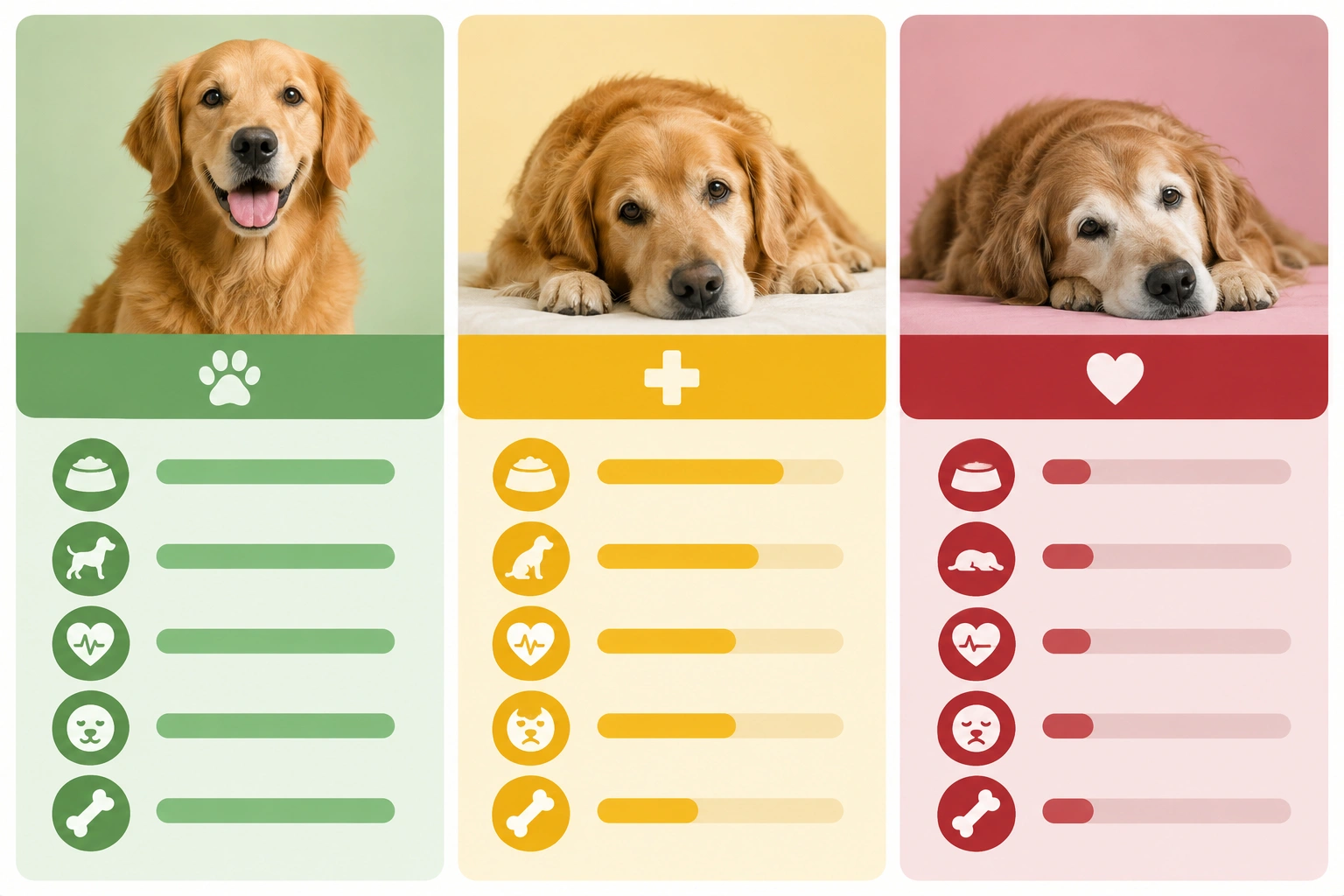
Here’s the simplest comparison:
| Situation | What it often looks like | What to do |
|---|---|---|
| Normal aging | Slower to rise, naps more, less eager for long walks, but still eats, drinks, and recovers after rest | Book a routine vet visit; adjust activity and home setup |
| Treatable illness | Sudden vomiting, diarrhea, limping, feverish behavior, lethargy, but some interest in food or comfort remains | Call your vet promptly; same-day if severe |
| Possible end-of-life decline | Multiple systems worsening together: no appetite, weakness, incontinence, confusion, labored breathing, withdrawal | Call your vet today to discuss prognosis and comfort care |
| Emergency | Collapse, seizures, blue/pale gums, severe breathing trouble, unresponsiveness | Go to the ER now |
A practical way to think about it: aging usually changes speed and stamina; dying changes basic function. A senior dog may move more slowly but still enjoy life. A dog nearing death often cannot maintain the basics: breathing comfortably, staying hydrated, standing, or interacting normally.
A useful edge case is the dog that is still awake and even seems “okay” for short moments, but then pants, hides, cannot settle, or refuses water. That dog may still be suffering even if they are not collapsed. Responsive does not equal comfortable.
Is my dog in pain or distress?
Pain is not always obvious. Dogs often hide it, and some become quiet rather than vocal. So don’t wait for crying or dramatic behavior.
Watch for these signs:
- panting when the room is not hot
- trembling or shaking
- guarding a body part
- restlessness, pacing, or repeatedly changing position
- reluctance to move, be touched, or lie down
- a fixed tense posture
- hiding, withdrawing, or avoiding contact
- a glazed or faraway look that comes with other decline
Distress can also show up as panic-like breathing, inability to settle, or seeming “trapped” in their own body. A dog may be calm one minute and miserable the next. That’s why one good moment does not erase a bad day.
If you’re trying to judge quality of life, ask three blunt questions:
- Can my dog breathe comfortably?
- Can my dog rest without obvious struggle?
- Are there still enough good moments to outweigh the bad ones?
If the answer to the first two is no, the situation is serious even if the dog still responds to you.
For a general quality-of-life framework, the AKC’s senior dog care resources can help you think through comfort and mobility, but a veterinarian should guide end-of-life decisions when suffering is possible.
What to do in the moment: comfort care while you decide
If your dog is not in immediate emergency distress, focus on making the next few hours easier.
Reduce movement
Keep your dog close to the place they already want to rest. If they need to go outside, help them as little as possible and avoid stairs if you can safely do so. If they are very weak, use a blanket as a makeshift stretcher only if you can do it safely without causing more distress.
Make the resting area simple and quiet
Use soft bedding, dim the noise, and keep other pets from crowding them. A calm room lowers stress and makes it easier for a weak dog to settle.
Keep water close, but don’t force it
Offer fresh water within easy reach. If your dog drinks on their own, good. If they refuse, don’t force large amounts into the mouth, especially if they are weak or nauseated. If swallowing seems difficult, skip food and water until you’ve spoken with a vet.
Help with hygiene
If your dog is incontinent, keep bedding clean and dry. Gently wipe the area as needed to protect skin from irritation.
Avoid human medications unless your vet specifically approves them
This matters. Many human pain relievers are dangerous for dogs, especially when they are already weak, dehydrated, or not eating.
Call your vet with a clear update
Tell them:
– what changed and when
– whether your dog is eating or drinking
– whether they can stand and walk
– whether they are breathing normally
– whether there is vomiting, diarrhea, incontinence, or pain
That information helps the vet decide whether this is likely a crisis, a treatable illness, or end-of-life decline.
If you need a practical example of how to limit exposure and keep a sick dog comfortable at home, the guidance on CareCredit’s pet care resource page aligns with the basics: reduce movement, keep essentials close, and watch for worsening symptoms.
When euthanasia may be the kindest option
This is one of the hardest decisions a dog owner faces, and it should be treated as a medical decision, not a failure.
Euthanasia often becomes the kinder choice when:
- the dog is no longer comfortable for most of the day
- breathing is persistently difficult
- pain or distress cannot be controlled well enough
- the dog cannot stand, eat, or drink without repeated struggle
- decline is continuing despite comfort-focused care
- your vet believes recovery is unlikely
A simple quality-of-life check can help when you’re unsure:
- Is my dog having more bad hours than good hours?
- Can my dog breathe, rest, and move without obvious distress?
- Is my dog still enjoying anything meaningful, even briefly?
- Are we needing to intervene constantly just to keep them comfortable?
- If nothing improves, would I still feel that home care is kind rather than prolonging suffering?
If the honest answer is that comfort is no longer manageable at home, euthanasia may be the gentlest option.
The trade-off is simple but painful: natural death may feel emotionally easier to imagine, but it can also mean more suffering if the body keeps failing in ways you cannot relieve at home. Euthanasia gives you more control over timing and can prevent a prolonged, distressing decline.
A good question to ask your vet is: “Is my dog still having enough comfortable time for this to be humane?” If the honest answer is no, it may be time.
What the final hours or days may look like
The final stage is not always dramatic. Sometimes it is a slow narrowing of the world.
Pre-death signs you may see:
– less interest in food and water
– more sleeping and less interaction
– weaker movement or inability to rise
– irregular breathing
– incontinence
– confusion or staring
– choosing to lie in one place and not move much
Right before death, some dogs may do a full-body stretch and take a deep breath before the body relaxes completely.
Informational post-death changes — these happen after death and should not be confused with active dying:
– breathing stops
– the heart stops beating
– pupils dilate
– the body becomes still
– some muscle twitching may happen after death and can be mistaken for breathing
That can be startling if you don’t expect it. PetMD describes these final physical changes clearly here.
The important thing is not to use one moment to judge the whole process. A dog may have a brief alert spell and still be very near the end. The overall pattern matters more than the snapshot.
How to prepare for the next steps and talk with your vet
If you can, write down the following before you call:
- when the decline started
- what your dog is eating and drinking
- whether they can stand, walk, or toilet normally
- any vomiting, diarrhea, coughing, panting, or seizures
- what seems to cause obvious discomfort
- whether the dog has a known terminal diagnosis
Then ask direct questions:
- Is this likely reversible, or are we looking at end-of-life decline?
- Is my dog suffering right now?
- Can comfort care at home still be humane?
- Should I bring my dog in today?
- If euthanasia may be appropriate, what timing would you recommend?
If your vet recommends hospice or palliative care, the goal is comfort, not cure. If they recommend euthanasia, they are usually trying to help you prevent avoidable suffering, not take away your choice.
For families also managing other dog-related health concerns, it can help to keep your broader care resources organized. If you’re dealing with illness-related questions in the household, our guide on dog worms and human risk can help you separate fear from actual exposure risk, while our article on dog worms and people explains what matters most for safety at home.
When the signs are adding up, the next step is usually not “wait and see.” It is “call the vet, describe the pattern, and decide whether the kindest move is treatment, hospice, or euthanasia.”
FAQ
How can I tell if my dog is dying or just sick?
Look for the pattern, not a single symptom. A dog that is just sick may still have periods of normal behavior, interest in water, or recovery after rest. A dog nearing death often shows several problems at once: refusal to eat or drink, extreme weakness, breathing changes, confusion, and loss of control over bladder or bowels.
Can a dog still be dying if it is awake and responsive?
Yes. Some dogs remain aware for part of the process. Responsiveness does not mean they are comfortable or stable. If the dog is breathing hard, cannot stand, or seems distressed, that is still serious.
What signs mean I should go to an emergency vet now?
Breathing trouble, collapse, seizures, pale or blue gums, and unresponsiveness are the biggest red flags. Those symptoms should not wait for a regular appointment.
How long can a dog live after showing end-of-life signs?
There is no reliable one-size-fits-all timeline. Some dogs decline over days, others over hours. Because the timing is unpredictable, it is safer to focus on comfort and veterinary guidance rather than trying to guess how long is left.
Is natural death better than euthanasia?
Not always. Natural death may sound gentler, but it can involve prolonged distress that cannot be fully relieved at home. Euthanasia is often chosen to prevent suffering when recovery is no longer realistic.
What should I do if my dog is refusing food and water?
Call your vet, especially if the refusal is new, persistent, or paired with weakness, vomiting, or breathing changes. Offer water nearby, but do not force it.
How do I know if my dog is in pain?
Look for panting at rest, trembling, guarding, restlessness, hiding, reluctance to move, and a tense or withdrawn posture. A quiet dog can still be in significant pain.
