
How to Tell If a Puppy Has Parvo: Fast Signs, Red Flags, and What to Do Next

If you’re asking how to tell if your puppy has parvo, the most useful answer is this: look for a puppy that suddenly becomes quiet, stops eating, starts vomiting, and develops diarrhea — especially if the puppy is young, unvaccinated, or only partly vaccinated.
Parvo often begins like a vague stomach bug. That is what makes it dangerous. Many owners wait for bloody diarrhea before taking it seriously, but by then the puppy may already be dehydrated and getting weaker fast.
A Border Collie puppy can go from “just a bit off” to seriously ill in a short window. I’ve seen owners lose precious time because the puppy was still wagging, still drinking a little, or still interested in a treat. Those details can be misleading. Parvo is not about one symptom alone. It is about the pattern and the speed of change.
The fastest warning signs to watch for
The strongest early parvo pattern is this combination:
- lethargy or unusual sleepiness
- loss of appetite
- vomiting
- diarrhea, which may become bloody later
- fever or, in some cases, a low body temperature
- abdominal pain, bloating, or a tense belly
- drooling
- weakness or collapse
The AVMA’s canine parvovirus guidance lists lethargy, loss of appetite, vomiting, severe often bloody diarrhea, abdominal pain and bloating, fever or low body temperature, and drooling among the signs to watch for. That matters because it shows how broad the early picture can be. Parvo is not always “vomiting plus bloody stool.” Sometimes it starts with a puppy who just seems flat, tired, and uninterested in food.
A practical rule: if a puppy has vomiting plus diarrhea plus marked tiredness, treat it as urgent even if the stool is not bloody yet.
What parvo usually looks like in the first 24 to 72 hours
The first day can be subtle. A puppy may seem less playful, skip meals, or act a little uncomfortable after eating. Then vomiting starts. Diarrhea often follows, and the puppy may become progressively weaker and more dehydrated over the next day or two.
That progression is the reason parvo is so easy to miss early. Owners expect a dramatic start. Instead, they get a puppy that seems “just off” before the illness becomes obvious.
A typical pattern looks like this:
Early stage
- less interest in food or treats
- lower energy
- mild stomach discomfort
- one or more episodes of vomiting
Worsening stage
- repeated vomiting
- watery diarrhea
- refusal to eat
- growing weakness
- signs of dehydration, such as dry gums or sunken eyes
Serious stage
- bloody diarrhea may appear
- the puppy may stop drinking
- the puppy may collapse or become very weak
- body temperature may drop instead of rising
The key point: bloody diarrhea is a warning sign, not the starting line. A puppy can have parvo before blood appears in the stool.
What to do after a known exposure
If your puppy was around a dog with confirmed parvo or a high-risk exposure, isolate the puppy from other dogs, monitor closely, and call the vet right away if vomiting, diarrhea, or lethargy starts.
How soon symptoms appear after exposure
Parvo does not usually show up immediately after exposure. There is an incubation period, which means the puppy may look normal for several days after contact with the virus.
That timing matters when you’re trying to connect symptoms to a dog-park visit, a shelter pickup, a new puppy class, or contact with contaminated ground or shoes.
If your puppy was around unfamiliar dogs, shared public spaces, or unknown surfaces in the last week or so, and now has vomiting or diarrhea, parvo moves higher on the list.
The important decision rule is not, “Was there definitely exposure?” It is, “Is this puppy in a high-risk age group and now showing the right symptoms?” If the answer is yes, don’t wait for more proof at home.
Red-flag symptoms that mean your puppy needs a vet now
Some symptoms should move you from observation to action immediately.
Seek veterinary care the same day, and in many cases urgently, if your puppy has:
- repeated vomiting
- diarrhea, especially if it is frequent or bloody
- refusal to eat or drink
- clear weakness or unusual sleepiness
- signs of dehydration
- fever or a very low temperature
- a swollen or painful belly
- collapse
- trouble staying upright
- any rapid worsening over a few hours
The reason this is urgent is simple: puppies can dehydrate quickly, and dehydration plus electrolyte imbalance can become dangerous fast. A puppy that is still drinking a little is not automatically safe, especially if vomiting or diarrhea are ongoing. If the puppy cannot keep water down, the clock is already working against you.
Parvo vs. common puppy problems: what looks similar and what doesn’t
A lot of puppy illnesses share a few signs. The trick is to judge the whole pattern, not one symptom.
| Possible cause | What you might see | Why it can confuse owners | What makes parvo more concerning |
|---|---|---|---|
| Mild stomach upset | One or two vomits, soft stool, otherwise fairly normal energy | Puppies do get minor GI upset from diet changes or scavenging | Symptoms keep going, energy drops, appetite fades, diarrhea worsens |
| Intestinal parasites or worms | Loose stool, poor weight gain, sometimes a pot-bellied look | Can cause diarrhea and a dull coat | Parvo is usually more sudden and more systemically draining |
| Kennel cough or another respiratory infection | Coughing, gagging, mild tiredness | Gagging can look like vomiting | True parvo usually centers on vomiting, diarrhea, and lethargy rather than cough |
| Mild vaccine reaction | Temporary tiredness or mild soreness after vaccination | Puppies may seem quieter for a day | Ongoing vomiting, diarrhea, or worsening weakness is not a normal mild reaction |
A useful way to think about it: mild problems tend to stay mild or improve. Parvo tends to escalate.
If your puppy has only one mild symptom and is otherwise bright, eating, and playful, you may not be looking at parvo. If the symptoms stack up — especially vomiting plus diarrhea plus lethargy — the risk picture changes quickly.
For broader puppy health checks, I also recommend keeping an eye on other signs that can hide illness, like mouth pain. If you want a useful comparison point, see how to tell if your dog has tooth pain.
What to do in the first hour if you suspect parvo
This is the part that matters most.
1) Isolate the puppy immediately
Keep the puppy away from every other dog in the house, yard, car, and neighborhood. If parvo is possible, assume it is contagious until a vet says otherwise.
2) Call a veterinarian the same day
Describe the symptoms clearly: vomiting, diarrhea, appetite loss, lethargy, age, vaccination status, and any recent exposure to other dogs or public places.
3) Do not try home remedies
Skip over-the-counter anti-diarrheal products, human medications, and “wait and see” detox advice. Those can delay real treatment.
4) Limit contamination
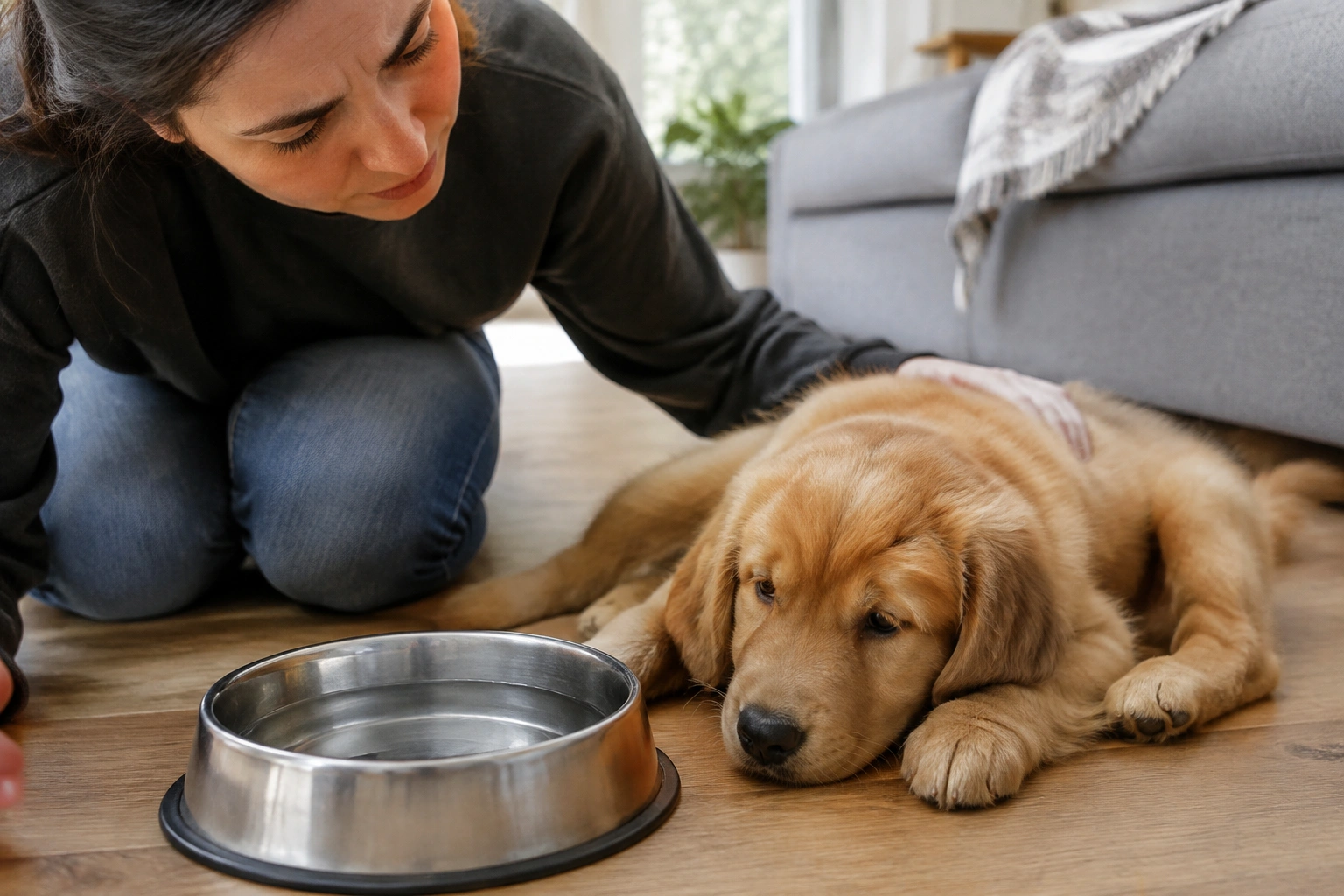
Use one set of shoes, one towel, and one cleanup area for the sick puppy. Wash your hands after contact and keep the puppy off shared bedding and carpets if you can manage it safely.
5) Prepare for transport
If the vet wants the puppy seen, bring a stool sample if requested and keep the puppy contained. Do not stop at pet stores, parks, or anywhere other dogs might be exposed.
The trade-off here is straightforward: a little inconvenience now versus a much bigger problem later. In suspected parvo, caution is the better choice.
How vets test for parvo and what the result means
Veterinarians usually start with a fecal ELISA or SNAP-style test on a stool sample. These tests are quick and can help confirm parvo in a symptomatic puppy.
The testing process is usually straightforward:
- The vet reviews the puppy’s symptoms, age, and vaccination status.
- A stool sample is tested with a SNAP or ELISA test.
- If the result is positive and the symptoms fit, the vet treats the puppy as a parvo case.
- If the result is negative but the puppy still looks sick, the vet may repeat the test later or add other testing, such as a CBC or PCR, to get more information.
- The final diagnosis is made from the test result plus the puppy’s overall condition, not the test alone.
The most important thing to understand is this: a negative test does not always rule out parvo in a symptomatic puppy. If the puppy is early in the illness or not shedding enough viral antigen yet, the test can miss it. That is why vets use the test together with the puppy’s symptoms and overall condition.
A positive test in the right clinical setting is serious. A negative test in a sick puppy does not necessarily end the conversation.
How parvo is treated and why early care matters
There is no magic home cure for parvo. Treatment is supportive and usually focuses on keeping the puppy alive while the body fights the infection.
That often means:
– fluid therapy for dehydration
– medication to control vomiting
– support for electrolytes and blood sugar as needed
– careful monitoring for worsening weakness or complications
– in some cases, hospitalization
The earlier the puppy gets veterinary support, the better the odds of getting ahead of dehydration and collapse. Waiting until the puppy is too weak to stand is a bad gamble.
Prognosis depends on several practical factors: how early the puppy is treated, how severe the dehydration is, whether the puppy can keep fluids down, and how quickly the illness is progressing. I would not trust anyone who promises a guaranteed outcome either way. Parvo can be survivable, but it is not a disease to manage casually at home.
How to protect other dogs and clean the environment
If parvo is suspected, act as if the puppy can spread it.
That means:
– keep the puppy away from other dogs
– wash hands after handling the puppy or its bedding
– use separate bowls, bedding, and towels
– launder contaminated fabric promptly
– clean hard surfaces with a parvovirus-effective disinfectant

General household cleaners are not always enough. This is one of those places where being “clean” is not the same as being properly disinfected.
If you have multiple dogs, the safest move is to create a strict separation plan until a vet tells you the risk is over. Shared yards, shared water bowls, and shared blankets are all avoidable exposure points.
How to lower the risk in the future
Vaccination matters, but it is not a reason to relax too early.
Puppies and unvaccinated dogs are the two groups most susceptible to parvo, according to Project Street Vet. That means a puppy in the middle of the vaccine series still deserves caution around high-risk environments.
Prevention is mostly about three things:
– following your vet’s vaccination schedule
– limiting exposure to unknown dogs and contaminated areas until protection is more complete
– avoiding high-risk public areas until the puppy’s vaccine series is complete, or until your vet says the exposure risk is acceptable
If you’re unsure whether your puppy’s vaccination status is enough for the situations you’re putting them in, ask your vet directly. A good prevention plan is based on the puppy’s age, vaccine timing, and real-world exposure risk, not wishful thinking.
When to see a veterinarian or certified trainer
For suspected parvo, see a veterinarian immediately. This is not a “watch it overnight” situation if vomiting, diarrhea, lethargy, or appetite loss are present in a young or under-vaccinated puppy.
A certified trainer is not the right first call for this problem. Health comes first. Once your puppy is medically stable, then you can return to training, routines, and rebuilding confidence around food, handling, and rest.
FAQs
Can a puppy have parvo without bloody diarrhea?
Yes. Bloody diarrhea can happen later. Early parvo may look like lethargy, appetite loss, vomiting, and soft or watery stool before blood appears.
Can parvo cause vomiting without diarrhea?
It can begin with vomiting, but vomiting alone is not enough to rule parvo in or out. The combination with lethargy, appetite loss, and exposure risk is what raises concern.
How fast can a puppy get worse?
Very fast. Some puppies decline over hours, especially once dehydration starts. That is why same-day veterinary advice matters.
If my puppy seems a little better, can I wait?
Not safely if parvo is on the table. Puppies can have brief periods of alertness even while becoming more dehydrated and weak.
Does a negative parvo test mean my puppy is fine?
Not always. In a symptomatic puppy, a negative test may need follow-up testing or repeat evaluation.
What should I do with my other dogs?
Separate them immediately from the sick puppy and from contaminated items until your veterinarian tells you the risk has passed.
Final takeaway
If you’re trying to tell whether a puppy has parvo, don’t wait for the textbook version. The early clue is usually a young or unvaccinated puppy that suddenly becomes tired, stops eating, and starts vomiting and/or having diarrhea. Bloody stool may come later.
When in doubt, isolate first, call the vet the same day, and treat it as urgent until proven otherwise. That is the safest way to protect the puppy in front of you and the dogs around it.
