How to Tell If Your Dog Is Overweight: A Practical Guide for Dog Owners

If you’ve been wondering how to know if your dog is overweight, the best place to begin is not the scale. It’s your hands and eyes.
A dog can weigh more than expected for lots of reasons: breed build, coat thickness, muscle, age, or extra body fat. That’s why a quick home check works best when you combine a few clues: body shape, rib feel, and belly tuck. Used together, they give you a much better picture than a number alone.
Quick way to tell if your dog may be overweight
Here’s the fastest first-pass check:
- Look at your dog from above. Do you see a waist behind the ribs?
- Look from the side. Does the belly tuck up after the ribcage?
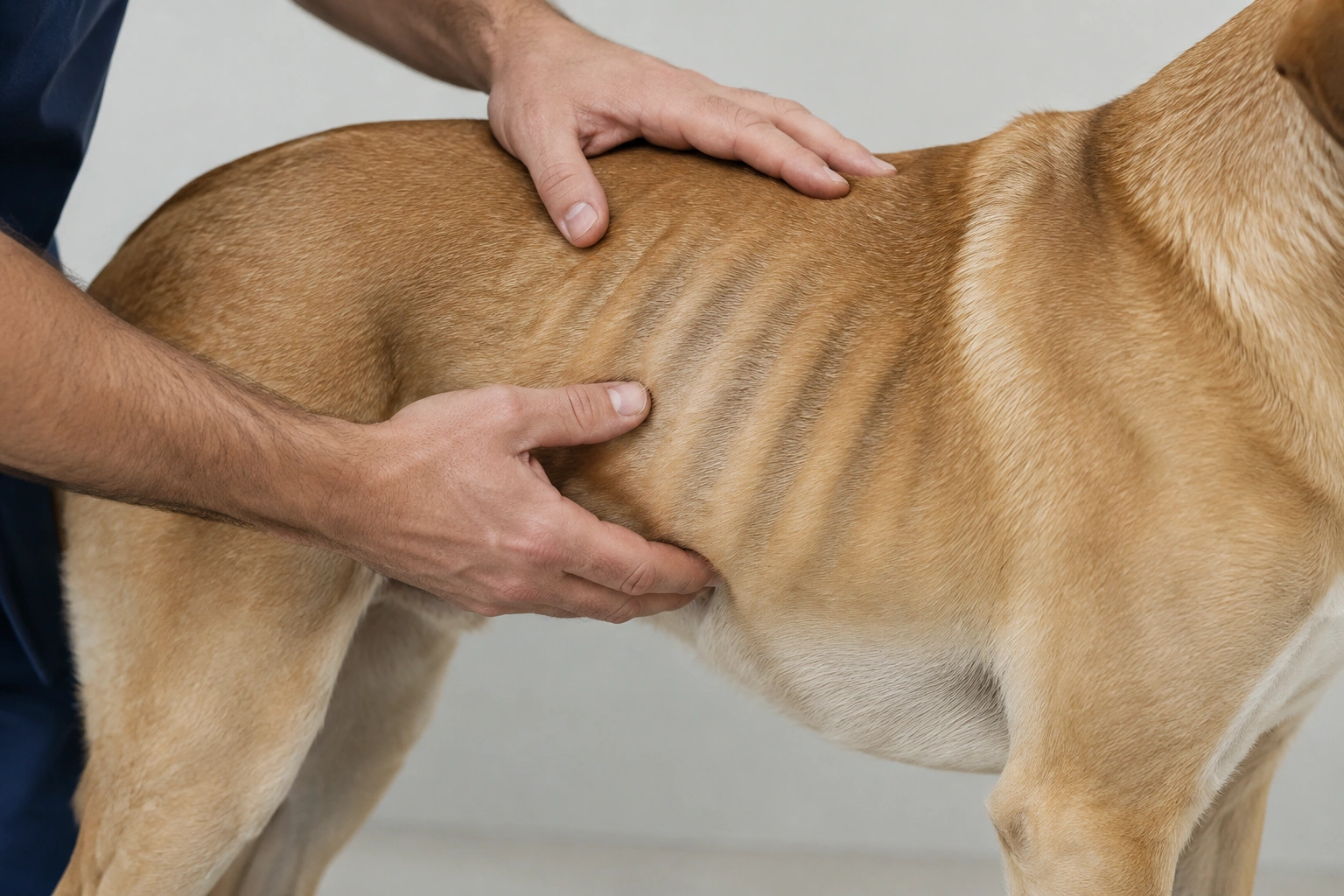
- Run your hands over the ribcage. Can you feel the ribs without pressing hard?
If the answer is “no” to one or more of those, extra weight is possible. If the waist has disappeared, the belly looks round or oval, and the ribs feel buried under a layer of fat, your dog likely needs a closer look.
That said, home screening is a clue, not a diagnosis. Breed, age, and muscle mass all affect what a dog looks like. Some dogs are naturally stocky or broad-chested without being overweight. A fluffy dog may hide fat under a thick coat. And a sudden change in body shape can point to something more serious than overeating.
What a healthy dog body should look and feel like
A healthy dog is usually not “skinny.” The goal is a lean, balanced body condition.
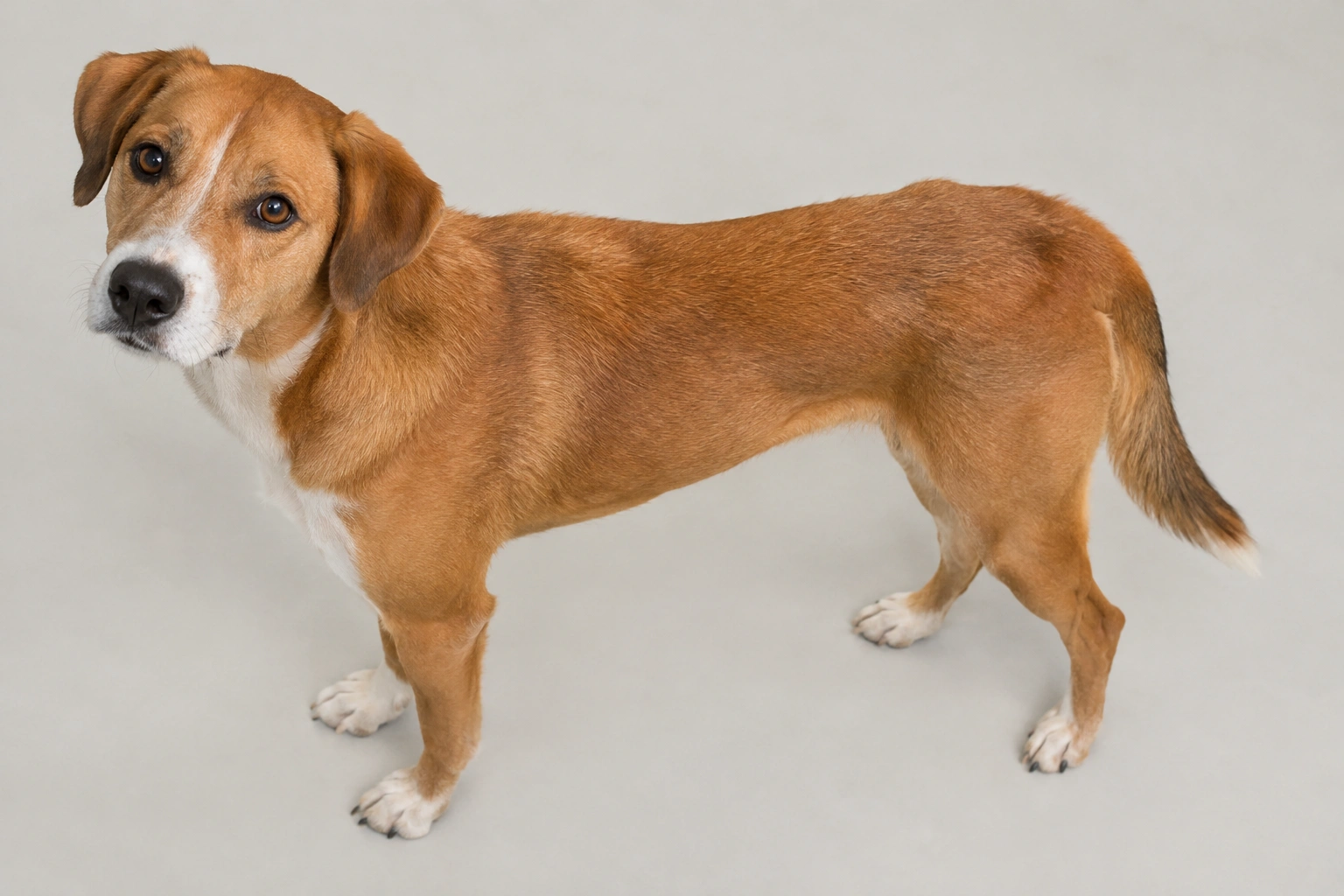
From above, you should generally see a waist narrowing behind the ribs. From the side, the abdomen should rise slightly after the ribcage instead of hanging in a straight line. When you place your hands on the ribs, they should be easy to feel under a thin layer of fat.
That rib feel matters because it tells you about body fat, not just body size. A dog with a healthy body condition may have ribs that are easy to feel but not obvious to see. That is different from a dog that looks bony, where the ribs, spine, and hip bones may stand out sharply.
A useful mental image: healthy dogs tend to look “athletic,” not round. If your dog’s outline looks more like an oval than a tucked-in shape, excess fat may be part of the picture.
Keep in mind that ideal body condition varies by breed, age, and muscle mass. A young, muscular dog may look fuller than a leaner breed without actually being overweight, and some dogs can be stocky by build while still being at a healthy weight.
How to check your dog at home: the rib, waist, and tuck test
This is the simplest at-home method, and it works for most dogs.
1) Check the ribs
Slide your hands lightly over both sides of the ribcage. You should be able to feel the ribs without pressing hard. If you have to push in to find them, that suggests a thicker layer of fat.
2) Check the waist
Stand over your dog and look down. A healthy dog usually narrows behind the ribs before widening again at the hips. If the body looks straight-sided, broad, or round through the middle, that can point to excess weight.
3) Check the abdominal tuck
Look from the side. The belly should rise up after the ribcage. If the underside hangs low or stays level all the way back, the dog may be carrying extra fat.
4) Repeat in good lighting
This sounds simple, but it matters. Thick coats, dark fur, and poor lighting can hide shape changes. If you’re unsure, repeat the check when your dog is standing naturally on a flat surface.
A practical tip: do the test when your dog is relaxed, not after a meal or right after exercise. You’re looking for body shape, not temporary fullness.
Body Condition Score: the simplest way to judge overweight vs. healthy
Veterinarians often use a Body Condition Score, or BCS, to judge body fat more reliably than scale weight alone. One commonly used scale runs from 1 to 9, where lower numbers mean underweight, middle numbers are ideal, and higher numbers indicate excess weight.
You do not need to memorize the whole scale to use it well. For home checks, think in broad terms:
- 1/9: extremely thin; ribs, spine, and hip bones are usually very prominent
- 4–5/9: generally ideal for many dogs; ribs are easy to feel, waist is visible, belly tucks
- 8–9/9: obese; waist is absent, belly is round, fat is obvious over the ribcage and base of tail
The value of BCS is that it accounts for body shape. A 45-pound dog and a 90-pound dog can both be at a healthy condition if their frames differ. That’s why “ideal weight” is not the same as “same weight as another dog of the same breed.”
If you want a more formal read on your dog’s condition, your veterinarian can score body condition during an exam and weigh your dog at the same visit. The AVMA also emphasizes the importance of veterinary guidance for overall pet health decisions.
Overweight, obese, or just stocky: how to tell the difference
This is where many owners get stuck, especially with broad-chested breeds or thick-coated dogs.
Stocky build
Some dogs are naturally compact, muscular, or wide through the chest. A stocky dog may look sturdy without carrying extra fat. The key difference is that you can still feel the ribs fairly easily, and there is usually some waist and abdominal tuck.
Overweight
An overweight dog has noticeable extra fat, but not usually to the point of major body distortion. The waist is reduced, the belly may look rounder, and the ribs feel less obvious.
Obese
Obesity means excess body fat is more pronounced. The waist may disappear completely, the abdomen may sag, and the chest-to-belly line can blur from the side. The ribs can be difficult to feel without pressing firmly.
Here’s a simple rule: if your dog looks broad but still has a clear waist and easy-to-feel ribs, build may be the explanation. If the waist is gone and the ribcage feels padded, fat is more likely the issue.
Breed matters here. Bulldogs, Pugs, and other compact breeds can look naturally heavy in a way that doesn’t always mean excess fat. Border Collies and other lean, athletic dogs often show weight gain earlier because their normal outline is more defined. That makes subtle changes easier to spot if you know what your dog usually looks like.
Comparison table: healthy, overweight, obese, or possibly medical-related weight gain
| What you notice | Healthy body condition | Overweight | Obese | Possible medical issue |
|---|---|---|---|---|
| Waist from above | Visible | Reduced | Absent | May be absent due to swelling |
| Belly from the side | Tucks up behind ribs | Less tuck | Round or level | Distended or suddenly enlarged |
| Ribs | Easy to feel with light pressure | Harder to feel | Difficult to feel | May be harder to assess because of abdominal enlargement |
| Change over time | Stable | Gradual gain | Ongoing gain | Sudden or unexplained change |
| Activity level | Normal for age | May tire more easily | Often less active | May seem weak, painful, or lethargic |
| Main clue | Balanced outline | Extra fat likely | Excess fat likely | Needs veterinary check |
This table is useful because it separates “looks heavy” from “needs a vet now.” Sudden belly enlargement is not the same thing as slow, steady weight gain.
Why dogs gain weight: common lifestyle causes and hidden calorie traps
Most weight gain starts quietly.
The biggest culprits are usually:
– Portions that are a little too large
– Treats that add up over the day
– Table scraps
– Lower activity after injury, aging, or a change in routine
– Free-feeding when a dog eats more than needed
Treats are a common trap because they feel small in the moment. A few extras during training, a biscuit after a walk, and a snack from the kids can add meaningful calories without anyone noticing. If your dog seems “always hungry,” that does not necessarily mean the food is too little. Some dogs are simply very food-motivated and will ask for more even when they are already getting enough.
Older dogs can gain weight more easily because they often move less. A dog that once burned off extra calories through long walks or energetic play may now need fewer calories than before.
Food changes often matter a great deal, but exercise still matters too. In many cases, both need attention: diet controls calorie intake, while movement supports weight management and overall health.
When weight gain may be a medical issue instead of simple overeating
Not every heavier-looking dog has a diet problem.
You should be more cautious if the weight gain is:
– Sudden
– Unexplained
– Centered mostly in the belly
– Accompanied by lethargy
– Linked with breathing changes, pain, or a reluctance to move
A swollen abdomen is especially important to take seriously. It can be mistaken for fat, but it may reflect something that needs prompt veterinary attention. Likewise, if your dog seems tired, uncomfortable, or “not quite right” along with the weight change, don’t assume it’s just from eating too much.
This is where home assessment has limits. A dog can look heavier for reasons that have nothing to do with extra food. If the change happened quickly, a vet visit is the safer next step.
What overweight can do to your dog’s health
Excess weight is not just a cosmetic issue. It changes how a dog moves, breathes, and carries stress through the body.
Overweight dogs may be more likely to have:
– Reduced stamina
– Harder breathing during activity
– More strain on joints
– Less interest in exercise
– A harder time staying comfortable in hot weather
Even before serious disease shows up, extra weight can make normal life less comfortable. A dog that pants after a short walk or hesitates on stairs may simply be carrying more body fat than is healthy.
The practical reason to act early is that small gains are easier to reverse than large ones. A dog that is only slightly overweight usually has simpler next steps than a dog that has been obese for years.
For broader veterinary guidance on excess weight in dogs, VCA Animal Hospitals’ overview of obesity in dogs is a helpful reference.
Safe first steps if your dog does appear overweight
If your dog seems a little heavy but otherwise bright, active, and stable, you can begin with careful adjustments while planning a vet check if needed.
Measure meals instead of guessing
Eyeballing food is one of the easiest ways to overfeed. Use a measuring cup or kitchen scale so portions stay consistent.
Count treats as part of the day
Treats should fit inside the day’s total food intake, not sit on top of it. If your dog gets a lot of training rewards, consider using smaller pieces or part of the regular meal as rewards.
Add movement gradually
A little more walking, sniffing time, or play can help. The goal is consistency, not a sudden burst of intense exercise. If your dog is already overweight, too much activity too fast can be hard on joints and stamina.
Avoid crash dieting
Severely cutting food can backfire. It may leave your dog hungry, make the plan unsustainable, or create nutritional problems. If your dog is very overweight, a veterinarian should guide the weight-loss plan.
Recheck body shape every 2 to 4 weeks
You may not see dramatic changes day to day. A simple photo from above and from the side can help you notice whether the waist and tuck are improving.
When to call your veterinarian
Make a routine appointment if:
– You cannot feel the ribs without pressing hard
– Your dog has lost the waist and tuck
– Weight gain happened gradually
– You want help deciding whether your dog is overweight, stocky, or simply built differently
– Your dog seems less active, but otherwise stable
Call your veterinarian promptly or seek same-day advice if:
– The belly looks suddenly swollen or distended
– Weight gain happened quickly
– Your dog is breathing hard, panting unusually, or struggling to breathe
– Your dog seems weak, painful, or very lethargic
– Your dog will not eat, cannot get comfortable, or seems acutely unwell
A veterinarian can weigh your dog, examine body condition, and judge the result in the context of breed and frame. That matters because the same number on a scale can mean very different things for different dogs.
If your dog is clearly overweight, especially if the change is significant, veterinary supervision is the safest route. If the change is mild and gradual, your vet can still help you decide whether home adjustments are enough or whether a more structured plan is needed.
FAQ
Should I be able to feel my dog’s ribs?
Yes, you should usually be able to feel the ribs without pressing hard. If you have to push in to find them, your dog may be carrying extra fat.
Is a visible waist always necessary?
A visible waist is a strong sign of healthy body condition, but breed and body type matter. A stocky dog may have a less dramatic waist and still be at a healthy condition if the ribs are easy to feel.
Can a thick coat hide overweight?
Absolutely. Long or fluffy coats can make a dog look more filled out than they really are, so use your hands as well as your eyes.
How do I know if my dog is overweight or just big-boned?
Check the ribs, waist, and abdominal tuck. Big-boned or stocky dogs still usually have a discernible waist and ribs that can be felt fairly easily.
When does weight gain become urgent?
If the belly enlarges quickly, your dog seems weak or uncomfortable, or breathing changes along with the weight gain, call your veterinarian promptly.
Can I just feed less if my dog is overweight?
Sometimes, but not always. Mild weight gain may improve with portion control and more activity, but significant overweight or sudden gain should be assessed by a veterinarian first.
How often should I check my dog’s body condition?
A monthly check is a good habit. It catches slow changes early, before they become harder to reverse.
If you want a deeper walkthrough of the same home checks, see our guide on how to tell if your dog is overweight. For a second reference version, this related post on body-checking a dog for extra weight may also be helpful.
