
How to Transition a Border Collie to New Food Without Upsetting Their Stomach

Switching food sounds simple until your Border Collie develops loose stool, skips a meal, or acts off for a day or two. That’s usually the point where owners realize the transition itself matters almost as much as the new food.
Border Collies are athletic dogs, but they’re not all easy stomachs. A gradual switch gives the digestive tract time to adapt to the new recipe, new protein source, or new texture. It also helps you tell the difference between a normal adjustment and a food that genuinely doesn’t agree with your dog.
A practical transition plan is usually better than a fast one. Many pet-food guides and veterinary resources recommend starting with a small amount of the new food and increasing it gradually while keeping the total daily amount steady. Chewy advises beginning with about 25% new food and 75% current food as a general feeding-transition guideline, and using a calibrated measuring cup so you don’t accidentally overfeed or underfeed during the switch. AAHA also recommends a gradual transition rather than an abrupt change.
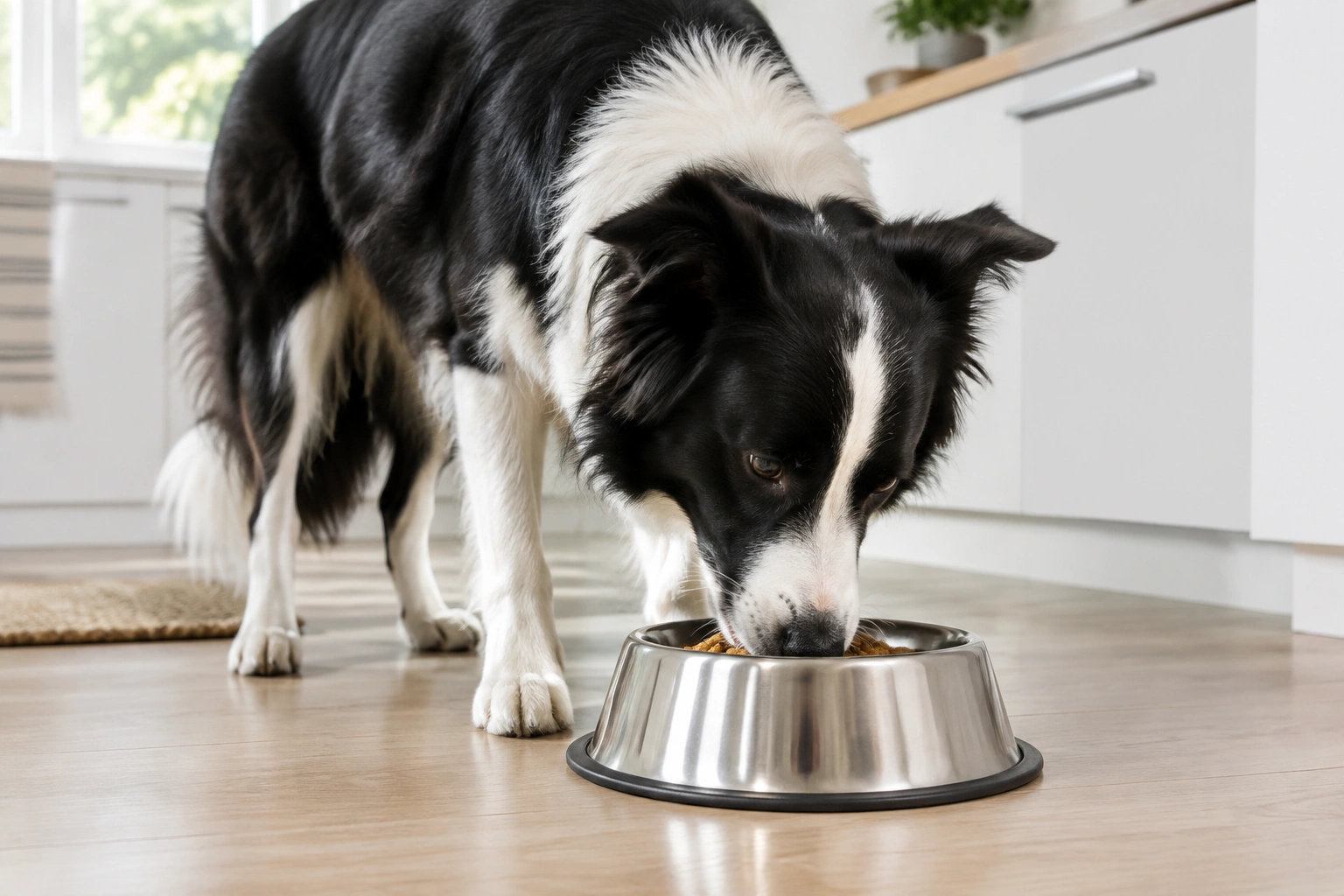
Quick Decision Guide: 7 Days or 10–14 Days?
Use a 7-day transition if your Border Collie is a healthy adult, has had normal stools, and has not had trouble with prior food changes.
Use a 10- to 14-day transition if your dog has any of these:
– a history of loose stool or diarrhea after diet changes
– repeated food switches in a short period
– known GI sensitivity or a “sensitive stomach”
– vomiting with previous food transitions
– stress-related stomach upset
– a puppy, senior, or dog already adjusting to a major diet change
If stool softens at any step, hold the current ratio instead of advancing. If symptoms worsen, step back to the last tolerated mix.
When You Should Change Your Dog’s Food
Not every food change is optional, and not every change needs to be dramatic. The most common reasons are practical:
- your Border Collie has outgrown puppy food
- the current food is being discontinued or is out of stock
- your dog is gaining or losing weight and needs a different calorie density
- your vet recommended a prescription or limited-ingredient diet
- you suspect the current food is causing digestive upset or skin issues
- you want to move from one texture or protein source to another
The key question is whether the new food is actually solving a problem. If the switch is happening because your dog is bored, but the current diet is working well, there’s less urgency. If the change is being made for medical reasons, or because the old food is no longer available, you may need to move sooner and monitor more carefully.
Choose the Right New Food Before You Start
A smooth transition can still go badly if the replacement food is the wrong fit. Before mixing anything, check three things:
1) Life stage
Puppy, adult, and senior foods are not interchangeable. A puppy formula is designed for growth, while adult food is meant for maintenance. If your Border Collie is still growing, don’t rush the move to adult food just because the puppy bag is nearly empty. If you’re unsure whether the timing is right, ask your veterinarian or use the feeding guidance on the food label.
2) Activity level and calorie density
Border Collies vary a lot in how active they are. Working, training, or hiking dogs may need more calories than a less active companion. Two foods can look similar in a bowl but deliver very different energy. That matters because if the new food is more calorie-dense, feeding the old volume can quietly add weight. If it’s less calorie-dense, your dog may seem hungry even though the portion looks normal.
3) Ingredient tolerance
If your dog has reacted badly to certain proteins or rich foods in the past, don’t treat the transition as a test of endurance. A food that matches your dog’s history is easier to transition onto than one that already has warning signs attached to it.
If the new food is a prescription diet, a therapeutic elimination diet, or something your vet specifically recommended, follow the clinic’s guidance rather than improvising your own schedule.
Standard 7-Day Transition Schedule
For a healthy adult Border Collie with no known history of food sensitivity, a 7-day transition is a reasonable starting point. It gives the gut time to adjust without dragging the process out unnecessarily.
Use the same total daily amount you normally feed, then change only the ratio of old to new food.
| Day | Old Food | New Food |
|---|---|---|
| 1–2 | 75% | 25% |
| 3–4 | 50% | 50% |
| 5–6 | 25% | 75% |
| 7 | 0% | 100% |
A simple example: if your dog eats 2 cups per day, you would not suddenly feed 2.5 cups because the new food is mixed in. You would keep the total near 2 cups and change the split.
That steady total matters. Otherwise, you can mistake overfeeding for food intolerance, or underfeeding for pickiness.
If stool starts to soften, hold at the current ratio for another day or two instead of moving ahead. If the stool firms back up, continue. If it worsens, step back to the last ratio your dog handled well.
Slower 10- to 14-Day Transition for Sensitive Stomachs
If your Border Collie has a history of loose stool, vomiting with food changes, repeated diet switches, stress-related stomach upset, or a known sensitive stomach, a slower transition is usually the safer move.
A slower schedule can look like this:
| Day | Old Food | New Food |
|---|---|---|
| 1–3 | 75% | 25% |
| 4–6 | 50% | 50% |
| 7–10 | 25% | 75% |
| 11–14 | 0% | 100% |
You don’t have to use this exact version. The point is to stay at each step long enough to see whether the stool stays normal and the dog keeps eating well. If the transition is going smoothly, you can move forward. If not, stay at the current ratio a little longer.
This slower approach is especially useful when you’re also changing texture, such as going from dry kibble to wet food, or when the new diet has a very different protein source.
How to Measure and Mix Old and New Food Correctly
The easiest way to create problems is to eyeball portions.
Use a measuring cup or, better yet, a kitchen scale if you already have one. The goal is consistency. If your dog gets 1 cup per meal, measure the old and new food accurately so the total stays the same. Chewy specifically recommends using a calibrated measuring cup during the transition, which helps avoid accidental overfeeding.
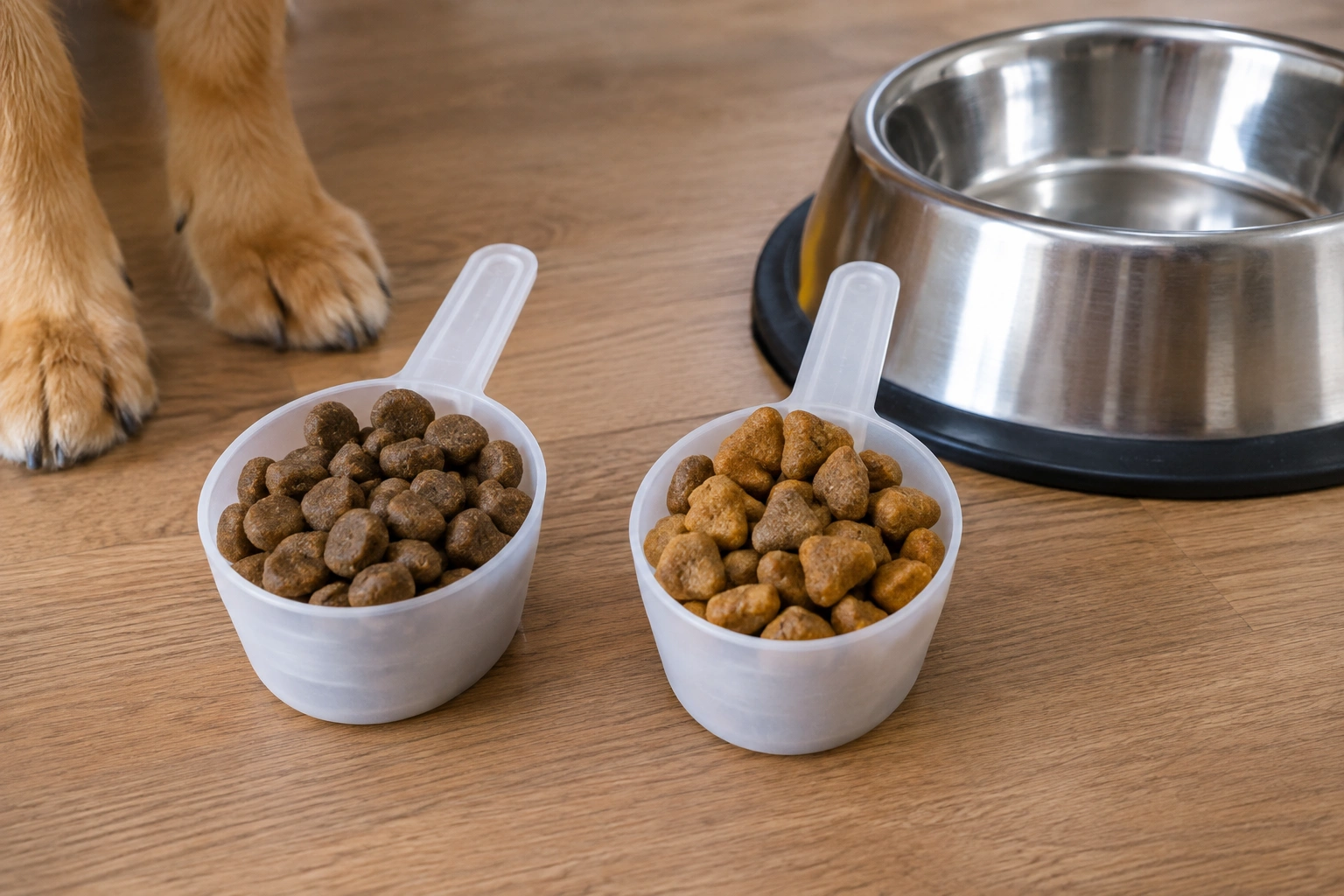
A few practical rules make this easier:
- Keep meal times the same.
- Don’t change treats, toppers, or supplements at the same time unless your vet told you to.
- Mix the foods thoroughly so your dog can’t sort around the new pieces.
- If you feed twice a day, split the transition ratio across both meals.
If you’re switching protein sources, treat that as a meaningful change rather than a minor label update. Chicken to beef, fish to lamb, or a diet with a very different protein profile can be enough to trigger digestive upset in some dogs, so a slower transition is often the safer choice.
If you have more than one dog in the house, separate bowls and double-check who gets what. Feed each dog in a separate spot, pick up bowls when they’re done, and don’t leave food down where another dog can finish it. That makes it easier to prevent cross-feeding and to track how each dog is responding.
What Normal Adjustment Looks Like Versus Warning Signs
A mild adjustment period is not unusual. What matters is whether the changes stay mild and improve as the transition moves forward.
Usually acceptable during the first few days
- slightly softer stool that still holds shape
- a small drop in enthusiasm at one meal
- a bit of hesitation around the new smell or texture
- mild gas without other symptoms
Not a good sign
- repeated diarrhea
- vomiting
- refusal to eat for more than a meal or two
- lethargy
- blood in stool
- itching, face rubbing, or ear irritation that seems new and persistent
Loose stool in the first few days can happen, but it should not keep getting worse. If the stool is clearly deteriorating, the transition is moving too fast or the food may not agree with your dog.
What to Do If Your Border Collie Gets Diarrhea, Vomiting, or Refuses to Eat
When the transition goes sideways, the fix is usually not to push harder.
If stool softens or diarrhea starts
If the stool is only mildly soft, hold at the current ratio for a few more days instead of increasing the new food. If it improves, continue slowly.
If your dog develops diarrhea, step back to the last ratio that produced normal stool. If the diarrhea is mild and your dog otherwise seems normal, you can often pause the transition for a short period and retry later at a slower pace. If the diarrhea is frequent, watery, or keeps worsening, stop the transition and call your veterinarian.
If your dog vomits
Stop advancing the transition. If the vomiting is a one-time event and your dog otherwise seems normal, pause the new food and wait until the stomach settles before retrying at a lower ratio or a slower schedule.
If your dog vomits more than once, cannot keep food down, or seems tired or unwell, stop the transition and call your veterinarian. Repeated vomiting is not something to “wait out” at home.
If your dog refuses to eat
First, make sure you’re not overfeeding or changing too many variables at once. Some dogs refuse a new food because the portion is too large, the texture is unfamiliar, or the food smells different. You can try mixing more gradually or using a small amount of the new food as part of the meal rather than a sudden full swap.
AAHA notes that a small amount of canned food or a low-salt flavored broth can be used as a topper to encourage acceptance. Keep that simple and modest; the goal is to support the transition, not create a new feeding habit that masks whether the food itself is working.
If your dog refuses to eat and also seems unwell, don’t keep trying to force the issue. That’s a vet conversation.
Special Cases: Puppies, Adults, Seniors, and Prescription Diets
Puppy to adult food
Switching from puppy food to adult food should happen at the right life stage, not just when the bag runs out. A practical rule is to follow the food label for your dog’s expected adult size and the formula’s feeding directions. If the puppy food says it is for growth up to a certain age or weight range, use that as your first guide, then confirm with your vet if your Border Collie is still growing or very active.
If your puppy has a sensitive stomach, use the slower transition schedule rather than assuming youth makes the switch easier.
Dry kibble to wet food
A format change can be just as noticeable as a protein change. Wet food may be more palatable, but it also changes texture, moisture, and calorie density. Measure carefully and don’t assume the same volume equals the same nutrition.
Prescription or limited-ingredient diets
These should be handled with more caution. If your veterinarian prescribed the food for a specific reason, follow the clinic’s instructions on timing and transition. Don’t mix in extra foods or treats unless your vet says they’re compatible with the diet.
Seniors
Older dogs may need a slower pace if they have a history of digestive sensitivity or reduced appetite. Keep an eye on hydration, stool quality, and whether the dog is finishing meals normally.
How Much to Feed During the Transition
The amount you feed should usually stay the same during the switch unless the new food has a different calorie density or your vet told you otherwise. That’s why measuring matters.
If the new food is richer, your dog may need less volume. If it’s less calorie-dense, the bowl may need to be a little fuller to provide the same nutrition. The feeding guide on the package is a starting point, but Border Collies vary a lot based on age, work level, and body condition.
A practical check: if your dog starts leaving food behind, gaining weight, or seeming hungrier than usual, don’t assume the transition is failing. Recheck the calories per cup and compare the old and new labels.
For a more detailed breakdown of portions by age and weight, see Border Collie food amount by weight.
When to Ask Your Veterinarian
Call your veterinarian sooner rather than later if any of these happen:
- repeated vomiting
- significant diarrhea
- blood in stool
- marked lethargy
- refusal to eat that lasts beyond a short period
- signs of dehydration
- a dog with a known medical issue suddenly stops tolerating food changes
You should also ask before switching if your Border Collie is on a prescription diet, has a history of chronic digestive trouble, or has reacted badly to food changes in the past.
If you’re moving a puppy onto adult food, this is also a good time to confirm that the new formula fits the dog’s growth stage and workload. For a feeding overview by life stage, the guide on what is the best food for a Border Collie is a useful companion read.
A Simple Decision Rule for the Transition
If your Border Collie is eating well, stool is staying formed, and energy looks normal, keep going.
If stool softens, appetite drops, or vomiting appears, slow down.
If symptoms are persistent, severe, or getting worse, stop guessing and call the vet.
That’s the practical version. A food transition should be uneventful. If the switch is staying steady and your dog is acting normally, you’re probably on the right track.
FAQs
How long should it take to transition a Border Collie to new food?
Most healthy dogs can transition over about 7 days. Border Collies with sensitive stomachs often do better with 10 to 14 days.
Can I switch food immediately if the old food is unavailable?
If you have no choice, yes, but monitor closely. An abrupt change raises the chance of digestive upset, so watch stool and appetite carefully and contact your vet if vomiting or diarrhea shows up.
Should I change treats at the same time?
No, not if you can avoid it. Too many changes at once make it hard to tell what’s causing the problem.
Do Border Collies need a slower transition than other dogs?
Not automatically, but a slower approach is wise if your dog has had stomach upset with prior diet changes or has a known sensitive stomach.
What if my dog eats less during the switch?
A small dip in enthusiasm can happen. If the dog is still eating enough overall and otherwise seems normal, keep monitoring. If appetite drops off sharply or the dog seems unwell, call your vet.
Can probiotics help?
Some dogs do well with them, but they’re not a substitute for a sensible transition plan. If you’re considering a probiotic, ask your veterinarian which type makes sense for your dog.
Should I feed before or after exercise?
Keep the routine consistent and avoid big changes around meals. If your dog is very active, don’t make the transition and the exercise schedule more chaotic at the same time.
What if I have two dogs on different diets?
Feed them separately, pick up bowls after meals, and don’t leave food where the other dog can reach it. That prevents accidental cross-feeding and makes it easier to tell which diet is causing a problem.
