
How to Treat Bloodshot Eyes in Dogs: A Practical Guide for Owners

A bloodshot eye in a dog can be a minor irritation — or the first sign of a problem that needs prompt veterinary care. The tricky part is that the eye often looks similar whether the cause is dust, allergies, a scratch, an infection, or something more serious such as glaucoma or uveitis.
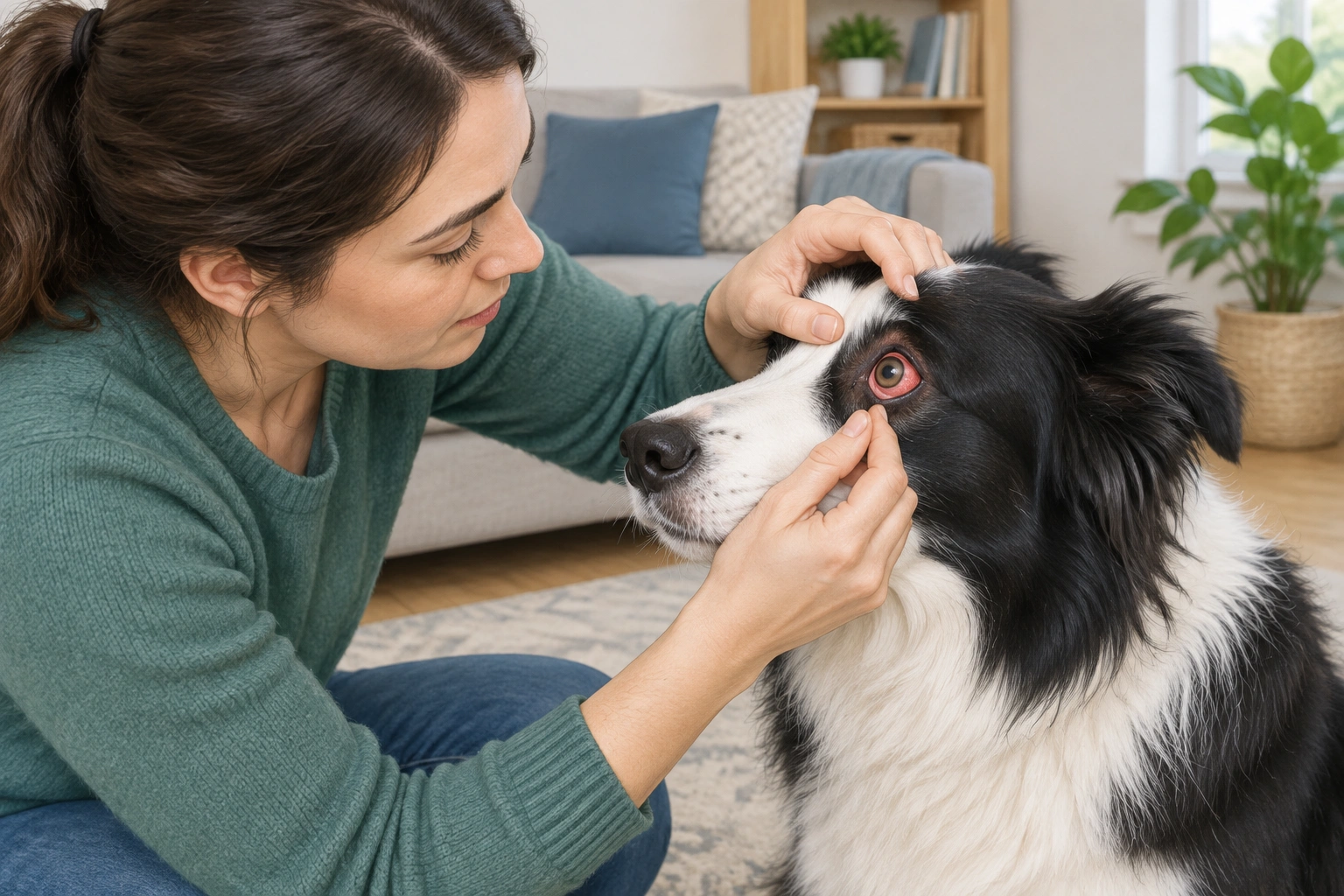
If your dog’s eye is red right now, the safest approach is not to guess. Look at how the eye behaves: is your dog squinting, pawing, keeping it closed, acting sensitive to light, or showing cloudiness or discharge? Those details matter more than the redness itself.
For Border Collies and other active dogs, eye issues often show up after hiking, running through brush, chasing balls, or rough play. That matters because a small scratch can become a bigger problem if the dog keeps rubbing it.
Bloodshot Eyes in Dogs: When It’s Mild and When It’s an Emergency
Redness alone does not tell you how serious the problem is. A dog can have a mildly irritated eye after dust exposure and still be comfortable, or a painful eye that needs urgent treatment.
A useful rule: if the eye is red but your dog is acting normal, not squinting, not pawing, and there is no discharge or cloudiness, you may be dealing with a minor irritation. If the eye is red and your dog seems uncomfortable, that shifts the situation toward same-day veterinary care.
Here is the practical split:
- Likely mild irritation: slight redness, clear tearing, normal behavior, no obvious pain
- Needs same-day vet attention: squinting, pawing, thicker discharge, swelling, or redness that keeps getting worse
- Needs emergency care now: cloudiness, a bulging eye, sudden vision changes, severe pain, or a known injury
That last group matters because some eye diseases can worsen quickly. With conditions like corneal ulcers, uveitis, or glaucoma, waiting to “see if it clears up” can cost vision.
Common Causes of Red or Bloodshot Eyes in Dogs
The eye is a delicate surface. Many different problems can make it look red, and the pattern of symptoms often gives the first clue.
Irritation from dust, wind, or debris
A little dust, grass seed, or loose hair can irritate the eye and cause temporary redness and tearing. This is more likely if the redness appeared after outdoor activity and your dog otherwise seems comfortable.
A mild irritant can cause:
– watery eyes
– brief blinking
– mild redness
– little or no discharge
If the redness does not settle quickly, stop assuming it is minor.
Allergies
Allergies often affect both eyes, not just one. The eyes may look red and itchy, and your dog may also have skin itching, sneezing, or seasonal flare-ups.
Allergies are more likely when:
– both eyes are red
– the dog is itchy in general
– there is clear, watery discharge
– symptoms come and go with pollen, dust, or environmental exposure
Allergies can still be uncomfortable, but they usually do not cause the same level of pain or cloudiness you worry about with injury or glaucoma.
Conjunctivitis
Conjunctivitis means inflammation of the tissue around the eye. It can happen with allergies, irritation, infection, or an underlying eye problem.
Signs can include:
– red or pink tissue around the eye
– discharge that may be watery or thicker
– blinking or mild squinting
Because conjunctivitis has several possible causes, the treatment depends on what triggered it. That is why the same red eye should not automatically be treated with the same drops.
Foreign body or scratch
A tiny piece of debris, a grass awn, or a scratch from a branch can make one eye suddenly red and painful. This is common in active dogs.
Clues include:
– one eye only
– sudden onset
– pawing or rubbing
– squinting or keeping the eye closed
– tearing
If the dog has been running through brush, do not assume it is “just irritated.” A scratch on the cornea can worsen if the dog keeps rubbing.
Corneal ulcer
A corneal ulcer is an injury to the clear surface of the eye. It can start from a scratch, debris, dry eye, or rubbing. It may look like redness at first, but pain is often more obvious than the redness.
Warning signs often include:
– squinting
– tearing
– light sensitivity
– pawing
– cloudy or hazy appearance
This is one of the reasons human eye drops are risky. Some products can mask pain or make the problem worse.
Dry eye
Dry eye means the eye is not producing enough tears to stay comfortable and protected. It can lead to redness, thick discharge, and repeated irritation.
You may notice:
– sticky discharge
– dull-looking eyes
– recurring redness
– discomfort that keeps coming back
Dry eye usually needs veterinary diagnosis and ongoing management. It is not a problem to “wait out” if the eye keeps flaring.
Uveitis
Uveitis is inflammation inside the eye. It can be painful and may cause a very red eye, light sensitivity, and a smaller-looking pupil in some cases.
This is a more serious condition because the problem is not just surface irritation. If the eye looks painful or the dog is avoiding light, get veterinary help quickly.
Glaucoma
Glaucoma is a pressure problem inside the eye and is an emergency. It can cause redness, pain, cloudiness, and vision loss.
A red eye with:
– obvious pain
– cloudiness
– a bulging appearance
– sudden vision changes
should not be monitored at home. It needs immediate veterinary attention.
How to Tell Mild Irritation from a Sight-Threatening Eye Problem
The best triage tool is not the color of the eye. It is the pattern.
Use this comparison to judge what you are seeing:
| Likely pattern | More likely cause | Urgency | Safe first step |
|---|---|---|---|
| Both eyes red, itchy, watery, dog otherwise normal | Allergies | Non-emergency unless worsening | Prevent rubbing, monitor briefly only if mild and comfortable, call vet if persistent |
| One eye red after dust or wind, mild tearing, no pain | Minor irritation | Monitor briefly only if mild and comfortable | Gentle saline rinse if appropriate |
| One eye red, squinting, pawing, or keeping closed | Scratch, foreign body, ulcer | Same-day vet visit | Cone and prompt exam |
| Red eye with cloudiness, marked pain, or light sensitivity | Uveitis, glaucoma, ulcer | Emergency now | Do not delay care |
| Red eye after trauma, rough play, or branch contact | Injury | Same-day or emergency depending on severity | Prevent rubbing, seek exam |
A few details matter a lot:
- One eye only often points toward a foreign body, scratch, or injury.
- Both eyes more often suggest allergies or environmental irritation.
- Pain changes everything. Squinting and pawing are pain signals.
- Cloudiness is a red flag because it can mean deeper eye disease.
- Vision change is an emergency until proven otherwise.
If your dog is acting like the eye hurts, treat that as more serious than the redness itself.
Safe At-Home First Aid for a Dog’s Red Eye
Home care should be limited to low-risk steps that do not delay a vet visit if the eye looks painful or abnormal.
- Stop the rubbing. If your dog is pawing or rubbing the eye, use an Elizabethan collar if you have one. That may feel inconvenient, but it can prevent a scratch from becoming a deeper ulcer.
- Keep the dog calm. Excitement, running, and head shaking can worsen irritation. Keep activity quiet until you know what you are dealing with.
- Inspect the eye gently. Look for obvious debris, swelling, discharge, or cloudiness. Do not press on the eye or try to pry it open forcefully.
- Rinse only if appropriate. If the eye seems mildly irritated from dust or loose debris and your dog is comfortable, you can try a gentle sterile saline rinse once.
- Stop home care and call the vet if pain or abnormal signs are present. Squinting, pawing, cloudiness, swelling, or worsening redness means it is no longer a simple home-care situation.
When to Flush the Eye with Sterile Saline — and When Not To
A saline rinse has a narrow job: it may help wash out loose debris. It does not treat ulcers, pressure problems, deep infection, or internal inflammation.
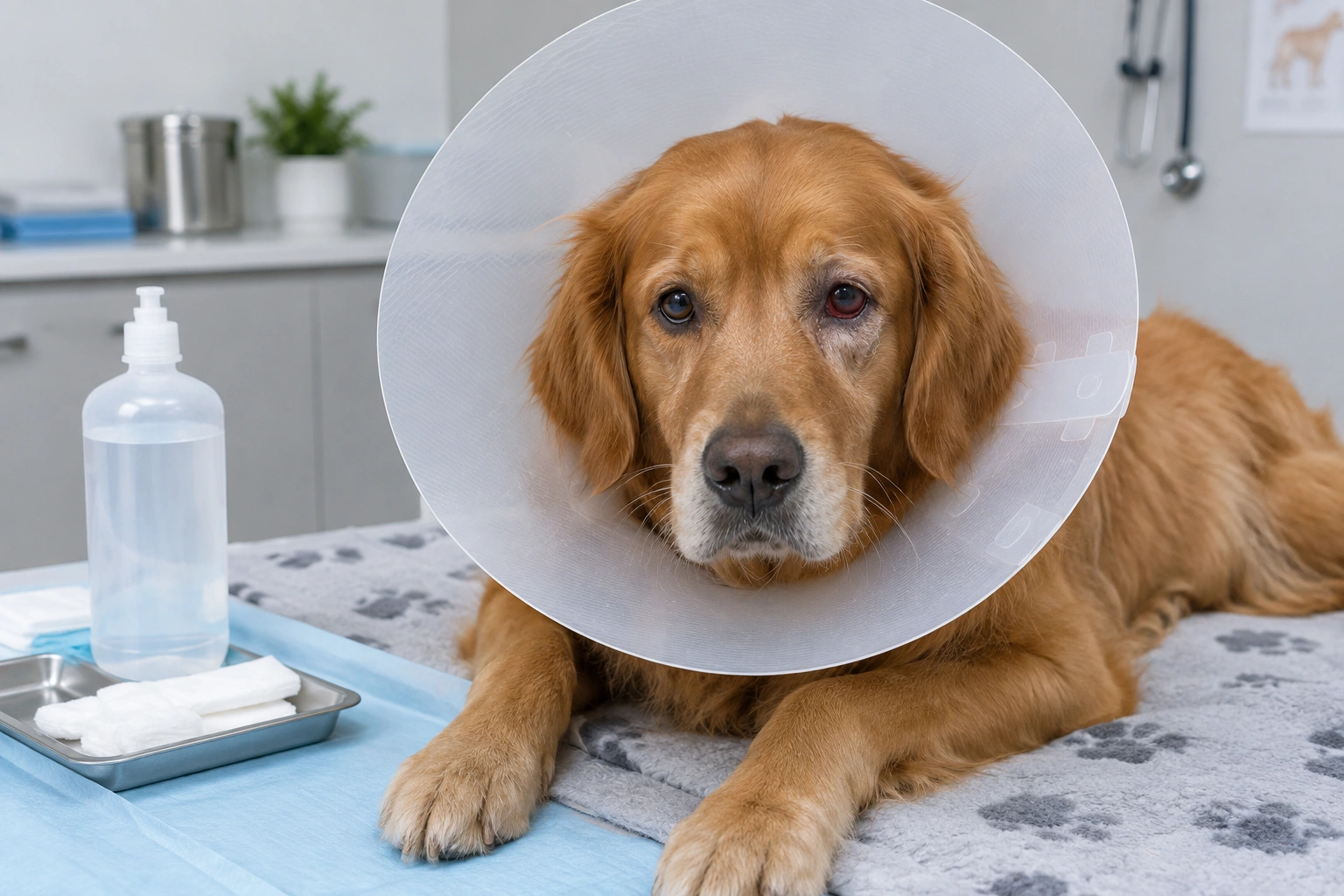
Use saline when:
– the eye was exposed to dust or fine debris
– the dog is not in obvious pain
– there is no known trauma
– the eye is not cloudy or bulging
How to do it safely:
– use sterile saline made for eyes or a veterinarian-approved product
– rinse gently, without force
– stop if the dog resists, squints more, or seems painful
– try it once; do not keep flushing repeatedly
Do not rely on flushing when:
– the dog is squinting hard or keeping the eye shut
– you suspect a scratch, puncture, or embedded object
– there is cloudiness
– the eye appears swollen or pushed forward
– the dog may have been hit, scratched, or injured
If an object looks embedded, leave it alone and get veterinary help. Pulling on it can cause more damage.
What Not to Put in a Dog’s Eye
This is where owners can accidentally make things worse.
Avoid:
– human eye drops
– steroid eye drops unless a veterinarian specifically prescribed them
– non-sterile water
– herbal rinses
– saltwater mixed at home
– leftover prescription drops from another pet or person
Human products are risky because the wrong ingredient can irritate the eye, hide symptoms, or delay the right diagnosis. Steroid-containing drops are especially concerning if there is a corneal ulcer, because they may worsen the problem. If you are unsure what a product contains, do not use it.
For a similar “what to do and what to avoid” approach on a different eye issue, you may also find our guide to how to treat cherry eye in dogs without surgery helpful.
When a Bloodshot Eye Needs Same-Day or Emergency Veterinary Care
Some signs should move you out of home-monitoring mode immediately.
Same-day veterinary care
Call your vet the same day if the red eye is paired with:
– squinting
– pawing
– discharge
– swelling
– persistent tearing
– worsening redness
– repeated blinking
– sensitivity to light
Emergency care now
Seek urgent care now if you notice:
– cloudiness
– a bulging eye
– obvious trauma
– sudden vision change
– severe pain
– a suspected puncture or embedded object
– a red eye with a very dull, distressed dog
The reason for urgency is simple: eye disease can progress quickly, and some causes threaten vision.
How Veterinarians Diagnose the Cause of Eye Redness
A veterinarian will usually look at the eye closely and may use a few basic tests to narrow the cause.
Common steps may include:
– checking the eye surface for scratches or ulcers with a fluorescein stain
– measuring eye pressure if glaucoma is a concern
– testing tear production if dry eye is suspected
– examining the eyelids, cornea, and surrounding tissue
– checking how the pupil responds to light and whether the inside of the eye looks inflamed
That exam is why it is hard to safely diagnose eye redness at home. Two dogs can both have a red eye and need completely different treatment.
Border Collie and Active-Dog Eye Risks
Border Collies are often out in brush, grass, dust, and wind. That lifestyle increases the chance of minor debris, scratches, and impact injuries.
Practical prevention looks like this:
– check the eyes after hikes, fetch sessions, or rough play
– look for blinking, rubbing, or one eye staying half closed
– rinse off visible dust only if the eye is otherwise comfortable
– use a cone if the dog keeps rubbing after an eye issue starts
After a hike, a Border Collie may seem fine until the evening, when the eye starts watering or the dog begins pawing at it. That delayed pattern often points to irritation that has become more painful.
How to Prevent Recurrent Eye Irritation and Injury
You cannot prevent every eye problem, but you can lower the odds of making a small issue worse.
A practical routine:
1. Check both eyes after outdoor activity.
2. Watch for repeat redness in the same eye.
3. Keep the dog from rubbing if symptoms appear.
4. Book a vet visit if red-eye episodes keep returning.
Repeated redness is worth attention because recurring irritation can mean dry eye, an eyelid issue, or a surface problem that needs treatment rather than another rinse.
If your dog also tends to have watery eyes, our article on why dogs’ eyes weep can help you sort out tearing versus a more serious eye problem.
When to See a Veterinarian or Certified Trainer
For a bloodshot eye, the right professional is a veterinarian. A certified trainer is not the person to consult for eye redness itself, though a trainer can help later if your dog needs support wearing a cone or staying calm during recovery.
See a veterinarian:
– the same day for squinting, swelling, discharge, or persistent redness
– immediately for cloudiness, trauma, bulging, or vision change
– whenever you are unsure whether the eye is painful
The safest rule is plain: if the eye looks uncomfortable, abnormal, or worse than mild irritation, do not wait.
FAQs
Can I use Visine or human eye drops on my dog?
No, not without veterinary guidance. Human drops can contain ingredients that are unsafe or can hide a more serious eye problem.
Should I rinse my dog’s eye with water?
Avoid tap water or homemade rinses. If flushing is appropriate, use sterile saline.
How long can I watch a red eye at home?
Only briefly if the redness is mild and your dog is comfortable. If it persists, worsens, or comes with pain, discharge, cloudiness, or squinting, call a vet.
Is one red eye worse than both eyes being red?
Not always, but one red eye often suggests a scratch, foreign body, or injury, while both eyes can point more toward allergies or environmental irritation.
What if my dog keeps pawing at the eye?
Put on a cone if you have one and contact a veterinarian. Pawing can turn a minor scratch into a bigger corneal injury.
Does redness always mean infection?
No. Redness can come from irritation, allergies, injury, dry eye, inflammation, or pressure-related disease. That is why the accompanying signs matter so much.
When should I worry about vision loss?
Any sudden change in vision, a cloudy eye, a bulging eye, or severe pain should be treated as urgent.
Can a red eye get better on its own?
Sometimes mild irritation does settle, but painful or worsening eye problems should not be left to chance. If you are unsure, it is safer to have the eye checked.
What is the most important thing to do first?
Stop your dog from rubbing the eye and judge the warning signs. That one step can prevent further damage while you decide whether the situation is mild or urgent.
