
How to Treat Cherry Eye in Dogs Without Surgery: What Helps, What Doesn’t, and When to See a Vet

Cherry eye is one of those problems that looks alarming the moment you notice it. A red, fleshy bulge sitting in the inner corner of your dog’s eye is hard to ignore, and it often sends owners straight into “how do I fix this right now?” mode.
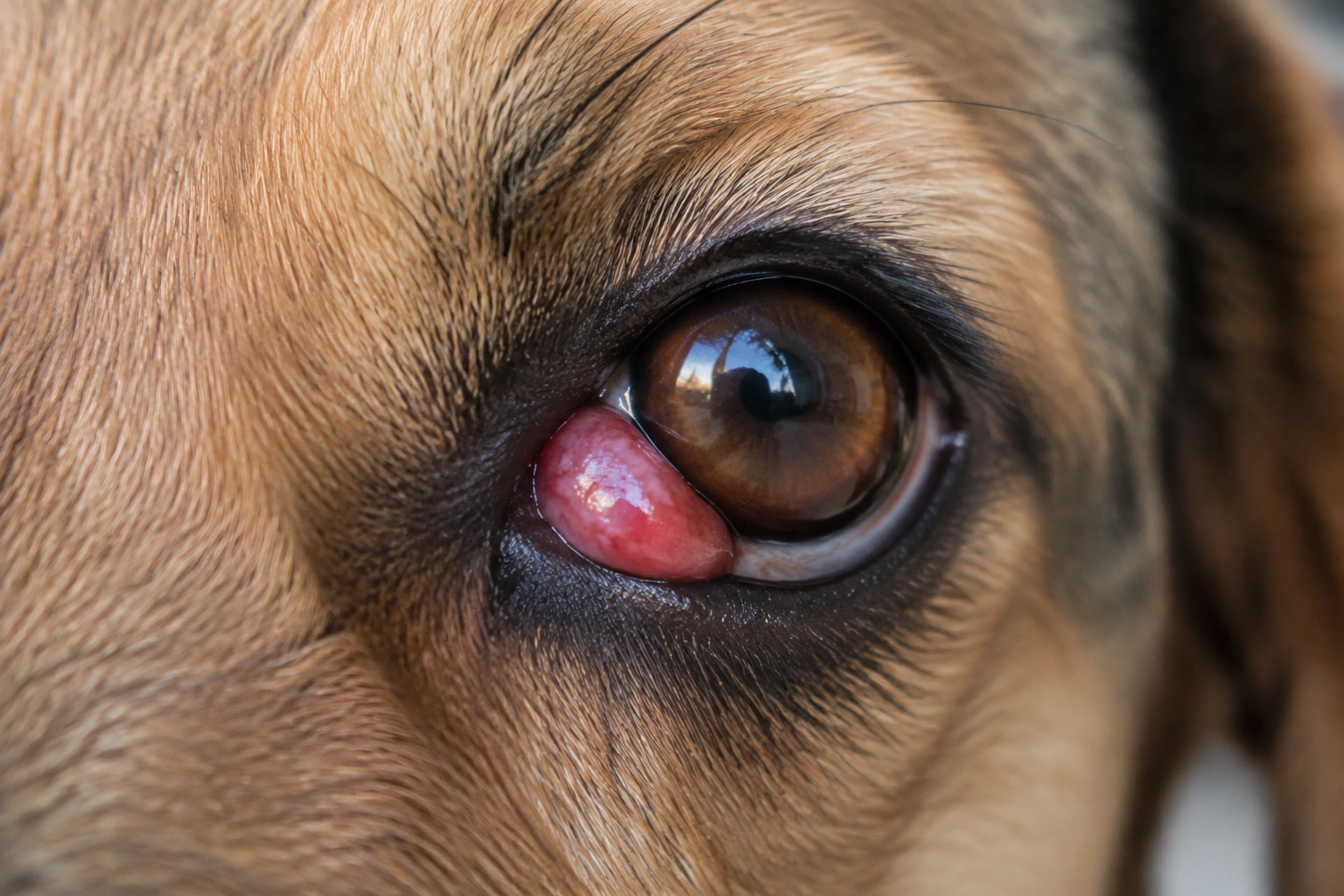
Here’s the practical answer: there are a few non-surgical steps that may help protect the eye and reduce irritation, but they usually do not cure cherry eye. In most cases, it does not go away permanently without veterinary treatment, and non-surgical care is only temporary support. If the gland stays prolapsed or keeps popping out, a veterinarian is the right next step.
For dogs that are active or prone to rubbing their faces, this matters because even a minor eye issue can get worse quickly. The goal is not to “tough it out.” The goal is to protect vision, reduce discomfort, and avoid making the eye more inflamed while you arrange proper care.
What Cherry Eye in Dogs Actually Is
Cherry eye is the common name for prolapse of the third eyelid gland. Dogs have a nictitating membrane, also called the third eyelid, and that membrane contains a gland that helps produce tears. When the tissue holding that gland in place weakens, the gland can pop out and become visible as a red mass in the inner corner of the eye.
That red bulge is usually more than simple irritation, but a veterinarian should confirm the cause. A structural problem like this generally does not resolve on its own just because the surface looks less red for a day or two.
Cherry eye can happen in one eye or both. It may appear suddenly, or it may seem to come and go at first. Some dogs look fairly comfortable; others squint, rub, or produce more discharge because the exposed tissue is irritated.
If you want a fuller breakdown of what it looks like and why it happens, see this overview of cherry eye in dogs.
Can Cherry Eye Be Treated Without Surgery?
The short version: sometimes you can manage the symptoms without surgery for a while, but non-surgical care is usually temporary rather than curative.
That distinction matters. A treatment can be useful without being definitive. For example:
- Lubrication or saline rinses may make the eye more comfortable.
- Veterinarian-prescribed drops may reduce inflammation if the eye surface is irritated.
- A vet may sometimes try to reposition the gland manually in selected cases.
But if the gland keeps prolapsing, those measures usually do not provide a lasting fix. The underlying support tissue is still weak, so the gland can pop out again.
In practical terms, non-surgical care is best viewed as:
1. A bridge to veterinary evaluation
2. A comfort measure while you decide on treatment
3. A short-term option when surgery is delayed or declined
It can help manage irritation, but recurrence remains common when the gland is not surgically corrected.
How to Tell Cherry Eye Apart from Other Red Eye Problems
A red lump in the corner of the eye often does suggest cherry eye, but not every red eye mass is the same problem. That’s why a veterinary exam matters.
Cherry eye usually looks like:
– A smooth, round, red or pink mass
– Located at the inner corner of the eye
– Associated with the third eyelid area
– Sometimes accompanied by mild tearing or squinting
A different eye problem may look similar if you also notice:
– Cloudiness in the eye
– Marked pain
– Yellow or green discharge
– The eye is held shut
– A wound, scratch, or obvious trauma
– Rapid swelling of the eyelids or face
If your dog is rubbing hard, squinting a lot, or the eye looks cloudy, don’t assume it is simple cherry eye. Those signs raise the odds of corneal injury, infection, or another urgent eye issue.
A useful rule: if it looks like a lump and the dog seems otherwise comfortable, cherry eye is possible; if it looks painful, cloudy, or infected, treat it as a veterinary problem first and a cherry-eye question second.
What You Can Safely Do at Home Before the Vet Visit
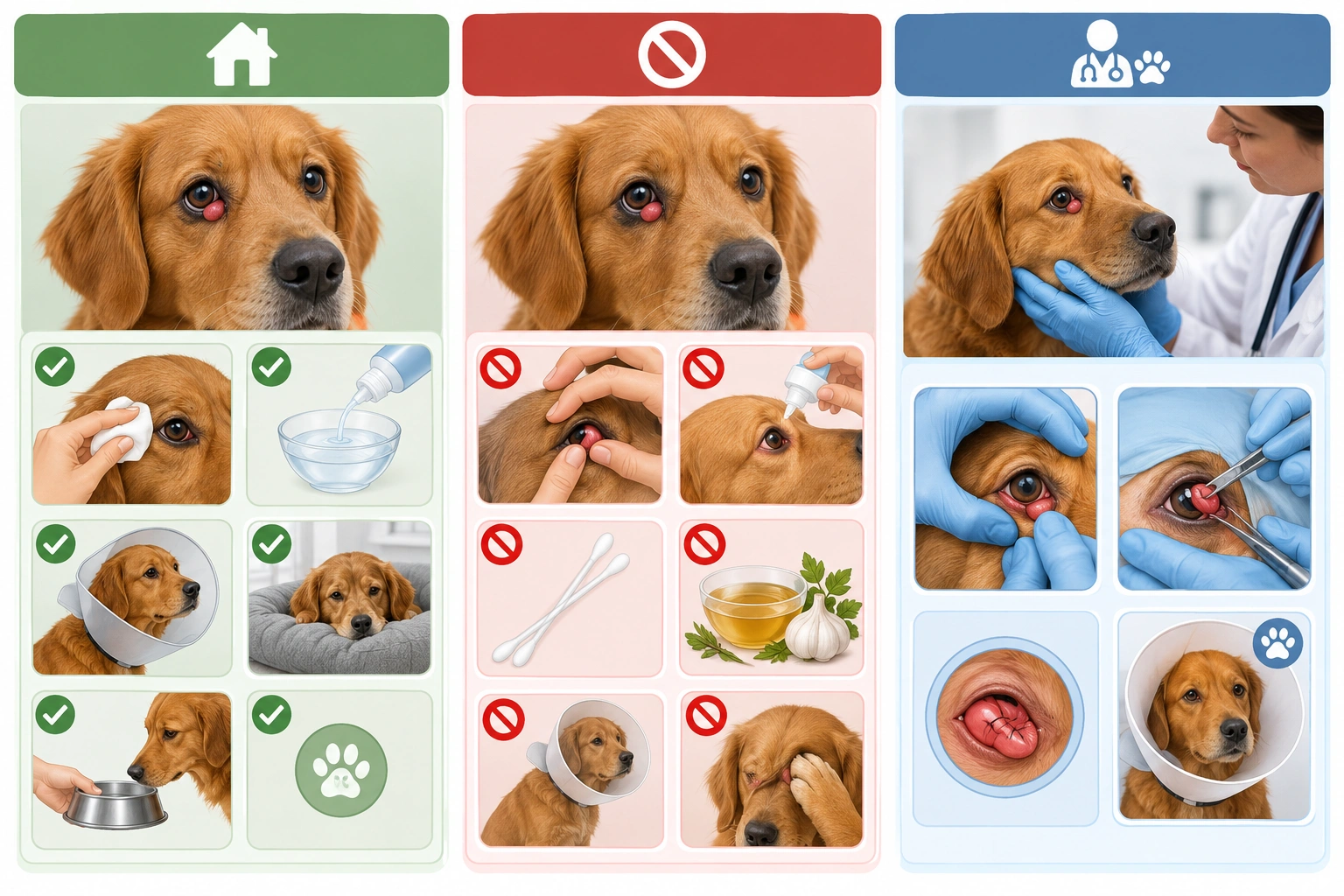
There are a few sensible things you can do while waiting for an appointment. The goal is to keep the eye from getting more irritated.
Safe temporary steps
- Prevent rubbing and pawing. If needed, use an e-collar so your dog cannot scratch the eye.
- Keep the face clean. If there is discharge, gently wipe it away with clean gauze or cotton dampened with sterile saline.
- Book a veterinary exam promptly. Even if the eye does not seem terrible, get it checked soon.
If you already have a veterinarian’s guidance, they may approve a saline rinse or lubrication product to keep the surface more comfortable until the visit.
For practical eye-symptom context, you may also find this guide to dog pink eye symptoms useful, especially if you are trying to tell irritation apart from infection.
What this home care can and cannot do
It can reduce rubbing, keep debris off the eye, and make your dog more comfortable. It is only a short bridge to the vet visit, not a treatment plan, and it should not include any attempt to push the gland back in at home.
What Not to Do: Common Home Remedies That Can Make It Worse
This is where well-meaning owners often get into trouble.
Avoid these mistakes
- Do not force the gland back into place repeatedly.
- Do not press hard on the eye.
- Do not use human eye drops unless a veterinarian specifically says they are safe.
- Do not try unproven remedies or ointments.
- Do not keep “watching it” for many days if the eye is red, swollen, or irritating your dog.
Why the caution? Because the exposed tissue is delicate. Pressing on it can increase inflammation, and using the wrong drops can irritate the eye surface or mask a more serious problem.
A common owner mistake is assuming that if a red mass looks small, it must be harmless. In reality, a small prolapse can still interfere with tear production and make the eye more vulnerable over time.
Do Warm Compresses, Massage, or Eye Drops Help?
These are the most common non-surgical ideas people ask about, so let’s separate comfort from cure.
Warm compresses
A warm compress may soothe a mildly irritated eye if your veterinarian approves it and if you can do it gently. It may help loosen crust or discharge. It does not fix the underlying prolapse.
Use caution: the compress should be warm, not hot, and you should never press firmly on the eye.
Massage
Massage is sometimes mentioned online, but this is not something to treat casually at home. If a veterinarian attempts repositioning, it is done with proper restraint, lubrication, and a clear understanding of the eye’s condition. Owners should not try to reposition the gland themselves, and repeated home massage can aggravate the tissue.
Eye drops
This depends entirely on the product. A veterinarian may prescribe drops if the eye is inflamed or infected. Over-the-counter human eye products are a poor bet unless your vet has reviewed them. Some products are simply not appropriate for dogs, and some can delay the right diagnosis.
The practical takeaway
- Warm compresses: possible comfort measure, not a fix
- Massage: not a DIY treatment
- Eye drops: only with veterinary guidance
When Cherry Eye Needs Prompt Veterinary Care
Cherry eye is not always an emergency, but it should not be brushed off.
Seek veterinary care promptly if:
– The eye is squinting or held shut
– Your dog is pawing at the face
– There is yellow, green, or thick discharge
– The eye looks cloudy
– The redness is worsening
– The swelling seems to be spreading
– Your dog seems unusually uncomfortable
If your dog is painful, the eye looks injured, or you cannot tell whether it is cherry eye versus another eye problem, do not wait. Any sudden change in appearance or obvious pain warrants same-day veterinary advice, even if it does not require an emergency room visit.
What a Veterinarian May Recommend If Surgery Is Delayed or Declined
If surgery is not happening right away, a vet may suggest a conservative plan to keep the eye comfortable and monitor for complications. That may include:
– Lubricating drops or ointment
– Anti-inflammatory medication if appropriate
– Antibiotic drops if infection is suspected
– An attempt to reposition the gland in select cases
– An e-collar to stop rubbing
The key word is supportive. These steps may help the eye feel better while the dog is monitored for worsening tear production or corneal irritation, but they do not make the tissue support problem go away.
If you are delaying surgery for cost, timing, or other reasons, be direct with the veterinarian. Ask what signs mean the plan is no longer working and what the next step should be if the gland keeps prolapsing.
For general veterinary guidance on eye problems and when to seek care, the AKC eye health guidance and VCA Hospitals are useful starting points, but they do not replace an in-person exam.
Why Untreated Cherry Eye Can Become a Bigger Problem
Leaving the gland exposed can create a few long-term problems.
First, the tissue itself can stay irritated. Second, the gland may not contribute to tear production as effectively when it is out of place. Third, the eye surface may become more vulnerable to dryness, discharge, and inflammation.
That does not mean every untreated case immediately causes severe damage. It does mean the risk profile gets worse the longer the gland stays exposed and irritated.
In real life, this is where owners can get stuck: the eye seems “not too bad” one week, then the dog starts rubbing it, and now the problem is bigger and harder to manage.
Non-Surgical Management vs Surgical Repair: The Real Trade-Offs
If you are trying to avoid surgery, it helps to compare the options honestly.
| Option | What it can do | Limitations | Best use |
|---|---|---|---|
| Home supportive care | Reduce rubbing, keep the eye cleaner, improve comfort | Does not correct the prolapse | While waiting for the vet |
| Vet-directed medication | Reduce inflammation or treat infection | Usually does not cure the gland problem | When the eye is irritated or infected |
| Manual repositioning by a vet | May temporarily move the gland back | Often not permanent | Selected cases, short-term relief |
| Surgery | Offers the most reliable long-term correction | Requires anesthesia, cost, and recovery | Recurrent or persistent cherry eye |
The trade-off is simple but not easy: avoiding surgery may reduce immediate cost and stress, but it usually increases the chance of recurrence. Surgery carries anesthesia and recovery concerns, but it is the more definitive option when the gland keeps coming out.
How Often Does Cherry Eye Come Back?
Recurrence is the reason conservative management often disappoints owners. If the gland has already prolapsed once, the underlying support is still weak. That is why a dog may seem better for a while and then have the same red mass appear again.
If your dog’s eye keeps popping back out after temporary improvement, that is a strong sign you need to revisit the treatment plan with your veterinarian. Repeated recurrence usually shifts the discussion away from “Can we manage this at home?” and toward “What is the most reliable long-term fix?”
When Surgery Becomes the Only Practical Long-Term Option
Surgery becomes the practical choice when:
– The gland keeps prolapsing
– The eye stays irritated despite conservative care
– The dog is rubbing or scratching at it
– The condition is affecting comfort or tear function
– You are tired of chasing the problem every few weeks
That does not mean surgery is the only acceptable choice for every dog on day one. It does mean that when cherry eye is persistent or recurrent, non-surgical care is usually a holding pattern, not a solution.
When to See a Veterinarian or Certified Trainer
For cherry eye, a veterinarian is the right professional. A certified trainer does not treat the eye itself, though a trainer can help if your dog is struggling with the e-collar, rest period, or handling around the face.
See a veterinarian promptly if:
– The mass is new
– You are not sure it is cherry eye
– Your dog is painful or squinting
– The eye is discharging or cloudy
– The gland keeps returning after temporary improvement
If you are unsure whether the problem is cherry eye or something else, err on the side of the exam. Eye problems move fast, and the cost of waiting can be a more irritated eye and a harder decision later.
FAQ
Can cherry eye go away on its own?
Sometimes it may seem to improve temporarily, but it usually does not stay corrected on its own. Recurrence is common without veterinary treatment.
Can I push the gland back in myself?
I would not recommend trying to force it at home. Pressing on the eye can worsen irritation or injury, and it can also delay the right diagnosis.
Are human eye drops safe for dogs with cherry eye?
Not unless a veterinarian specifically approves them. Human products may be inappropriate for the problem or the eye surface.
Is cherry eye painful?
It can be uncomfortable, especially if the tissue is irritated or the dog is rubbing the eye. Pain and squinting are signs to get the eye checked sooner.
What if I want to avoid surgery?
Ask your veterinarian about short-term supportive care, the likelihood of recurrence, and what signs mean conservative management is no longer enough. That gives you a realistic plan instead of guessing.
How urgent is cherry eye?
It is usually not a middle-of-the-night emergency if your dog is otherwise comfortable, but it should be seen promptly. If there is pain, discharge, squinting, or cloudiness, treat it as urgent.
Does cherry eye affect Border Collies?
Any dog can develop eye problems, and active dogs may rub or scratch an irritated eye more. The breed does not change the basic rule: a visible third-eyelid gland should be checked by a vet.
The bottom line is straightforward: you may be able to support a dog with cherry eye without surgery for a short time, but home care is usually temporary, not curative. The safest path is to protect the eye, avoid rough handling, and get a veterinarian to confirm the diagnosis and discuss the best long-term option.