
What Cherry Eye in Dogs Looks Like, Why It Happens, and What to Do Next

If you notice a red or pink lump in the corner of your dog’s eye, cherry eye is one of the first conditions a vet will think about. It looks dramatic, but the bigger issue is not the color itself — it’s that a tear-producing gland has slipped out of place.
For Border Collie owners, that matters because this is the kind of problem that can be easy to dismiss at first glance. A dog may still be eating, playing, and acting normal, while the eye looks suddenly swollen and strange. That mismatch is exactly why it pays to know what you’re seeing.
What cherry eye in dogs actually is
Cherry eye is the common name for a prolapse of the third eyelid gland in dogs. Cornell’s veterinary guidance explains that the third eyelid is a thin membrane at the inner corner of the eye, and it contains an important tear-producing gland that is normally not visible. When that gland pops out from its normal position, it can appear as a smooth pink or red mass that resembles a cherry. Cornell University College of Veterinary Medicine

That detail matters because cherry eye is not just a cosmetic issue. The gland helps support tear production and eye health. If it stays out of place for long enough, the eye can become more irritated, and tear production can suffer.
A practical way to think about it: if the red lump is the “headline,” the gland’s job is the real story. The eye may look red on the outside, but the underlying problem is mechanical — a structure has slipped where it should not be.
Cherry eye does not typically resolve on its own, and it should be examined by a veterinarian.
What cherry eye looks like in real life
In the real world, cherry eye usually shows up as a smooth, rounded pink or red bulge in the inner corner of the eye, closest to the nose. It may sit there like a small cherry tucked against the lower lid, or it may look larger and cover part of the eye.
Owners often describe it as:
– a “red bubble” in the corner of the eye
– a pink flap that suddenly appeared
– a swollen lump near the nose side of one eye
The eye may also look irritated, watery, or mildly swollen. Some dogs squint a little or rub at the face. Others seem almost normal apart from the visible lump.
That visible lump is what makes cherry eye easier to spot than many other eye problems, but it also makes it easy to mislabel. People often assume it is simple conjunctivitis, an allergic flare, or a scratch. Those are possible, but they are not the same thing.
Is cherry eye painful or urgent?
Cherry eye is not usually an emergency, but it does need prompt veterinary attention. The reason is simple: the longer the gland stays prolapsed, the more likely the eye becomes irritated and the more it may affect tear production over time, even if your dog seems comfortable.
A dog with cherry eye may show:
– redness
– discharge
– squinting
– pawing or rubbing at the eye
– watery eyes
– mild swelling around the eyelids
If the dog is otherwise bright and comfortable, a regular same-day or next-day vet visit is usually appropriate. If the eye looks painful, the dog is squinting hard, discharge is heavy, the swelling is worsening quickly, or the eye seems cloudy or vision is affected, treat it as urgent.
A simple decision rule helps:
Visible red lump only, dog comfortable = prompt vet visit.
Visible red lump plus pain, squinting, discharge, or vision change = urgent vet visit.
Why cherry eye happens and which dogs are at higher risk
The exact cause is not always known. What is better supported is that some dogs appear predisposed, and a hereditary component is often suspected in affected breeds. Cherry eye is reported more often in younger dogs, and it can affect one eye or both. In some dogs, the second eye may follow later.
Breed risk is not exclusive to one type of dog. Brachycephalic breeds and purebred dogs are often reported as having higher odds in research summaries, but any dog can develop it. Border Collies are not usually among the most commonly cited breeds, yet that does not rule it out.
For a Border Collie owner, the important takeaway is not breed panic; it’s pattern recognition. If your dog is young and develops a new red mass at the inner corner of the eye, cherry eye belongs high on the list even if the breed is not the most famous example.
How veterinarians diagnose cherry eye
Diagnosis is usually straightforward once a veterinarian looks at the eye. The vet checks the shape, location, and appearance of the mass and looks for signs of pain, discharge, injury, or infection.
What matters is not just naming the lump. The vet also needs to rule out problems that can look similar, such as:
– conjunctivitis
– eye injury
– infection
– swelling from trauma
– other masses or eyelid problems
That distinction is important because treatment differs. A red eye from conjunctivitis may need a very different approach than a prolapsed third-eyelid gland. If you want a deeper comparison with one of the most common lookalikes, our guide on whether dogs can get pink eye is worth reading after this article.
Treatment options: temporary management versus surgery
There are two broad approaches: temporary reduction and surgical correction.
Temporary management
Sometimes a veterinarian may be able to gently reposition the gland, at least for the short term. In practice, that usually means the vet manually places the gland back into position during the exam, sometimes along with medication to calm irritation and protect the eye surface.
The trade-off is obvious: it can be quicker and less expensive up front, but it may not solve the underlying issue. In many cases, it is best thought of as a short-term measure while you plan the next step.
Surgical correction
Surgery is often recommended because the goal is to put the gland back where it belongs and keep it there. That gives the dog the best chance of preserving tear production long term.
The key decision here is not “surgery or no surgery” in the abstract. It is:
– lower upfront cost and faster short-term relief, versus
– better long-term stability and lower chance of the problem returning
For many dogs, surgery is the path that makes the most sense if the gland keeps prolapsing or the eye is becoming irritated.
| Option | What it does | Recurrence risk | Long-term effectiveness | Cost tendency |
|---|---|---|---|---|
| Temporary reduction | Pushes the gland back in place for now | Higher | Short-term only | Lower upfront |
| Surgical correction | Repositions the gland more permanently | Lower than temporary management, but not zero | Usually better long term | Higher upfront |
Why gland replacement is usually preferred over removal
This is one of the most important points owners should understand: the gland is not just “extra tissue.” It helps produce tears. That is why simply removing it is generally avoided.
If the gland is removed, the eye can be left with a greater risk of dry eye later. Dry eye is not a minor inconvenience; it can become a chronic management problem and may affect comfort and vision.
That is why most modern treatment plans aim to preserve the gland rather than excise it. The logic is practical, not cosmetic: keep the tear-producing tissue working if at all possible.
Recovery and aftercare after treatment
Recovery depends on the procedure your vet uses, but most dogs need a period of controlled healing. Expect some combination of:
– eye drops or ointment
– pain relief if prescribed
– an e-collar to stop rubbing
– restricted activity for a short period
– follow-up checks
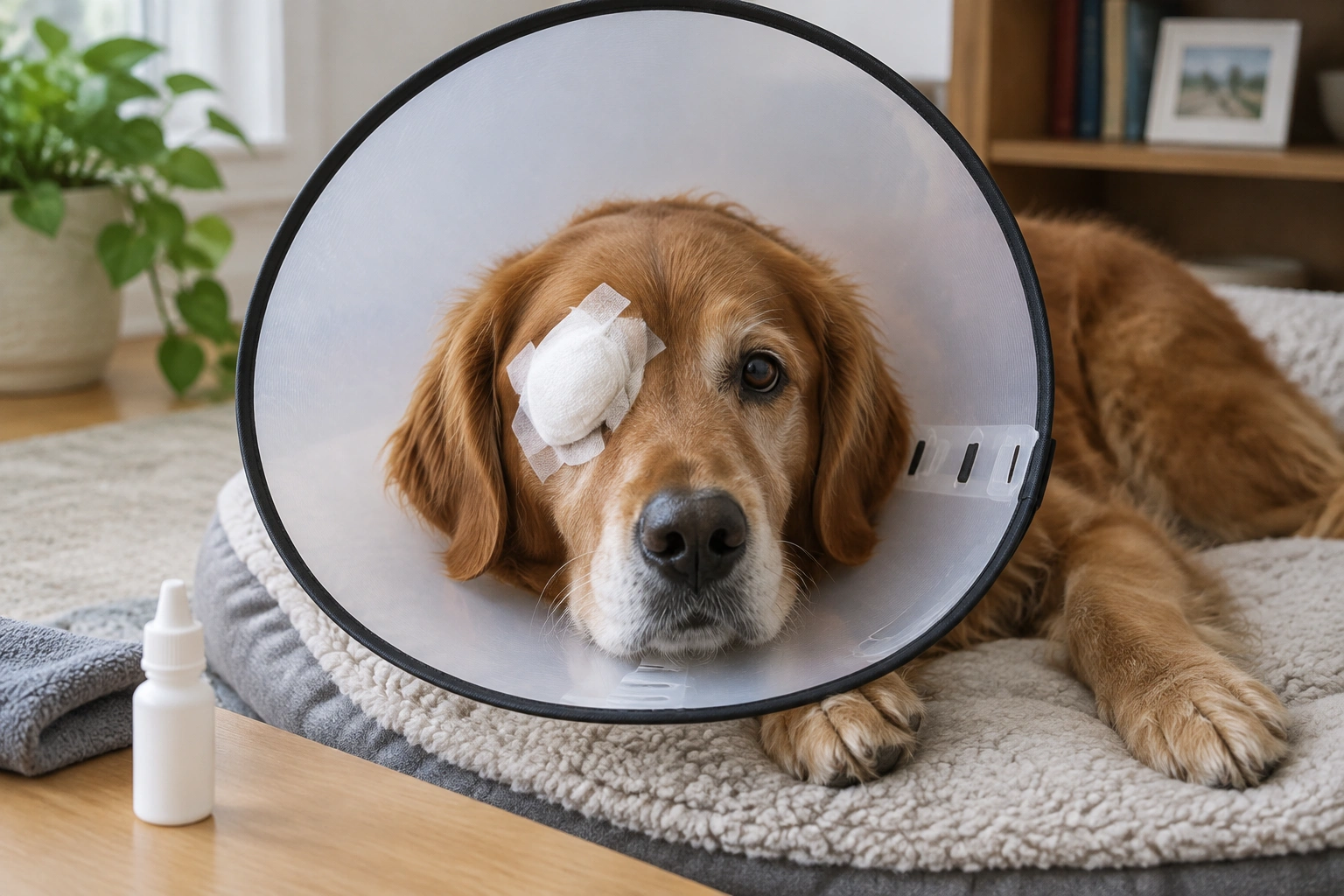
Before the vet visit, the most helpful things owners can do are to stop the dog from rubbing the eye, avoid putting in human eye drops unless a vet tells you to, and keep the dog calm if possible. If your dog tolerates it, a cone or similar barrier can help prevent more irritation on the way to the clinic.
The biggest recovery mistake is assuming the eye looks better, so the job is done. Even if the swelling settles quickly, the tissue still needs time to heal. A dog that rubs the eye, plays rough, or shakes its head repeatedly can undo progress.
A realistic example: a dog may seem fine 48 hours after surgery, but still need the cone because the surface tissues are not fully settled. That is not overcautious — it protects the repair.
Can cherry eye come back?
Yes, it can come back, even after treatment. That is one reason veterinarians usually prefer gland-preserving surgery rather than simple removal or repeated temporary fixes.
The chance of recurrence can vary with:
– the dog’s age
– the surgical technique used
– whether one or both eyes are affected
– how much rubbing or irritation happens during recovery
If the problem returns, a veterinary ophthalmologist may be worth consulting, especially if the first repair did not hold or the eye has other complications.
The practical mindset here is simple: treat the first correction as important, but not magical. Good follow-up matters.
How much cherry eye treatment can cost
Costs vary a lot by location, clinic type, and whether the case is straightforward or complex. A basic exam is usually far less expensive than surgery, while referral care from a specialist costs more than a routine visit.
A cautious ballpark in the U.S. is that the exam and initial medications may be on the lower end of veterinary pricing, while surgical correction is often a more meaningful expense. The exact amount can vary enough that an in-person exam is the best way to get a useful quote.
Ask the clinic what is included: exam, sedation, surgery, medications, and recheck visits. That gives you a real comparison instead of a vague number.
When to seek veterinary care right away
Any red mass in a dog’s eye should be checked promptly. Don’t wait to see if it “goes away on its own” if the lump is still there the next day.
Seek urgent care sooner if you notice:
– strong squinting
– obvious pain
– thick discharge
– the eye looks cloudy
– swelling is rapidly getting worse
– your dog is rubbing the eye hard
– the dog seems to have trouble seeing
If you are unsure, err on the side of the vet visit. Eyes are one area where delay can cost comfort quickly.
What else could it be besides cherry eye?
This is where self-diagnosis can go wrong. A red lump near the eye is not automatically cherry eye.
Other lookalikes include:
– conjunctivitis
– an eye injury
– a swollen eyelid
– infection
– other growths or masses
That is why a vet exam matters even when the lump looks classic. The location and appearance may point strongly toward cherry eye, but the eye still needs a proper check.
If you want a broader overview of red-eye problems that can overlap with cherry eye, our article on dog eye redness and pink eye symptoms can help you sort the common confusion points.
The bottom line for Border Collie owners
Cherry eye is a prolapsed third-eyelid gland, usually seen as a smooth pink or red mass in the inner corner of the eye. It is common enough to be familiar to vets, but it should never be brushed off as “just a weird red bump.”
The best next step is usually a veterinary exam, followed by a discussion of whether temporary management or surgical correction makes the most sense for your dog. If you catch it early and protect the eye from rubbing, you give your dog the best chance of a clean recovery.
For Border Collie owners especially, the useful habit is simple: check the eyes whenever something seems off. A few seconds of observation can save a lot of discomfort later.
FAQ
Can cherry eye go away on its own?
Usually no. It should be checked by a veterinarian, even if your dog seems comfortable.
Is cherry eye an emergency?
Not usually, but it does need prompt veterinary attention. Pain, squinting, cloudy appearance, or heavy discharge make it more urgent.
How much does cherry eye treatment cost?
Pricing varies too much to give one reliable number without an exam. A routine exam is typically less than surgery, and a clinic can give the most accurate estimate after seeing the eye.
