
How to Prevent Border Collie Bathing Accidents

Quick Answer
To prevent Border Collie accidents during bathing, place a secure non-slip mat in the tub, use lukewarm water, keep supplies within reach, and supervise your dog throughout the bath. Wet the coat slowly, avoid spraying the face or ears, and never force a frightened dog to stay in the tub. Dry your Border Collie on a slip-resistant surface before allowing normal activity.
A Border Collie can turn a simple bath into a safety problem within seconds. A sudden jump, slippery paw, or loud showerhead may cause a fall or escape attempt.
The safest approach is to control the environment before washing begins. A secure surface, calm handling, and a clear exit plan help protect both your dog and the person giving the bath.
What Are the Biggest Bathing Accident Risks?
The most common situations to prepare for are slipping, jumping from the tub, sudden movement during handling, and irritation from water or shampoo.
These risks can overlap. For example, a Border Collie that loses its footing may panic, scramble against the bathtub wall, and attempt to escape.
- Slipping: Smooth bathtub surfaces offer limited traction for wet paws.
- Jumping: A frightened dog may try to climb or leap over the tub edge.
- Water exposure: Direct spray into the eyes, nose, or ears can cause discomfort.
- Temperature problems: Water that is too hot or cold can cause distress or injury.
- Handling reactions: A struggling dog may scratch, collide with, or bite the person bathing it.
- Drying accidents: Wet floors, loose towels, and frightening dryer noises can create additional hazards.
A Border Collie’s active nature makes it especially useful to plan for sudden movement. However, individual behavior matters more than breed stereotypes. Some Border Collies remain relaxed, while others need gradual training before they can tolerate bathing.
How to Prepare a Safe Bathing Area

Prepare the bathing area completely before bringing your Border Collie into it. This reduces the need to reach away, leave the room, or manage equipment while your dog is standing on a wet surface.
Secure the Floor and Tub
Place a rubberized, non-slip bath mat flat against the tub or shower floor. Check that it does not bunch up, slide, or lift at the edges.
Add a second slip-resistant mat outside the tub where your dog will stand during drying. Remove loose rugs and other objects that could shift under wet paws.
If the tub is unusually high or your dog has trouble stepping over its edge, consider a suitable walk-in washing area. Do not expect a nervous dog to jump safely into or out of a slippery bathtub.
Keep Your Equipment Within Reach
Prepare dog shampoo, a rinsing cup or gentle sprayer, towels, treats, and a washcloth. Place everything where you can reach it without abandoning your dog.
Clear away razors, bottles, electrical appliances, and cleaning chemicals. Keep electrical equipment unplugged and away from the wet washing area.
Close the bathroom door if appropriate, but keep an easy and safe way to guide your dog out. Avoid clutter that could block your movement during an unexpected escape attempt.
Safety Tip
Test the bath mat with your hand before your dog enters. If it moves easily across the wet surface, reposition or replace it. A towel alone is not a dependable substitute for a secure non-slip mat.
How to Bathe a Border Collie Without Causing Accidents
Use a slow, predictable washing sequence. Your main goal is to keep your dog comfortable and stable while cleaning the coat.
- Check your dog before bathing. Look for sore paws, painful areas, skin irritation, and any signs that handling causes discomfort. Postpone an ordinary bath if your dog seems injured or unwell.
- Brush the dry coat. Remove loose hair, burrs, and easy tangles before adding water. Avoid pulling tightly matted fur.
- Guide your dog into position. Encourage a calm step into the bath when possible. Support your dog appropriately rather than pulling by the collar or legs.
- Check the water temperature. Use comfortably lukewarm water and test it before the spray touches your dog.
- Start with the body. Wet the shoulders, back, and legs using gentle water flow. Avoid sudden spraying around the face.
- Apply dog-specific shampoo. Massage gently rather than scrubbing forcefully. Follow the product instructions.
- Rinse carefully. Work through the double coat, including the chest, belly, and leg feathering. Keep shampoo and direct spray away from the eyes and ear canals.
- Guide your dog out slowly. Place a towel over the coat, help your dog move onto the dry non-slip surface, and begin gentle drying.
For more detail on coat preparation and the full washing sequence, see our Border Collie bathing guide.
Never leave your Border Collie unattended in the bath, even briefly. If you need something from another room, end the washing process safely before retrieving it.
How to Prevent Slipping and Sudden Jumping
Preventing slips involves more than adding a bath mat. Your dog’s posture, the shower setup, and the way you handle unexpected movement also matter.
Keep the water level low and avoid creating unnecessary standing water. Your dog should be able to stand naturally without struggling to maintain balance.
If your Border Collie begins moving toward the edge, pause the water and calmly encourage a stable position. Do not yank the collar, pin the dog down, or struggle physically to prevent escape.
For a dog that repeatedly attempts to leap out, stop the bath and reassess the setup. A lower washing area, another calm adult to assist, or professional grooming support may be safer.
Bath restraints, if used, must be appropriate for bathing and continuously supervised. Never tether a dog in a way that could tighten around the neck or trap it during a fall.
How to Keep a Nervous Border Collie Calm
A nervous dog is more likely to move unpredictably. Reducing fear can therefore improve physical safety as well as the bathing experience.
Watch for stress signals such as repeated lip licking, a tucked tail, freezing, trembling, attempts to escape, or escalating resistance. These signals mean you should slow down or stop.
Practice Before a Real Bath
Start with short sessions in a dry bathroom. Reward your Border Collie for approaching the bathing area, stepping onto the non-slip surface, and standing calmly.
Introduce the sound of running water separately. Let your dog hear a gentle flow from a comfortable distance, then reward calm behavior. Gradually combine these steps only when your dog remains relaxed.
This approach is called cooperative care. The goal is to help a dog participate willingly rather than relying on force. Cornell’s cooperative grooming guidance explains how gradual exposure and positive reinforcement can improve handling experiences.
Know When to End the Session
If your Border Collie panics, snaps, or struggles intensely, stop the water and prioritize getting everyone safely out of the situation.
Do not try to finish the bath at any cost. For recurring severe fear or defensive behavior, ask your veterinarian about a qualified reward-based behavior professional or a low-stress grooming service.
Warning
Do not force a panicking Border Collie into a bathtub or hold it down until washing is finished. Forceful restraint can increase fear and create a risk of injury to both the dog and the handler.
Protect the Eyes, Ears, and Sensitive Skin
Use gentle water flow and keep the sprayer directed away from the face. Clean around the eyes and muzzle with a damp washcloth rather than spraying those areas directly.
Do not direct water into the ear canals or insert cotton swabs deeply into the ears. If your dog has an existing ear condition, follow your veterinarian’s bathing precautions.
Choose shampoo made for dogs. Human shampoos and strongly scented cleaning products may irritate canine skin. Rinse thoroughly so no residue remains trapped beneath the dense outer coat.
The ASPCA dog grooming guide also advises protecting the eyes, nose, and ears from direct water flow and using appropriate pet shampoo.
Pay attention to tender areas under the legs and around the belly. If you notice wounds, marked redness, or painful skin, avoid scrubbing and seek veterinary advice.
Prevent Accidents While Drying Your Border Collie
Bathing safety continues after the water stops. A wet Border Collie may shake vigorously, rush through the bathroom, or slip while trying to escape the towel.
Begin drying while your dog stands on a stable surface. Press absorbent towels gently against the fur instead of rubbing rapidly, which can create tangles.
Check areas where moisture may remain hidden, including the chest, underside, tail base, and thick undercoat. A dense coat can feel dry on the surface while remaining damp closer to the skin.
If your dog accepts a dryer, use a suitable low-temperature setting, maintain a safe distance, and avoid directing airflow into the face or ears. Stop if the sound or sensation causes distress.
For further coat-care details, our guide to bathing double-coated Border Collies explains the importance of complete rinsing and careful drying.
Keep your dog away from slick tile floors until the paws and coat are sufficiently dry. Calm walking is safer than encouraging excited running immediately after a bath.
What Should You Do If an Accident Happens?
Stop bathing immediately and assess the situation before continuing. The next action depends on what happened and how your dog responds.
| Situation | Immediate Action |
|---|---|
| Dog slips but appears uninjured | Stop, stabilize the dog, and check for pain or abnormal movement before deciding whether to continue. |
| Dog jumps or falls from the tub | Keep the dog calm and check for limping, pain, weakness, or head injury. Seek veterinary care if injury is suspected. |
| Shampoo enters an eye | Gently flush with clean lukewarm water or sterile saline. Contact a veterinarian if irritation continues or the product is hazardous. |
| Dog becomes extremely frightened | Stop washing, avoid forcing restraint, and guide the dog to a safe area when possible. |
| Dog shows breathing difficulty or collapses | Seek emergency veterinary care immediately. |
Do not assume a dog is unharmed simply because it stands up after a fall. Watch for limping, reluctance to move, unusual behavior, or signs of pain. Significant falls, suspected fractures, head injuries, or persistent symptoms warrant veterinary assessment.
When Is a Full Bath Not the Safest Choice?
A full bath is not always necessary, particularly when your Border Collie is frightened, recovering from an injury, or only lightly dirty.
For ordinary dust or a small patch of dried mud, brushing or wiping the affected area may be enough. You can also consider a water-only rinse when the dirt does not require shampoo.
Our guide to bathing without shampoo explains when a simpler cleaning method may be appropriate.
However, suspected chemical exposure, toxic residues, wounds, or serious skin problems need situation-specific guidance. Contact a veterinarian or animal poison service instead of assuming a routine bath is sufficient.
If your dog struggles with mobility, pain, or severe fear, professional assistance may be more appropriate than attempting a standard home bath.
A Final Safety Check Before Turning on the Water
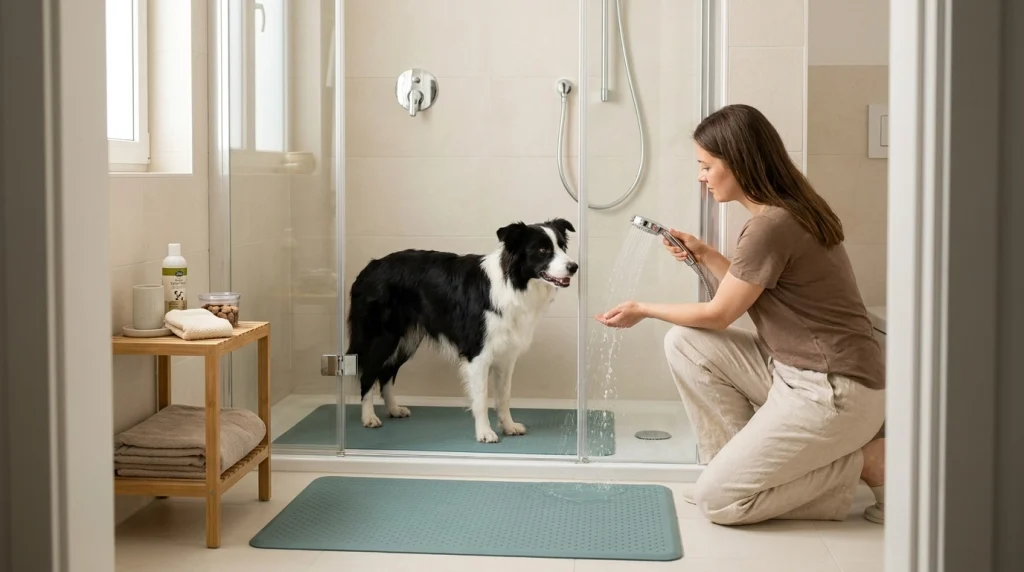
A short preparation check makes it easier to catch preventable hazards before the dog becomes wet.
- The tub mat grips securely and lies flat.
- The surrounding floor is clear and slip-resistant.
- The water is comfortably lukewarm.
- Shampoo, towels, treats, and rinsing tools are within reach.
- The showerhead or rinsing cup can deliver gentle water flow.
- Your Border Collie appears comfortable with handling.
- You have a safe way to stop and exit if your dog becomes distressed.
- The drying area is prepared before the bath begins.
If any important safety condition is missing, correct it before starting. A delayed bath is preferable to an avoidable injury.
Related Product
Non-Slip Dog Bath Mat
A properly fitted non-slip bath mat helps give your Border Collie steadier footing on smooth, wet surfaces. Choose one that grips your specific tub securely.
As an Amazon Associate, we earn from qualifying purchases.
Frequently Asked Questions
Can I bathe my Border Collie in a walk-in shower?
Yes. A walk-in shower can be practical if it offers enough space, a secure non-slip surface, gentle water flow, and a safe way to prevent sudden escape. Avoid using an area where your dog can easily slip or run into obstacles.
Should I hold my Border Collie by the collar during a bath?
Avoid pulling or lifting your dog by the collar. Gentle guidance may be appropriate, but forceful restraint can cause injury or increase panic. If your dog cannot remain safely in position, stop and reconsider the setup.
Can a puppy use the same bathing setup as an adult Border Collie?
Yes, if the setup is adapted to the puppy’s size, balance, and ability to stay calm. Use a secure non-slip surface, gentle water, and close supervision. Introduce bathing gradually rather than forcing a complete wash during the first session.
What if my Border Collie keeps shaking during the bath?
Brief shaking may be an attempt to remove water, but repeated shaking alongside trembling, freezing, or escape attempts can signal discomfort or stress. Pause and check the water temperature, noise level, and your dog’s behavior.
Is it safer to have two people bathe a nervous Border Collie?
Sometimes. A second calm adult can help offer rewards or manage supplies while one person washes. However, two people should not pin down or forcibly restrain a frightened dog. Severe fear calls for a different approach.
Can I use a hair dryer immediately after bathing?
Only if your Border Collie tolerates it and the dryer can be used safely at a suitable low temperature. Begin with towels, keep airflow away from the face and ears, and stop if the dog becomes frightened. Never leave a running dryer unattended near your dog.
Conclusion
Preventing Border Collie bathing accidents starts with making the entire process predictable and physically safe. Secure footing, comfortable water temperature, gentle handling, and close supervision address many of the hazards that can turn a routine bath into an injury risk.
Pay attention to your dog’s behavior as carefully as you watch the water and equipment. A calm Border Collie is easier to guide, while a frightened dog may need shorter practice sessions or professional support. Prepare the drying area in advance, avoid unnecessary restraint, and stop when safety becomes uncertain. A successful bath is one that leaves your dog both clean and comfortable.
