
Stop Border Collie Paws From Slipping in the Bath

Quick Answer
Prevent your Border Collie’s paws from sliding in the bath by placing a secure, textured, non-slip mat on the tub floor, checking that it stays firmly in place when wet, and rinsing away slippery shampoo residue. Use gentle water pressure, keep all four paws on stable footing, and prepare a non-slip exit area. If your dog remains unsteady, stop the bath and investigate the cause rather than forcing them to stand.
Why Do Border Collie Paws Slide in the Bath?
Border Collie paws can slide because a smooth bathtub provides little reliable traction once water, shampoo, and loose hair accumulate on its surface. Even a dog that runs confidently across grass may feel unstable on wet porcelain, acrylic, or another slick bathing surface.
The problem is not necessarily a lack of coordination. Your dog may spread its legs, brace against the tub walls, or repeatedly reposition its feet because it cannot find secure footing. Anxiety can make these movements more abrupt, increasing the likelihood of another slip.
Several factors can contribute:
- Smooth tub flooring: The surface becomes difficult to grip when wet.
- Soap residue: Shampoo or conditioner left beneath the paws can make an otherwise grippy surface slippery.
- An unstable mat: Loose edges, poor suction, or an incompatible backing can allow the mat to shift.
- Excess paw hair or long nails: Hair covering the pads or overgrown nails may interfere with secure contact, depending on the dog’s paw condition.
- Fear or discomfort: Unexpected spray, loud water, or a previous frightening bath can cause scrambling.
Start by correcting the surface and removing residue. If your Border Collie also struggles to stand or walk on ordinary flooring, consider a possible mobility or paw problem instead of assuming the bathtub is the only cause.
Choose a Non-Slip Mat That Stays Put
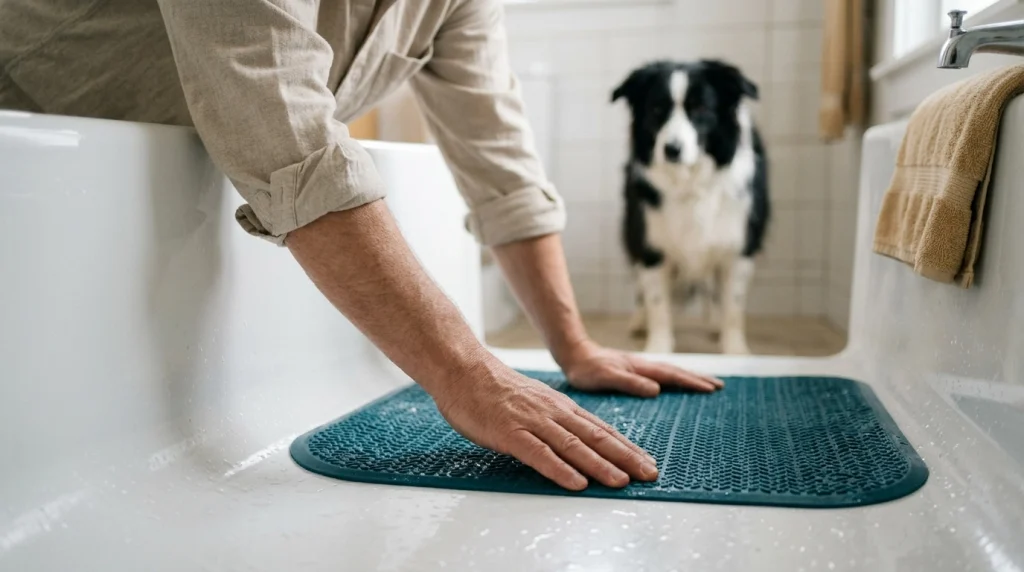
A properly fitted bath mat is usually the most useful first change. It creates a textured standing surface and reduces the dog’s dependence on gripping a smooth tub floor with its paws.
Choose a mat designed for use inside a bathtub or shower. An ordinary bathroom rug may absorb water but can slide around when placed in a tub.
What should you look for in a bath mat?
- Enough coverage: Your Border Collie should be able to stand with all four paws on the mat and make small adjustments without stepping onto exposed slippery areas.
- Wet-surface texture: Choose a top surface designed to provide traction when wet, rather than relying on its feel when dry.
- A secure underside: Suction cups or a grippy backing must work with your particular tub material.
- Flat edges: Corners should not curl, fold, or create obstacles under the dog’s feet.
- Easy cleaning: A washable mat is easier to keep free of soap film, hair, and buildup.
Suction cups are not suitable for every bathtub. Textured or uneven floors can prevent them from forming a reliable seal, so follow the manufacturer’s compatibility instructions.
Test the mat before every bath
- Clean away hair, dirt, and old soap residue from the tub floor.
- Fit the mat according to its instructions and press down its attachment points where applicable.
- Push gently against the mat in several directions, checking the edges as well as the center.
- Wet the mat and test it again. If it slides, lifts, or bunches, reposition it or use a compatible alternative.
- Recheck the surface during the bath if the mat starts moving or soap accumulates.
A mat is only useful when it remains stable underfoot. Never assume a product is safe simply because its packaging describes it as non-slip.
Prepare the Bath So Your Dog Can Stand Securely
Set up the bathing area before bringing your Border Collie into the bathroom. Having everything ready prevents rushed movements and reduces the temptation to leave a wet dog unattended while searching for supplies.
- Clear the surrounding floor. Move loose rugs, bottles, cords, and other objects that could create tripping hazards.
- Prepare a separate exit mat. Place a stable, non-slip surface beside the tub where your dog can safely step out.
- Gather supplies. Keep dog shampoo, a cup or gentle sprayer, towels, and rewards within reach.
- Check the water temperature. Use comfortably lukewarm water rather than water that feels hot or cold.
- Plan entry and exit. Decide how your dog will get into and out of the tub without an uncontrolled jump.
For a larger adult Border Collie, stepping over a high bathtub rim can be difficult. If entry or lifting is unsafe, choose a suitable low-entry shower or seek help from a professional groomer. Never pull the dog by its collar or legs to move it over the edge.
Use a Bathing Technique That Reduces Paw Slipping
Once the surface is secure, adjust the washing routine so your Border Collie does not need to scramble or repeatedly turn on wet flooring. The goal is to move the water and your hands around the dog instead of making the dog constantly reposition its feet.
- Let your dog settle first. Allow a moment to stand on the dry mat before turning on the water. Reward calm behavior if your dog accepts treats comfortably.
- Introduce water gradually. Use a gentle stream and avoid startling your dog with a sudden burst of spray. A cup or controllable handheld sprayer may make rinsing easier.
- Wash in manageable sections. Work around the shoulders, back, sides, legs, and underside without repeatedly asking your dog to spin.
- Keep the standing area clear. Avoid letting thick foam or soapy water accumulate around the paws. Keep the mat positioned securely throughout the wash.
- Rinse away residue. Thoroughly rinse the coat and remove shampoo from the mat and areas where the paws rest.
- Pause if the feet slide. Turn off the water, restore secure footing, and correct the problem before continuing.
- Finish with a controlled exit. Blot the paws and prepare the exit surface before allowing your dog to step out.
Border Collies have dense double coats, so rinsing can take time. Plan the process before starting, but do not keep your dog standing in an unsafe position simply to finish the wash. The broader Border Collie bathing essentials guide covers the additional preparation and coat-care steps that support a safe bath.
Tip
Check the mat and your dog’s footing whenever you notice a change in stance. If the paws start sliding, stop the water and fix the surface instead of trying to hold your dog still.
Check Paw Hair and Nails Without Over-Trimming
Paw condition can affect stability, but trimming is not a substitute for fixing a slippery bathtub. Inspect your Border Collie’s feet separately from bath time, when the dog can stand comfortably on a dry, stable surface.
- Hair between the pads: Excess hair may extend beyond the pads and interfere with contact against some surfaces. If it needs tidying, ask an experienced groomer to show you how to do it safely.
- Overgrown nails: Nails that are too long can affect comfortable paw placement and movement. Keep them maintained through routine nail care appropriate for your dog’s needs.
- Tender or irritated pads: Cuts, redness, swelling, or sensitivity may make your dog reluctant to bear weight normally. Do not scrub or trim an uncomfortable paw to improve grip.
- Sudden changes in balance: New limping, weakness, or difficulty standing may indicate a problem that requires veterinary assessment.
Never attempt close trimming between the pads while your dog is wet, frightened, or struggling to keep its balance. A groomer or veterinarian can help if the hair or nails are difficult to manage safely.
What If Your Border Collie Still Slips on the Mat?
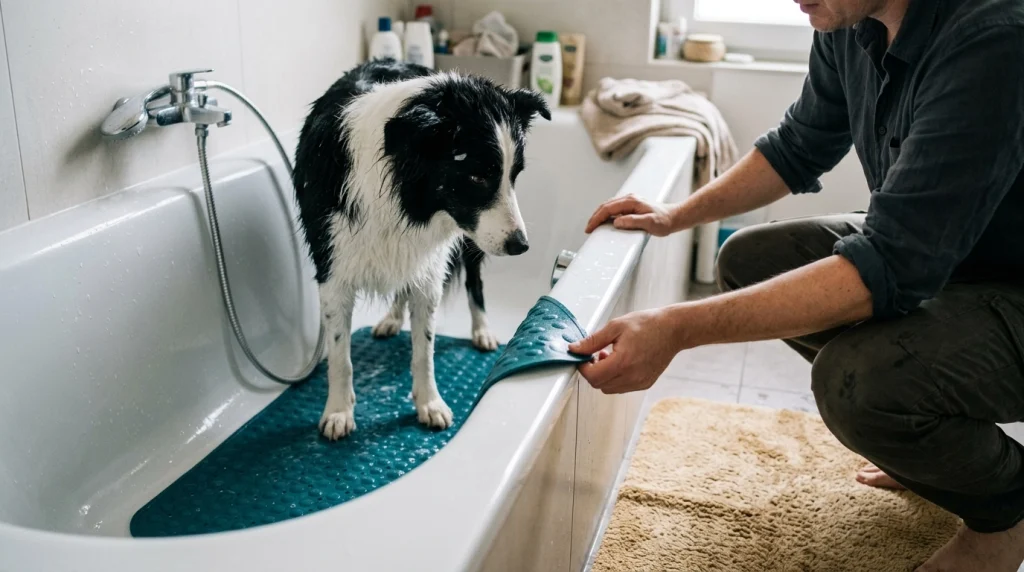
If slipping continues after you install a mat, identify exactly what is moving. Different problems require different fixes, and adding more restraint will not correct an unstable surface.
- The entire mat moves: Clean the tub, check the mat’s compatibility, and test its attachment again.
- The mat stays still but the paws slide: Rinse away shampoo residue and check whether the mat provides sufficient wet traction.
- The dog scrambles when water starts: Reduce the spray pressure, pause, and introduce the sound and sensation of water gradually.
- The dog slips while exiting: Improve the exit surface, dry the paws, and reconsider whether the tub height makes access unsafe.
- The dog seems unsteady on dry floors too: Stop bathing and arrange veterinary advice rather than continuing to experiment with mats.
Some dogs develop a strong fear of the tub after a previous slip. On a separate day, let your dog explore the dry bathing area and mat voluntarily, reward calm behavior, and finish before the dog becomes distressed. Gradually introduce water only when the earlier stage is comfortable.
Do not use a neck tether to catch a falling dog or force a frightened dog to remain in the tub. If handling becomes unsafe, stop and consider a qualified groomer or reward-based behavior professional. The guide to home bathing versus professional grooming can help you decide when another bathing arrangement is more practical.
When Should You Stop the Bath?
Stop immediately if your Border Collie repeatedly falls, cries out, suddenly limps, cannot support its weight normally, or shows marked weakness or difficulty standing. Seek veterinary care promptly for significant or sudden mobility changes, especially when they persist outside the bath.
Also stop if panic makes it impossible to handle your dog safely. Allow it to settle on a secure surface, then reconsider the bathing setup. A low-entry wash area or professional grooming appointment may be safer than another attempt in the same tub.
Veterinary bathing guidance, including PetMD’s guide to bathing a dog safely, recommends non-slip footing and a suitable surface for stepping out after the bath. These measures reduce environmental hazards, but they cannot resolve pain or a medical problem.
Related Product
Non-Slip Dog Bathtub Mat
A washable, textured mat can improve footing when its size and backing are compatible with your tub and it stays securely in place when wet.
As an Amazon Associate, we earn from qualifying purchases.
Frequently Asked Questions
Can I use a regular human bathtub mat for my Border Collie?
Yes, provided the mat is suitable for use inside your tub, offers reliable wet traction, and stays firmly in place. Test it before each bath and make sure it covers the area where all four paws need to stand.
Will a towel prevent my dog’s paws from sliding?
A towel may provide temporary traction if it stays flat, but it can bunch or shift under a moving dog. A properly fitted, compatible non-slip mat is generally a more dependable choice.
Should I trim the hair between my Border Collie’s paw pads?
Only if excess hair needs tidying. Ask a qualified groomer to demonstrate safe trimming if you are unsure, and never attempt close trimming while your dog is wet, distressed, or unsteady.
Can shampoo make a non-slip mat slippery?
Yes. Shampoo residue and soapy water can reduce traction on the mat’s top surface. Rinse away buildup and check the footing before asking your dog to turn or step out.
How can I help my Border Collie stop fearing the bathtub?
Practice when you are not giving a bath. Reward voluntary approaches to the dry bathing area, then introduce standing on the mat and the sound of running water in small steps. Stop before your dog becomes distressed.
What if my Border Collie keeps slipping even on a secure mat?
Stop the bath and check for soap residue, inadequate mat traction, and paw discomfort. If your dog remains unsteady, limps, seems weak, or struggles to stand on dry flooring, seek veterinary advice rather than continuing the bath.
Conclusion
Preventing your Border Collie’s paws from sliding in the bath starts with dependable footing. Choose a textured mat that fits your tub, test its stability when wet, remove shampoo residue, and prepare a secure surface for stepping out.
Keep the bathing routine calm, use gentle water pressure, and inspect your dog’s paws separately if excess hair or long nails may be affecting traction. If slipping continues despite a secure setup, or your dog shows pain, weakness, or difficulty standing, stop the bath and seek appropriate help. A safer bathing arrangement is always preferable to forcing your dog through an unstable or frightening experience.
