
How to Prevent Mold on a Border Collie Bath Mat

Quick Answer
Prevent mold on a Border Collie bath mat by rinsing away hair and shampoo residue after every bath, removing trapped water, and allowing both sides of the mat to dry completely in a well-ventilated area. Lift the mat off the damp floor or bathtub, clean it regularly according to its material and care instructions, and replace it if persistent mold cannot be removed safely.
The most effective way to prevent mold on a Border Collie bath mat is to stop moisture from remaining trapped in the material, underneath the mat, or between the mat and the bathroom floor. A mat can look dry on top while its backing, underside, or surrounding surface remains damp.
Border Collies can leave behind plenty of water and loose hair during bathing. Shampoo residue, shed undercoat, bathroom humidity, and poor airflow can make the mat harder to keep clean if it is left in place between baths.
1. Remove the Mat and Dry Both Sides After Every Bath
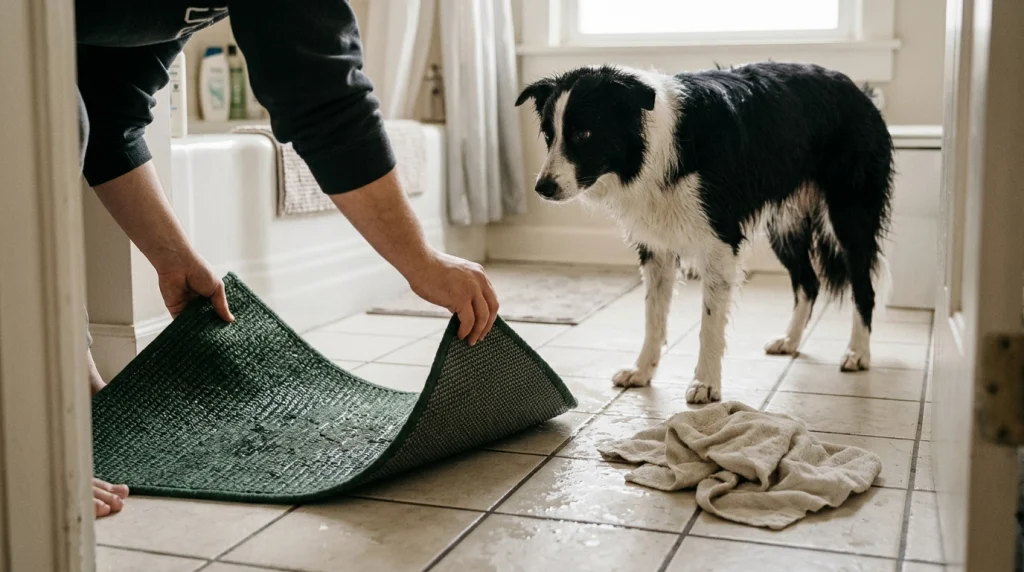
Lift the bath mat as soon as your Border Collie has safely left the bathing area. Do not leave it attached to the bathtub or lying flat on a wet bathroom floor until the next bath.
Water trapped underneath can evaporate slowly, particularly when the backing sits against a smooth surface. Removing the mat exposes both sides to moving air and allows you to dry the surface beneath it.
Follow this routine immediately after bathing:
- Remove loose hair. Pick off visible fur and rinse away remaining strands before they become embedded in the mat.
- Rinse away residue. Use clean water to remove shampoo, soap film, and other bathing residue from both sides when the mat’s care instructions permit.
- Remove excess water. Shake off water where appropriate or press a washable fabric mat gently with a clean towel. Avoid twisting or wringing materials that could deform.
- Hang or stand the mat to dry. Position it so air can reach the underside instead of folding it or leaving it flat.
- Dry the surface underneath. Wipe the bathtub or bathroom floor and check the mat’s contact points for lingering moisture.
Wait until the mat and the surface beneath it are dry before putting the mat back in its usual position. If your dog needs a safe bathing surface again before it has dried, use a separate, clean mat that is suitable for that location.
2. Improve Airflow So the Mat Dries Faster
A mat is less likely to develop mold when moisture can escape rather than remaining trapped in a humid bathroom. Good ventilation helps remove damp air, while hanging the mat increases the amount of material exposed to airflow.
Choose a drying location that is clean, well ventilated, and away from standing water. Depending on the mat’s material, a drying rack, suitable hook, or open laundry area may work better than the edge of a bathtub.
- Use bathroom ventilation. Run an exhaust fan if available, or open a window when outdoor conditions allow.
- Spread out fabric mats. Avoid folding or bunching thick fabric because the inner layers may stay wet after the surface feels dry.
- Allow drainage mats to drain. Position rubber or plastic mats so water can escape through their holes or channels.
- Reduce persistent humidity. If the room routinely stays damp, improve ventilation or use an appropriate dehumidifier.
- Keep storage areas dry. Do not put a damp mat into a closed cupboard, plastic bag, or covered basket.
The U.S. Environmental Protection Agency’s guide to mold, moisture, and the home explains that moisture control is central to preventing mold. Its general guidance recommends drying wet materials within 24–48 hours, but that is not a safe target to wait for with a repeatedly used bath mat. Aim to dry the mat as quickly as practical after each use.
3. Clean the Mat Before Hair and Soap Residue Build Up
Regular cleaning removes material that can make a bath mat unpleasant and difficult to maintain. Loose dog hair, skin debris, shampoo residue, and bathroom grime may collect in textured surfaces, drainage holes, fabric fibers, and suction cups.
Rinsing after every bath helps, but it does not replace periodic washing. Follow the manufacturer’s instructions for the specific mat because fabric, microfiber, rubber, silicone, PVC, and foam may have different cleaning and drying requirements.
For washable fabric or microfiber mats
- Remove loose fur before washing.
- Check the care label for the approved washing temperature and detergent.
- Use the recommended wash cycle and avoid products that could damage the backing.
- Dry the mat completely using the approved method before returning it to the bathroom.
A fabric mat with a non-slip backing may tolerate machine washing but not high dryer temperatures. Excessive heat can damage some backing materials, so do not assume every washable mat is safe for high-heat drying.
For rubber, silicone, or plastic mats
- Rinse the top and underside to remove hair and soap.
- Clean textured areas, drainage openings, and suction cups with a soft brush if the manufacturer permits it.
- Use an approved mild cleaning solution and rinse thoroughly.
- Allow water to drain away and dry the mat completely before storage or reuse.
Avoid mixing cleaning chemicals, and do not apply bleach, disinfectants, essential oils, or fragranced treatments to a dog-contact surface unless the product instructions specifically support that use. Chemical residue can irritate paws or skin, and a stronger cleaner does not compensate for poor drying.
4. Check the Underside for Hidden Moisture
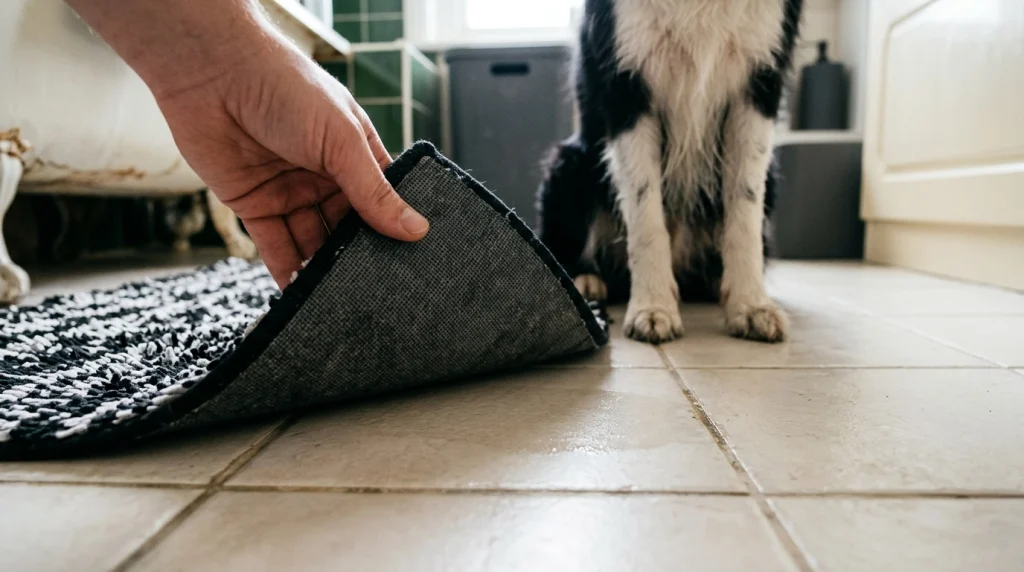
The underside is one of the easiest places to overlook when preventing mold on a Border Collie bath mat. Suction cups, textured backing, thick foam, and rubberized fabric can hold water against the tub or floor.
After removing the mat, inspect both surfaces before putting it away. Look for wet patches, trapped hair, residue, discoloration, or a persistent musty smell.
Use these checks to identify what needs attention:
- Wet patches beneath the mat: Dry the floor and hang the mat rather than leaving it in contact with the surface.
- Water inside drainage holes or suction cups: Rinse the affected areas and allow them to drain fully.
- Damp fabric backing: Give the mat more drying time and improve airflow around the underside.
- Repeated musty odors: Clean the mat according to its care instructions and investigate whether moisture remains trapped in the material.
- Persistent discoloration or visible growth: Treat it as a potential mold problem rather than simply covering it with another mat.
If the bathroom floor remains damp even after the mat is removed, address that moisture source as well. Mold prevention is less effective when a mat is repeatedly placed over a wet floor or stored in a consistently humid space.
5. Choose a Mat That Matches Your Bathing Setup
The best mat for mold prevention is one you can clean, drain, and dry reliably while still providing safe footing for your dog. No material is automatically mold-proof under every condition, and a product advertised as water-resistant can still develop problems if moisture and debris remain trapped.
Different designs require different care routines.
- Fabric or microfiber floor mats: Often absorb splashes well, but thick fibers and backing can retain water. They need thorough drying and periodic washing.
- Rubber or silicone bathing mats: Usually allow surface water to be rinsed away easily, but suction cups, grooves, and the underside still need cleaning and drying.
- Foam mats: May hold moisture inside their structure or at seams. Check whether the material can be cleaned and dried fully after repeated use.
- Drainage-style mats: Openings can help water escape, but hair and residue may accumulate in the channels and require regular removal.
For a mat used inside a bathtub, confirm that it is designed for that purpose and fits the tub securely. For a mat outside the tub, prioritize a washable surface with backing that remains stable on your bathroom floor.
Our guide to whether Border Collies need a bath mat explains the role of secure footing. Mold prevention should never come at the expense of traction: if a mat becomes slippery, curls at the edges, or no longer stays securely in place, stop using it until the problem is resolved.
6. Prevent Excess Water and Hair From Reaching the Mat
Reducing the amount of water that reaches the mat makes drying and cleaning easier. You do not need to keep every drop off the floor; you need to prevent repeated soaking and avoid leaving wet hair and soap residue behind.
- Prepare towels before bathing. Keep clean towels nearby so you can remove excess water from your Border Collie’s coat before the dog steps onto the floor mat.
- Rinse the coat carefully. Direct water toward the drain and avoid unnecessary splashing onto surrounding rugs or towels.
- Remove loose hair promptly. Pick up fur from the tub, mat, and nearby floor before it becomes tangled in the backing or drainage channels.
- Replace a saturated mat. If a fabric mat becomes soaked during the bath, use a clean, dry alternative where needed rather than leaving the wet one underfoot.
- Clean up puddles immediately. Dry the floor before putting the mat back in place.
Border Collies have a double coat, and water may remain around the legs, chest, belly, and feathered areas after bathing. For additional help controlling splashes and wet paw prints, see our guide to keeping the bathroom floor dry after a Border Collie bath.
Practical Tip
Keep two suitable mats available if bathing frequently: one for use and one that is clean and fully dry. Rotate them as needed, but never assume a spare mat is ready just because its surface feels dry.
7. What Should You Do If Mold Already Appears?
If you notice visible mold, unusual spotting, or a persistent musty smell, stop using the mat until you have assessed whether it can be cleaned safely. Do not simply spray fragrance on it, cover the affected area, or put it back under your dog’s wet paws.
The appropriate response depends on the material and the extent of the problem.
- Washable fabric: Follow the manufacturer’s cleaning instructions. If mold has penetrated the fibers or backing, or the odor and growth persist after appropriate cleaning, replace the mat.
- Nonporous rubber or plastic: If the mat is intact and the growth is limited to a cleanable surface, use a manufacturer-approved cleaning method, rinse as directed, and dry completely.
- Damaged or porous foam: Replace the mat if mold has penetrated the material, seams, or layers that cannot be cleaned and dried reliably.
Wear appropriate protection when handling moldy items, avoid brushing dry mold in a way that disperses particles, and keep your dog away during cleaning. Never mix bleach with ammonia, acids, or other cleaners. If the mat cannot be cleaned according to its instructions, discarding it is usually the simpler choice.
The EPA’s mold guidance notes that moldy absorbent materials may need to be replaced when they cannot be cleaned adequately. This is a useful distinction for bath mats: cleaning a washable surface is not the same as removing growth from material that holds moisture internally.
Warning
Do not return a moldy or chemically treated mat to your dog’s bathing area until it has been cleaned as permitted by the manufacturer and dried completely. Replace it if growth, damage, or musty odor persists.
8. Build a Simple Between-Bath Maintenance Routine
You do not need an elaborate cleaning schedule to keep a Border Collie bath mat in good condition. A consistent routine that responds to actual moisture and visible debris is more useful than relying on occasional deep cleaning while leaving the mat damp between uses.
- After every bath: Remove hair, rinse away residue when appropriate, lift the mat, dry the underside, and wipe the floor or tub.
- Before reuse: Check for damp patches, a musty odor, visible growth, loose backing, and damaged edges.
- Regularly: Wash the mat according to its care label and clean grooves, suction cups, or drainage holes where applicable.
- During humid weather: Allow extra drying time and improve airflow if the bathroom stays damp.
- When storing: Keep the fully dry mat in a clean, ventilated location instead of sealing it while damp.
If the mat repeatedly develops mold despite careful cleaning and drying, reconsider its material, thickness, or design. A mat that is difficult to dry completely may not suit your bathroom’s humidity or bathing frequency.
Related Product
Washable, Quick-Drying Dog Bath Mat
A washable mat that is easy to lift, clean, and dry can simplify routine maintenance. Check the backing, drying instructions, and suitability for your intended bathing surface before choosing one.
As an Amazon Associate, we earn from qualifying purchases.
Frequently Asked Questions
How often should I wash my Border Collie’s bath mat?
Rinse away hair and bathing residue after every use, and wash the mat according to its care instructions and how quickly it becomes dirty. Clean it sooner if you notice a musty smell, visible grime, or trapped hair.
Can I leave a rubber dog bath mat in the bathtub?
It is better to remove it after use when practical, rinse it, and let both sides dry. Water trapped between the mat and the tub can encourage mold and residue buildup, even when the upper surface looks clean.
Does a quick-drying bath mat guarantee mold prevention?
No. Quick-drying materials can help, but mold prevention still depends on cleaning, ventilation, drainage, and complete drying. Backing, seams, grooves, and the surface beneath the mat can retain moisture.
Can I use bleach to remove mold from my dog’s bath mat?
Only use a cleaning product if the mat manufacturer permits it and its instructions are followed. Never mix bleach with other cleaners, rinse away permitted cleaning products as directed, and keep your dog away until the mat is safe and completely dry.
Why does my bath mat smell musty even after washing?
Moisture may remain in the backing, foam, fibers, or seams, or the mat may be drying in a humid, poorly ventilated area. Clean it according to its care instructions and dry both sides thoroughly; replace it if the odor persists or mold appears inside the material.
Should I throw away a bath mat with visible mold?
Replace it if mold has penetrated porous material, the mat cannot be cleaned according to its instructions, or growth and odor persist after appropriate cleaning. A sound, nonporous mat with limited surface growth may be cleanable if the manufacturer permits it.
Conclusion
Preventing mold on a Border Collie bath mat comes down to controlling moisture, removing residue, and allowing the entire mat to dry after every bath. Lift it from the tub or floor, rinse away hair and shampoo where appropriate, and make sure the underside and surrounding surface are dry before replacing it.
Clean the mat according to its material and care instructions, and do not ignore persistent musty odors or visible mold. If the material cannot be cleaned and dried reliably, replace it with a suitable alternative. A simple, consistent maintenance routine helps keep the bathing area cleaner while preserving the stable footing your Border Collie needs.