
Keep Your Bathroom Floor Dry After a Border Collie Bath

Quick Answer
Keep your bathroom floor dry after bathing a Border Collie by preparing absorbent towels and secure non-slip mats, controlling splashes, rinsing carefully, and drying your dog before it leaves the bathing area. Wipe up puddles immediately, replace saturated towels, and guide your dog along a dry, stable route to a comfortable drying spot.
The easiest way to prevent a wet bathroom after a Border Collie bath is to manage the water before it spreads. These active dogs can shake vigorously, drip water from their feathered legs, and walk across the room before you have finished drying them.
A simple routine makes cleanup easier: protect the floor, keep towels within reach, rinse without unnecessary splashing, and dry the paws before your dog steps onto bare tile. You do not need to stop every drop of water; you need to keep it contained and remove it before it creates a slippery surface.
1. Prepare the Bathroom Before the Bath Begins
Set up the bathroom before bringing your Border Collie inside. Preparing the room first means you can concentrate on your dog instead of searching for towels while water spreads across the floor.
- Remove clutter. Move laundry baskets, loose bottles, electrical cords, and anything that could obstruct your dog’s exit.
- Place a secure mat beside the tub. Choose an absorbent, washable mat with backing that grips your bathroom floor.
- Keep several towels ready. Reserve one for the paws, one for the body, and another for replacing a saturated floor towel or mat.
- Prepare the drying area. Choose a nearby room or a dry section of the bathroom where your dog can stand comfortably.
- Check the floor. Remove existing puddles, soap film, and cleaning-product residue before bathing.
Test the mat by pressing and gently pushing its edges on the clean, dry floor. If it moves, curls, or bunches, replace it or use a suitable non-slip backing before your dog steps onto it.
2. Use Mats and Towels to Contain Water
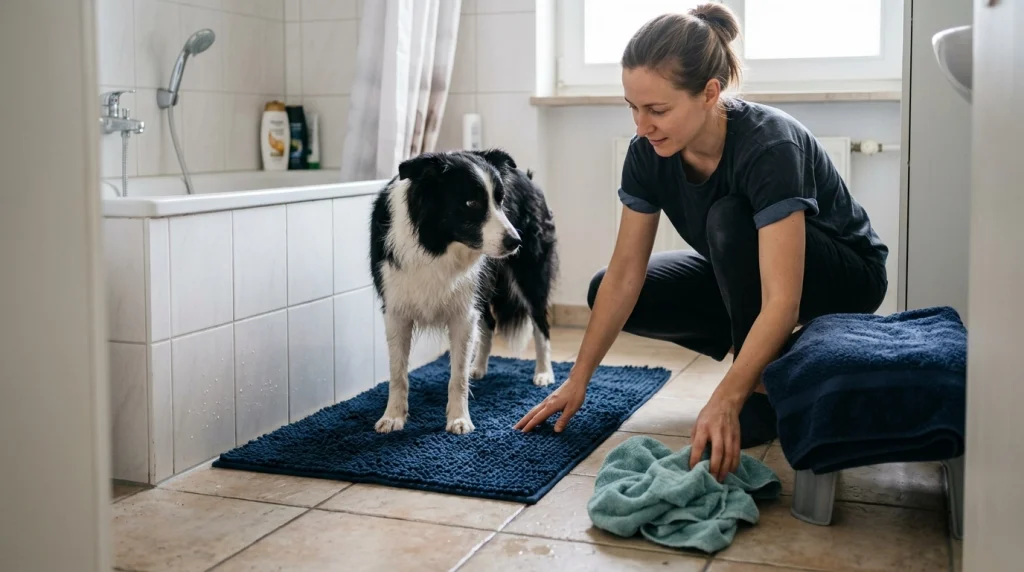
The most useful setup separates two jobs: preventing slips and absorbing moisture. An absorbent towel can soak up water, but it may slide beneath a moving dog. A non-slip mat provides more dependable footing when its backing is compatible with the floor.
Position the mat directly beside the bathtub or shower, where your Border Collie will place its first paws after bathing. If the route to the drying room crosses smooth tile, add secure coverage where necessary rather than leaving a wet gap between the bathing area and the exit.
- Inside the tub: Use a properly fitted bathing mat designed for that surface, if compatible with the tub manufacturer’s guidance.
- Outside the tub: Use an absorbent floor mat with backing that remains stable when damp.
- For extra water: Keep a folded towel nearby to blot splashes around the tub, not as a loose walking surface.
Do not assume that every rubber-backed rug or suction-cup mat will grip every surface. Follow its instructions, inspect it before each bath, and remove it if it shifts when wet. For additional setup guidance, see our guide on preventing slips during a Border Collie bath.
3. Control Splashes While Washing and Rinsing
Keeping the water contained starts with how you bathe your dog. Use comfortably lukewarm water and a gentle flow, directing it onto the coat rather than spraying forcefully toward the walls, doorway, or floor.
- Wet the coat gradually. Begin with a manageable flow and adjust your position so runoff falls into the tub or shower.
- Apply dog-safe shampoo carefully. Work it through the coat without creating unnecessary foam or letting suds spill onto the bathroom floor.
- Rinse thoroughly. Check areas such as the belly, legs, under the tail, and between the toes, where shampoo can remain.
- Pause before the exit. Turn off the water and allow excess water to drain from the coat while your dog remains on a secure surface.
- Wipe splashes promptly. Once your dog is stable and safely supervised, blot water around the bathing area before it spreads.
The Virginia Tech Veterinary Teaching Hospital’s dog-bathing guidance recommends thorough rinsing and pressing towels against the coat rather than rubbing vigorously. This helps remove residue and moisture without unnecessarily irritating the skin.
Never leave your dog standing unattended on a wet surface while you clean the floor. Prepare supplies beforehand and keep the bathing area as contained as possible.
4. Dry Your Border Collie Before It Leaves the Bathroom
A Border Collie’s coat can carry considerable water after a bath, especially around the chest, belly, legs, and tail. The outer coat may appear dry while moisture remains closer to the skin, so drying the visible surface alone may not be enough.
Blot the coat instead of rubbing hard
Use an absorbent towel to press gently against the coat, working through wet areas in manageable sections. Switch to a dry towel when the first becomes saturated. Vigorous rubbing can tangle longer hair and irritate sensitive skin.
Give the paws special attention
Before allowing your dog to walk away, gently blot the underside of each paw and the hair between the toes. Dry the lower legs as well, since water can drip from the feathering onto the floor after the rest of the body has been towel-dried.
Keep a dedicated paw towel separate from the towel used for the wet body. This avoids transferring moisture back onto paws you have already dried.
Use a dryer cautiously if needed
If towel drying leaves the coat damp, a pet-safe dryer may help when your dog tolerates it. Use a cool or low setting, keep the airflow moving, and stop if your dog becomes distressed. Avoid directing hot air at one spot or close to the eyes and ears.
The American Kennel Club’s guide to drying dogs offers additional advice on removing moisture and checking the coat. A thorough drying routine also reduces the amount of water your dog carries onto other floors.
5. Keep the Post-Bath Shake Under Control
Dogs often shake their bodies after getting wet. You cannot always prevent this natural behavior, but you can choose where it happens and reduce the amount of cleanup it creates.
Keep your Border Collie in the bathing area until the water is off and you have a towel ready. If your dog begins shaking, give it enough room to move safely, away from bottles, hard edges, and slippery puddles.
- Keep a large towel within reach before the final rinse.
- If your dog tolerates it, drape a towel gently over its body after the initial shake to catch remaining droplets.
- Do not wrap the towel tightly or restrain a struggling dog.
- Blot the floor around the tub after your dog is stable, then replace wet towels or mats.
A towel can reduce splashes, but it should never interfere with breathing, movement, or your dog’s ability to maintain balance. If your Border Collie repeatedly panics or tries to escape, pause and make future bathing sessions calmer and more gradual.
6. Clean Up Water and Shampoo Residue Immediately
Once your dog is on a secure drying surface, remove the water left around the tub, shower entrance, and doorway. A floor can remain slippery even when the puddle is small, particularly if shampoo or conditioner has mixed with the water.
- Move your dog to a dry, secure place before cleaning the walking route.
- Use a clean towel or suitable floor mop to absorb standing water.
- Follow the floor-cleaner manufacturer’s instructions if soap or grooming products leave a film.
- Rinse or wipe the area as directed, then dry it thoroughly.
- Inspect the floor in good light and check that no slippery residue remains before allowing normal traffic.
Do not use a cleaning product on a floor while your dog is walking over it, and keep your dog away until the surface is safe. Never mix household cleaning chemicals. If you use a reusable mat, clean it according to its care label and lift it after bathing so moisture does not remain trapped underneath.
7. What If the Bathroom Still Gets Wet Every Time?

If puddles keep appearing despite using towels, identify where the water is coming from instead of adding more floor coverings everywhere.
- Water around the tub: Reduce spray pressure and redirect the flow toward the drain.
- A wet trail to the doorway: Dry the paws and lower legs before your dog leaves the bathing area.
- A saturated mat: Replace it with a dry one during the bath and use a second towel for cleanup.
- Water beneath the mat: Lift it after use, dry the floor, and check whether the backing is suitable for the surface.
- Repeated shaking: Prepare a towel and safe standing area before the final rinse, then allow a controlled shake without forcing restraint.
For more help with the footing problem itself, read our guide to stopping a Border Collie from slipping on a wet bathroom floor. If your dog also slips on dry, grippy surfaces, limps, or suddenly struggles to stand, do not assume water is the only cause; arrange a veterinary assessment.
Practical Tip
Keep a small bath-day kit together: two or three absorbent towels, a secure floor mat, a spare dry mat or towel, and your dog’s shampoo. Having everything ready helps you finish drying before water spreads into the hallway.
Related Product
Absorbent Non-Slip Bathroom Floor Mat
A washable mat with secure backing can absorb drips where your Border Collie steps out of the bath. Check that it fits your floor and remains stable when damp.
As an Amazon Associate, we earn from qualifying purchases.
Frequently Asked Questions
How many towels do I need to bathe a Border Collie without soaking the bathroom?
Start with two or three absorbent towels: one for the paws, one for the coat, and a spare for saturated fabric or floor splashes. The number may vary with your dog’s coat length and how wet it becomes.
Should I let my Border Collie shake after a bath?
Yes, if your dog can do so safely in a clear, non-slip area. Prepare for the shake before the final rinse and use a towel afterward to catch remaining droplets.
Can I put an ordinary towel on the bathroom floor?
You can use a towel to absorb water, but a loose towel may slide or bunch beneath wet paws. Use a secure non-slip surface for walking and reserve loose towels for drying when your dog is safely positioned.
Why does my bathroom floor stay slippery after the water is wiped up?
Shampoo, conditioner, or cleaning-product residue may leave a film after visible water disappears. Clean and rinse the floor according to the product instructions, then dry it fully before your dog walks across it.
How do I dry a Border Collie’s thick coat without making another mess?
Blot the coat with absorbent towels and pay attention to the legs, belly, and paws. If needed, use a pet-safe dryer on a cool or low setting while keeping airflow moving and your dog comfortable.
How can I stop water from spreading into the hallway after bathing?
Prepare a secure, absorbent exit zone and a short route to a dry room. Dry the paws and lower legs before your dog leaves, and wipe any water from the route before allowing normal foot traffic.
Conclusion
Keeping the bathroom floor dry after bathing a Border Collie comes down to preparation, controlled rinsing, and a consistent drying routine. Place a secure absorbent mat beside the tub, keep clean towels within reach, and dry the paws and lower legs before your dog walks away. Wipe up puddles and shampoo residue as soon as your dog is safely positioned, and lift reusable mats afterward so the floor underneath can dry.
Most importantly, never trade safe footing for a faster cleanup. A calm bath, a stable exit route, and a thoroughly dried floor help protect both your dog and everyone using the bathroom.