
How to Prevent a Border Collie From Slipping in the Bath

Quick Answer
To prevent a Border Collie from slipping during bath time, cover the tub or shower floor with a secure, textured non-slip mat, check that it cannot slide or bunch, and keep a second non-slip surface ready for stepping out. Use lukewarm water at gentle pressure, encourage your dog to stand calmly, and dry the paws and bathroom floor before walking away. If your dog cannot stand securely, stop the bath rather than holding them in place by force.
A Border Collie may be comfortable running over grass but uneasy on a slick bathtub. The surface feels different under wet paws, and one sudden turn can send the feet sideways. The solution is not simply to hold the dog tighter: it is to make the entire route into, through, and out of the bath safer.
Start With a Bath Surface That Actually Grips
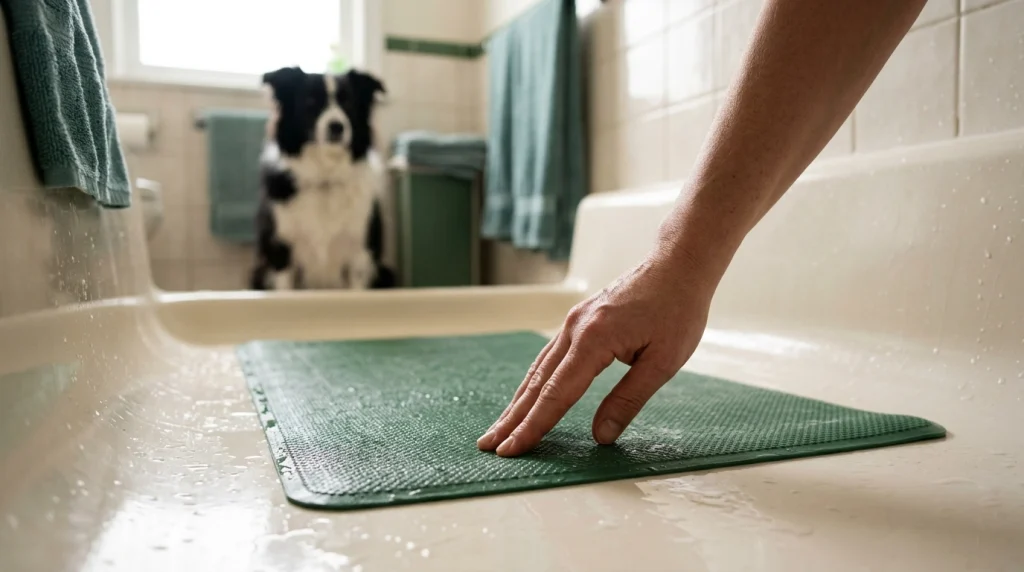
A properly fitted non-slip tub mat is the most useful first change. Choose a mat designed for the inside of a bathtub or shower, rather than an ordinary absorbent bathroom rug. It should provide a textured standing surface and stay in place on the specific floor you have.
Some bath mats use suction cups, while others rely on a grippy underside. Neither design works on every surface. Textured tubs, grout lines, and uneven shower floors may prevent suction cups from attaching securely. Check the manufacturer’s surface-compatibility instructions instead of assuming that more suction cups guarantee better grip.
- Coverage: The mat should cover the area where your Border Collie’s front and back paws normally rest, including room for a small turn.
- Secure edges: Corners should not curl upward or create a trip point.
- Wet traction: The top should feel textured under wet paws, not smooth and slippery when soapy.
- Stable underside: Press down and push the mat from several directions before bringing your dog in. If it skates or folds, reposition or replace it.
- Cleaning: Rinse away soap and hair after use, and inspect the underside for buildup that weakens its grip.
Safety Check
A mat that slips beneath your hand may slip beneath your dog. Test its attachment on the actual wet bathing surface before each bath. Never assume a bathroom floor rug is suitable for use inside a tub.
Set Up the Whole Bathroom Before Your Dog Comes In
Slipping is not limited to the moment shampoo touches the coat. Dogs can scramble while climbing into a tub, lose footing when turning around, or step onto wet tile while leaving. Treat the bath as one continuous route, not a single slippery spot.
- Clear the route. Remove loose bottles, cords, buckets, and rugs that slide easily.
- Secure the in-tub mat. Fit it flat and test all edges.
- Place an exit mat. Put a separate rubber-backed, non-slip surface where the dog will land. Verify it grips your particular floor.
- Keep supplies within reach. Set out dog shampoo, a cup or gentle sprayer, treats, and multiple towels so you do not need to leave the dog unattended.
- Control the water. Check for a comfortable lukewarm temperature and reduce spray pressure before washing.
- Plan the exit. Decide whether your dog can safely step out or needs assistance before their paws are wet.
Help Your Border Collie Enter Without Jumping or Scrambling
Approach the tub calmly and allow your dog to inspect it before asking for any movement. A dog that leaps suddenly onto an unfamiliar wet surface can land awkwardly even when a mat is installed.
If the rim is low and your dog can comfortably step over it, guide them slowly toward the textured footing. If the tub is high, do not encourage a running jump. Consider a stable, purpose-built access step or ramp that is suitable for the dog and the bathroom, or use a low-entry shower instead.
Follow a Low-Stress Washing Sequence
The safest bathing technique minimizes abrupt turning, unnecessary repositioning, and panic. A Border Collie may become restless when water hits unexpectedly, even on a grippy surface.
- Begin with a dry, calm stance. Let your dog stand on the mat before turning on the water. Reward a relaxed pause.
- Wet the body gradually. Start away from the face and use a gentle flow. Avoid startling the dog with a loud, forceful spray.
- Keep paws planted when possible. Move your hand or sprayer around the dog instead of repeatedly asking the dog to spin.
- Apply dog-safe shampoo sparingly. Massage it through the coat while avoiding unnecessary puddles of slippery foam near the feet.
- Rinse thoroughly. Remove shampoo from the coat and tub surface, including the area around the paws.
- Pause if footing fails. If paws begin sliding or your dog struggles, turn off the water and restore a secure stance before continuing.
Because Border Collies have double coats, a complete rinse can take more attention than it first appears. The site’s step-by-step bathing guide covers coat washing and drying in more depth. For slip prevention, the key is to keep the dog steady while moving the water around the coat.
The PetMD home-bathing guide, reviewed by a veterinarian, also recommends non-slip footing, comfortable water temperature, and gentler rinsing for dogs that find the process stressful.
What if Your Border Collie Keeps Trying to Escape?
If your dog repeatedly scrambles, the problem may be fear, unfamiliar footing, water pressure, noise, or a combination. Holding the collar tightly or continuing a full shampoo bath despite distress can make the situation less safe.
Try separating bath training from actual washing. On a non-bath day, invite your dog into a dry bathing area with the non-slip mat already fitted. Reward a brief, voluntary stand; then let the dog leave. Build up to a few seconds of calm standing, the sound of running water, and finally small amounts of water, only as the dog remains comfortable.
Do not force the next stage if the previous one causes frantic movement. Short, successful practice sessions are more useful than one lengthy struggle. You can also ask a second adult to offer calm rewards while you manage water and towels, provided the extra person does not crowd or restrain the dog.
Prevent Slips When Leaving the Bath
The exit can be more dangerous than the wash because wet paws meet a new surface. Before opening the shower door or encouraging a step out, make sure the exit mat is dry enough to grip and that the dog has space to stand.
Blot the paws and lower legs while your Border Collie is still in a secure position. Then guide one controlled step at a time onto the non-slip floor mat. Avoid encouraging a jump or letting your dog charge across wet tile. If assistance is needed, use the preplanned safe lifting or access method.
Dry water tracked onto tile immediately. Keep your dog on a stable surface while towel-drying the coat; thick feathering can drip for some time after washing. The American Kennel Club’s grooming advice specifically highlights non-slip bath surfaces and drying paws to reduce slip hazards.
Fix the Cause if Your Dog Still Slides
If slipping continues despite a mat, identify where it starts. The timing tells you what to adjust instead of replacing equipment at random.
| What you notice | What to check next |
|---|---|
| Mat slides beneath paws | Surface compatibility, soap residue, suction or backing, curled edges |
| Feet spread during rinsing | Soapy top surface, limited standing room, sudden spray or turning |
| Dog scrambles as water starts | Fear of noise, pressure, temperature, or unfamiliar bathing routine |
| Slip occurs while stepping out | Tub height, unsafe jump, wet paws, unsecured exit mat |
| Unsteady even on dry floors | Possible pain, weakness, balance difficulty, or other health concern needing veterinary evaluation |
Notice especially whether instability occurs only on slick surfaces or in ordinary walking too. A dog that is unexpectedly weak, limping, collapsing, or having difficulty standing needs veterinary attention rather than another attempt at bath training.
Common Bath-Safety Mistakes to Avoid
- Using a loose floor rug inside the bath. Absorbency does not equal secure wet traction.
- Assuming suction cups will work everywhere. They may not seal to textured surfaces.
- Washing while the dog is visibly panicking. Struggling increases the chance of uncontrolled movement.
- Turning the dog repeatedly for each body area. Reposition yourself instead whenever possible.
- Pulling on the collar to stop a slip. This can create another injury risk and does not repair unstable footing.
- Leaving soap beneath the paws. Shampoo runoff can make a previously grippy surface slick.
- Ignoring the exit. Even a safe tub does not prevent a fall on wet tiles outside it.
Practical Tip
Before each bath, do a three-point check: the mat stays fixed when pushed, your dog has room for all four paws, and the exit surface is ready. Repeat after cleaning or replacing a mat because its grip can change.
When Is a Different Bathing Setup Better?
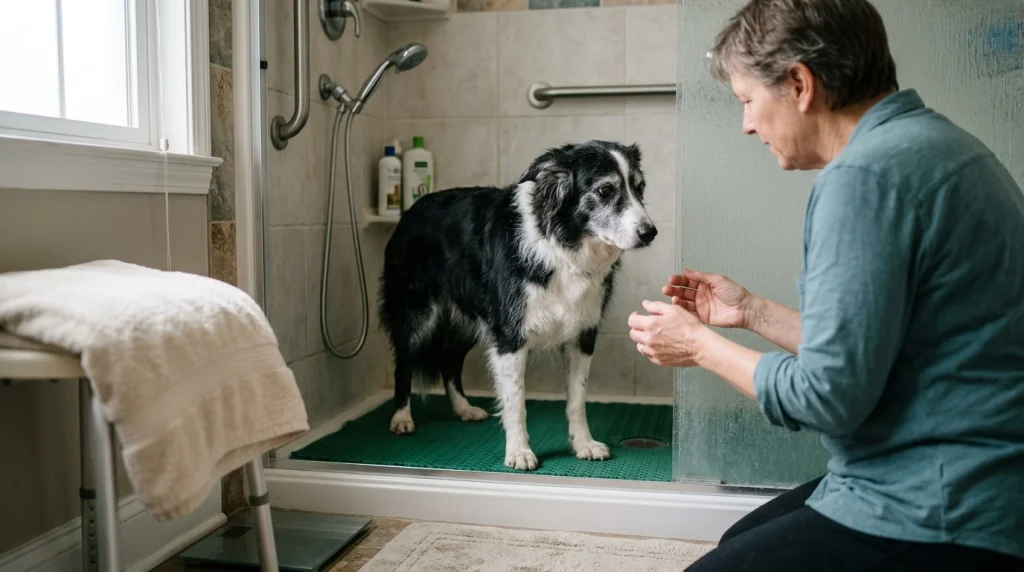
A different setup is sensible when the bathtub is too high, the available floor cannot support a secure mat, or the dog cannot step in and out without a struggle. A low-entry shower or properly equipped professional grooming facility may offer safer access.
If your Border Collie has mobility limitations, arthritis, an injury, or persistent distress, consult your veterinarian or a qualified groomer about a practical bathing arrangement. For heavily soiled dogs that cannot tolerate a safe home wash, professional help is preferable to forcing an unsafe bath.
For deciding between the two options, the site’s home versus professional grooming guide gives additional context. The important decision is whether you can reliably control footing, handling, and safe entry and exit at home.
Related Product
Non-Slip Bathtub Mat for Dogs
A textured in-tub mat can give your Border Collie more stable footing. Check that the mat is compatible with your tub surface and stays secure when wet.
As an Amazon Associate, we earn from qualifying purchases.
Frequently Asked Questions
Can I use a regular bath towel instead of a non-slip mat?
A towel may provide temporary traction if it lies flat and does not move, but it can bunch or shift under an active dog. A compatible, secured in-tub mat is preferable.
Are suction-cup bath mats safe on textured tubs?
Not necessarily. Suction cups often need a smooth, compatible surface. Check the mat’s instructions and test its hold before allowing your dog to stand on it.
Should I trim my Border Collie’s paw fur to improve grip?
Excess hair between paw pads can sometimes interfere with traction. Ask a qualified groomer to assess and tidy it if needed; do not cut close to the pads or attempt trimming while your dog is struggling.
Is a handheld shower better than a fixed showerhead?
It can be easier to control the direction and force of water with a handheld sprayer. What matters is a gentle flow that does not make your dog startle or change position suddenly.
What should I do if my Border Collie falls in the bath?
Turn off the water and help your dog reach secure footing without sudden pulling. Look for pain, limping, weakness, or difficulty standing. Seek veterinary care promptly if any concerning signs appear, and do not restart the bath until the hazard is fixed.
Can an older Border Collie still be bathed safely at home?
Sometimes, provided the dog can stand comfortably, the surface offers reliable traction, and entry and exit are manageable. A dog with weakness or painful joints may need an adapted setup or professional assistance.
Final Takeaway
Preventing bath-time slips starts with dependable traction, but it also requires a calm washing routine and a safe way out. Secure the mat, use gentle water, reduce sudden turns, and dry paws before your Border Collie steps onto the bathroom floor. If stable footing is not possible, choose a safer bathing arrangement instead of risking a fall.
