
Prevent Slippery Floors When Bathing a Border Collie

Quick Answer
Prevent slippery floors when bathing a Border Collie by placing a secure, textured non-slip mat inside the tub or shower, adding a separate non-slip surface outside the bathing area, and wiping up water and shampoo immediately. Prepare towels and supplies beforehand, help your dog enter and exit calmly, and dry its paws before it walks away. If your dog keeps slipping on dry surfaces or suddenly struggles to stand, stop bathing and investigate the cause.
A Border Collie can move confidently across grass and uneven ground but become hesitant when standing on a wet bathtub or tiled bathroom floor. Water, shampoo residue, loose fur, and sudden movements can make bath time less secure for both the dog and the person washing it.
The solution is to make the entire bathing route safer, not just the bottom of the tub. Reliable footing, controlled water, a clear exit path, and calm handling work together to reduce slipping.
1. Prepare the Bathroom Before Turning on the Water
Start by removing anything that could make your Border Collie lose traction or force you to reach away while holding the dog steady. Preparing the room first also reduces interruptions once bathing begins.
- Clean the bathing surface. Remove soap film, conditioner, loose hair, and cleaning-product residue from the tub or shower floor.
- Secure a non-slip mat. Choose a mat that fits the standing area and remains firmly in place when wet.
- Protect the exit route. Place a non-slip-backed bath mat or washable traction runner where your dog will step after bathing.
- Clear the floor. Move bottles, laundry baskets, cords, and other obstacles away from the walking path.
- Gather everything you need. Keep dog shampoo, a rinsing cup, towels, and treats within reach.
- Check the water. Use comfortably lukewarm water and gentle pressure rather than a forceful spray that may startle your dog.
Before bringing your dog into the bathing area, press down on the mat and test whether its edges lift or slide. A mat that moves under your hand is not ready for a moving dog.
For a broader preparation routine, see this guide on making bath time safer for a Border Collie.
2. Choose a Mat That Provides Reliable Grip
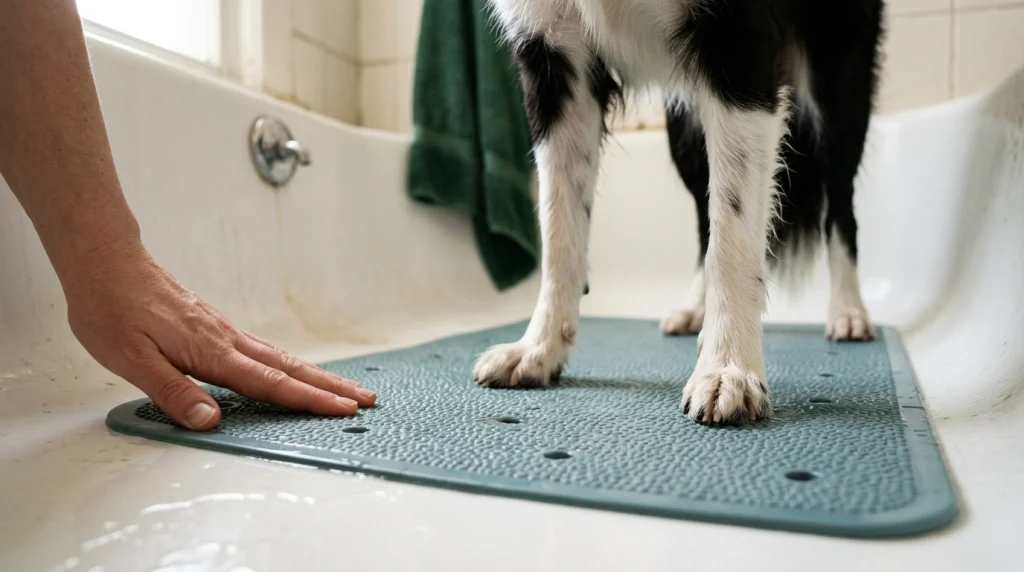
A suitable non-slip mat gives your Border Collie a more stable surface to stand on while you wet, shampoo, and rinse its coat. The important features are secure attachment, a textured upper surface, appropriate coverage, and drainage.
What should you look for?
- Secure backing: Suction cups can work on smooth, compatible bathtub surfaces when properly attached. On textured shower floors, a mat designed for that surface may be more reliable.
- Textured top: A grippy surface helps paws maintain contact instead of sliding across smooth material.
- Suitable size: Your dog should be able to stand naturally with all four paws supported during washing.
- Water drainage: Openings or channels help prevent water and suds from collecting around the paws.
- Easy cleaning: Choose a mat you can rinse, dry, and inspect regularly.
Do not assume that a mat is safe simply because it has suction cups. Soap, trapped hair, worn suction cups, and an incompatible floor can all undermine its grip. Test the mat before every bath, and replace it if the surface becomes smooth or the backing stops holding securely.
A loose towel may provide temporary traction, but it can fold, bunch up, or move as a dog shifts its weight. If you use one as a temporary measure, keep it flat and monitor its position closely; a properly secured bathing mat is generally a more dependable arrangement.
3. Keep the Floor Outside the Tub Dry
A secure bathtub does not prevent slipping if your Border Collie steps onto wet tile immediately afterward. The transition from the bathing surface to the bathroom floor is a separate risk that needs its own solution.
Place a washable, non-slip-backed mat beside the tub before bathing. Make sure it covers the area where your dog will actually place its paws, rather than sitting several steps away.
During the bath, wipe up splashes around the tub when it is safe to do so. Pay particular attention to areas where shampoo or conditioner may have dripped. These residues can make a floor slippery even after the visible puddles have disappeared.
Keep a dry towel ready at the exit. After rinsing, guide your dog onto the secured mat, blot excess water from its paws and lower legs, and allow it to walk away only when the route is clear and reasonably dry.
Tip
Create a simple dry exit zone: a firmly backed mat, an absorbent towel within reach, and a clear route to a dry room. This helps prevent the familiar post-bath scramble across slippery tile.
4. Help Your Border Collie Enter, Stand, and Exit Safely
Do not rush your dog into a tub or encourage it to jump over a high edge onto a wet surface. A sudden landing can cause the paws to slide before the dog has a chance to establish its footing.
- Introduce the bathing area while it is dry. Let your dog approach and investigate the space without running water or immediate washing.
- Reward calm behavior. Use small treats and praise when your dog stands on the prepared mat or calmly approaches the bathing area.
- Assist with entry when necessary. Use a stable, appropriate step or a low-entry bathing area if available. Do not improvise with an unstable stool or slippery platform.
- Keep a natural standing position. Allow enough room for your dog to place its feet comfortably rather than forcing it into an awkward stance.
- Use gentle handling. Avoid pulling the legs apart, yanking a collar, or trying to hold the dog upright by force.
- Guide the exit slowly. Keep the destination clear and use the same secure mat-and-towel arrangement after every bath.
If your Border Collie becomes frightened, freezes, struggles, or repeatedly attempts to escape, pause the bath if you can do so safely. Continuing while the dog is panicking can increase the chance of a fall.
For a complete washing sequence, including brushing, rinsing, and drying the double coat, read how to give a Border Collie a bath.
5. Control Water and Shampoo So the Surface Stays Grippy
Excess water is not the only problem. Shampoo, conditioner, and loose hair can form a slippery film that remains after the obvious puddles are gone. Keeping the bathing area clean throughout the process helps preserve traction.
- Use gentle water pressure. A cup or low-pressure sprayer can help you rinse without startling your dog.
- Work in manageable sections. Wet and rinse the coat methodically instead of flooding the bathing area all at once.
- Rinse thoroughly. Work through the dense coat until shampoo is removed, including around the chest, belly, legs, and tail.
- Remove loose fur. Hair collecting around the drain or mat should be cleared when you can do so safely.
- Clean up spills promptly. If a bottle tips over, stop and remove the residue before continuing.
The American Kennel Club’s at-home dog grooming guidance recommends using a towel or non-slip mat in the bathing area and drying the paws afterward. These simple precautions address both footing during washing and traction after the bath.
Avoid adding oils, household cleaners, or other substances to the mat to improve grip. They can leave residue or create additional hazards. Use the mat according to its instructions and rinse it thoroughly after bathing.
6. Check Your Dog’s Paws, Nails, and Coat
Good floor preparation matters most, but your dog’s condition can also affect stability. Long nails, excess hair around the paw pads, sore feet, or reduced mobility may make secure footing harder to maintain.
- Nails: Check whether the nails are excessively long and arrange careful trimming if needed. Avoid cutting into the sensitive quick.
- Paw-pad hair: Hair extending over the pads may reduce contact between the pads and the floor. If trimming is appropriate, use care around the skin and toes.
- Paw condition: Look for cuts, irritation, swelling, or tenderness that could make standing uncomfortable.
- Mobility: Notice whether your dog has trouble rising, climbing steps, turning, or standing on dry surfaces.
Do not try to solve a mobility problem by simply adding more mats or holding the dog more tightly. If slipping is new, happens repeatedly, or occurs on dry floors as well as wet ones, stop the bath and arrange a veterinary assessment. Pain, weakness, or another health problem may need attention.
7. What Should You Do If Your Dog Keeps Slipping?
If your Border Collie loses its footing despite your preparations, stop adding water and shampoo. Make the situation safe before deciding whether to continue.
- Pause the wash. Turn off the water and avoid pulling the dog across the tub.
- Check the surface. Look for a shifted mat, trapped fur, soap film, or pooled water.
- Restore traction. Reposition or replace the mat only when you can do so without putting the dog at risk.
- Assess your dog’s comfort. If the dog is frightened or cannot stand securely, end the bath if possible and move to a safer setup.
- Watch for injury. After a fall, seek veterinary advice if your dog is limping, reluctant to bear weight, unusually distressed, or showing signs of pain. Serious injury or inability to stand warrants urgent veterinary attention.
Repeated slipping on a dry, nonslippery surface is different from losing traction on wet tile. The former deserves particular attention because changing the bath mat alone may not resolve the underlying problem.
8. Keep the Setup Safe Between Baths
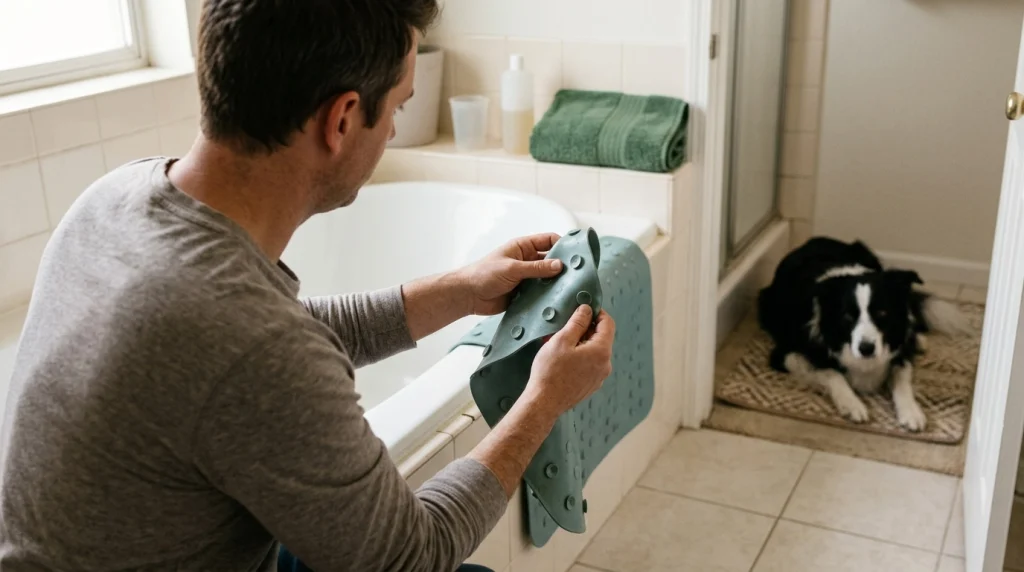
A mat that works well today may become less reliable as soap residue builds up or its backing wears down. Clean and dry the equipment after every use instead of waiting until the next bath.
- Rinse the mat to remove shampoo, conditioner, and hair.
- Hang it or lay it out to dry according to the manufacturer’s instructions.
- Check suction cups, backing, seams, and edges for wear or lifting.
- Wash the surrounding floor and remove any slippery cleaning residue.
- Store towels and supplies where they can be reached without stepping across a wet area.
Make a quick inspection part of the routine before every bath. A clean mat, a dry exit route, and supplies within reach are more useful than discovering a problem after your dog is already wet.
Related Product
Non-Slip Dog Bath Mat
A properly sized, textured bath mat can provide more secure footing inside a tub or shower. Check surface compatibility and stability before each use.
As an Amazon Associate, we earn from qualifying purchases.
Frequently Asked Questions
Can I use a regular bathroom mat to bathe my Border Collie?
Only if the mat is designed to stay secure on the surface when wet and provides suitable traction. A loose fabric rug can bunch up or slide, so use a mat that is compatible with the tub or shower and test its stability first.
Should I put a mat both inside and outside the bathtub?
Yes, when your setup allows it. An appropriately secured mat inside the tub supports standing during washing, while a separate non-slip surface outside helps your dog transition onto the bathroom floor safely.
Is a towel enough to stop a dog from slipping in the bath?
A flat towel may offer temporary traction, but it can shift, fold, and hold soapy water. A secure, purpose-designed non-slip mat is generally a more dependable choice, although it still needs regular cleaning and inspection.
Why does my Border Collie panic when its paws slide?
Unstable footing can make a dog feel insecure, and noise, water pressure, or a previous frightening bath may add to the stress. Pause when your dog becomes distressed and gradually reintroduce the bathing area with secure footing and positive rewards.
Can long nails make my dog slip on bathroom floors?
They can contribute to poor footing, particularly on smooth surfaces. Check nail length and seek appropriate trimming advice, but remember that nail care does not replace a secure mat or a dry walking route.
When should I call a veterinarian about slipping?
Arrange a veterinary assessment if slipping is new or persistent, happens on dry surfaces, or comes with limping, pain, weakness, or difficulty rising. Seek urgent care if your dog cannot stand or appears seriously injured after a fall.
Conclusion
Preventing slippery floors when bathing a Border Collie starts with secure footing inside the tub and continues through the entire exit route. Use a mat that stays in place, keep shampoo and water from accumulating on surrounding tile, and have towels ready before the bath begins.
Help your dog move calmly, avoid forcing it to stand when frightened or unsteady, and clean and inspect the equipment after every use. If slipping continues despite good traction, especially on dry surfaces or alongside signs of pain or weakness, stop and seek veterinary guidance. A safer bathing routine should make your Border Collie more comfortable while reducing avoidable falls.
