
How to Stop a Border Collie Tracking Water After a Bath

Quick Answer
To stop your Border Collie from tracking water after a bath, dry each paw thoroughly, press absorbent towels into the coat, and keep your dog on a washable mat or towel until the fur is no longer dripping. Pay extra attention to the feathering, belly, legs, and hair between the paw pads, because a dense double coat can hold moisture after the surface feels dry.
A Border Collie can leave wet footprints across the floor even after you have towel-dried its body. The solution is to make paw drying a separate step rather than assuming that a mostly dry coat means your dog is ready to roam.
Border Collies have either a smooth or moderately long coat, and both varieties have a dense double coat. Their longer feathering can hold water around the legs, chest, belly, and tail, while wet paws can transfer water directly onto floors, rugs, and furniture.
1. Prepare a Drying Station Before the Bath Ends
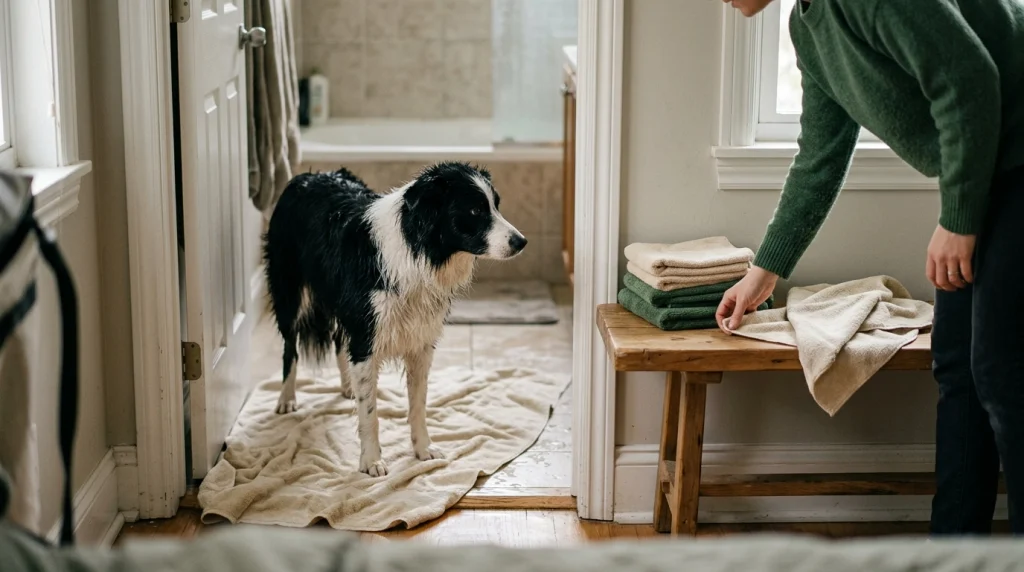
The easiest way to prevent water from spreading is to prepare a designated drying area before you release your dog from the bath. This avoids the familiar scramble of looking for another towel while a wet Border Collie walks through the house.
Choose a comfortable area with a non-slip surface, away from electrical cords and anything that could be damaged by water. Put these items within reach:
- Two or more clean, absorbent towels.
- A washable mat or old towel to catch water from the paws.
- A suitable dog brush for finishing the coat once it is ready to brush.
- Small treats to reward calm standing and paw handling.
Keep the drying area separate from carpeted rooms if possible. A tiled bathroom, laundry room, or easy-to-clean floor works well, provided your dog has secure footing.
After rinsing, let your Border Collie shake off excess water in this area. Dogs naturally shake to remove water from their coats, so allowing a brief shake before towel-drying can reduce the amount of moisture you need to absorb manually.
2. Dry the Paws Before Your Border Collie Walks Away
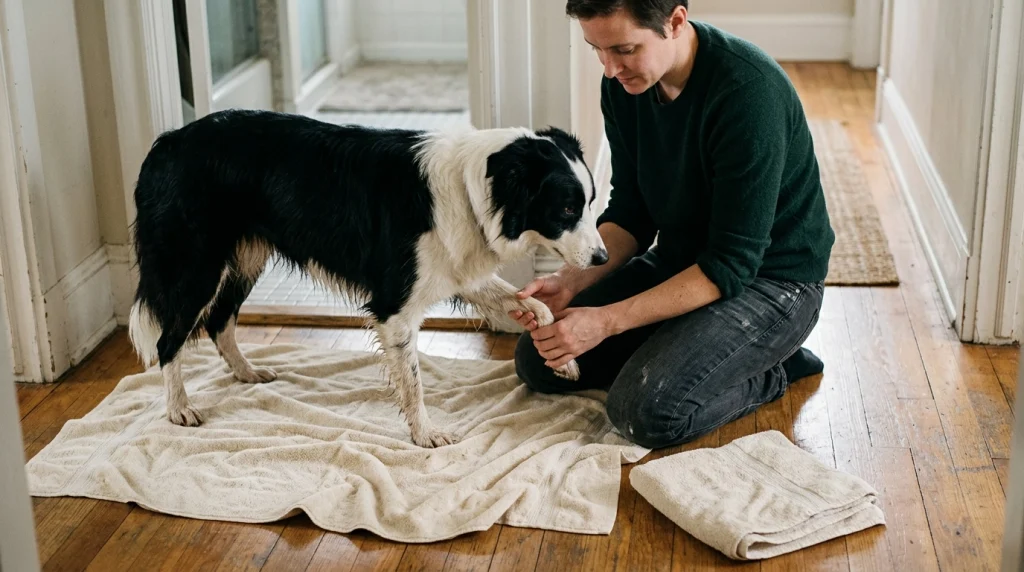
Drying the paws individually is the most direct way to prevent wet pawprints. Even if the back and sides feel reasonably dry, water can remain around the toes, paw pads, and hair between the pads.
- Ask your dog to stand on the drying mat. Keep the surface stable so your Border Collie does not slide while you handle its feet.
- Lift one paw gently. Support it comfortably without pulling the leg or forcing the toes apart.
- Press a clean towel against the paw. Blot the top, sides, and underside instead of rubbing vigorously.
- Check between the pads. Gently dry any accessible damp hair and the spaces around the toes without digging into the skin.
- Repeat for all four paws. Use a drier section of the towel or replace it when it becomes saturated.
- Check the floor before releasing your dog. If the paws still leave visible prints, repeat the drying step.
Long hair around the feet can retain water, so inspect the paw edges as well as the pads themselves. If the hair repeatedly becomes soaked or collects dirt, ask a qualified groomer to assess whether a modest paw tidy would help.
Never cut closely around the pads with scissors if your dog is moving or the skin is difficult to see. The skin between the toes is delicate, and a sudden movement can cause an injury.
3. Blot the Coat Instead of Rubbing It Hard
Once the paws are under control, remove as much water as possible from the rest of the coat. Pressing a towel into the fur absorbs moisture without twisting damp hair into tangles.
Work through the coat in manageable sections, paying attention to areas that tend to remain wet:
- Chest and neck: Press the towel into the thicker coat rather than wiping only the surface.
- Belly and armpits: Dry gently around the legs and skin folds without pulling the hair.
- Leg feathering: Squeeze longer hair gently between the towel instead of rubbing it back and forth.
- Tail and hindquarters: Blot the longer hair and check for moisture near the tail base.
- Behind the ears: Dry the outer ear area gently, keeping the ear canal free from towels and fingers.
Change towels as soon as they become too wet to absorb effectively. A saturated towel may spread moisture around the coat instead of removing much more of it.
The American Kennel Club’s dog-drying guidance also recommends pressing a towel into the fur rather than rubbing vigorously, which can encourage tangles and mats.
4. Dry the Double Coat, Not Just the Top Layer
A Border Collie’s coat can feel dry on the outside while the undercoat still holds moisture. This is especially relevant to rough-coated dogs with longer feathering, although smooth-coated Border Collies also have a dense undercoat.
Run your fingers gently through the fur to check whether the hair close to the skin feels damp. Check the chest, belly, thighs, neck, and tail base, where thick hair can make moisture harder to notice.
If the coat is still damp, continue with a fresh towel or use a dog-specific dryer if your dog tolerates it. Choose comfortable, low-temperature or cool airflow, keep the nozzle moving, and avoid directing air into the eyes or ears.
Do not assume that a human hair dryer is safe simply because it has a low setting. Heat can build up against a dog’s skin, particularly when the coat is thick and airflow is held in one place. Stop if your dog shows signs of distress, and introduce dryer sounds and handling gradually if needed.
For additional breed-specific guidance, see our guide to drying a Border Collie after a bath. It covers the drying process beyond the immediate problem of wet pawprints.
Tip
Use a two-towel routine: the first towel removes most of the water, and the second finishes the paws and checks the areas that remain damp. This is more effective than continuing to use one saturated towel.
5. Keep Your Dog in a Dry Area Until the Coat Is Ready
After towel-drying, keep your Border Collie on a washable mat or in a comfortable, easy-to-clean room while the remaining coat dries. This gives you time to check the paws and reduces the chance of water reaching rugs, sofas, and bedding.
Use a baby gate or close the doors to carpeted rooms if your dog tends to wander immediately after bathing. The goal is not to restrain your dog harshly but to make the drying routine predictable and easy to supervise.
Make the waiting period comfortable. Provide praise, treats, and a calm place to stand or lie down, and allow your dog to change position naturally. Avoid leaving a damp dog in a cold, drafty area or wrapping it tightly in a wet towel.
A washable dog drying robe can help absorb water from the body and keep the coat from wetting household surfaces. However, a robe does not replace checking and drying the paws, and it should not remain on the dog if it becomes soaked or traps moisture against the skin.
6. Check the Coat and Paws Before Allowing Free Access
Before your Border Collie leaves the drying station, perform a quick check rather than relying on appearance alone. The topcoat may look fluffy and dry even when the undercoat or paw hair is still damp.
- Touch test: Feel the coat close to the skin in several places, including the chest and thighs.
- Paw test: Gently check each paw and the hair around the pads for residual moisture.
- Towel test: Press a clean, dry towel against a suspiciously damp area. Noticeable moisture on the towel means more drying is needed.
- Movement test: Let your dog take a few steps on the washable mat. Check for wet prints before opening access to the rest of the home.
Once the paws are dry and the coat is comfortably dry through the undercoat, allow your dog to return to normal activities. You do not need to keep a Border Collie confined simply because a few individual hairs feel cool; focus on actual dampness near the skin and between the toes.
7. Avoid These Common Post-Bath Mistakes
A few small changes can prevent most of the mess without making bath time longer or more stressful.
- Letting the dog roam too soon: Finish the paws first, then check the coat before allowing access to carpeted rooms.
- Using the same soaked towel throughout: Replace it when it stops absorbing water effectively.
- Rubbing long feathering aggressively: Blot and squeeze gently to reduce tangles.
- Using excessive dryer heat: Choose safe, comfortable airflow and keep it moving to avoid overheating the skin.
- Ignoring the undercoat: Check near the skin instead of judging dryness from the outer hair alone.
- Trimming paw hair too closely: Ask a groomer for help if excess hair around the pads is a recurring issue.
Thorough drying also supports coat and skin care. The Virginia Tech Veterinary Teaching Hospital’s bathing guidance advises pressing towels against the coat, using a moving cool or low-heat dryer when appropriate, and checking areas where moisture can remain trapped.
If your dog develops persistent redness, itching, an unpleasant skin odor, or soreness around the paws after bathing, do not assume that water tracking is the only issue. Arrange veterinary advice if symptoms persist or appear painful, because skin irritation and other problems may need separate attention.
Related Product
Absorbent Microfiber Dog Towels
A few absorbent towels make it easier to remove water from the paws and dense coat without repeatedly using a saturated bath towel.
As an Amazon Associate, we earn from qualifying purchases.
Frequently Asked Questions
Why does my Border Collie still leave wet pawprints after a bath?
Water may remain between the toes, around the paw pads, or in the hair surrounding them. Dry each paw individually with an absorbent towel and check again before letting your dog walk across the house.
Should I dry my Border Collie’s paws before its body?
Drying the paws early helps prevent immediate footprints, while drying the body afterward removes moisture from the dense coat. If your dog is dripping heavily, blot the body first, then finish the paws before it leaves the drying area.
Can I use a human hair dryer on my Border Collie?
A dog-specific dryer is preferable because excessive heat can burn a dog’s skin. If using any dryer, keep the airflow comfortable and moving, avoid the face and ears, and stop if your dog becomes distressed.
Does a Border Collie drying robe prevent water tracking?
A drying robe can absorb water from the body and help protect household surfaces, but it does not reliably dry the paws. You should still towel-dry all four feet and check the coat for trapped moisture.
Should I trim the hair between my Border Collie’s paw pads?
Excess hair around the pads can collect moisture and debris, so a modest tidy may help some dogs. Have a qualified groomer show you an appropriate approach, and avoid cutting close to the skin or attempting a trim while your dog is moving.
How can I stop my Border Collie from running around while wet?
Prepare towels and a non-slip drying area before the bath ends, then reward your dog for calmly standing while you dry each paw. Use a gate or closed door to limit access to wet-sensitive rooms until the drying check is complete.
Conclusion
The most reliable way to stop a Border Collie from tracking water after a bath is to combine thorough drying with a short, supervised transition back into the house. Prepare a drying station, blot the coat with absorbent towels, and give each paw individual attention before your dog walks on carpets or furniture.
Because Border Collies have dense double coats, check beneath the outer fur as well as around the toes and paw pads. Use gentle airflow if needed, avoid excessive heat, and keep your dog comfortable throughout the process. With a consistent routine, you can reduce wet footprints and protect your floors without turning every bath into a lengthy grooming session.