
Wet vs Dry Food for Border Collies: Which Feeding Option Fits Best?

Border Collies are not ordinary “feed-and-forget” dogs. Their energy output can swing from calm companion to full-throttle athlete, and that makes food choice more about function than format. In most homes, the best answer is not “wet” or “dry” in isolation. It is the food that is complete and balanced, fits your dog’s life stage, and matches the way your Border Collie actually lives.
For many owners, dry food is the easiest base. For others, wet food improves appetite, hydration, or comfort. And for plenty of Border Collies, a mixed diet works well as long as you count calories carefully and do not accidentally double-feed. The format matters, but it matters less than the nutrition inside the bowl.
Wet vs Dry Food for Border Collies: The Short Answer
If you want the practical answer first: there is no universal winner. A healthy Border Collie can do well on wet food, dry food, or a combination of both.
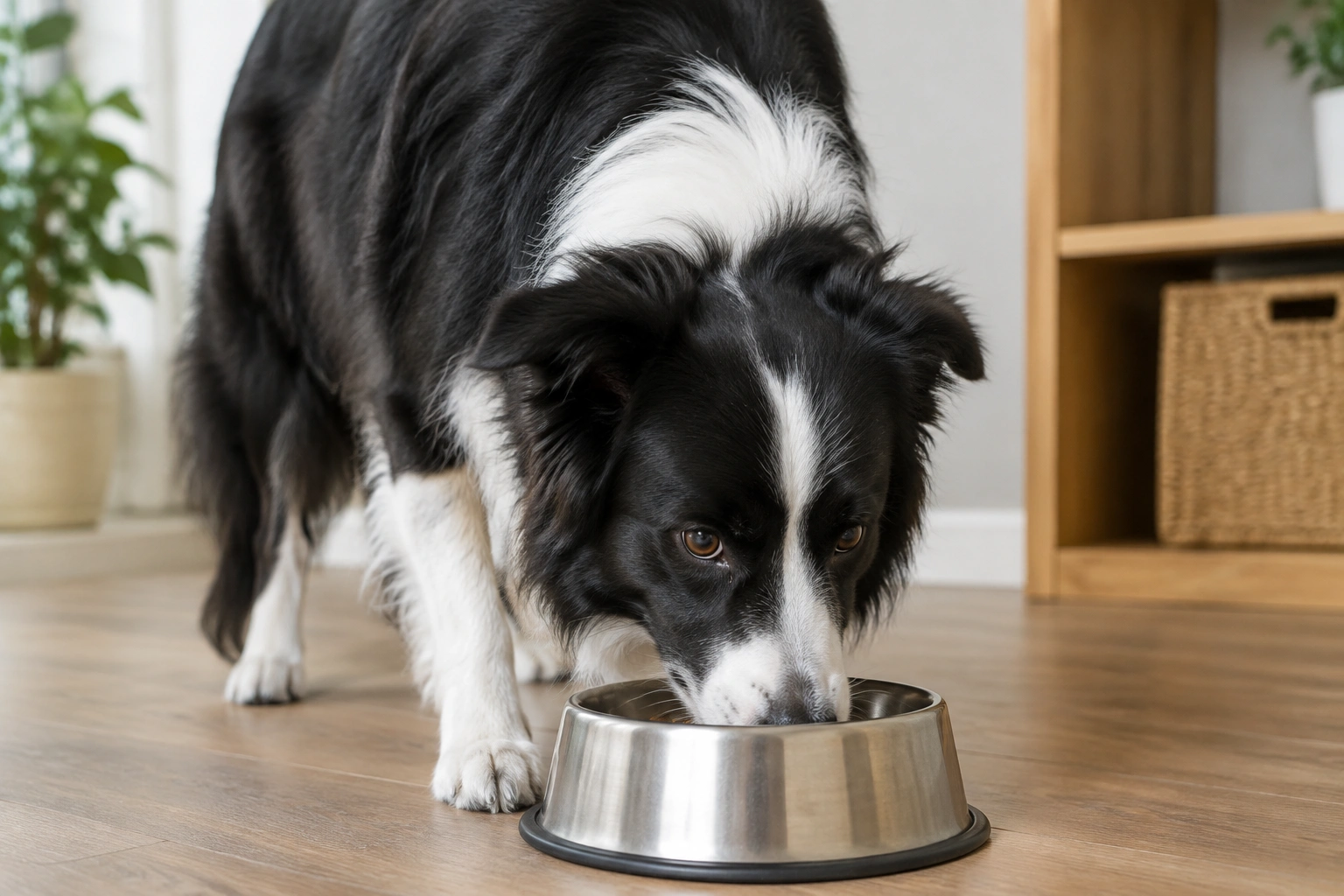
The better choice depends on a few real-world factors: hydration needs, activity level, dental comfort, and convenience. A working Border Collie on long training days may thrive on calorie-dense kibble or a mixed feeding plan, while a senior dog with a smaller appetite may do better with wet food or softened kibble. Format is the tool. Nutrition is the goal.
How Border Collies’ Activity Level Changes Their Feeding Needs
Border Collies are built for movement. Some spend their days herding, running, training, or doing agility. Others are family dogs with shorter exercise windows. That difference matters more than whether the food is wet or dry.
A highly active Border Collie often needs more calories and may do better with calorie-dense dry food or mixed feeding, especially on heavy training days when it is easier to meet energy needs without huge meal volumes. A less active Border Collie still needs quality nutrition, but may need tighter calorie control regardless of format because this breed can gain weight when exercise drops and portions stay the same.
This is where feeding advice for Border Collies gets more specific than generic dog-food comparisons. On especially active days, you may need a little more food or a more energy-dense option. On low-activity days, the same dog may need less, even if the food itself has not changed.
A useful rule: adjust by body condition, stool quality, and energy level, not by the label’s feeding chart alone. Feeding charts are a starting point, not a verdict.
Wet Food vs Dry Food: Key Differences Border Collie Owners Should Care About
Here is the comparison most owners actually need.
| Factor | Wet Food | Dry Food |
|---|---|---|
| Moisture | Usually much higher, often around 70% to 80% | Usually lower, often around 5% to 10% |
| Calorie density | Often less calorie-dense by volume | Usually more calorie-dense per cup |
| Palatability | Often more appealing to picky eaters | Some dogs love it, some ignore it |
| Storage | Needs refrigeration after opening | Easy to store at room temperature |
| Convenience | Less convenient for travel and measuring | Easier for routine feeding and travel |
| Cost | Often more expensive per calorie | Usually cheaper to feed |
| Dental use | Softer texture, useful for sore mouths | May offer limited chewing benefit, but it does not meaningfully clean teeth unless it is a specifically designed dental diet |
| Best fit | Hydration support, seniors, picky eaters | Portion control, budget, busy households |
The biggest practical difference is not “better ingredients.” It is how the food behaves in daily life. Wet food adds moisture and can be easier to eat. Dry food is usually simpler to store, measure, and use consistently.
That calorie-density point matters a lot. A cup of kibble and a can of wet food are not interchangeable just because they look like similar amounts in the bowl. For example, if one wet food has 400 kcal per can and a dry food has 400 kcal per cup, then one can and one cup may sound equivalent even though the volume and feeding experience are completely different. If you compare by volume alone, overfeeding becomes very easy.
When Dry Food May Be the Better Choice
Dry food often makes sense when you need routine, precision, and convenience.
It is usually the better fit if:
- You want easy portion control.
- You travel with your dog or feed away from home.
- You use an automatic feeder.
- You are managing a budget.
- Your Border Collie does well on a straightforward, consistent routine.
Dry food can also suit active Border Collies because it often packs more calories into a smaller serving. That can make it easier to fuel a dog that works, trains, or burns through energy quickly without needing huge meal volumes.
There is another practical benefit: kibble is easier to store and less messy. For multi-dog homes or busy households, that matters more than it sounds. If you need to measure meals quickly before work or training, dry food is often the least complicated option.
One caution: do not assume kibble takes care of dental health. Dry food may offer some chewing benefit, but it does not meaningfully clean teeth unless it is a specifically formulated dental diet. Even then, it is not a substitute for dental care.
When Wet Food May Be the Better Choice
Wet food can be the better choice when hydration, appetite, or mouth comfort matter more than convenience.
It may help if your Border Collie:
- Drinks less than you would like.
- Needs extra moisture in the diet.
- Is a senior and has become pickier.
- Has dental sensitivity or sore gums.
- Is recovering from a period of reduced appetite and needs food that smells and tastes stronger.
Wet food’s high moisture content is the main advantage here. Dry food is usually much lower in moisture, while wet food is usually much higher. That difference may help support fluid intake, especially in warm weather or in older dogs that may not drink as much as they used to.
Wet food also tends to be more appealing to many dogs. If your Border Collie turns away from kibble or eats slowly, a wet formula may be the difference between a skipped meal and a clean bowl.
The trade-off is cost and convenience. Wet food usually costs more per calorie, and once opened, it needs to be handled more carefully than dry food.
Can Border Collies Eat Both Wet and Dry Food?
Yes. Mixed feeding is common, and it can work very well for Border Collies.
One practical approach is to use a dry kibble base on normal days and add a small amount of wet food on high-activity days or when you want to improve palatability. That style of feeding gives you flexibility without giving up routine.
The upside of mixed feeding is flexibility. You can use kibble for structure and cost control, then use wet food for hydration or appetite support.
The risk is simple: it is easy to overfeed. If you pour kibble into the bowl and then add wet food on top without reducing one or the other, your dog may get more calories than you intended.
How to Mix Wet and Dry Food Without Overfeeding
The safest way to mix formats is to think in calories, not scoops or cans.
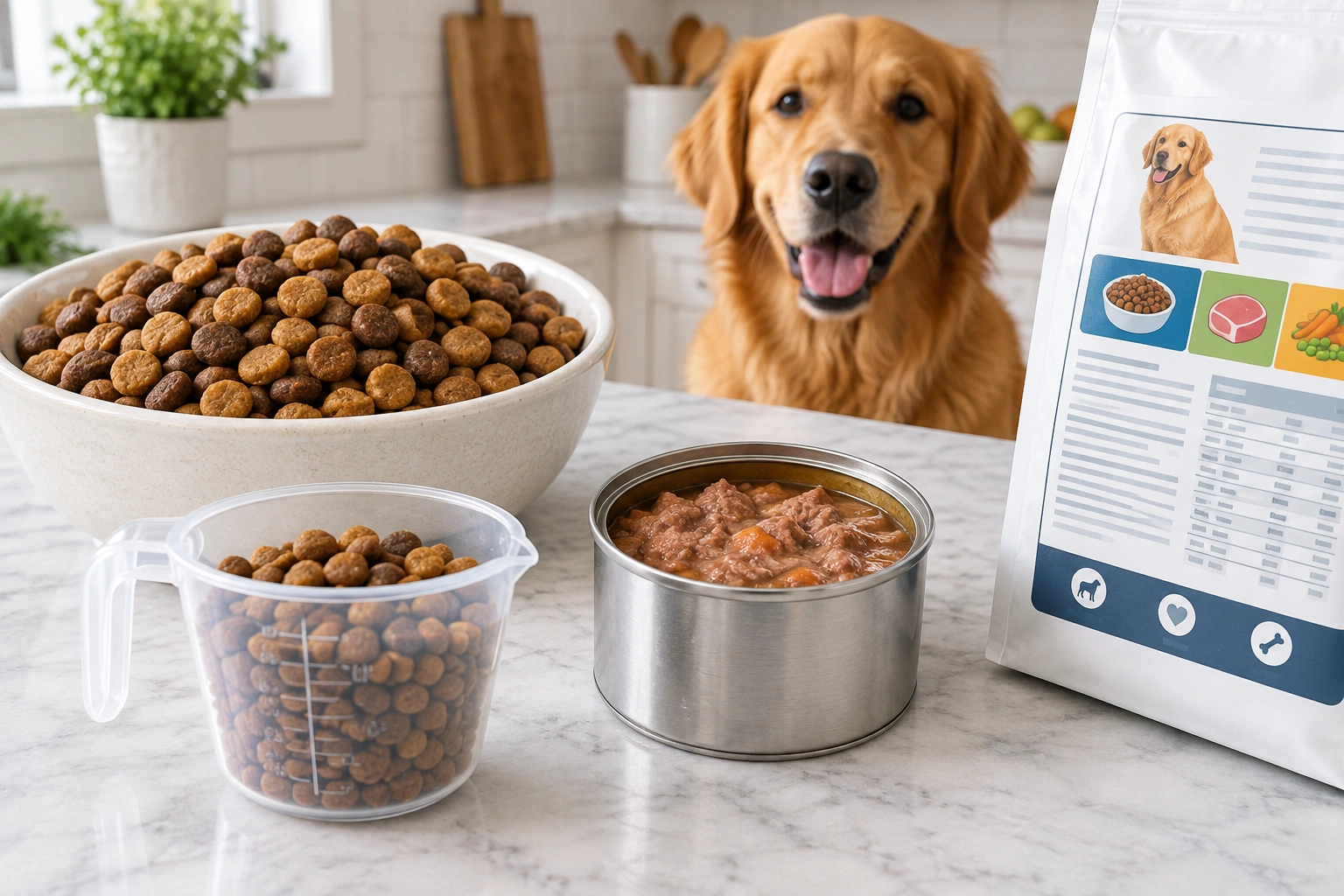
Use this method:
- Find the calorie count on both foods. Look for kcal per cup on kibble and kcal per can, pouch, or gram on wet food.
- Decide the total daily calorie target for your Border Collie based on body condition, age, and activity.
- Split the calories between foods rather than splitting by volume.
- Measure both portions carefully for a few days.
- Check body condition and stool quality after the change.
Example: if your dog needs 900 calories per day and you want to use wet food as a topper, you might feed 700 calories from kibble and 200 calories from wet food. The exact split does not matter as much as the total.
That is the main discipline mixed feeding requires. If you keep the calorie total steady, mixing can be very practical. If you do not track calories, mixed feeding is the easiest way to accidentally create slow weight gain.
What to Look for on the Label: Complete and Balanced Nutrition, Protein, Fat, and Calories
The first thing to check is not whether the food is wet or dry. It is whether the label says the food is complete and balanced for your dog’s life stage.
The AAFCO nutritional adequacy statement is the quickest way to check that a food is meant to stand alone as a diet. You can read more about that standard through AAFCO’s guidance on pet food labeling. If a food is not complete and balanced, it should not be the main diet unless your veterinarian has told you otherwise.
After that, check three things:
- Protein source: Look for named animal protein sources, not just vague terms. A formula that clearly identifies chicken, salmon, beef, turkey, or another named protein is easier to evaluate than one that relies on generic wording.
- Life-stage appropriateness: Puppies need growth formulas, adults need maintenance formulas, and seniors may need different calorie levels or texture support. The best food for a Border Collie puppy, adult, or senior is the one matched to that stage.
- Calories: This is where many owners get tripped up. Two foods can look similar in the bowl but deliver very different calorie totals. Calories per cup or per can are the key comparison metric.
Ingredient buzzwords can be distracting. “Real meat” or “premium” does not tell you enough on its own. The full formulation, calorie density, and adequacy statement matter more than marketing language.
Choosing the Right Food for a Border Collie Puppy, Adult, or Senior
Border Collie puppies
Puppies need a life-stage appropriate food that supports growth, not an adult maintenance formula. That matters more than whether the food is wet or dry. Puppies also tend to do best with measured meals rather than free-feeding, especially in a breed that can be intense around food and exercise.
If a puppy is small or still adjusting to solid food, wet food or softened kibble can be easier to manage. But the food still needs to be complete and balanced for growth.
Adult Border Collies
Most adult Border Collies do well with a complete and balanced adult formula that fits their workload. A working dog may need more calories and may do well on a dry base or mixed feeding. A companion dog with moderate exercise may need a simpler, lower-calorie routine.
For adults, the main question is often not “wet or dry?” but “How much energy does this dog actually burn?”
Senior Border Collies
Seniors may need a different feeding strategy because appetite, dental comfort, and activity level can change. Wet food can be helpful here because it is softer and more aromatic, and the extra moisture may support hydration. A senior that still chews well may also do fine with kibble, especially if you soak it slightly.
The key is to watch for smaller appetite, slower eating, and changes in body condition. Seniors can lose muscle if meals are too small, but they can also gain weight if activity drops and portions stay the same.
Special Cases: Picky Eaters, Sensitive Stomachs, and Dental Concerns
Picky eaters often respond well to wet food because aroma and texture are more appealing. If your Border Collie sniffs kibble and walks away, adding a small amount of wet food can improve meal acceptance without changing the whole diet.
For dogs with sensitive stomachs, the issue is not wet versus dry on its own. It is whether the new food is digestible, introduced gradually, and appropriate for the dog. Some dogs do better with one format simply because it is easier to keep consistent.
For dental concerns, softer food can be more comfortable. That makes wet food useful when chewing is unpleasant. But if your dog has a real dental issue, the food format alone will not solve it. It only affects comfort at mealtime.
How to Transition Safely Between Wet and Dry Food
Switch gradually over about a week if your dog is sensitive, and even if your dog is not, a slow transition is still the safer habit. Some dogs do fine with a 7-day change, while others need 10 to 14 days, especially if they are sensitive or you are changing formats more substantially.
A simple method:
- Days 1–2: mostly old food with a small amount of the new food
- Days 3–4: half old, half new
- Days 5–6: mostly new food
- Day 7: fully transitioned, if stools and appetite are normal
If you are moving from kibble to wet food, or the other way around, keep an eye on stool quality, gas, and appetite. Loose stool usually means the transition was too fast or the new food is not agreeing with the dog.
When to Ask Your Veterinarian
Ask your veterinarian if your Border Collie has:
- Ongoing weight loss or gain
- Repeated digestive upset
- Significant dental pain or trouble chewing
- A sudden drop in appetite
- A life-stage question about puppy growth or senior feeding
- A medical condition that changes diet needs
That is especially useful if you are trying to decide whether your dog needs a more energy-dense food, a softer texture, or a tighter calorie plan.
Simple Decision Guide: Which Option Fits Your Border Collie Best?
Use this quick framework:
- Choose dry food if you want convenience, easier storage, better portion control, or a budget-friendly base.
- Choose wet food if hydration, palatability, or dental comfort is the bigger issue.
- Choose mixed feeding if you want flexibility and your dog benefits from both moisture and routine, as long as you track total calories.
If your Border Collie is highly active, start by checking whether the food can deliver enough calories without huge meal volumes. If your dog is older, picky, or drinks poorly, wet food may solve more practical problems than kibble does. If your life is busy and your dog thrives on routine, dry food is often the easiest system to keep consistent.
The best feeding choice is the one that keeps your Border Collie in good body condition, eats willingly, and fits your daily routine without guesswork.
For a broader look at choosing diets by age and lifestyle, see our guide to the best food for Border Collies and our practical overview of what Border Collies eat.
FAQ
Is wet or dry food better for Border Collies?
Neither is universally better. Wet food can help with hydration and palatability, while dry food is often easier for portion control and convenience. The best choice depends on your dog’s activity level, dental comfort, and your routine.
Does dry food help Border Collie dental health?
Only a little, and not in a way that replaces dental care. Kibble may provide some chewing benefit, but it does not meaningfully clean teeth unless it is a specifically designed dental diet. Regular brushing and veterinary dental care still matter.
Can I feed my Border Collie both wet and dry food?
Yes. Mixed feeding is a practical option for many Border Collies. Just make sure you count total calories so you do not overfeed.
What is the best food for a Border Collie puppy?
The best food for a Border Collie puppy is a complete and balanced growth formula that matches puppy life-stage needs. Wet or dry can both work if the food is appropriate for growth.
How do I compare wet and dry foods fairly?
Compare calories per cup for dry food and calories per can, pouch, or gram for wet food. Volume alone can be misleading because foods with similar-looking portions may have very different calorie totals.
How long should I take to switch foods?
Many dogs do well with a 7-day transition, but sensitive dogs or major format changes may need 10 to 14 days.
