
What Are the Signs of Parvo in a Dog? A Practical Guide for Fast Action

If you are worried your dog might have parvo, the most useful thing you can do is look at the pattern of signs, not just one symptom in isolation. Canine parvovirus often begins with vague illness that can look like a minor stomach upset, but it can worsen quickly, especially in puppies and other high-risk dogs.
The reason this matters is simple: waiting to “see if it passes” can cost valuable time. Parvo is not something to monitor casually at home if the dog is young, unvaccinated, partially vaccinated, or suddenly getting worse. In those cases, the safest move is prompt veterinary evaluation.
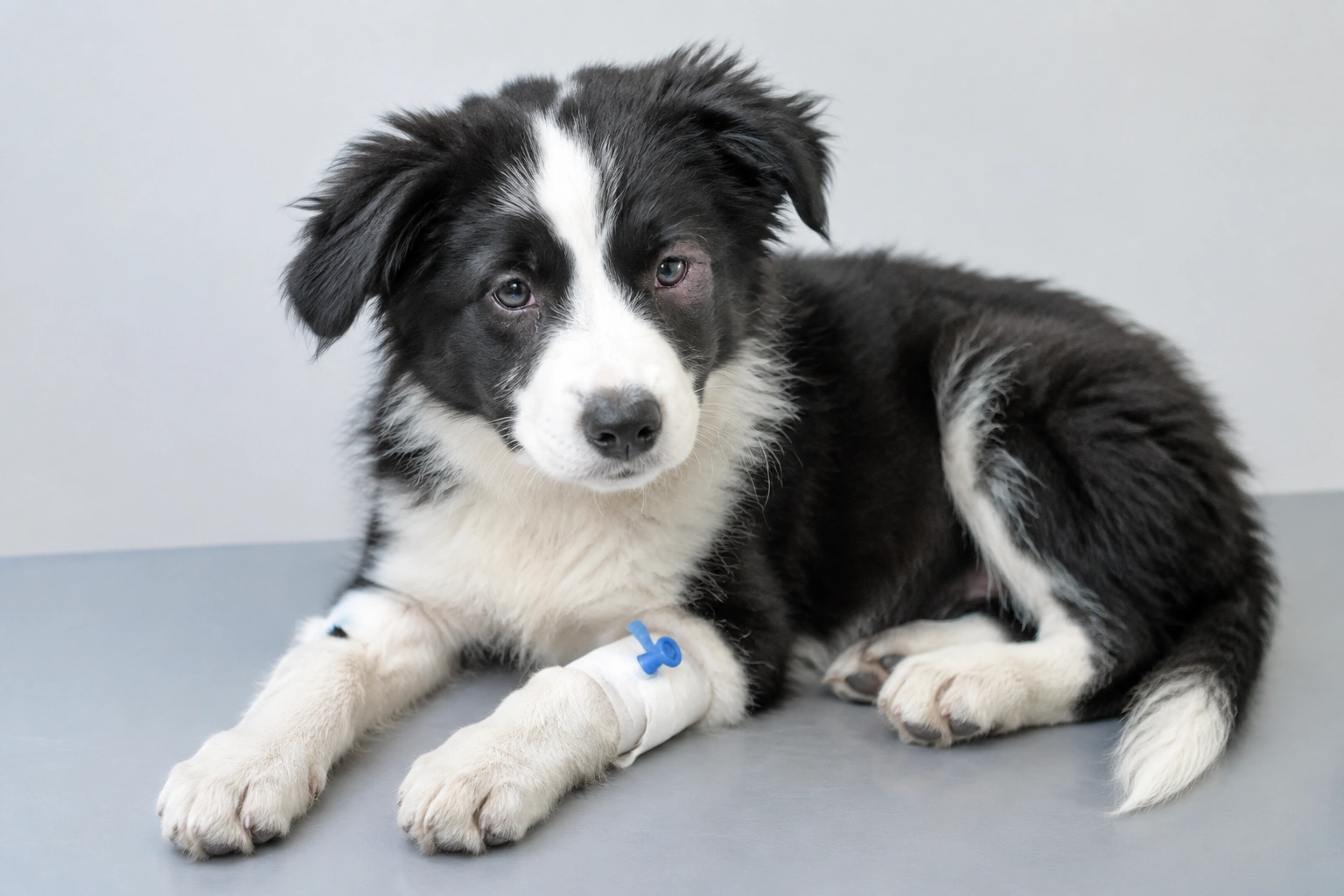
What the first signs of parvo usually look like
Early parvo signs are often nonspecific. A dog may first seem quieter than usual, less interested in food, or just “not right.” Vomiting may come next, followed by soft stool or diarrhea. A fever may be present early, but owners usually notice behavior changes before they notice temperature changes.
That vagueness is what makes parvo tricky. A puppy that skips a meal and acts tired can seem like a mild stomach issue, but the problem is that parvo can move from mild to serious fast, and the first signs may not look dramatic.
A practical rule: if a puppy or high-risk dog has a sudden change in energy plus vomiting or diarrhea, treat it as urgent until a vet says otherwise.
How parvo symptoms typically progress
Parvo often follows a pattern rather than appearing all at once. A dog may first become quiet, stop eating, and start vomiting. Diarrhea may follow, and it can become frequent and watery. As the illness progresses, the dog may weaken, become dehydrated, and show obvious abdominal discomfort.
In more serious cases, the dog may become too weak to stand normally, refuse water, or have bloody diarrhea. That progression is why the early stage matters so much. A dog that still seems “mostly okay” in the morning can be much worse by evening.
This is especially important in puppies. Their smaller bodies have less reserve, so repeated vomiting and diarrhea can lead to dehydration faster than many owners expect.
Core symptoms to watch for
Here are the main signs that raise concern for parvo:
Vomiting
Vomiting is one of the most common warning signs. One vomit by itself does not prove parvo, but repeated vomiting, especially with lethargy or diarrhea, is more concerning.
Diarrhea
Diarrhea may start soft and become watery. In parvo, it can become severe and frequent. The more often it happens, the greater the risk of dehydration.
Loss of appetite
A dog that refuses food, even favorite treats, is sending a signal that something is wrong. Appetite loss becomes more concerning when it lasts more than a short period or appears alongside vomiting.
Lethargy and weakness
This is one of the clearest “something is not right” signs. A puppy that is unusually quiet, slow to move, or uninterested in interaction may be more seriously ill than the stool alone suggests.
Dehydration
Dry gums, sunken eyes, weakness, and poor energy can all point to dehydration. With parvo, dehydration is often a consequence of repeated vomiting and diarrhea, not a separate problem.
If several of these signs happen together, the risk is much higher than with a single mild symptom.
When blood in the stool, dehydration, or collapse means emergency care
Blood in the stool is a serious warning sign. It does not automatically prove parvo, but it raises the urgency sharply, especially in a puppy or under-vaccinated dog.
Emergency care is warranted if you see any of the following:
- bloody diarrhea
- repeated vomiting that does not stop
- obvious weakness or collapse
- inability to keep water down
- signs of dehydration
- a puppy becoming quieter and weaker over hours, not days
If the dog seems unable to stand properly, collapses, or becomes unresponsive, do not wait for a regular appointment. Go to an emergency clinic.
A useful decision rule: vomiting plus diarrhea plus lethargy is much more concerning than vomiting alone or diarrhea alone. If blood appears on top of that cluster, treat it as urgent.
Parvo vs. mild stomach upset: how to tell the difference
This is the comparison most owners need in real life. Many dogs get a temporary upset stomach. Parvo is different because the signs tend to cluster, intensify, and affect the dog’s overall condition more strongly.
| Feature | Mild stomach upset | Possible parvo |
|---|---|---|
| Energy | Usually fairly normal | Often noticeably low or worsening |
| Appetite | May dip briefly | Often poor or absent |
| Vomiting | May happen once or twice | Often repeated or worsening |
| Diarrhea | May be mild and short-lived | Can become frequent, watery, or bloody |
| Hydration | Usually maintained | Dehydration can develop quickly |
| Risk factors | Any dog | Higher concern in puppies, unvaccinated, partially vaccinated, or exposed dogs |
| Trend | Often improves within a day or so | Often gets worse without veterinary care |
The biggest difference is the trend. Mild stomach upset usually stabilizes or improves. Parvo often escalates.
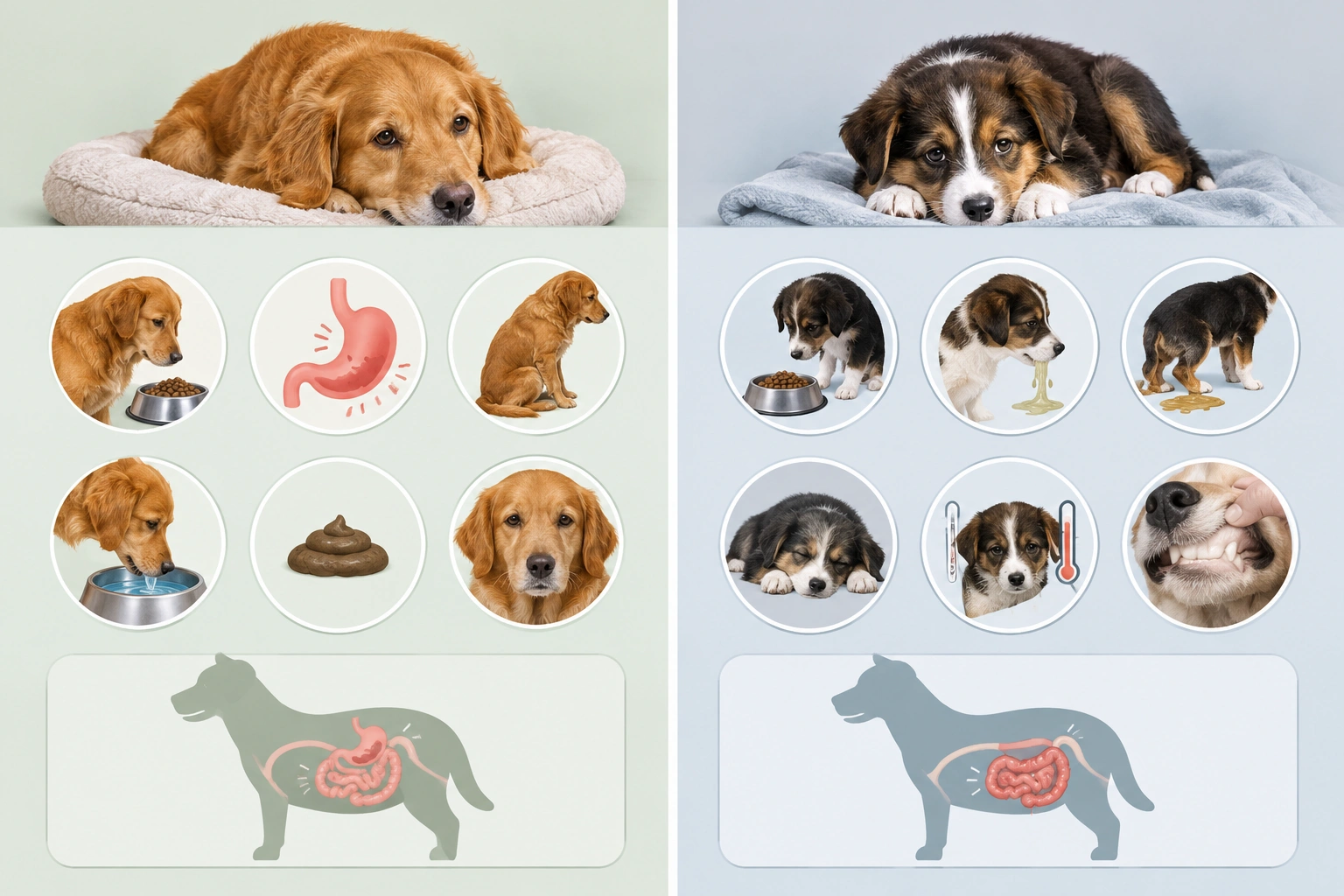
Which dogs are at highest risk for parvo
Puppies are the group owners worry about most, and for good reason. Young dogs have less immune protection, and if vaccination is incomplete, the risk is higher.
Higher suspicion is warranted when a dog is:
- a young puppy
- unvaccinated
- only partially vaccinated
- recently exposed to other dogs, kennels, shelters, or contaminated feces
- showing more than one digestive symptom at the same time
Exposure matters because parvovirus spreads through contaminated feces and contaminated environments. A dog does not need to have direct contact with a sick-looking dog to be at risk.
If you want a broader sense of how serious gastrointestinal warning signs can be, our guide on how to tell if a dog has a blockage can help you compare emergency patterns. Different conditions can look similar at first, which is exactly why the combination of signs matters.
Can vaccinated or adult dogs still get parvo?
Yes, they can. Vaccination lowers risk significantly, but it does not make parvo impossible. Partial vaccination is especially easy to overestimate because one or two shots do not necessarily mean full protection.
Adult dogs can also get parvo, though the presentation may vary. Some adults appear less severely affected at first, which can create false reassurance. If an adult dog has vomiting and diarrhea after exposure to high-risk environments, it still deserves prompt veterinary attention.
The practical takeaway is this: do not rule out parvo just because the dog is older or “mostly vaccinated.” Use the symptom pattern and exposure history together.
What to do in the first hour if you suspect parvo
The first hour should be about containment and speed, not home experiments.
-
Isolate the dog from other dogs immediately.
Keep the dog away from shared yards, bowls, bedding, and common walking areas if possible. -
Call a veterinarian right away.
Tell them the dog’s age, vaccination status, and symptoms. Mention vomiting, diarrhea, blood, lethargy, and any recent exposure to other dogs. -
Prepare for a fecal test or exam.
A vet may use a fecal test to help confirm parvo suspicion. You do not need to diagnose it yourself before calling. -
Avoid spreading contamination.
Clean up stool carefully and keep the dog off high-traffic areas until you have guidance. -
Do not delay because the dog is still drinking.
Drinking some water does not mean the dog is safe. A dog can still become dehydrated or deteriorate quickly, especially in puppies.
What not to do at home while waiting for the vet:
– do not force food or water
– do not give human medications
– do not give over-the-counter anti-diarrhea or anti-vomiting products unless your vet tells you to
– do not let the dog mix with other pets
– do not wait to “see if it passes” if symptoms are worsening
If you are unsure whether to go to a regular clinic or emergency hospital, use the dog’s condition as the guide. Severe weakness, repeated vomiting, blood in the stool, collapse, or inability to keep water down should push you toward emergency care.
When to see a veterinarian or emergency clinic
For parvo concerns, this is a veterinary issue first. A certified trainer is not the right first stop for vomiting, diarrhea, or possible dehydration.
See a veterinarian immediately if:
- the dog is a puppy with vomiting or diarrhea
- the dog is lethargic or weak
- blood appears in the stool
- symptoms are worsening over hours
- the dog cannot keep water down
- the dog has been exposed to unknown dogs or contaminated areas
If you are dealing with a Border Collie puppy and want to understand how quickly health concerns can escalate in young dogs, you may also find our article on what are the signs of cancer in a dog useful for learning how to think through warning signs carefully. Different illnesses require different responses, but the habit of acting early is the same.
How parvo spreads and how to reduce the risk of infecting other dogs
Parvovirus spreads through infected feces and contaminated surfaces. That means paws, bedding, bowls, crates, grass, soil, and human hands can all become part of the problem if a sick dog is moved around carelessly.
Until parvo is ruled out:
- keep the dog separated from other dogs
- use separate bowls, bedding, and cleanup supplies
- avoid dog parks, pet stores, and shared potty areas
- clean up stool promptly and carefully
- wash hands after handling the dog or anything contaminated
- limit contact with other pets in the home until a vet advises otherwise
If you have other dogs at home, the safest assumption is that they should not share anything with the sick dog until a vet advises otherwise.
For general prevention, vaccination and hygiene matter most. The AKC’s canine parvovirus guidance is a helpful starting point for owners who want a broader overview of prevention and risk.
How a vet confirms parvo
Veterinarians often use a fecal test along with the dog’s symptoms and exam findings. That is one reason not to self-diagnose from symptoms alone. Vomiting and diarrhea can come from many causes, but the combination of signs, age, vaccination history, and exposure risk helps a vet decide how likely parvo is.
What matters most for owners is not the exact test mechanics. It is getting the dog seen quickly enough that testing and treatment can begin before the illness worsens.
Prevention that actually helps
The main prevention tools are straightforward:
- keep puppies on schedule with their vaccination series
- avoid high-risk exposure before protection is complete
- limit contact with unknown dogs and contaminated environments
- clean up and disinfect carefully if parvo exposure is possible
If you want a second trusted reference on prevention and symptoms, VCA Hospitals’ overview of parvovirus is a solid veterinary resource.
FAQs about parvo signs in dogs
What are the first signs of parvo in a dog?
The first signs are often vague: low energy, reduced appetite, vomiting, or soft stool. The key warning is when several of these appear together or worsen quickly.
Can a dog have parvo without bloody diarrhea?
Yes. Blood in the stool is a serious sign, but it may not appear at the very beginning. Early parvo can look like vomiting, diarrhea, and lethargy before blood shows up.
How fast do parvo symptoms get worse?
They can worsen quickly, especially in puppies. A dog that seems mildly ill in the morning may be much sicker by later the same day.
Can a vaccinated dog still get parvo?
Yes. Vaccination lowers risk, but it does not make parvo impossible. A partially vaccinated dog should still be treated as potentially at risk.
Can adult dogs get parvo too?
Yes. Adult dogs can get parvo, especially if they are unvaccinated, partially vaccinated, or exposed to contaminated environments.
Should I wait and see if my dog improves?
Not if parvo is plausible. With a puppy or high-risk dog, waiting can waste valuable time. Call a vet promptly and isolate the dog from others.
Is parvo always an emergency?
When suspected in a puppy or high-risk dog, yes, it should be treated as an urgent veterinary problem. Blood in the stool, collapse, severe weakness, or repeated vomiting make it even more urgent.
What if my dog only has diarrhea?
Diarrhea alone is not enough to diagnose parvo. But if the dog is young, under-vaccinated, exposed, or also tired and not eating, it deserves a veterinary call.
Does kennel cough look like parvo?
Usually not. Kennel cough more often causes coughing and other respiratory signs, while parvo more commonly causes vomiting, diarrhea, lethargy, and dehydration.
The bottom line
Parvo usually does not announce itself with one dramatic sign. It often starts as a small but worrying cluster: low energy, poor appetite, vomiting, diarrhea, and then worsening weakness or dehydration. In a puppy or any high-risk dog, that pattern is enough to act fast.
If your dog fits that picture, isolate them, call a veterinarian, and do not wait for the symptoms to “settle down” on their own.
