
What Dog Hives Look Like: How to Spot the Signs Fast and Decide What to Do

If you’ve just noticed sudden bumps, swelling, or a strange bumpy texture on your dog’s skin, the first question is usually simple: are these hives, or something else?
That question matters because hives can be mild and short-lived, but they can also be the first visible sign of a more serious allergic reaction. Hives often have a recognizable pattern once you know what to look for, but some cases are subtle and can be mistaken for other swelling or skin issues.
What Dog Hives Look Like
Dog hives, also called urticaria, usually show up as raised red welts or bumps on the skin. They often appear suddenly, sometimes within minutes to hours after a trigger. In many dogs, the bumps are smooth rather than crusty, and the skin may look puffy, swollen, or uneven.
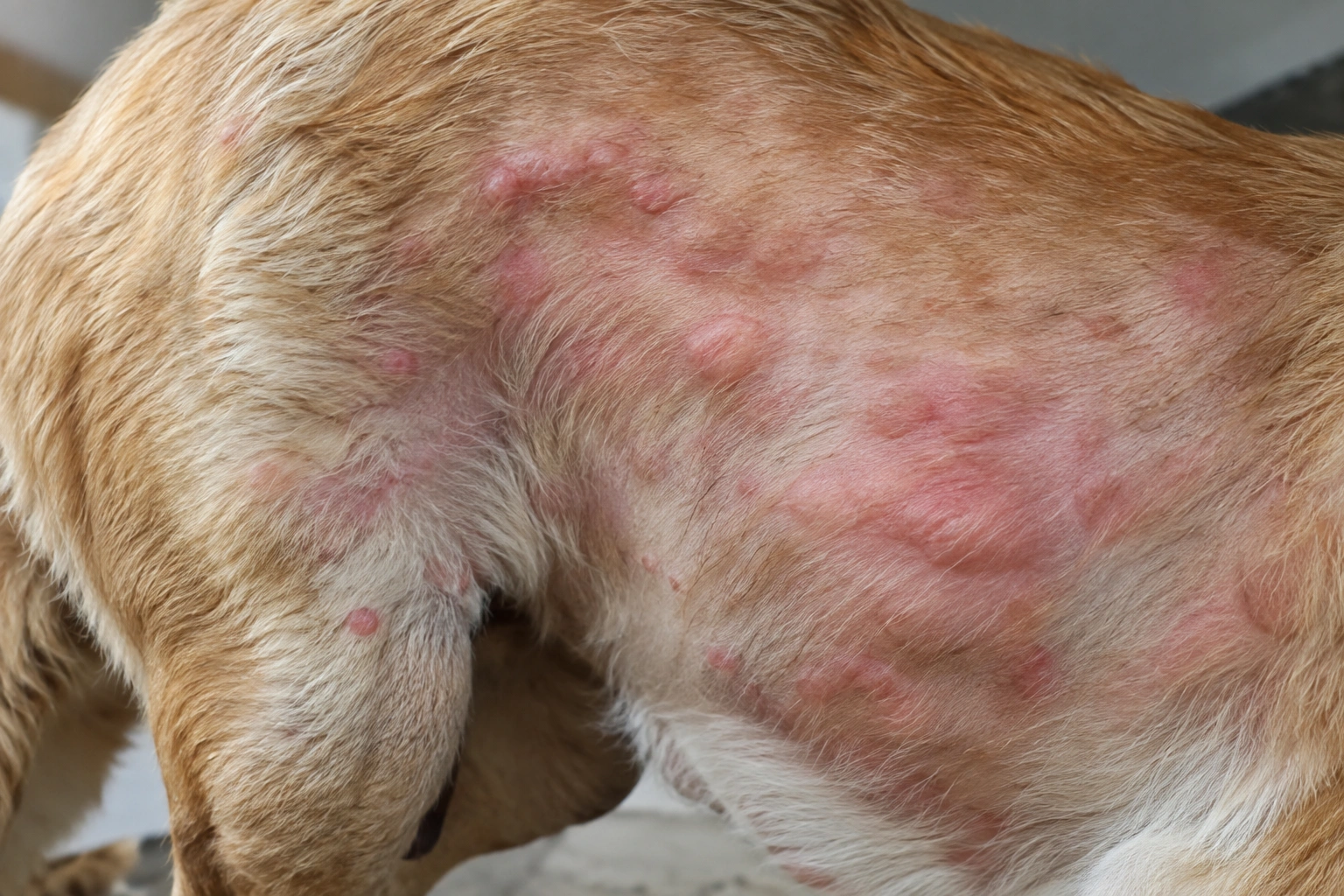
A useful way to picture them: hives often look less like a wound and more like the skin has briefly puffed up in spots.
In short-haired dogs, they can be easy to see. You may notice:
– small raised bumps
– red, swollen patches
– a rash-like pattern of “mosquito bite” bumps
– uneven fur where the coat seems to stand up over the welt
The bumps may be round, oval, or a little irregular in shape, and some can have a paler center with a redder edge. That center-pale look can make them easier to mistake for other skin changes at first glance.
In long-haired or thick-coated dogs, the bumps may be harder to spot directly. Sometimes the coat looks lifted or lumpy, and you feel the welts before you see them. That matters with long-haired or heavily coated dogs, because the fur can hide what is happening underneath.
Hives can vary in size, too. Some are tiny and scattered. Others are larger, more obvious welts that seem to merge into puffy patches. They may also change shape or seem to come and go over a short period instead of staying fixed in one place.
A practical clue: if the bumps appeared suddenly and the skin looks raised rather than flaky, wet, or greasy, hives move higher on the list.
Where Hives Usually Show Up on the Body
Hives can appear almost anywhere, but they often show up on the:
– face
– lips
– muzzle
– ears
– eyelids or around the eyes
– neck
– chest
– belly
– legs
– back
That spread matters because hives are often a body-wide allergic response, not just a single irritated spot. You may find a few bumps on the belly and then notice more on the face or legs a short time later.
Sometimes the swelling is subtle at first. The fur may hide it until you part the coat and look closely. On the face, though, hives can be easier to notice because the skin is thinner and swelling stands out faster. Swelling around the eyes is especially worth watching because it can make the reaction look more dramatic than a few isolated bumps suggest.
If the reaction seems to be spreading across multiple areas, treat that as more concerning than a few bumps in one place.
How Hives Feel: Itchy, Tender, or Just Noticeable
Hives are often itchy, but not always intensely so. Some dogs scratch, rub their face, or seem restless. Others barely seem bothered and only show the skin changes.
That difference matters because a dog does not need to be frantic for the bumps to be hives. Mild cases can look surprisingly calm.
The skin may feel:
– raised and smooth
– slightly warm
– puffy under the fur
– tender if touched in some dogs
In some dogs, hives can be more than itchy — they can feel sore, tender, or uncomfortable, especially if the swelling is more pronounced. If your dog keeps checking the area, rubbing against furniture, or pawing at the face, hives become more likely. But if your dog is quiet and the bumps are still sudden and raised, hives can still be the right explanation.
Common Triggers Behind Sudden Hives in Dogs
Hives are most often linked to an allergic reaction. The tricky part is that the trigger is not always obvious right away.
Common triggers include:
– insect stings or bites
– vaccines
– medications
– foods
– plants
– environmental allergens or irritants
A dog might react after a walk through grass, after a grooming appointment, after a new medication, or within a short time after a vaccine visit. Sometimes the trigger is a bee sting or another insect exposure that happened so quickly you never saw it.
The timing helps. If the bumps appeared soon after a new exposure, that exposure becomes a strong suspect. If your dog was normal before a walk, a vet visit, or a new treat and then suddenly developed welts, that pattern is more useful than trying to guess based on appearance alone.
For a broader look at allergic skin reactions and emergency warning signs, the American Kennel Club has helpful general guidance on dog allergies, while VCA Hospitals is a solid reference for veterinary health topics.
Hives vs Flea Bites, Insect Bites, Rash, Hot Spots, and Angioedema
This is where many owners get stuck. Several skin problems can look similar at a glance, but the details usually separate them.
| Condition | What it tends to look like | Common location | Timing | Itchiness | Urgency |
|---|---|---|---|---|---|
| Hives | Raised, smooth welts or puffy bumps; may change quickly | Anywhere, often face, belly, legs, back | Sudden, often minutes to hours after a trigger | Often itchy, not always severe | Can be urgent if swelling or breathing signs appear |
| Flea bites | Small bumps, often clustered; may see black flea dirt | Tail base, belly, thighs, neck | Develops with ongoing flea exposure | Usually itchy | Usually not an emergency unless severe skin irritation or infection develops |
| Tick bites | Often a single small bump or localized swelling at the bite site; you may also see the tick attached | Often ears, neck, face, between toes, or other hidden areas | Can appear after a tick attaches or is removed | May be mild, itchy, or not very noticeable at first | Usually not an emergency unless there is significant swelling, infection, or illness |
| Insect bites/stings | Local swelling, redness, sometimes a clear sting site | Single spot or localized area | Sudden after exposure | Can be itchy or painful | Urgent if facial swelling or systemic signs appear |
| Rash/irritation | Flat redness, scattered irritation, or widespread skin change | Often areas of contact or friction | Can build more gradually | Often itchy | Usually less urgent unless severe or spreading |
| Hot spot | Wet, red, inflamed, irritated patch; often self-trauma | Commonly neck, hips, cheeks, legs | Can worsen fast after licking or scratching | Usually very itchy and painful | Vet visit recommended |
| Angioedema | Deeper swelling, especially face, lips, eyelids, muzzle | Face and soft tissues | Sudden | May or may not itch | More concerning; can overlap with allergic emergencies |
A few decision points help:
– Hives are usually raised and scattered, not wet.
– Hot spots look angrier, wetter, and more irritated.
– Flea bites often cluster in predictable spots, especially near the tail base.
– Tick bites are usually more localized, and you may actually find the tick or a small bite site rather than multiple moving welts.
– Angioedema is deeper swelling, often around the face, and can look more alarming than surface welts.
If your dog has facial swelling and the skin is puffed rather than just bumpy, think beyond simple hives. Facial swelling can sit on the same allergic spectrum but deserves more caution because it can be part of a more serious reaction.
What to Do in the First Hour
If your dog suddenly develops possible hives, the first hour is about safety and observation, not guessing.
Here’s the practical order I’d use:
-
Check your dog’s breathing and behavior.
If breathing looks difficult, noisy, or fast, skip home monitoring and get help. -
Look for swelling beyond the bumps.
Face, lips, eyelids, muzzle, and throat area matter most. -
Think back to the last few hours.
Recent vaccine, walk, new treat, medication, insect sting, or plant exposure can help identify a trigger. -
Remove the likely trigger if you can do so safely.
For example, move the dog away from the area, stop the new treat, or bring the dog indoors. -
Call your vet right away for advice before giving any medication.
Even if your dog seems otherwise stable and is breathing normally, ask your vet what to do next before giving an antihistamine or any other treatment. -
Take a photo.
This helps your vet see how quickly the skin changed, especially if the bumps fade before the appointment. -
Do not give human medication unless your vet has told you to.
That’s especially important because not every antihistamine or human product is safe for every dog.
If the hives are mild and your dog is otherwise normal, a short period of observation can be reasonable. But if the bumps are spreading, the face is swelling, or your dog seems unwell, the situation is moving out of the “watch and wait” category.
When Dog Hives Are an Emergency
Some hives are just hives. Others are the first stage of a bigger allergic reaction.
Treat it as urgent or emergency veterinary care if you see any of the following:
– trouble breathing
– noisy breathing or gagging
– vomiting
– weakness or collapse
– pale gums
– rapid worsening swelling
– swelling of the face, lips, tongue, or throat
– restlessness combined with looking unwell
– hives that spread quickly across the body
This matters because hives can sometimes progress to anaphylaxis, which is a life-threatening emergency. In severe allergic reactions, the body can constrict the airway and drop blood pressure quickly. That is not a “wait until morning” situation.
If your dog was stung, vaccinated, or exposed to a new medication and then develops hives plus any systemic sign, call a vet immediately or head to an emergency clinic.
For a clear emergency-oriented overview, PetMD explains why sudden hives can be linked to anaphylaxis, and The Kennel Club is another useful general resource for dog owners looking for trustworthy health information.
When Monitoring May Be Reasonable and When to Call the Vet
Mild, localized hives can sometimes settle on their own within hours. That said, “mild” has to mean more than just “the dog is still standing.”
Home monitoring is more reasonable when:
– the welts are small and limited
– your dog is breathing normally
– there is no vomiting
– there is no facial or throat swelling
– the bumps are not rapidly spreading
– your dog seems otherwise bright and comfortable
Call your vet the same day if:
– the hives are increasing in number or size
– the bumps keep returning
– you cannot identify any likely trigger
– your dog seems itchy enough to keep rubbing or scratching
– the reaction happened after a vaccine, medication, or sting
– you are unsure whether the swelling is skin-level or deeper
One practical rule: if the skin findings are the only sign and they are not worsening, that points toward monitoring. If the dog’s whole body seems involved, or the dog’s behavior changes, that points toward veterinary care.
Why Hives Can Be Harder to Spot on Some Dogs
Coat type changes how hives present. On short-haired dogs, the welts can be obvious right away. On long-haired dogs, the fur may hide the skin changes, so the coat looks uneven or lifted before the bumps are obvious.
That means you may need to:
– part the fur in several places
– feel for raised areas under the coat
– check the face, belly, and legs carefully
– compare both sides of the body
Long-haired or heavily coated dogs can be a good example of why this matters. Their coat often makes subtle swelling harder to spot until you examine the skin directly.
A Simple Way to Judge What You’re Seeing
When you’re deciding whether the bumps are likely hives, ask four questions:
-
Did they appear suddenly?
Sudden onset strongly supports hives. -
Are they raised and smooth rather than wet or crusty?
That points toward hives more than a hot spot or infection. -
Are they spreading or appearing in multiple areas?
Widespread or changing welts fit an allergic reaction. -
Is there any swelling, vomiting, weakness, or breathing change?
If yes, treat it as urgent.
That simple check is often enough to decide whether you can monitor briefly or need a vet now.
When to See a Veterinarian or Certified Trainer
For hives specifically, the right professional is usually a veterinarian, not a trainer. A trainer becomes relevant only if the dog’s scratching, licking, or anxiety around handling is making skin care difficult after the medical issue has been addressed.
See a veterinarian promptly if:
– the hives are spreading
– the dog has facial swelling
– the dog seems unwell
– the cause is unclear
– symptoms followed a vaccine, medication, or sting
– you are unsure whether this is hives or something more serious
If your dog is otherwise stable, your vet may advise observation, a recheck, or treatment based on the likely trigger and severity. The key is not to wait for the problem to declare itself if the reaction is clearly progressing.
FAQ: Dog Hives
What do hives look like on dogs?
They usually look like sudden raised red welts, bumps, or puffy patches. On short-haired dogs they can look like a rash of large mosquito bites. On long-haired dogs, you may notice raised or uneven fur before you see the skin clearly.
Are hives itchy for dogs?
Often yes, but not always severely. Some dogs scratch or rub, while others seem only mildly bothered. Hives can also be tender or sore in some dogs.
How fast do dog hives appear?
They can appear quickly, often within minutes to hours after exposure to a trigger.
Can hives go away on their own?
Mild cases may clear within hours, and some can resolve within 24 to 48 hours. If they are spreading or not improving, call your vet.
Are dog hives an emergency?
They can be. Hives plus facial swelling, vomiting, weakness, collapse, or breathing trouble should be treated as urgent.
Can I give my dog something at home?
Do not give human medication unless your vet has told you exactly what is appropriate. The safest first steps are to monitor, remove the likely trigger if possible, and contact your vet for guidance before giving any antihistamine or other medication.
If you want to compare skin signs more broadly, our guide on what hives on dogs look like can help you spot the difference between hives and other common skin issues.
