
What Heat Rash on Dogs Looks Like: A Practical Guide for Spotting It Early

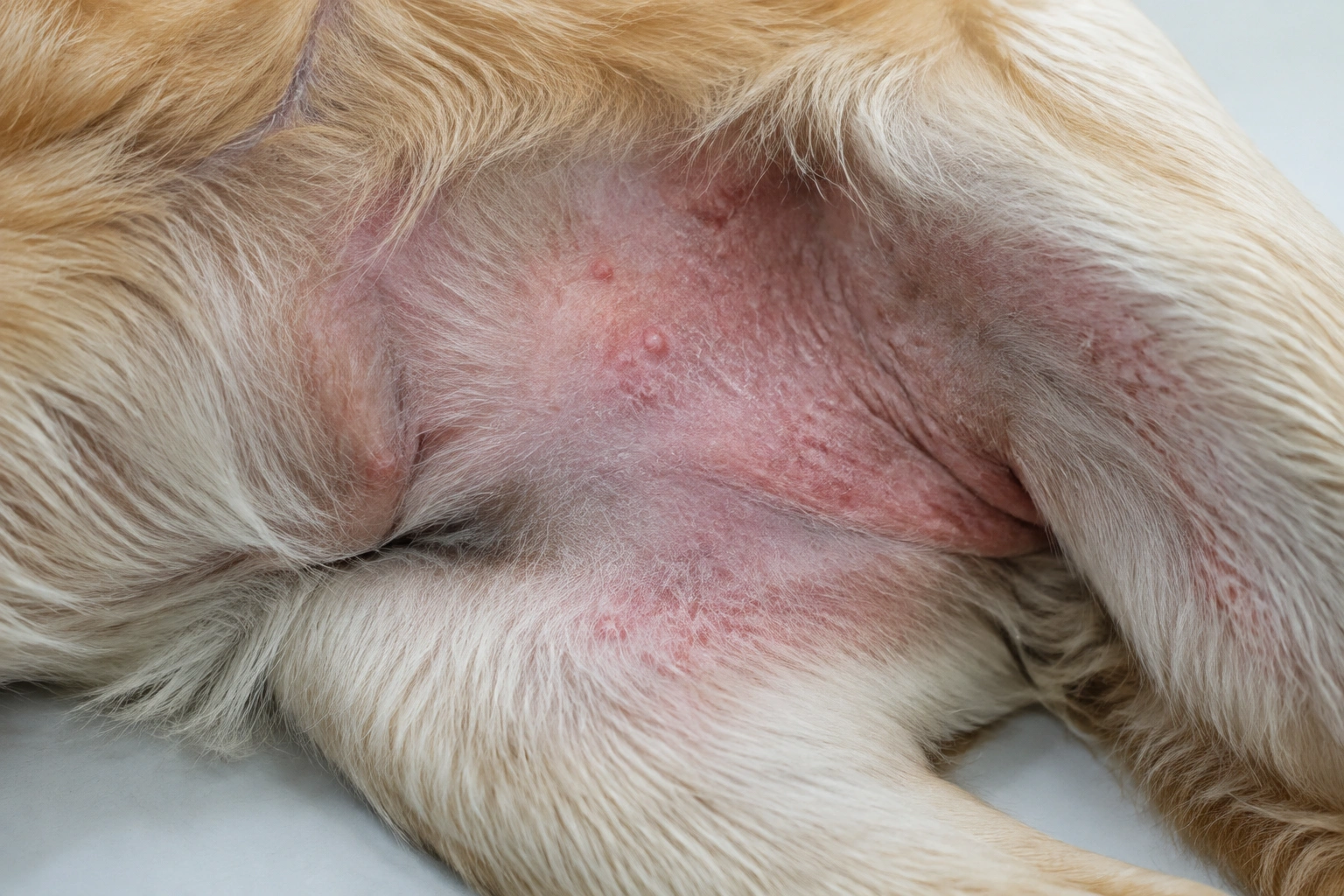
If you’re trying to work out what heat rash on dogs looks like, the short answer is this: it usually shows up as pink or red irritated skin, small red bumps, or a patch of inflamed skin, often in places where heat, moisture, and friction build up. On a dog with a thick coat, you may notice it more by touch than sight at first — the skin can feel a little warm, rough, or sensitive.
The tricky part is that heat rash does not always look dramatic. In mild cases, it may resemble simple redness. In more obvious cases, it can look like clusters of tiny bumps, pimple-like spots, or irritated skin that a dog keeps licking. A rash under a harness, in the groin, or in the armpits after a humid walk is a common pattern worth checking closely.
For Border Collie owners, this matters because active dogs often spend a lot of time exercising in warm weather, then trap moisture in a dense coat afterward. That combination can irritate the skin faster than people expect.
Quick visual answer: the most likely appearance
A mild heat rash usually looks like diffuse redness with small pink or red bumps. The area may look a little flushed rather than obviously injured. In some dogs, especially early on, the change is subtle enough that you notice it when you part the fur or run your hand over the skin.
More noticeable heat rash can look like:
- a patch of red, inflamed skin
- small pimple-like bumps
- slight swelling in the irritated area
- scabby or sore spots if the dog has been scratching or licking
- skin that seems warm to the touch or more textured than the surrounding area
A useful rule: if the skin looks irritated but still dry and fairly localized, heat rash is possible. If it looks wet, oozing, very painful, or rapidly worsening, think beyond simple heat rash.
For a useful comparison with a similar skin issue, see what hives on dogs look like.
Where heat rash usually appears on a dog’s body
The highest-probability places to check are the areas where airflow is poor, fur is dense, or gear rubs the skin. That usually means:
- belly
- groin
- armpits
- skin folds
- under a collar
- under a harness
- under bandages or other covered areas
- sometimes paws or legs after contact with hot surfaces
These spots matter because they trap heat and moisture. Skin that stays damp after exercise, a swim, or a walk in humid weather is more likely to get irritated. Equipment can add friction on top of that, which turns mild irritation into a more obvious rash.
A practical check after a hot outing: part the fur on the belly and inside the legs first. Those areas are often easier to inspect than the back or neck, and they’re common places for early changes to show up.
Why heat rash happens: heat, moisture, friction, and trapped airflow
Heat rash is usually not just “being hot.” It’s the combination of heat plus moisture plus limited airflow that irritates the skin. Add friction from movement, collars, harnesses, or a wet coat, and the skin can become red and inflamed.
Common triggers include:
- hot, humid weather
- exercise in warm conditions
- wet fur that stays damp
- lying on hot surfaces
- tight or rubbing gear
- skin folds that trap moisture
Dogs do not sweat across their whole body the way humans do. They rely heavily on panting, and they also have some sweat glands in limited areas such as the paw pads, so heat management is different. When the coat stays damp or airless, the skin underneath can become irritated even if the dog is otherwise coping well.
Dogs with skin folds are more vulnerable because those folds hold heat and moisture. That’s one reason some breeds are more prone to skin irritation in hot weather. Active, thick-coated dogs can also struggle if they’re exercised hard and then left damp under the coat.
What heat rash feels like versus what it looks like
Owners often ask whether heat rash is itchy, tender, or warm. The answer is usually yes, it can be irritating. A dog may lick the area more than usual, scratch at it, or seem bothered when you touch the skin.
Early on, the skin may feel:
- slightly warm
- a little rough or bumpy
- mildly sensitive
- more uncomfortable than it looks
That said, not every red patch is simple heat rash. If the dog is clearly painful, if the area is swelling quickly, or if the skin looks wet and angry, another problem may be developing.
A helpful decision point is this:
Mild heat rash tends to be localized irritation. Hot spots and infections tend to look and behave more aggressively.
Heat rash vs hot spots, allergies, flea bites, hives, and heatstroke
This is where many owners get stuck. Several skin problems can look similar at first glance, but the pattern usually gives you clues.
| Condition | What it usually looks like | Common location | Moisture / smell | Pain / itch | Urgency |
|---|---|---|---|---|---|
| Heat rash | Redness, small bumps, mild irritation | Belly, groin, armpits, folds, under gear | Usually dry or slightly damp | Itchy or mildly tender | Often non-urgent if mild and localized |
| Hot spot | Raw, wet, inflamed patch that can worsen quickly | Anywhere, often where the dog can lick or scratch | Often moist, may smell bad | Often painful and very irritating | Vet visit often needed |
| Allergic dermatitis | Red skin, scratching, sometimes widespread irritation | Can be multiple areas, often recurring | Usually dry unless secondarily infected | Often itchy | Depends on severity and spread |
| Flea bites | Small bumps or scabs, sometimes clustered | Rump, tail base, hindquarters | Usually dry | Itchy | Usually not urgent, but needs flea control |
| Hives | Raised welts or bumps that appear suddenly | Can be widespread | Usually dry | Itchy; may swell | Can become urgent if swelling affects face or breathing |
| Heatstroke-related illness | Not just skin changes; dog seems unwell overall | Whole body concern, not just skin | Skin may be hot; systemic signs matter more | May be weak, distressed, or disoriented | Emergency |
Heat rash vs hot spots
A hot spot is usually wetter, more painful, and more rapidly worsening than heat rash. If the skin looks raw, sticky, or smelly, treat it as more than simple irritation.
Heat rash vs allergies
Allergies often affect multiple areas and may come back repeatedly. Heat rash is more likely to line up with a specific hot, humid, or friction-heavy event.
Heat rash vs flea bites
Flea bites often cluster around the rump, tail base, and hindquarters. Heat rash is more likely in places where heat and moisture get trapped, such as the belly or armpits. Flea bites are usually small papules or crusts, often in groups near the tail base, while heat rash is more often a broader red patch or small bumps in sweaty, rubbed areas.
Heat rash vs hives
Hives usually appear more suddenly as raised welts. If the bumps look puffier, move around, or appear across several areas at once, hives are a stronger possibility.
Heat rash vs heatstroke
Heatstroke is not a skin-only problem. If the dog is panting heavily, weak, vomiting, disoriented, or collapsing, that is an emergency even if the skin irritation seems minor.
For general safety guidance on heat-related illness, the AKC’s heat safety advice is a useful place to start, but any signs of heatstroke need urgent veterinary attention.
What heat rash on a dog looks like in a real-life scenario
Picture a Border Collie coming in from a humid walk. The coat is damp along the belly and inside the legs. When you part the fur, you see a pink patch in the groin and a few small red bumps in the armpits. The dog is alert, eating normally, and not acting painful.
That pattern fits a mild irritation picture more than a serious skin problem.
Now compare that with a dog that has a wet, smelly, painful patch on the flank and keeps biting at it. That looks more like a hot spot than heat rash.
The difference matters because the right next step is different.
What you can do at home for a mild-looking rash
If the rash is mild, localized, and your dog otherwise seems normal, home care can be reasonable.
1) Cool the dog without soaking the skin
Move the dog into a cool room, shade, or air conditioning and let the body temperature settle. If the coat is damp, a fan on a low setting can help air move across the fur while you keep an eye on the skin. The goal is gentle cooling, not drenching the skin and leaving it wet.
2) Dry the area thoroughly
If the fur is wet from rain, a swim, or a sweaty walk, use a towel and gentle airflow to dry the coat. This is especially important in the belly, armpits, groin, and under the collar or harness line.
3) Clean only if the skin is dirty
If there’s dirt or debris, a gentle rinse may help, but avoid overdoing it. The goal is a clean, dry surface — not a constantly wet one. Heavy ointments can also trap heat, so keep treatment simple unless your vet tells you otherwise.
4) Stop licking and scratching
If your dog keeps working at the area, the skin can break down and become infected. A cone, recovery collar, or temporary supervision can prevent a minor rash from turning into a bigger problem.
5) Give the skin a break from friction
If the rash sits under a harness or collar, remove the pressure if it’s safe to do so. If you still need the gear for control, use it for the shortest practical time and recheck the skin after about 30 to 60 minutes out of gear.
When to stop home care and call the vet
Do not keep watching it at home if any of these happen:
- the rash is spreading
- the skin becomes painful
- you see oozing, pus, or a bad smell
- the area becomes very swollen
- the dog seems lethargic, feverish, or generally unwell
- the skin breaks down into sores or open wounds
- the dog is scratching or licking so much that the area is worsening
- there are any signs of heatstroke
A vet visit is also the better choice if you are not sure whether the issue is heat rash, hives, infection, or a hot spot. Uncertainty is a valid reason to get the skin checked, especially if the dog is uncomfortable.
For a broader look at heat rash patterns and prevention, Montgomery Veterinary Associates describes heat rash as potentially appearing as pink or red irritated skin, small pimple-like spots, or scabs and sores from scratching.
How to prevent heat rash from coming back
Prevention is mostly about reducing the conditions that cause the rash in the first place.
Keep the coat from staying damp
After exercise, swimming, or a rainy walk, dry the coat well. This is one of the simplest ways to reduce trapped moisture.
Adjust timing on hot days
Move hard exercise to cooler parts of the day. A Border Collie can still enjoy activity, but long, intense sessions in heat and humidity raise the odds of skin irritation.
Watch gear contact points
Check the skin under collars and harnesses after long walks or hikes. If you notice repeated redness in the same place, the problem may be friction rather than a random rash.
Groom with airflow in mind
A well-maintained coat can be part of general coat-care guidance that may help air move through the fur, especially in active double-coated dogs. The goal is not to strip the coat down to the skin, but to reduce excess trapped debris and moisture.
Provide shade and water
Simple, boring basics still matter: shade, rest breaks, and water reduce heat load and lower the chance of skin irritation after exertion.
For general skin and coat care, VCA Hospitals has reliable guidance on when skin changes need veterinary attention.
Expert notes for Border Collies and other active double-coated dogs
Border Collies can be prone to skin irritation in the right conditions, especially when they’re active in warm, humid weather. A dog that runs hard, pants heavily, and then stays damp under a dense coat can develop irritation in the same places again and again.
The pattern I’d pay closest attention to is this:
- humid exercise
- damp belly or armpits afterward
- irritation under a harness line
- repeated licking of the same area
If that keeps happening, don’t just treat each episode as a one-off. Look for the cause: gear fit, timing of exercise, drying routine, or coat management.
That approach is usually more effective than chasing the rash after it appears.
When to See a Veterinarian
A veterinarian is the right professional for a rash that is painful, spreading, smelly, oozing, or linked with systemic illness. If the issue seems tied to a collar or harness, a vet can also help you decide whether the skin needs treatment and whether the gear should be adjusted or temporarily avoided.
FAQ
What does heat rash on dogs look like at first?
At first, it often looks like mild redness or small pink bumps. In some dogs, the skin may feel warmer or slightly rough before it looks obviously irritated.
Where does heat rash usually show up?
The most common places are the belly, groin, armpits, skin folds, and areas under collars or harnesses. Those spots trap heat, moisture, and friction more easily.
Is heat rash on dogs itchy?
It can be. Many dogs seem itchy or mildly irritated, and some lick or scratch the area. If the dog seems very painful, the problem may be something else.
Can heat rash go away on its own?
Mild cases may improve if the dog is cooled, dried, and kept from licking the area. If it spreads, smells bad, or becomes painful, it needs veterinary attention.
How do I know if it’s a hot spot instead?
A hot spot is usually wetter, rawer, and more painful than simple heat rash. It often worsens fast and may smell bad.
Should I bathe the rash?
Only if the area is dirty or your vet has advised it. The bigger issue is often getting the skin dry and keeping it dry.
Is heat rash a sign of heatstroke?
Not necessarily. Heat rash is a skin issue. Heatstroke is a whole-body emergency with signs like weakness, heavy panting, vomiting, confusion, or collapse.
When should I call the vet?
Call if the rash is spreading, painful, oozing, smelly, or if your dog seems unwell. If you suspect heatstroke, seek emergency care immediately.
Can collars or harnesses cause it?
Yes, they can contribute if they trap moisture or rub the skin. If the rash keeps appearing in the same place, the gear fit is worth reviewing.
Are Border Collies more at risk?
They can be, especially when they’re active in warm, humid conditions. Their coats and exercise level can trap heat and moisture if the post-exercise routine is not managed well.
