
What Makes a Border Collie Coat Healthy?

Quick Answer
A healthy Border Collie coat is clean, reasonably smooth, resilient, and appropriate for the dog’s natural coat type. The skin underneath should be comfortable and free from persistent redness, sores, excessive flaking, or unusual greasiness. Balanced nutrition, regular brushing, appropriate bathing, parasite prevention, and good overall health all contribute to a healthy coat.
A Border Collie’s coat does not need to look perfectly glossy or shed very little to be healthy. Natural differences in genetics, coat length, age, and season affect how the fur looks and feels.
The more useful approach is to assess the coat alongside the skin underneath it. A dog with normal seasonal shedding and a slightly coarse outer coat may be perfectly healthy, while a dog with sudden bald patches, persistent itching, or a greasy coat may need closer attention.
1. What Are the Signs of a Healthy Border Collie Coat?
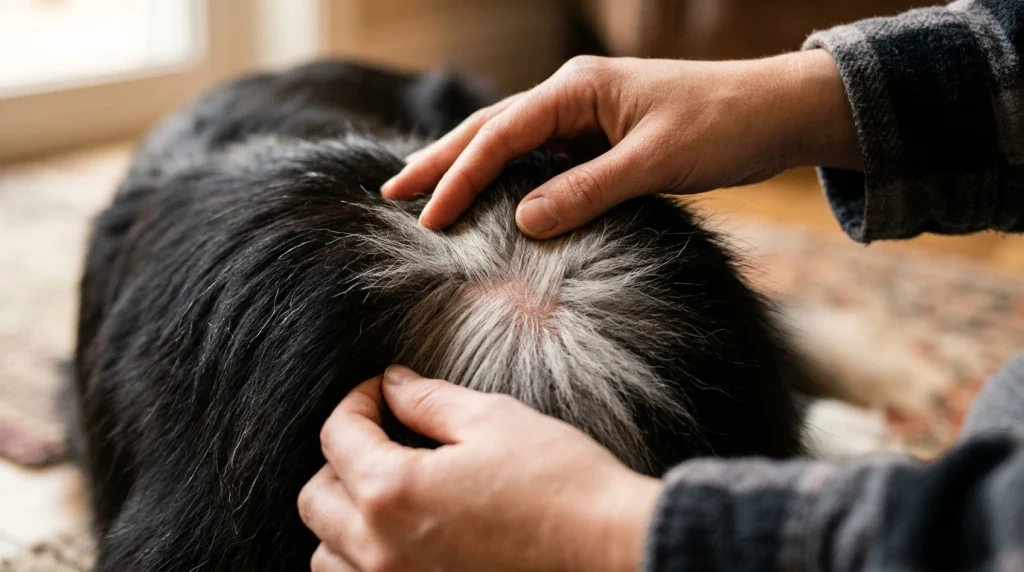
A healthy Border Collie generally has a coat that feels reasonably smooth for its natural texture, protects the skin, and remains free from extensive matting. The skin should not be persistently irritated, and the dog should not constantly scratch, lick, or chew at its body.
- Natural texture: The outer coat may feel slightly coarse, while the undercoat is softer and denser.
- Consistent coverage: Fur should cover the body in a pattern consistent with the dog’s normal coat, without unexplained bald areas.
- Comfortable skin: Persistent redness, sores, heavy scaling, and greasy buildup are not normal signs of good skin health.
- Manageable shedding: Loose hair is expected, particularly when the undercoat changes seasonally.
- Healthy appearance: The coat may have a natural sheen, but shine alone does not prove that the dog is healthy.
- Minimal tangling: The fur should separate reasonably easily during brushing, without painful knots pulling at the skin.
These signs are most useful when compared with your individual dog’s normal condition. A naturally fluffy Border Collie will not look like a short-coated dog, and healthy fur does not have to feel silky.
2. How Does a Border Collie’s Double Coat Affect Its Health?
Border Collies have a double coat consisting of an outer layer and a softer undercoat. The outer hairs provide protection from weather and debris, while the undercoat contributes to insulation. Both layers are important to the coat’s natural function.
The breed commonly has two coat varieties:
- Rough coat: Medium-length hair with feathering around areas such as the chest, legs, and tail. These longer sections can collect debris and develop tangles more easily.
- Smooth coat: Shorter hair that lies closer to the body. It is generally easier to detangle, although the dense undercoat still requires maintenance.
Neither coat variety is automatically healthier than the other. Proper texture, suitable coverage, comfortable skin, and the dog’s overall condition matter more than whether the fur is long or short.
For a closer look at these differences, read our guide to Border Collie coat types and their grooming needs.
Because the coat has two layers, a dog can look tidy on the surface while loose undercoat or small tangles remain underneath. Part the fur during grooming to check the skin rather than judging the coat by its outer appearance alone.
Avoid shaving a healthy double coat simply to reduce shedding or make summer grooming easier. Routine brushing and appropriate trimming of excess hair around the feet are generally more suitable. Extensive matting or a medical reason for clipping may require help from a qualified groomer or veterinarian.
3. What Nutrition Helps Keep a Border Collie Coat Healthy?
A complete, balanced diet suitable for your dog’s life stage is one of the foundations of healthy skin and fur. Hair production requires adequate protein, fats, essential fatty acids, vitamins, minerals, and enough overall energy.
If a dog’s diet does not provide the nutrients it needs, the coat may become dull, brittle, thin, or unusually dry. However, these changes can also result from illness or skin disease, so appearance alone cannot identify a nutritional deficiency.
To support coat health:
- Feed a complete and balanced dog food appropriate for your Border Collie’s age and health needs.
- Adjust portions to maintain a healthy body condition rather than feeding extra calories to improve coat appearance.
- Keep fresh drinking water available throughout the day.
- Introduce dietary changes gradually and monitor how your dog responds.
- Ask your veterinarian before adding fish oil, vitamins, minerals, or other supplements.
Omega-3 and omega-6 fatty acids help support normal skin function, but adding more is not automatically better. Excessive or poorly chosen supplementation can unbalance a diet, and some coat problems need treatment rather than a nutritional product.
The VCA Animal Hospitals guide to healthy coat and skin appearance explains how nutrition, digestion, and general health can affect a dog’s fur.
4. How Often Should You Brush a Border Collie?
Most Border Collies benefit from brushing once or twice a week, with additional sessions when loose undercoat builds up or tangles appear. Rough-coated dogs may need more frequent attention to their feathering, while smooth-coated dogs still need brushing to remove loose hair.
Regular grooming helps remove dead hair, dirt, and small debris while allowing you to inspect the skin. It also helps prevent small tangles from developing into tight mats that can pull on the skin and trap moisture.
A practical brushing routine
- Inspect first. Check behind the ears, beneath the front legs, around the tail, and through the longer feathering for tangles, burrs, or irritated skin.
- Brush in manageable sections. Use gentle strokes that reach the coat without scraping or repeatedly irritating the skin.
- Remove loose undercoat carefully. Use a suitable comb or undercoat tool when needed, especially during heavier shedding.
- Check your progress. A comb should move through the coat without catching on hidden knots or pulling painfully.
- Increase brushing during heavy shedding. Short daily sessions may be useful when your dog is releasing substantial amounts of undercoat.
Stop if brushing causes pain, redness, or repeated resistance. Tight mats close to the skin should not be pulled out forcefully; a professional groomer or veterinarian can help remove them safely.
Tip
Use grooming time to check the skin, not just remove loose fur. Noticing a new lump, tick, irritated patch, or unusual thinning early can help you address the problem before it worsens.
5. Does Bathing Make a Border Collie’s Coat Healthier?
Bathing helps when a Border Collie’s coat is dirty, muddy, oily, or carrying debris that brushing cannot remove. It can improve cleanliness and appearance, but frequent shampooing will not correct an underlying nutritional deficiency, allergy, or other medical problem.
There is no single bathing schedule that suits every Border Collie. Consider the dog’s activity, coat condition, skin sensitivity, and the amount of dirt it collects. A dog that spends time outdoors may need cleaning sooner than one that stays relatively clean indoors.
For a healthy coat, follow these basic practices:
- Brush out loose hair and existing tangles before bathing.
- Use a gentle shampoo formulated for dogs.
- Rinse thoroughly so product does not remain against the skin.
- Dry the dense undercoat completely, paying particular attention to thick feathering.
- Avoid repeated shampooing when brushing or spot-cleaning would be sufficient.
Persistent odor, greasy fur, or flaking that returns quickly after bathing deserves investigation. Repeatedly changing shampoos may irritate sensitive skin without addressing the cause.
Our guide to how bathing affects a Border Collie’s coat explains the role of washing, rinsing, and drying in routine coat care.
6. What Can Cause a Border Collie’s Coat to Become Unhealthy?
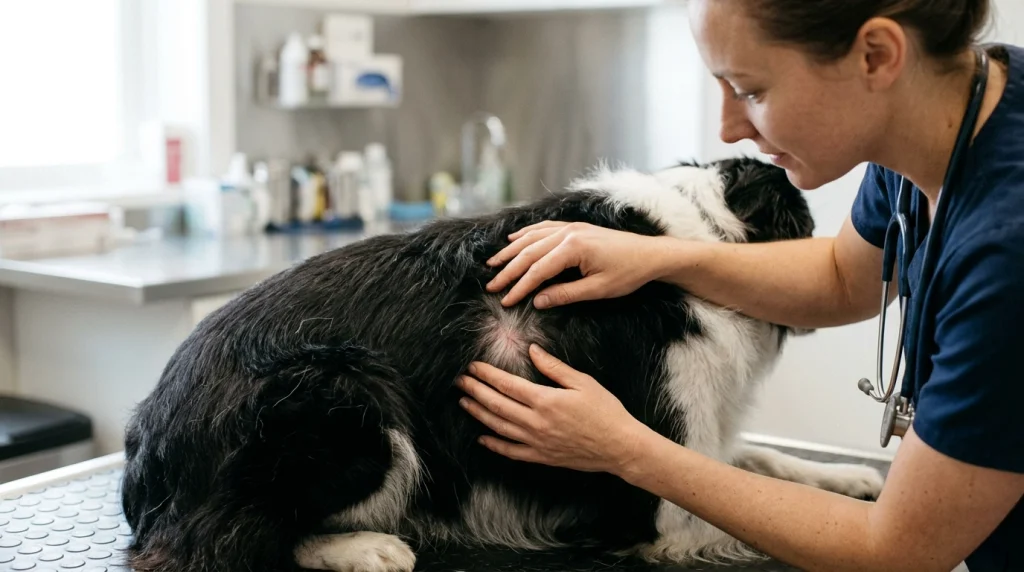
A coat that suddenly changes texture, loses coverage, or develops persistent flakes may indicate a problem beyond ordinary grooming. Common possibilities include nutritional issues, parasites, allergies, infections, and certain hormonal or other medical conditions.
- Parasites: Fleas and mites can trigger itching, inflammation, scratching, and hair loss.
- Allergies: Allergic skin disease can cause redness, repeated licking, irritated paws, and secondary skin infections.
- Infections: Some bacterial or fungal conditions can produce odor, scaling, sores, or areas of hair loss.
- Nutritional problems: An unbalanced diet or poor nutrient absorption can affect hair quality and skin function.
- Underlying illness: Certain hormonal disorders and other health conditions can alter coat growth or texture.
- Stress or discomfort: Stress-related behaviors or pain that interferes with normal grooming can affect the coat’s appearance.
These signs are not enough to diagnose a particular condition. For example, itching does not automatically mean an allergy, and a dull coat does not necessarily mean the food is inadequate.
Pay attention to the pattern and timing of the change. Sudden patchy hair loss is different from an even release of loose undercoat, and persistent itching is different from an occasional scratch.
7. When Should You Contact a Veterinarian?
Arrange a veterinary assessment when coat changes are persistent, unexplained, worsening, or accompanied by signs of skin discomfort or illness. Early evaluation can help identify whether the problem involves parasites, infection, allergies, nutrition, or another underlying condition.
Seek veterinary advice if you notice:
- New bald patches or progressive hair thinning.
- Persistent scratching, licking, chewing, or rubbing.
- Red, painful, swollen, crusted, or oozing areas of skin.
- Strong or unusual odor that remains after appropriate cleaning.
- Recurring greasy buildup, heavy scaling, or a sudden change in coat texture.
- Coat changes alongside reduced appetite, unusual tiredness, weight changes, or other changes in normal behavior.
Severe pain, rapidly spreading swelling, extensive open sores, or a dog that seems seriously unwell warrants prompt veterinary attention.
Before the appointment, note when the problem started, which areas are affected, whether itching is present, and whether you recently changed your dog’s food, grooming products, or parasite prevention. Photographs can help document changes over time.
Do not apply human skin treatments, use leftover medication, or start multiple supplements without appropriate veterinary guidance. These measures can irritate the skin or complicate efforts to identify the actual cause.
Related Product
Brush for a Double-Coated Dog
A suitable pin brush or gentle slicker brush can help remove loose fur and prevent tangles during regular Border Collie grooming. Choose a tool that suits your dog’s coat length and use it without scraping the skin.
As an Amazon Associate, we earn from qualifying purchases.
Frequently Asked Questions
Can a Border Collie have a healthy coat that is not very shiny?
Yes. Shine varies with natural coat texture, color, lighting, and individual differences. A reasonably smooth coat with comfortable skin and normal coverage is more reassuring than shine alone. Persistent dullness accompanied by dryness, itching, or hair loss deserves closer attention.
Does a Border Collie’s coat change as it gets older?
Yes. Coat density, texture, and color can change with age and normal hair growth. However, sudden or extensive thinning should not automatically be attributed to aging, especially when skin irritation or other symptoms are present.
Is seasonal shedding a sign of poor coat health?
Not necessarily. Border Collies naturally shed, and loose undercoat can become more noticeable during seasonal changes. Even shedding with healthy-looking skin is generally less concerning than bald patches, persistent itching, or inflamed areas.
Can I improve my Border Collie’s coat by adding fish oil?
Not every dog needs a supplement. Essential fatty acids support normal skin function, but additional fish oil may be unnecessary or unsuitable for some dogs. Ask your veterinarian whether supplementation is appropriate before adding it to a balanced diet.
Why does my Border Collie have dandruff?
Flakes can occur for several reasons, including dry skin, grooming issues, parasites, allergies, and other skin conditions. Occasional mild flaking is different from persistent scaling, redness, itching, or odor, which should be evaluated by a veterinarian.
Should I trim my Border Collie’s coat to keep it healthy?
Routine shaving is generally unnecessary for a healthy double-coated Border Collie. Basic grooming and limited tidying of excess hair around the feet may be sufficient. Severe matting or medical clipping needs should be assessed individually by a qualified groomer or veterinarian.
Conclusion
A healthy Border Collie coat reflects a combination of genetics, balanced nutrition, regular grooming, and good overall health. Look for natural texture, consistent coverage, comfortable skin, and shedding that does not leave unexplained bald patches. Brush regularly, bathe when needed, and avoid shaving the double coat simply to control loose fur.
Most importantly, learn what is normal for your individual dog. If the coat develops persistent itching, sores, unusual odor, or sudden hair loss, investigate the cause rather than trying to solve every problem with a different shampoo or supplement. Consistent care and timely veterinary attention help keep your Border Collie comfortable as well as looking healthy.