
What to Do If Your Dog Has a Seizure: A Calm, Practical Guide for Owners

A dog seizure is one of those moments that can make even a steady owner freeze. The dog may collapse, paddle, stiffen, drool, or lose awareness for a short time. Your job in that moment is not to “fix” the seizure. Your job is to keep the dog safe, avoid making things worse, and gather the information your veterinarian will need afterward.

For Border Collie owners, this can feel especially unsettling because these dogs are so alert and responsive most of the time. When that changes suddenly, it can look dramatic. The good news is that the most useful first-aid steps are simple: protect the dog from injury, time the event, and get veterinary guidance as soon as you can.
What to do in the first 5 minutes if your dog has a seizure
If your dog is actively seizing, focus on safety first.
-
Move hazards away from the dog.
Clear coffee tables, sharp objects, lamps, and anything the dog could hit. If the dog is near stairs, water, heat sources, or furniture edges, gently create space around them without grabbing the dog. -
Keep your hands away from the mouth.
Do not put fingers, a spoon, or any object near the dog’s mouth. Avoiding the mouth is important because jaw movements are involuntary during a seizure and you could get bitten. -
Time the seizure.
Use a phone timer or watch as soon as you notice the seizure start. The duration is one of the most important details for the vet. -
Stay calm and speak softly.
Your dog may not register your words in the moment, but keeping your own voice steady helps you think clearly and reduces the chance of panicked mistakes. -
Watch, don’t restrain.
Let the seizure run its course unless the dog is in immediate danger from the environment. Trying to hold the dog down can cause injury to both of you.
If you can safely do it, record a short video. Even 20 to 30 seconds can help your veterinarian identify whether the episode looked like a seizure, a fainting spell, pain response, or another neurologic event. If recording means taking your attention away from safety, skip it and focus on the dog.
What not to do during a dog seizure
A seizure is one of the worst times to rely on instinct alone. Some common “helpful” ideas are actually dangerous.
Do not put anything in the dog’s mouth.
Dogs do not swallow their tongues during seizures, and putting your hand near the mouth can get you bitten.
Do not hold the dog down.
The dog is not choosing the movement. Restraining them can increase the risk of injury, especially if they are thrashing.
Do not give food, water, or medication during the seizure.
The dog may not be able to swallow safely, and anything placed in the mouth can be aspirated.
Do not assume the seizure is harmless just because it stopped.
A short seizure can still be a sign of a toxin, metabolic issue, head injury, or epilepsy. The pattern matters.
Do not drag out the decision to call for help if the seizure is long or repeated.
Time matters here more than reassurance.
How to time the seizure and document what happened
When the seizure ends, write down what you saw while it is still fresh. The goal is not a perfect medical report. The goal is enough detail for your vet to decide what to do next.
Record these points:
- Start and stop time
- How long it lasted
- How many seizures happened
- What the dog was doing right before it started
- Whether the dog lost consciousness
- Whether the body stiffened, paddled, trembled, or collapsed
- Any drooling, urination, or defecation
- Any possible trigger or exposure
For example: medication, chocolate, xylitol, rodent poison, garbage, a fall, a head bump, or access to something unusual - How the dog behaved afterward
- Whether you got a video
If your dog has more than one episode, note the timing between them. That detail helps your vet tell the difference between a one-off seizure and a cluster pattern.
A practical way to think about this is simple: the more unusual the pattern, the more useful your notes become. A single brief event in an otherwise normal dog is very different from repeated episodes, incomplete recovery, or a seizure after possible toxin exposure.
When a dog seizure is an emergency
Some seizures can be monitored briefly at home after they end. Others should be treated as urgent right away.
Go to an emergency vet now if:
- The seizure lasts more than five minutes
- Your dog has more than one seizure in a short period
- Your dog does not return to a near-normal state
- Your dog has trouble breathing
- Your dog is injured during the episode
- You suspect poisoning, toxin exposure, or ingestion of something dangerous
- The seizure started after a fall, head injury, or other trauma
A seizure that is the first one after possible toxin exposure, head trauma, or in an older dog should be treated as urgent even if it stops.
Seizures longer than five minutes are commonly treated as an emergency in veterinary guidance, and that threshold is worth respecting. Even if the dog eventually stops, prolonged seizure activity can become dangerous quickly.
A single brief seizure is still worth a veterinary call, but repeated seizures or a seizure that does not stop normally should not wait for a routine appointment.
A quick comparison to help you decide
| Situation | What it may mean | Best next step |
|---|---|---|
| One brief seizure, dog recovers and acts mostly normal | Could be an isolated event, but still needs vet follow-up | Call your vet soon and share notes/video |
| Two or more seizures in one day or a short period | Cluster pattern, higher urgency | Emergency vet |
| Seizure lasts over 5 minutes | Medical emergency risk rises | Emergency vet immediately |
| Dog is confused briefly but improves | May be normal post-seizure recovery | Quiet monitoring, then vet follow-up |
| Dog stays weak, blind, collapsed, or unresponsive | Not normal recovery | Emergency vet |
If the seizure is still happening when you arrive at the clinic, call ahead if you can and tell the team you are coming with an actively seizing dog. Prioritize safety during transport: keep the dog away from stairs, heat, and hard edges, and do not attempt to drive alone if the dog is actively convulsing and you cannot transport safely.
What to expect after the seizure ends: the postictal phase
The period after a seizure is called the postictal phase. This is when the brain is recovering, and your dog may seem unlike themselves for minutes to hours.
Common post-seizure signs include:
- Confusion or disorientation
- Wobbliness
- Pacing
- Temporary blindness or bumping into things
- Restlessness
- Clinginess
- Mild aggression or snapping if startled
Dogs can remain disoriented or confused after a seizure, and that can sometimes show up as aggressive behavior. That is one reason you should not crowd the dog immediately after the episode ends.
A quiet, dim room is usually the best place to let the dog settle. Keep the area calm and free of stairs or obstacles. If the dog wants water after they are fully able to swallow normally, offer a small amount. Do not force it. If the dog is still very groggy, avoid food until they are more settled.
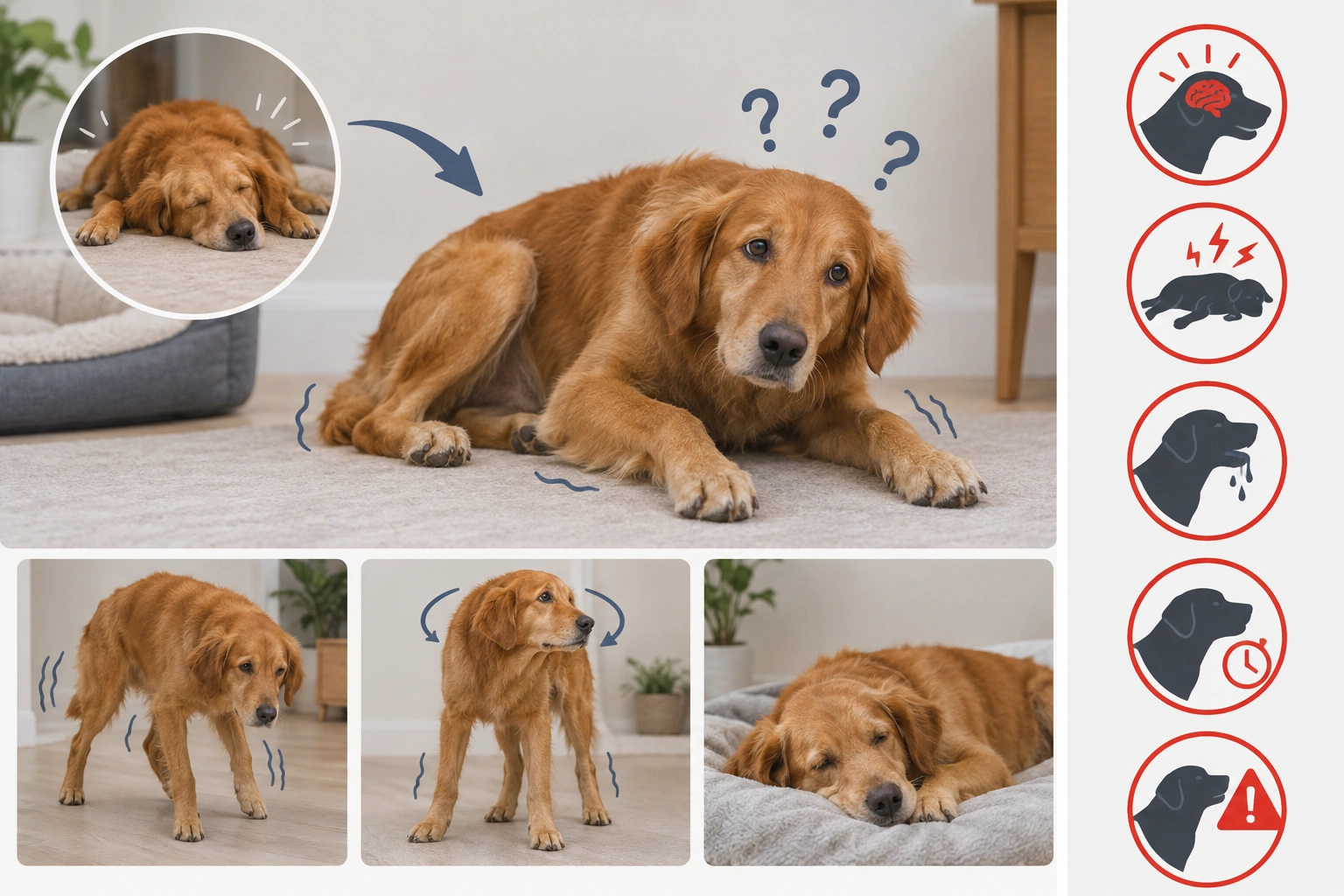
Normal recovery vs. warning signs
Usually expected after a seizure:
– Brief confusion
– Wobbly walking
– Needing to rest
– Temporary clinginess or mild restlessness
Not something to ignore:
– Trouble breathing
– Persistent unresponsiveness
– Severe weakness
– Continued circling or inability to stand
– Ongoing blindness that does not improve
– Repeated vomiting
– Another seizure soon after the first
A useful rule: if your dog is gradually improving, that is more reassuring than a flat or worsening pattern. If they are not clearly getting better, treat it as urgent.
Should you call your regular vet or go to an emergency vet?
This is the trade-off most owners struggle with. The decision usually comes down to three questions:
- How long did it last?
- Did it happen more than once?
- Did the dog recover normally afterward?
Call your regular vet soon if:
- The seizure was brief
- It was a first-time event, but the dog recovered well
- There are no red flags like toxin exposure, injury, or breathing trouble
- You have a video or detailed notes to share
Go to an emergency vet if:
- The seizure lasted more than five minutes
- There were multiple seizures
- Recovery is incomplete or abnormal
- There is any chance of poisoning or trauma
- Your dog seems worse, not better, after the episode
If you are unsure, call the emergency clinic before driving over. Veterinary Specialty Center specifically advises owners to call ahead to discuss the pet’s condition. That helps the team prepare and can save time once you arrive.
What causes seizures in dogs
A seizure is a symptom, not a diagnosis. That matters because the cause changes both urgency and treatment.
Common cause categories include:
-
Idiopathic epilepsy
This means seizures occur without a clear underlying structural cause identified right away. It is one of the more common explanations in dogs with recurring seizures. -
Toxin exposure
Poisoning from medications, human foods, pesticides, rodenticides, or other chemicals can trigger seizures. -
Metabolic problems
Low blood sugar, liver disease, kidney disease, or electrolyte abnormalities can affect the brain and provoke seizures. -
Head injury or other trauma
A fall, collision, or blunt force injury may be linked to seizure activity. -
Infection, inflammation, fever, or other illness
Some systemic illnesses can affect the nervous system directly or indirectly.
Because the cause can range from manageable to life-threatening, it is a mistake to treat every seizure as “just epilepsy.” A dog that has never seized before and suddenly does so after possible toxin exposure needs a different response than a dog with a known seizure history.
What the veterinarian may do next
After the immediate emergency has passed, your vet will usually try to answer two questions: Was this truly a seizure? and What caused it?
Depending on the dog’s age, history, and exam findings, the workup may include:
- A physical and neurologic exam
- Bloodwork to look for metabolic causes, and in some first-seizure cases this may include checking blood glucose right away
- Tests based on possible toxin exposure
- Additional imaging or specialist referral if the pattern is unusual
If the dog has repeated seizures, your vet may discuss long-term management. That does not always mean medication right away, but it does mean the seizure pattern is being taken seriously. Treatment decisions usually depend on how often the seizures happen, how severe they are, and whether an underlying cause is found.
For a broader practical overview of recovery and monitoring after the event, see what to do after a dog has a seizure. If you want the full step-by-step emergency response guide in one place, our related article on what to do if your dog has a seizure is also useful.
When repeated seizures suggest epilepsy or a bigger problem
A single seizure does not tell you much on its own. The pattern over time is what changes the picture.
Repeated seizures make these questions more important:
- Are they happening close together?
- Is the dog fully recovering between episodes?
- Is there any possible trigger, toxin, or illness?
- Is the dog young, middle-aged, or older?
- Has the pattern changed suddenly?
A dog with recurring seizures and otherwise normal tests may be more likely to have idiopathic epilepsy. But if the seizures start later in life, come with other neurologic signs, or follow an exposure or injury, your vet will likely look harder for another cause.
Cluster seizures deserve special attention because they can escalate quickly. Even if each episode is short, the repeated pattern changes the risk.
Key takeaways for anxious owners
If your dog has a seizure, remember these four rules:
- Protect the dog from injury
- Do not put anything in the mouth
- Time the episode
- Call a vet promptly, and treat long seizures or repeated seizures as urgent
If you can do only one thing well, do this: stay calm enough to keep the dog safe and gather useful information. That alone can make the next step with your veterinarian much clearer.
When to See a Veterinarian or Certified Trainer
A veterinarian should be involved after any first seizure, and urgently if the episode is long, repeated, or followed by abnormal recovery. A certified trainer cannot diagnose seizures, but a trainer can still help later if the dog becomes anxious, reactive, or difficult to settle after medical treatment. First solve the medical question; then address any behavior fallout.
FAQs
Can I give my dog medicine during a seizure?
No. Do not give oral medication during the seizure unless your veterinarian has already given you a specific emergency plan for future episodes.
Is my dog in pain during a seizure?
Dogs are generally not aware of their surroundings during the seizure itself. The bigger concern is injury and the post-seizure period, when they may be confused or reactive.
How long is too long for a dog seizure?
A seizure lasting more than five minutes should be treated as a medical emergency.
Should I wake my dog up after a seizure?
No. Let them recover naturally in a quiet, safe space. Watch them closely, but do not force interaction.
Does one seizure mean my dog has epilepsy?
Not necessarily. A seizure can also be caused by toxins, metabolic illness, injury, or other medical problems. Repeated seizures and a vet workup help clarify the cause.
Should I record the seizure?
Yes, if you can do so safely. A short video can be extremely helpful for your veterinarian.
What if my dog seems normal afterward?
That is reassuring, but it still does not rule out a medical cause. A vet should review the event, especially if it was the first seizure.
Should I call the vet even if the seizure stopped?
Yes, especially if it was the first one, if your dog is older, or if there was possible toxin exposure or trauma.
What if my dog has two seizures in one day?
That is a strong reason to seek emergency veterinary care.
Can Border Collies have seizures?
Yes. Any dog can have seizures, including Border Collies. The breed does not change the first-aid steps, but it does make it even more important to document the pattern carefully if episodes repeat.