What to Feed a Dog That Won’t Eat: A Practical Guide for Worried Owners

A dog refusing food can be a small, temporary issue or the first clue that something more serious is going on. The job is to sort those two apart quickly.
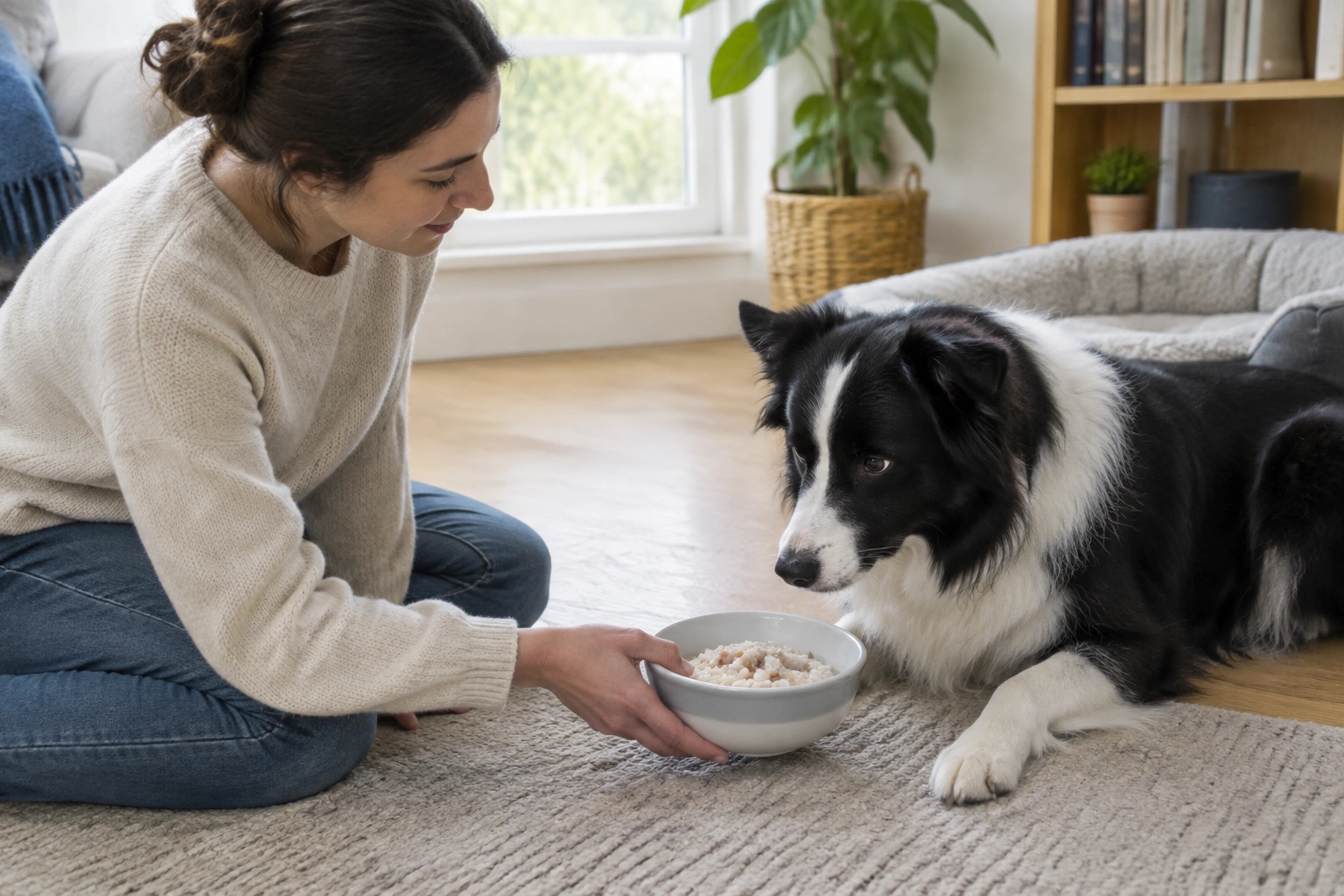
If your dog has skipped one meal but is still bright, drinking, and acting fairly normal, you can usually try a short, sensible feeding reset at home. If your dog is vomiting, lethargic, painful, bloated, or not drinking, skip the kitchen experiments and call a veterinarian.
For Border Collies, this comes up more often than people expect. These dogs are sensitive to routine changes, travel, hard exercise, and stress. A dog that normally eats with enthusiasm may turn away from food after a disrupted day and then bounce back once the routine settles. The key is not to assume every missed meal is “just pickiness.”
What to do first when your dog won’t eat
Use a simple triage check before you offer anything new.
Monitor briefly at home if all of these are true
- Your dog is alert and responsive
- Drinking is normal
- No vomiting or diarrhea
- No obvious pain
- No bloating, collapse, or breathing trouble
- The appetite loss is recent, not ongoing
In that situation, offer one small test meal instead of setting out food all day. Keep the portion modest and give your dog a short window to eat it; if it is not eaten, pick it up and reassess later rather than letting the bowl sit out. That helps keep mealtimes clear and avoids training your dog to wait for something better.
Call a veterinarian right away if you see
- Vomiting
- Diarrhea
- Lethargy
- Abdominal pain
- Collapse
- Trouble breathing
- Refusal to drink
- A swollen or tense belly
- Repeated inability to keep food down
Those signs shift the problem from “won’t eat” to “may be sick, painful, or dehydrated.”
Offer a small test meal if your dog seems otherwise normal
Pick one appealing, easy-to-digest option and keep the portion modest. If the dog eats it, that tells you appetite is still present and the issue may be mild nausea, stress, or food boredom. If the dog turns down even a tempting option, the concern rises.
How long a dog can safely go without eating
There is no single safe number that fits every dog.
A healthy adult dog who misses one meal may simply be waiting out a mild upset stomach or a stressful day. But the risk changes fast based on age, hydration, and overall health. Puppies, seniors, underweight dogs, and dogs with medical problems deserve faster attention.
A practical rule:
– Healthy adult, acting normal: one missed meal can be watched at home, but call your vet if the dog still will not eat by the next meal or has gone about 24 hours without eating
– Dog with vomiting, diarrhea, or low energy: don’t wait; call the same day
– Puppy: call sooner, especially if the puppy skips more than one meal or goes roughly 12 hours without eating
– Senior, underweight, or medically fragile dog: call sooner, often after one missed meal or within 12 to 24 hours at most
– Dog with diabetes, kidney disease, cancer, pancreatitis, or another ongoing condition: call your vet promptly if a meal is refused, even if the dog otherwise seems fairly normal
– Dog not drinking: treat as more urgent than not eating alone
If your dog has gone more than a day without eating, that’s a strong reason to contact your vet, and sooner if anything else looks off. A dog that is still drinking and acting normal is lower risk than one that is also refusing water, but the clock still matters.
Common reasons dogs stop eating
A dog that stops eating is usually telling you something changed. The cause matters because the fix changes with it.
Stress or routine disruption
Travel, boarding, visitors, a new home, noise, schedule changes, and intense exercise can all suppress appetite. This is especially common in active, alert dogs that notice everything.
Mild gastrointestinal upset
Nausea often shows up as food refusal before vomiting starts. Some dogs will still sniff food but walk away, lick their lips, or seem interested and then lose interest.
Dental pain or mouth problems
Dental disease, a sore tooth, or something stuck in the mouth can make chewing uncomfortable. Dogs often keep drinking but avoid harder kibble.
Pain, infection, or inflammation
Dogs may stop eating when they feel generally unwell, even before more obvious symptoms appear.
Obstruction or toxin exposure
If a dog ate something foreign or toxic, appetite loss may be one of the earliest signs. That’s not a home-feeding problem.
Food preference or over-snacking
Sometimes the issue is behavioral rather than medical. A dog that has had too many treats, table scraps, or richer foods may hold out for better options.
What to feed a dog that won’t eat: the safest short-term options
When appetite is poor, the goal is not perfect nutrition for the day. The goal is to get food into a dog safely without making the stomach worse.
Step 1: Choose the right option based on the situation
- No vomiting, no diarrhea, no obvious pain, dog just seems picky or stressed: start with the dog’s normal food or a preferred familiar food first
- Mild stomach upset, nausea, or loose stool: start with a bland diet
- Dental discomfort or low appetite but otherwise normal: try wet food or softened normal food
- Dog needs extra scent appeal: try a small amount of plain broth or warm water added to food
1) Boiled chicken and white rice
This is the classic bland-diet option for a reason. Cooked chicken breast with cooked rice is widely used because it is mild, easy to digest, and usually appealing.
Keep it plain:
– No seasoning
– No skin
– No bones
– No garlic or onion
– No butter or oil
This is best for a dog with mild stomach upset and no known dietary restrictions. One veterinary source also notes that cooked white rice is often used for a few days because it is easy to digest and can help firm stool. For dogs with diabetes, rice should be used cautiously and only if your veterinarian says it is appropriate.
2) Wet food or canned food
If your dog normally eats dry food, a small amount of wet food can be a better short-term option because it often smells stronger and is easier to chew. It can also help with hydration.
This is especially useful for:
– Older dogs
– Dogs with dental discomfort
– Dogs that are interested in smell but not crunch
3) Plain pumpkin
Plain pumpkin can be useful in small amounts when the stomach is unsettled. It is not a cure-all, and it should not replace a proper diet for long, but it can be a gentle add-on for some dogs.
Use plain pumpkin, not pie filling.
4) Plain broth
A little low-sodium broth can make food more tempting or encourage drinking. But the broth must be safe for dogs: no onion, no garlic, and no heavy salt.
5) Eggs, cottage cheese, or plain pasta
For dogs with food allergies or dogs who should not have chicken and rice, one veterinary source lists boiled eggs, cottage cheese, or plain pasta as alternatives. These are still short-term tools, not a long-term feeding plan.
6) Fish
Plain cooked fish can work for some dogs because the smell is strong and often appealing. Keep it simple and unseasoned.
Bland diet vs normal food: which is better right now?
Here is the practical version: use the food strategy that matches the likely cause.
| Option | Best when | Trade-off |
|---|---|---|
| Bland diet | Mild GI upset, nausea, recovery from short stomach upset | Less balanced nutritionally if used too long |
| Usual food | Dog is healthy but distracted, stressed, or tired of the routine | May be ignored if nausea is the real issue |
| Preferred familiar food | Dog is picky or refusing kibble but will eat something recognizable | Easy to overuse and create a habit of waiting for upgrades |
| Wet food | Dental discomfort, low appetite, need for stronger smell | Can be richer than dry food for some sensitive stomachs |
| Broth or warm water added to food | Need to increase smell or soften kibble | Too much liquid can make some dogs pick around the food |
If your dog seems nauseated or has loose stool, bland food usually makes more sense than pushing the regular meal. If the dog seems physically fine but uninterested, a familiar, more aromatic version of the normal food may work better.
Wet food vs dry food, homemade food vs commercial food, and broth vs water
Wet food vs dry food
Wet food usually wins on smell and texture. Dry food wins on convenience and consistency. If appetite is the problem, wet food often has the edge because scent matters a lot to a dog deciding whether to eat.
Homemade food vs commercial food
Homemade bland food can be more tempting in the short term, but commercial diets are more complete and balanced. That matters if the refusal lasts more than a day or two. Homemade food is a bridge, not a destination.
Broth vs water
Water is always the safest default. Broth can help if it is plain and low-sodium, but it must not contain onion, garlic, or excess salt. If you are unsure, choose water and use broth only if you know exactly what is in it.
How to make food more appealing without making the problem worse
These tactics are simple, but they work for many dogs.
Warm the food slightly
Warming food increases aroma, which can matter more than taste at first. Don’t make it hot; just take the chill off.
Feed in a quiet place
Some dogs eat better with privacy. Others want company at first. A new dog or stressed dog may do better in a calm room away from traffic and noise, then gradually move back to the normal feeding spot.
Offer smaller meals
A large bowl can overwhelm a nauseated dog. Two to four smaller meals can be easier than one big one.
Hand-feed only as a short-term reset
Hand-feeding can help a nervous dog start eating, but it should stay temporary. If you keep doing it forever, some dogs learn to wait for that special treatment.
Use kibble as treats carefully
Kibble can be used as a reward during the day, but don’t turn the dog into a snacker. Too many extras can reduce real meal hunger.
Can I add dog-safe toppers or a little human food?
Yes, sometimes. A small amount of dog-safe topper or plain human food can help a reluctant dog start eating, especially if the dog is otherwise acting normal. Good short-term examples include a spoonful of wet dog food, a little plain cooked chicken, a small amount of plain pumpkin, or a bit of plain cooked rice. Keep it modest and avoid rich, salty, seasoned, or fatty foods. If your dog has a medical condition, ask your vet before using toppers regularly.
What not to feed a dog that won’t eat
Do not “tempt” a dog with foods that create new problems.
Avoid:
– Onion or garlic
– Seasoned meats
– Greasy foods
– Very salty broths
– Bones
– Rich sauces
– Spicy food
– Large amounts of cheese
– Anything with xylitol or other known toxins
High-fat human foods are a bad trade when the stomach is already unsettled. They may make nausea worse or trigger vomiting.
Also avoid making the meal so exciting that your dog learns to hold out for better and better options. If every skipped meal leads to a buffet upgrade, some dogs quickly become more selective.
Hydration, dehydration, and when not drinking is more concerning than not eating
A dog can tolerate a missed meal better than a missed day of drinking.
Watch for:
– Dry gums
– Weakness
– Sunken eyes
– Thick saliva
– Reduced urination
– Refusal to drink
If your dog is not drinking, the situation becomes more urgent. A little broth may encourage intake, but plain water is the safest baseline. If the dog won’t drink and also won’t eat, that is not a “wait and see” situation for long.
When appetite loss is an emergency
Get urgent veterinary help if appetite loss comes with any of these:
– Vomiting that repeats
– Diarrhea, especially if severe
– Bloated abdomen
– Collapse
– Trouble breathing
– Obvious pain
– Blood in vomit or stool
– Inability to keep water down
– Sudden marked lethargy
A dog that looks “off” and won’t eat may be telling you something more serious than simple pickiness. If the dog is also hiding, trembling, or refusing to move normally, take that seriously.
Special considerations for Border Collies and other active dogs
Border Collies are often sensitive to routine, workload, and emotional tension. After a long car ride, a busy day, or a hard training session, a Border Collie may skip a meal and then eat normally later.
That pattern is more reassuring when:
– The dog is still drinking
– Energy is mostly normal
– There is no vomiting or diarrhea
– Appetite returns within a short time
It is more concerning when:
– The dog skips multiple meals
– There is a sudden personality change
– The dog is less responsive than usual
– Exercise tolerance drops
– The dog seems painful or nauseated
Active dogs can also mask illness early because they are used to pushing through. If your Border Collie is usually enthusiastic and suddenly turns away from food for no clear reason, don’t dismiss it too quickly.
For anxious or highly active dogs, timing can help too. After hard exercise, let the dog cool down and settle before offering a meal. After travel or a disrupted routine, give the dog a quiet break and then try a small meal once it is calm and drinking normally. If the dog still refuses food after that reset, or if any GI signs appear, call the vet rather than trying more food tricks.
When to see a veterinarian or certified trainer
See a veterinarian if:
– Your dog refuses food for more than a day
– The dog is young, elderly, underweight, or medically fragile
– There is vomiting, diarrhea, pain, or lethargy
– Water intake drops
– You suspect dental disease
– Your dog keeps skipping meals after the initial stressor is gone
– Weight loss is starting
– The dog eats treats but refuses meals consistently
If the problem seems behavioral rather than medical, a certified trainer can help with feeding routine, stress, and mealtime structure. But a trainer should not be the first stop when illness is possible.
For dogs whose appetite problems may connect to general well-being and routine, it can also help to review how you reinforce calm, trust, and predictability at home. Our guide on how to show a dog you love them may help you think about that daily structure in practical terms.
FAQs
Can I give chicken and rice every time my dog won’t eat?
Only as a short-term bland option, and only if it suits your dog’s health status. It is not a complete long-term diet.
Should I force my dog to eat?
No. Forcing food can add stress and may be unsafe if the dog is nauseated or at risk of vomiting.
Is it okay to add treats to get my dog eating?
A few small extras can help, but keep them limited. Too many treats can reduce meal appetite and unbalance the diet.
My dog eats treats but not dinner. What does that mean?
That often points to pickiness, habit, or preference. But dental pain and nausea can also look like that, so watch for other symptoms.
Can I leave food out all day?
It’s better not to. Scheduled meals make it easier to tell whether appetite is improving and help prevent grazing.
What if my dog is acting normal but skips breakfast?
One missed meal can happen. If the dog is otherwise normal, offer a small test meal and watch closely. If the refusal continues into the next meal or reaches about 24 hours, call your vet.
Is warm food really better?
For many dogs, yes. Warmth increases smell, and smell drives appetite.
What if my dog has a sensitive stomach?
A bland diet is usually the safer short-term choice, but if symptoms are significant or persistent, a veterinarian should guide the next step.
How do I know if this is just stress?
Stress-related appetite loss usually comes with a clear trigger and a quick return to normal once the dog settles. If the refusal lasts, broadens, or comes with other symptoms, treat it as medical until proven otherwise.
Should I worry if my Border Collie skips meals after exercise?
A brief dip can happen after stress or heavy activity, but repeated skipping, lethargy, or any GI signs are not normal and deserve attention.
Is broth okay to use to encourage eating?
Yes, if it is plain and low-sodium and contains no onion, garlic, or heavy seasoning. It can help with smell and hydration, but water is still the safest default.
When is appetite loss after travel or exercise still normal?
It can be normal for a short time if your dog is otherwise bright, drinking, and not showing vomiting, diarrhea, pain, or lethargy. If appetite does not return after the dog has rested, or if any other signs appear, contact your vet.
Can I use a dog-safe topper?
Yes, a small amount can be okay as a short-term appetite helper. Use something simple and dog-safe, and keep it modest so you do not create a habit of waiting for upgrades.
