
When an Old Dog Stops Eating: What It Means and What to Do Next

When a senior dog stops eating, treat it as a symptom first, not a personality quirk. Older dogs can become less interested in food for harmless reasons, but appetite loss is also one of the earliest clues that something painful, nauseating, or serious is going on.
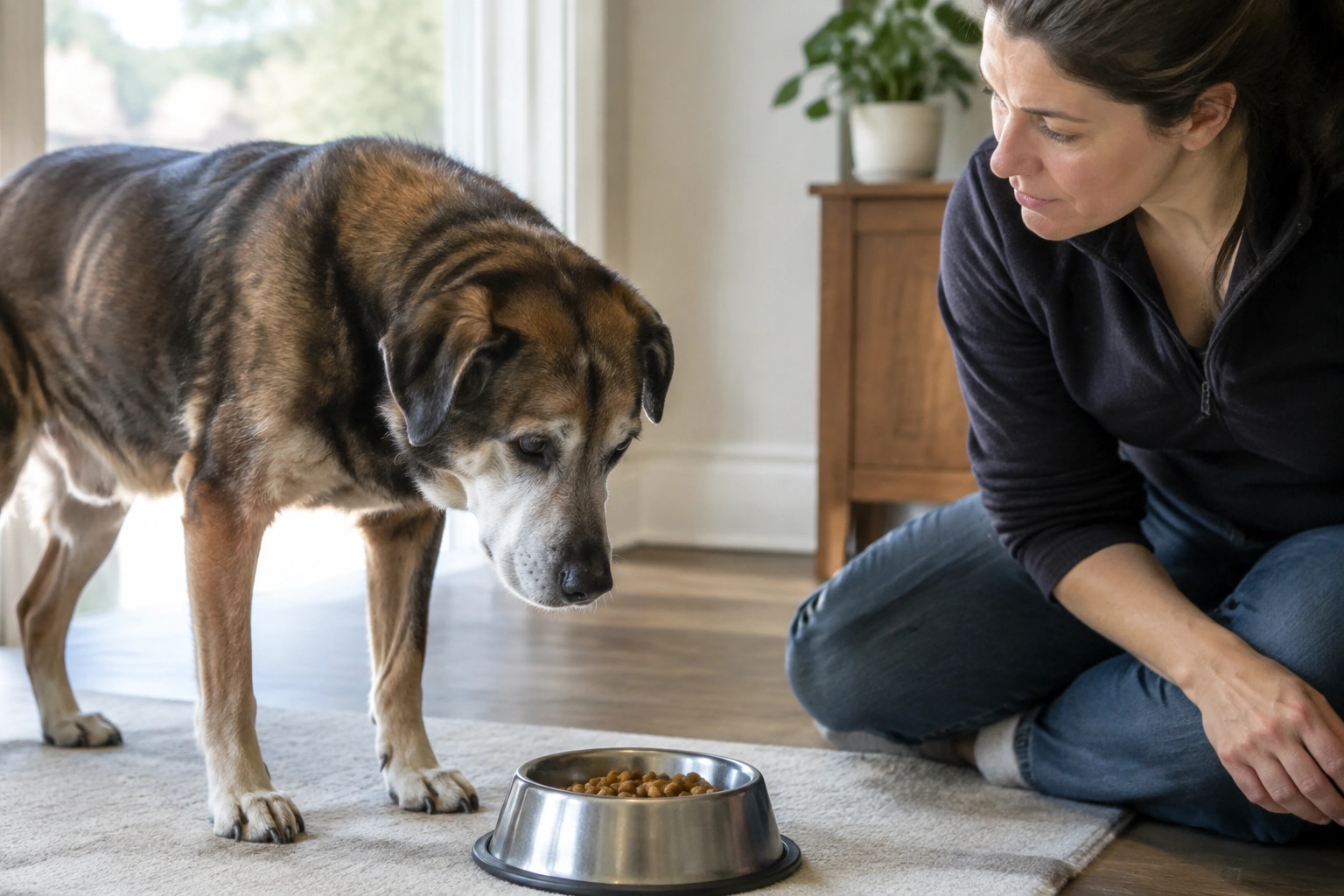
That is the practical mindset I want you to use: don’t panic, but don’t dismiss it either. The goal is to decide whether you can monitor for a short window, call your vet today, or head to urgent care now.
Why an old dog stops eating: the most likely causes
Senior dogs usually stop eating for one of two broad reasons: something is making eating unpleasant, or something is making them feel unwell enough that food loses appeal.
Dental pain is one of the first things to check
If an older dog sniffs food and walks away, chews on one side, drops kibble, or suddenly prefers soft food, mouth pain moves high on the list. Dental disease is a common cause of appetite loss in older dogs, and problems like loose teeth, tooth abscesses, fractures, gum disease, and oral infections can make chewing or swallowing painful and difficult. The dog may still drink water because drinking hurts less than chewing.
A practical clue: bad breath plus reduced appetite is not “just aging.” It deserves a closer look.
For more background on senior age and what changes are common, you may also find this Border Collie senior-age guide useful.
Nausea can make food look unappealing
A dog that feels nauseated often approaches food, sniffs, and leaves it. You may also see lip licking, drooling, swallowing, grass eating, hiding, or vomiting. Nausea can come from many causes, including pancreatitis, kidney disease, liver disease, medications, infections, and pain.
The key point is this: nausea is not a behavior problem. If the stomach is unsettled, “trying harder” at mealtime usually won’t solve it.
Pain anywhere in the body can suppress appetite
Dogs in pain often eat less, even when the mouth is fine. Arthritis, back pain, abdominal pain, and even subtle internal discomfort can change how a senior dog moves toward food, stands at the bowl, or finishes meals. Some dogs become quieter. Others become restless, clingy, or unusually withdrawn.
If appetite loss appears alongside stiffness, panting at rest, trembling, or reluctance to jump, think pain rather than pickiness.
Chronic disease is a major concern in older dogs
A persistent drop in appetite can be an early visible sign of a more serious health problem. Conditions such as kidney disease, liver disease, diabetes, hypothyroidism, and cancer can all cause an older dog to stop eating or eat significantly less. Heart disease, digestive disease, and other chronic illnesses can also affect appetite.
That does not mean every senior dog who skips a meal has one of these diseases. It does mean you should not assume age alone explains it.
Medication side effects matter more than many owners realize
If your dog recently started a new prescription, appetite loss may be a side effect rather than a new disease. Some medications can upset the stomach, cause nausea, or simply reduce interest in food. This is especially important after surgery or after a new diagnosis.
Do not stop a prescribed medication on your own. Call the vet who prescribed it and describe what changed, when it started, and whether your dog is still drinking.
Stress, routine changes, and environment can play a role
A new home, a boarding stay, visitors, a house move, a new pet, or a disrupted routine can all affect eating. Older dogs often handle change less flexibly than younger dogs. Some also become more sensitive to noise, separation, or household tension.
Still, stress should be a diagnosis of caution, not a default explanation. If the appetite loss lasts or comes with other symptoms, look deeper.
How urgent is it? Red flags that mean your dog needs veterinary care now
A senior dog that is not eating and also seems weak, painful, dehydrated, vomiting, or unresponsive may need urgent veterinary care. The more symptoms pile on, the less safe it is to wait.
Go the same day or emergency if you see any of these
- Refusing both food and water
- Vomiting repeatedly
- Diarrhea, especially if it is severe or bloody
- Marked lethargy or collapse
- Signs of dehydration, such as tacky gums, sunken eyes, or very little urination
- Obvious abdominal pain, whining, a tight belly, or a hunched posture
- Trouble breathing
- Sudden behavior change, confusion, or unresponsiveness
- Inability to keep water down
- Pale gums or weakness
If your dog is not eating and has one or more of those signs, do not wait for appetite to “come back naturally.”
A quick home check you can do in minutes
Before you call, check four things:
- Is your dog drinking?
- Is your dog urinating normally?
- Is your dog alert and able to stand or walk normally?
- Is there vomiting, diarrhea, or obvious pain?
Those answers help you and the vet decide how urgent this is.
What counts as normal aging versus a problem
Older dogs may eat a bit less than they did when they were younger. That can happen because they are less active, their sense of smell may not be as sharp, or they simply need fewer calories than they once did. But “eating a little less” is not the same thing as refusing food.
Usually less concerning
- Skipping one meal but eating the next
- Being slightly slower to start eating but finishing meals
- Being selective for a day or two without other symptoms
- Eating less after a routine change, then returning to normal quickly
More concerning
- Refusing food for more than a day
- Eating only treats but refusing meals
- Progressive weight loss
- Repeated missed meals
- Eating less plus vomiting, diarrhea, lethargy, or pain
- Sudden refusal in a dog that normally eats well
A useful mental split is this: one missed meal in an otherwise normal dog is different from a pattern of reduced appetite with body changes. The second needs investigation.
For a broader look at senior-dog aging, the Kennel Club’s guidance on older dogs is a useful general reference point.
How long can a senior dog safely go without eating?
A senior dog that has not eaten for more than 24 hours should be evaluated by a veterinarian. That is a conservative threshold, and it is a good one for older dogs because they are less resilient than healthy younger dogs.
If your dog is thin, has a chronic illness, or also stops drinking, the safe window is shorter and you should call sooner rather than later.
Use this practical decision rule
- Less than 24 hours, otherwise normal: monitor closely and try gentle appetite support
- Around 24 hours with no improvement: call your vet
- Any time with vomiting, lethargy, pain, dehydration, or no water intake: seek veterinary care sooner
- Complete refusal to eat plus weakness or collapse: emergency care
Hydration changes the picture. A dog that is still drinking and urinating normally is in a different category from a dog that is not eating and not drinking. The second situation becomes risky much faster.
Body condition matters too. A thin senior dog, a dog with chronic illness, or a dog recovering from surgery has less buffer than a healthy dog with normal reserves.
What to do in the first 24 hours
The first day is about gathering useful information without wasting time.
1. Track what is actually happening
Write down:
- When the dog last ate
- Whether the dog ate any treats, table scraps, or human food
- Water intake
- Urination and stool
- Vomiting or diarrhea
- Energy level
- Any signs of pain or mouth discomfort
- Any new medication or recent dose change
This gives your vet a clearer picture than “he’s not eating.”
2. Check the mouth if your dog allows it
Look for:
- Bad breath
- Red or bleeding gums
- Broken teeth
- Swelling
- Drooling
- Food trapped in the mouth
- Reluctance to open the mouth
Do not force a painful mouth open. If your dog resists, that resistance itself is useful information.
3. Decide whether to call today
Call your regular vet the same day if:
- Your dog is a senior and has not eaten for close to 24 hours
- Appetite loss is new and unexplained
- Your dog is eating only tiny amounts
- You suspect dental pain
- A new medication or recent illness may be involved
If your dog has red flags, skip the wait and go to urgent care.
Safe short-term ways to encourage eating at home
These are temporary measures, not substitutes for diagnosis.
Warm the food slightly
Warming food can increase aroma, which matters because smell drives appetite. Use a small amount of warm water or briefly warm the food so it is not hot.
Change texture
Some older dogs prefer softer food when chewing hurts or nausea is present. A dry kibble meal may be ignored while a moistened version is accepted.
Short-term options can include a little warmed canned dog food, moistened kibble, or a vet-approved bland food such as plain boiled chicken and rice if your veterinarian says that is appropriate for your dog’s condition.
Offer a calm feeding setup
Keep the room quiet, reduce pressure, and avoid hovering. Some senior dogs eat better when they are not being watched.
Try hand-feeding once or twice
Hand-feeding can help when a dog feels uncertain or mildly nauseated, but it should not turn into a long-term battle. If your dog only eats from your hand for a short time and then refuses again, the underlying cause still needs attention.
Use strong-smelling options briefly
A little warm, aromatic food may tempt a dog that is otherwise stable. The point is to get a small amount of nutrition in while you arrange veterinary advice, not to solve the problem by endless menu changes.
Keep the meal simple
If your dog has a sensitive stomach, too many food switches can make troubleshooting harder. One or two sensible attempts are enough before you move toward a vet visit.
When not to force-feed or keep trying different foods
Do not force-feed unless a veterinarian has instructed you to do so. It can worsen stress, trigger aspiration, and make a painful mouth or nauseated stomach worse.
Repeated food trials can also delay care. If your senior dog is refusing meals, you do not want to spend three days testing every canned food in the pantry while the real problem worsens.
Use this boundary:
- Mild appetite dip, otherwise normal: one or two gentle home strategies are reasonable
- Complete refusal, recurring refusal, or refusal plus symptoms: stop experimenting and call the vet
If your dog is acting sick, treat the appetite loss as a medical clue, not finicky behavior.
What a veterinarian may check and why
A vet visit is not just about “getting the dog to eat.” It is about finding the reason the appetite changed.
Likely first steps
- Oral exam for dental disease or mouth pain
- Full physical exam
- Medication review
- Bloodwork to look for infection, organ disease, inflammation, or metabolic problems
- Urinalysis to check kidney function and hydration clues
- Imaging if abdominal disease, cancer, or another internal problem is suspected
If the dog seems painful or nauseated, the vet may also assess those directly and start supportive care.
For general canine health guidance, VCA Hospitals has helpful owner resources on common veterinary problems and what they can mean.
How treatment depends on the cause
Treatment only works well when it matches the reason the dog stopped eating.
If the problem is dental
The fix may involve dental treatment, pain control, and a temporary soft-food plan. A dog with a painful tooth will often eat better once the pain source is addressed.
If the problem is nausea or digestive upset
The vet may recommend anti-nausea support, fluids, and a careful diet plan. A dog that feels sick to the stomach often needs symptom control before appetite returns.
If the problem is pain
Pain control can be the turning point. Once discomfort is reduced, many dogs begin eating again because food no longer feels like extra work.
If the problem is dehydration or systemic illness
Fluids, monitoring, and disease-specific treatment may be needed. Kidney disease, liver disease, pancreatitis, cancer, and other conditions often require a broader plan than simple appetite support.
If medication is the trigger
The vet may adjust the dose, change the drug, or recommend a different timing strategy. Never make that decision alone.
The important pattern is this: appetite often returns only after the underlying issue is treated. That is why “getting calories in” is not the same as solving the problem.
Prevention and monitoring for recurring appetite changes
If your senior dog has repeated appetite dips, track them. A simple notebook or phone note can reveal a pattern that is easy to miss day to day.
Watch these four trends
- Meal size
- Body weight
- Water intake
- Energy and mobility
A dog that is eating a little less every week, losing weight, or becoming less active needs a veterinary workup even if he is still eating something.
Pay attention to patterns, not just bad days
One off day after a stressful event may pass. Repeated off days, especially in an older dog, are different. The more often appetite changes recur, the more likely there is an underlying medical issue.
Build a baseline before problems start
If your dog is currently stable, note what normal eating looks like now: how much he eats, how fast he finishes, and whether he needs soft food or hand-feeding. That baseline makes future changes easier to spot.
When to see a veterinarian or certified trainer
A certified trainer is not the right professional for appetite loss caused by illness. This is a veterinary issue first.
See a veterinarian promptly if your senior dog:
- Has not eaten for close to 24 hours
- Is refusing water
- Is vomiting, weak, painful, or dehydrated
- Has bad breath, chewing trouble, or mouth sensitivity
- Has recurring appetite changes
- Recently started a medication and appetite dropped
If stress, routine change, or anxiety seems to be part of the picture, that may matter later. First, rule out medical causes.
FAQ
Why did my old dog suddenly stop eating?
Common reasons include dental pain, nausea, pain elsewhere in the body, medication side effects, stress, or a chronic illness such as kidney or liver disease. Sudden appetite loss in a senior dog should not be written off as normal aging.
How long can an old dog go without eating if he is still drinking?
If a senior dog is still drinking and otherwise acting normal, you may monitor briefly, but more than about 24 hours without eating is a good point to call the vet. If the dog is thin, has chronic disease, or starts drinking less too, call sooner.
Should I try a different food right away?
You can try one or two short-term, vet-appropriate options, such as warmed canned dog food or moistened kibble, but keep changes temporary. If the dog refuses food repeatedly or seems sick, stop switching foods and get veterinary advice.
Is it ever okay to wait and see?
A single missed meal in an otherwise bright, normal senior dog is less urgent than refusal plus vomiting, lethargy, pain, or dehydration. But if the appetite loss is new, lasts, or repeats, it deserves a vet call.
The bottom line
When an old dog stops eating, the safest assumption is that something is wrong until a vet proves otherwise. Sometimes the cause is simple, like dental pain or a temporary stomach upset. Sometimes it is the first visible sign of a deeper problem.
Your job in the first 24 hours is to judge urgency, protect hydration, avoid risky home fixes, and get veterinary help when the pattern is more than a missed meal. In senior dogs, that approach is usually what protects both comfort and outcomes.
