
When Do Dogs Mature and Calm Down? A Border Collie Owner’s Guide

If you’re waiting for your dog to “grow out of it,” the honest answer is this: many dogs begin to look and act a little calmer around 18 months to 2 years, but real behavioral maturity often takes longer. For many dogs, calmness keeps improving through the 2- to 3-year range, and some high-drive dogs do not feel truly settled until later.
For Border Collies, that timeline often stretches further. They may become physically adult before they become mentally easy. A Border Collie can be fully grown in body and still behave like a dog that has not yet learned how to switch itself off. That is normal for the breed.
The practical goal is not to wait for a magical age. It is to recognize what stage your dog is in, what is age-appropriate, and what you can do now to build calmer habits.
What “mature” really means in dogs
People often use “mature” to mean one thing, but dogs mature in several different ways.
Physical maturity
This is body growth: height, muscle, bone development, and sexual maturity. A dog may look adult-sized long before the brain catches up. That is especially true in larger and high-drive dogs.
Behavioral maturity
This is the part owners care about most when asking when dogs mature and calm down. Behavioral maturity shows up as better impulse control, less frantic reactivity, and a stronger ability to pause before acting.
Mental and emotional maturity
This is the dog’s ability to handle stimulation without tipping into chaos. A mentally mature dog recovers faster from excitement, handles routine changes better, and is less likely to spiral into overarousal.
A useful rule: adult body does not equal adult behavior. If your dog is physically grown but still mouthy, impulsive, and unable to settle, that can still be normal developmental behavior.
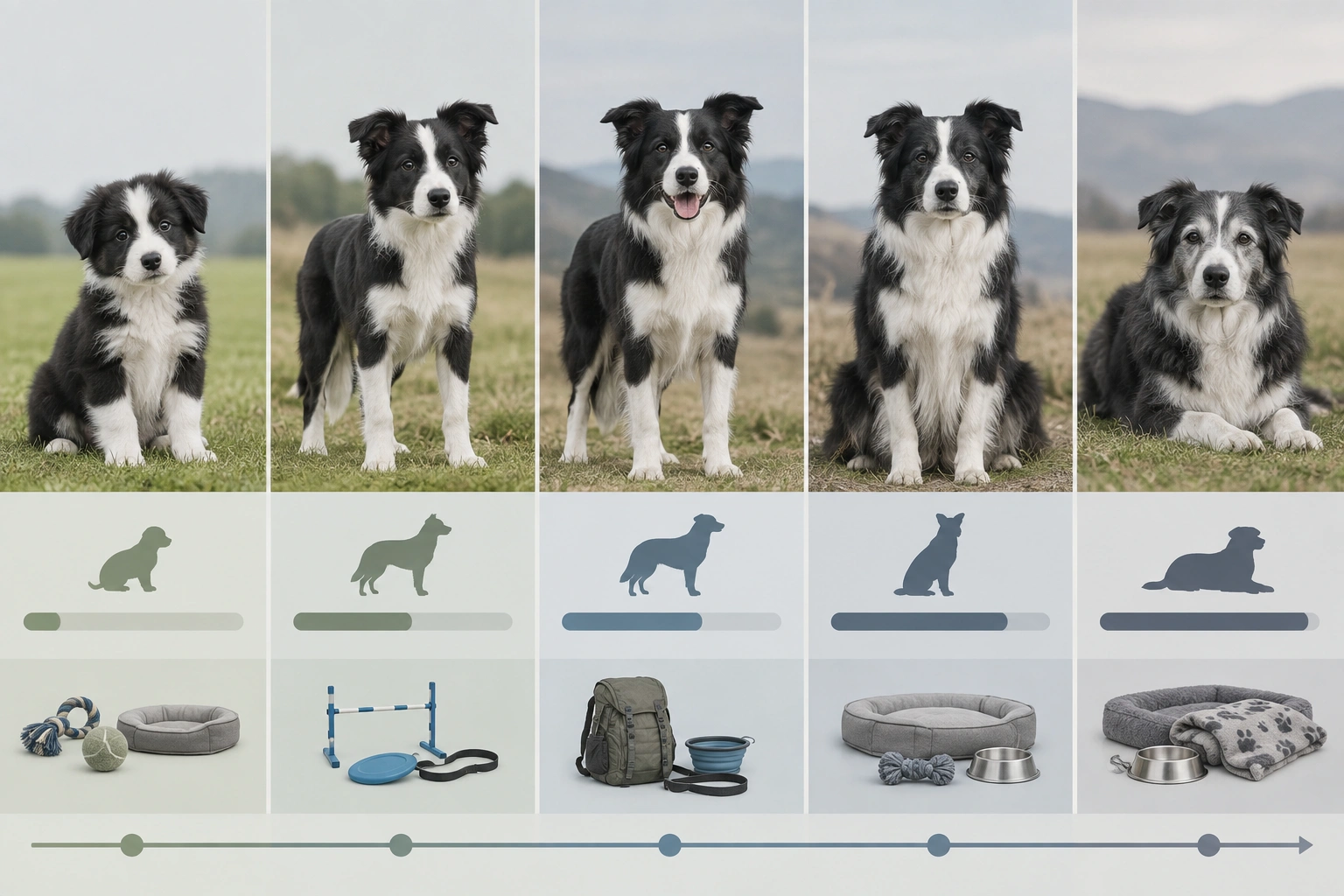
Typical maturity timeline by life stage
Here is the broad pattern most owners see.
| Life stage | Typical age range | What you often see | What is normal |
|---|---|---|---|
| Puppyhood | Birth to about 6 months | Fast learning, short attention span, bursts of energy, biting, restlessness | Lots of supervision, frequent naps, and limited self-control |
| Adolescence | About 6 to 18 months, sometimes longer | Testing limits, more intensity, selective listening, zoomies, jumping, chewing | A dog that seems “worse” before it gets better |
| Young adult | About 18 months to 3 years | Better focus, more predictable routines, gradual settling | Still energetic, but less chaotic and easier to interrupt |
| Mature adult | About 3 to 7 years | More steadiness, better off-switch, improved recovery after excitement | Calmness is more reliable, especially with routine |
| Senior years | Often 5-10+ depending on size | Slower movement, more rest, possible health-related changes | Lower physical intensity, but still benefits from enrichment |
This is not a strict schedule. Breed, size, and temperament can shift the timing quite a bit.
When Border Collies usually start to calm down
Border Collies are not usually “easygoing” dogs. They are bred for focus, stamina, and responsiveness. Those traits are useful in work, but they also mean the dog may stay mentally intense longer than a more laid-back breed.
Many Border Collies begin to show more self-control somewhere in the 18-month to 3-year range, but that does not mean they become couch potatoes. It usually means they become more manageable: less frantic, less mouthy, less likely to explode at every bit of stimulation, and more able to rest after their needs are met. Individual dogs vary a lot, though, so one Border Collie may settle earlier while another stays more driven for years.
A realistic Border Collie expectation is this:
- Under 1 year: high energy, poor impulse control, easy overstimulation
- 1 to 2 years: still intense, but training starts to “stick” more
- 2 to 3 years: many dogs become noticeably steadier
- 3+ years: the dog often feels more settled, though still active and mentally sharp
If you want a Border Collie to behave like a low-energy companion breed, disappointment is almost guaranteed. If you aim for a dog that can work, think, and then relax on cue, that is realistic.
For a broader view of age-related behavior changes, the AKC’s guidance on puppy development is a useful starting point.
What affects how fast a dog settles
Two dogs of the same age can look completely different. That is not because one owner is doing everything right and the other is failing. It is usually a mix of factors.
Breed matters
High-drive breeds often mature later in behavior than lower-energy breeds. Border Collies, herding breeds, and other working dogs tend to stay mentally “on” longer.
Size matters
Size affects physical development and aging pace. Smaller dogs often reach adulthood sooner in body, while larger and giant breeds take longer to finish growing and may mature more slowly overall.
Genetics matter
Some dogs are simply more intense. Even within the same litter, one pup may be easy to settle while another acts like every waking hour is an emergency.
Early habits matter
A dog that has practiced frantic behavior for months will not magically stop because it has crossed a birthday. Calmness is partly learned. If a dog has been rewarded for demanding attention, barking, pacing, or jumping, those habits can linger.
Temperament matters
Some dogs are naturally more sensitive, more alert, or more driven. Those dogs often need more structure, not just more exercise.
The decision rule here is simple: judge your dog by age, breed, and history together, not age alone.
Signs your dog is maturing and becoming calmer
Maturity is easier to spot in small changes than in one dramatic transformation.
Look for these signs:
- Your dog pauses before launching into action
- Excitement fades faster after guests arrive or a walk ends
- The dog can lie down and stay there without constant reminders
- Fewer silly mistakes happen when the environment is busy
- Training carries over from one day to the next
- Your dog can hear “no” or “leave it” and recover
- The dog needs less constant input to stay regulated
One of the clearest signs is recovery speed. An immature dog may go from zero to one hundred instantly and stay there. A maturing dog still gets excited, but comes back down faster.
When a dog is just tired versus actually settled
This distinction matters more than people think.
A tired dog may look calm because it has simply run out of fuel. But that is not the same as learning how to relax. Once the next trigger appears, the dog pops right back into chaos.
A truly settled dog can do three things:
- Rest without being physically exhausted
- Stay calm after stimulation ends
- Return to calm more easily the next time
A dog that crashes after a two-hour walk but cannot settle the rest of the day has not necessarily learned calmness. It may just be overworked.
That is why “more exercise” is not always the answer.
How to help an energetic dog settle sooner
The fastest path to a calmer dog is not endless activity. It is teaching the dog how to regulate itself.
Build a predictable routine
High-energy dogs often do better when the day has a rhythm: potty, meal, walk or training, rest, play, rest again. Predictability lowers arousal because the dog stops bracing for the next thing.
Reward calm behavior on purpose
Most owners accidentally ignore calm moments and only respond when the dog is demanding something. Flip that pattern. If your dog lies quietly, mark it, praise it softly, or give a small reward. Calm behavior should pay.
Teach a settle cue
Place the dog on a mat or bed and reward relaxed body language: hip drop, head down, slower breathing, or staying in place while life happens around it. Keep sessions short. The goal is not stillness under pressure; it is relaxed practice.
Use a crate or pen strategically
A crate is not a punishment. For many puppies and adolescents, it is a useful off-switch when they cannot yet self-regulate. Use it alongside exercise and training, not instead of them.
Avoid overstimulation
Some Border Collies become more frantic the more they are hyped. Tug, rough chasing, and constant ball throwing can increase arousal if they are the only outlets. Balance active play with quiet work.
Add concrete settle practice and enrichment
A Border Collie-friendly routine often works better when it includes a few specific tools:
– Mat work: reward the dog for lying on a mat while you move around
– Enforced rest: scheduled quiet time in a crate, pen, or gated room
– Sniffing walks: slower walks where the dog can explore with its nose instead of only marching forward
– Short impulse-control games: simple “wait,” “leave it,” or brief pause-before-release exercises
– Low-key enrichment: food puzzles, scatter feeding, or short training sessions that end before the dog gets overexcited
If you want a deeper behavior-related health check, our guide on what’s normal heat behavior versus pain shows how to think through “normal versus not normal” changes in a dog’s body and behavior.
Exercise vs mental stimulation: what actually reduces restlessness
Physical exercise helps, but it is only one piece.
Exercise
Walks, fetch, free movement, and play burn energy. That matters. A dog with no physical outlet is more likely to be restless, noisy, or destructive.
Trade-off: if you rely only on exercise, you may build a dog that is simply fitter and more demanding.
Mental stimulation
Training, scent work, problem-solving, and structured enrichment use the brain in a way that often produces a better off-switch. Many Border Collies respond especially well to this.
Trade-off: too much mental work, done at high intensity, can also create more arousal if you never balance it with calm.
The best pattern for most high-energy dogs is a mix:
– some physical movement
– some thinking work
– some deliberate downtime
That combination teaches the dog that not every wakeful moment needs to become a performance.
For general behavior and training guidance, VCA Hospitals has practical veterinary behavior resources worth reading.
When constant hyperactivity is normal—and when it is not
A busy, excitable young Border Collie is often normal. A dog that cannot settle at all may need more than age and training.
Usually normal for age if:
- the dog is under about 2 years old
- the behavior is gradually improving
- the dog can settle sometimes after needs are met
- the dog is otherwise healthy and eating, sleeping, and eliminating normally
More concerning if:
- the dog suddenly becomes much more restless
- the dog seems unable to relax even after exercise and training
- the dog is destructive, panicked, or unsafe
- the dog paces, pants, or startles more than usual
- the dog seems to worsen instead of improve over time
Here is a simple way to sort out what you are seeing:
- Boredom or underexercising: the dog is restless, noisy, or destructive, but can usually calm down once it gets activity or something to do
- Adolescent energy: the dog is intense, silly, and impulsive, but the pattern is gradual and age-appropriate
- Anxiety or separation anxiety: the dog may panic when left alone, pace, vocalize, cling, or struggle to relax even when exercise is not the issue
- Pain or medical discomfort: the dog may be restless because movement hurts, or it may show stiffness, limping, sensitivity to touch, or a sudden change in behavior
Persistent hyperactivity can come from boredom, undertraining, anxiety, frustration, pain, or a medical issue. Sudden change is the biggest red flag. If a dog that used to settle now cannot, do not assume it is just a phase.
Do spaying or neutering make dogs calm down?
Sometimes people expect sterilization to “fix” energy. That is too simple.
Spaying or neutering may change some hormone-related behaviors in some dogs, but it is not a guaranteed calm-down switch. A dog that is under-exercised, under-trained, anxious, or highly driven may still be intense after surgery.
The useful way to think about it is this: sterilization may influence certain behaviors, but it does not replace training, routine, enrichment, or veterinary assessment when behavior changes are unusual.
If your dog’s energy is the main concern, focus first on:
– structure
– impulse control
– relaxation practice
– appropriate exercise
– mental work
When to see a veterinarian or certified trainer
Get help sooner rather than later if any of the following are true:
- your dog’s behavior changed suddenly
- restlessness is paired with pain, limping, or stiffness
- your dog cannot settle even in a quiet environment
- your dog shows panic when left alone
- destructive or frantic behavior is escalating
- you feel stuck repeating the same corrections with no progress
A veterinarian can rule out pain or illness. A certified trainer or behavior professional can help you build a plan for impulse control and relaxation without accidentally making arousal worse.
That matters most with Border Collies, because a dog with a sharp brain and a lot of drive usually needs more than “wear them out.” It needs guidance.
The bottom line for Border Collie owners
Most dogs do not become calm because they hit a certain birthday. They become calmer because they mature, learn, and live in a way that supports regulation. For Border Collies, that process often takes patience. Many start to settle more noticeably between 18 months and 3 years, but the calmer, more reliable version of the dog often keeps developing beyond that.
If your Border Collie is still wild at 10 months, that is not surprising. If your 2-year-old still has energy but can now recover faster, rest after work, and think before reacting, that is progress. That is maturity showing up where it counts.
FAQ
At what age do dogs usually calm down?
Many dogs start to calm physically around 18 months to 2 years, but behavioral maturity often takes longer. Some dogs keep settling into adulthood until 3 years or beyond.
Do Border Collies calm down later than other dogs?
Often, yes. Border Collies are high-drive working dogs, so they commonly stay mentally intense longer than more easygoing breeds.
How do I know if my dog is actually maturing?
Look for better impulse control, quicker recovery after excitement, less frantic behavior, and a better ability to rest without being exhausted.
Does more exercise always help?
No. Exercise helps, but too much can create a fitter, more demanding dog. Mental work and relaxation training matter just as much.
Should I worry if my dog is still hyper at 1 year old?
Not necessarily. One year old is still very much adolescent territory for many dogs, especially Border Collies. Worry more if behavior is suddenly changing, escalating, or paired with pain or panic.
