
Why Are My Dog’s Eyes Bloodshot? Causes, Urgency, and What to Do Next

If your dog’s eyes suddenly look red or bloodshot, treat that as a symptom, not a diagnosis. The redness may come from something mild, like dust or seasonal irritation, but it can also be the first visible sign of a painful eye injury, an ulcer, or a pressure problem that needs fast treatment.
For Border Collie owners, this matters because active dogs spend a lot of time in wind, brush, grass seed, and dusty environments. The safest approach is to use the redness as a triage signal and check for pain, discharge, cloudiness, swelling, and changes in behavior.
Quick Triage: Is a Bloodshot Eye in a Dog an Emergency?
Use this priority list:
- Emergency now: the eye is very painful, the dog cannot open it, there is obvious trauma, the eye looks bulging or markedly swollen, the pupil looks very abnormal, or you suspect sudden vision loss.
- Same-day vet care: sudden red eye with squinting, cloudiness, discharge, unequal pupils, pawing at the eye, or a suspected foreign body.
- Monitor briefly at home: mild redness in both eyes, no pain, no discharge, no cloudiness, and your dog is otherwise comfortable.
If the redness is mild, both eyes are affected, and your dog is otherwise comfortable, you may be dealing with irritation or allergies. Even then, watch closely and contact your vet if it does not settle quickly.
A practical way to sort urgency is this:
- Monitor briefly at home if the redness is mild, both eyes look similar, and there is no pain, discharge, cloudiness, or behavior change.
- Call your vet today if the redness persists, is only in one eye, or comes with watery or sticky discharge, rubbing, or mild squinting.
- Seek emergency care now if the dog seems painful, the eye is cloudy or swollen, the pupil looks abnormal, there was trauma, or you suspect vision loss.
Dogs can still seem fairly normal even with an eye problem, so a dog that is eating and wagging does not rule out something serious.
What Bloodshot Eyes in Dogs Usually Mean
Bloodshot eyes happen when the small blood vessels in or around the eye become enlarged or inflamed. That redness is the body’s response to irritation, infection, injury, or pressure changes inside the eye.
That matters because “red” does not tell you the cause. Two dogs can both have bloodshot eyes for completely different reasons:
- one may have a mild irritant in the eye
- another may have a corneal ulcer or glaucoma
The eye is a delicate structure, so even a small problem can create a lot of visible redness. In practical terms, redness is the smoke, not the fire. The goal is to figure out what is driving it before the condition gets worse.
Common Causes: From Mild Irritation to Serious Eye Disease
Allergies and environmental irritation
Allergies and irritants are common reasons for red eyes in dogs. Dust, smoke, perfumes, sprays, cleaning products, and pollen can all irritate the surface of the eye. When that happens, the redness is often in both eyes, and you may also see watery tearing, mild itchiness, or your dog blinking more than usual.
This is the pattern that often appears after a windy walk, a dusty room, or exposure to cleaning sprays. If both eyes are red and your dog is otherwise acting normal, irritation rises on the list.
Conjunctivitis
Conjunctivitis means inflammation of the tissue around the eye. It can be allergic, bacterial, viral, or related to another eye problem. The eye may look red and may also produce discharge.
A key point: conjunctivitis is a description of inflammation, not a final diagnosis. A dog with conjunctivitis still needs the underlying cause identified, especially if the redness is persistent or accompanied by discomfort.
Dry eye
Dry eye happens when the eye does not produce enough tears or the tears are not doing their job properly. The eye may look red, feel irritated, and develop thick discharge or a dull surface.
Owners sometimes mistake dry eye for simple irritation because the dog may just seem “a bit goopy.” But if the redness keeps returning, dry eye is one of the conditions a vet will want to rule out.
Foreign body
A piece of grass, dirt, seed, or other material can lodge under the eyelid or on the surface of the eye. This often causes one eye to suddenly become red, watery, and uncomfortable.
Border Collies that run through brush, fields, or tall grass are especially plausible candidates here. If the redness started after outdoor activity and the dog is pawing at one eye, a foreign body becomes a real possibility.
Corneal ulcer
A corneal ulcer is a sore on the surface of the eye. It can happen after a scratch, a foreign body, or another injury. Ulcers are painful and often cause squinting, tearing, redness, and light sensitivity.
This is one reason I treat “just a red eye” cautiously. A corneal ulcer can look minor from a distance but still be painful and risky if it is not examined properly.
Eye injury or trauma
If your dog ran into a branch, got hit by something, or had a rough play incident, redness may be the first obvious sign of injury. Trauma can affect the surface of the eye, the eyelids, or deeper structures.
Any redness after an obvious injury deserves prompt veterinary attention, especially if the eye is cloudy, swollen, or the dog is reluctant to open it.
Uveitis and glaucoma
These are more serious eye conditions that can cause redness along with pain and vision changes. Uveitis is inflammation inside the eye. Glaucoma involves increased pressure inside the eye.
Both can threaten vision, which is why redness plus pain, cloudiness, or a changed pupil should never be brushed off as “probably just irritation.”
Whole-body conditions
Sometimes red eyes are linked to a broader health issue, including high blood pressure. That is less obvious to owners because the eye may be the first place the problem shows up.
If the redness is unexplained, recurrent, or comes with other signs of illness, a vet may look beyond the eye itself.
For a broader overview of red-eye causes and emergency clues, the guidance from Veterinary Emergency Group is useful, and Purina’s red-eye article also highlights common irritants such as smoke, sprays, and dust.
One Red Eye vs Both Eyes: A Practical Clue, Not a Diagnosis
Laterality gives you a clue, not an answer.
Both eyes red
When both eyes are red, I think first about allergies, dust, smoke, or another environmental irritant. These causes often affect both eyes because both eyes were exposed to the same trigger.
Both-eye redness is more likely to come with watery tearing, mild itchiness, and a dog that otherwise seems fairly normal.
One eye red
When only one eye is red, I become more suspicious of a local problem: a foreign body, scratch, ulcer, or injury. One-eye redness is also more concerning when the dog is squinting or rubbing at that side.
A practical example: a Border Collie comes back from a hedgerow run with one eye half closed and a red, watery appearance. That pattern is more concerning for a scratch or debris than for simple environmental allergy.
Why this matters
If you only remember one thing, remember this: both eyes red leans toward exposure or allergy; one eye red leans toward a local eye problem. It is not a diagnosis, but it helps you decide how quickly to act.
Red Flags That Mean Same-Day Vet Care or an Emergency Visit
These are the signs I take seriously:
- squinting or keeping the eye closed
- pawing or rubbing at the eye
- obvious pain
- thick yellow, green, or heavy discharge
- cloudiness in the eye
- swelling around the eye or eyelids
- unequal pupils
- sudden change in vision or unusual clumsiness
- a visible scratch, cut, or foreign object
- redness after trauma
- redness plus a very dull or blue-looking eye surface
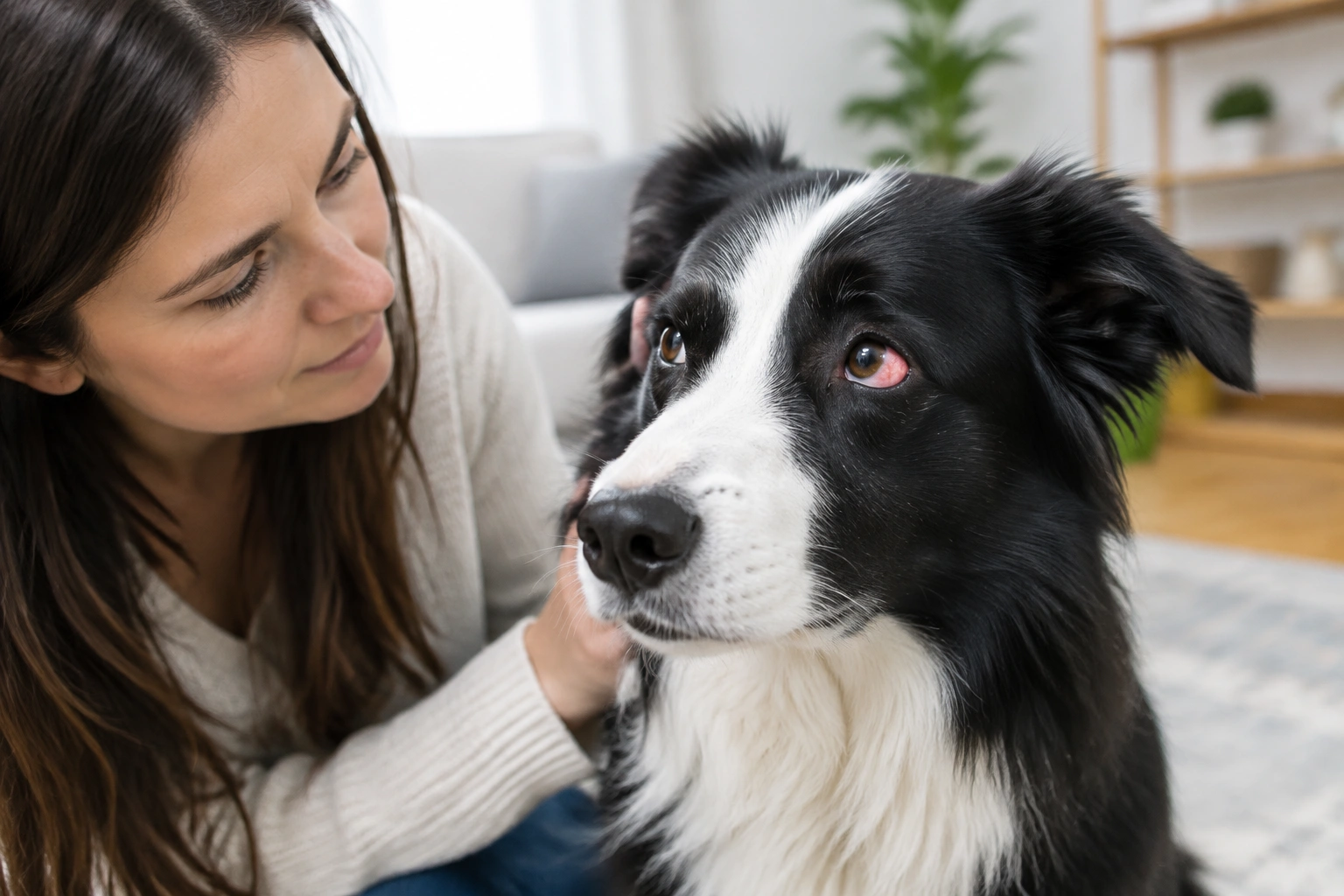
If your dog is acting painful, do not wait to “see if it clears overnight” unless your veterinarian specifically advised that plan. Eye problems can change quickly, and delayed treatment can make some conditions harder to treat.
Safe First Aid at Home Before the Vet Visit
If the eye is mildly red and your dog is otherwise comfortable, keep the first aid simple.
What you can do
- Prevent rubbing if possible. A cone or Elizabethan collar is often the safest way to stop self-trauma.
- Keep your dog out of dusty, windy, or smoky environments.
- If your vet has previously told you to use sterile saline for eye flushing, you can follow that instruction.
- Watch for worsening signs over the next few hours.
When gentle rinsing may help
If you suspect a tiny irritant and the dog is not in pain, a gentle rinse with sterile saline may help remove surface debris. The key word is gentle. You are trying to wash away a loose irritant, not forcefully flush a painful eye.
Do not try to pull out a suspected foreign body from the eye yourself. If the dog is squinting, the eye looks cloudy, or you suspect a scratch or ulcer, skip home flushing and get the dog examined.
A useful rule
If you are unsure whether it is safe to rinse, that uncertainty itself is a reason to call the vet first.
What Not to Put in a Dog’s Eye
This section matters because the wrong home treatment can make a bad eye problem worse.
Do not use:
- human eye drops unless a veterinarian specifically told you to
- steroid eye drops unless prescribed for that exact problem
- leftover antibiotic drops from a previous pet or illness
- peroxide, tea, chamomile, oils, or homemade rinses
- any product that is not meant for the eye
Steroid drops are especially risky if the dog has a corneal ulcer or infection, because they can worsen the problem. Human drops may also contain ingredients that are not appropriate for dogs.
If a dog’s eye is red, the safest default is restraint, not experimentation.
For practical owner guidance on what can and cannot be used safely, my companion article on how to treat bloodshot eyes in dogs covers the first-aid side in more detail.
How Veterinarians Figure Out Why the Eye Is Red
A proper eye exam is often the fastest way to stop guessing.
A veterinarian may:
- look closely at the eyelids, conjunctiva, and cornea
- check the pupil size and response
- measure eye pressure if glaucoma is a concern
- use fluorescein stain to look for corneal ulcers or scratches
- test tear production if dry eye is suspected
- recommend bloodwork or urinalysis if an underlying systemic issue is possible
This is why a red eye should not be treated as a one-size-fits-all problem. Two eyes can look similar from across the room but need completely different treatment once examined.
PetMD notes that veterinarians often combine a full physical exam with eye-specific testing such as lab work, staining, and pressure checks when investigating red eyes in dogs: Red Eyes in Dogs.
Treatment Depends on the Cause
Treatment follows the diagnosis.
- Irritation or allergies: the vet may recommend supportive care, environmental management, or medication if needed
- Conjunctivitis: treatment depends on whether the cause is allergic, bacterial, viral, or secondary to another eye problem
- Foreign body: removal of the object, plus treatment for surface irritation
- Corneal ulcer: pain control and prescription eye medication, with close follow-up
- Dry eye: tear-support treatment and ongoing monitoring
- Glaucoma or uveitis: urgent treatment to protect the eye and vision
The important trade-off here is simple: supportive care alone may be enough for a mild irritant, but it is not enough for an ulcer, pressure problem, or trauma. That is why diagnosis matters before you reach for drops.
How to Reduce the Chance of Recurrence
You cannot prevent every eye problem, but you can lower the odds of repeat irritation.
Practical prevention steps
- reduce exposure to smoke, sprays, and strong cleaning products
- rinse away dust or debris only when appropriate and advised
- keep an eye on windy hikes, brush, and tall grass
- check for repeated rubbing, tearing, or one-sided redness
- follow up if redness keeps returning, even if it clears between episodes
If your dog has recurring red eyes, think beyond the current flare-up. Recurrent irritation can point to dry eye, allergies, or an anatomic issue that needs veterinary management rather than repeated home care.
A Simple Decision Framework You Can Use Today
If you are staring at your dog and still not sure what to do, use this checklist:
- Both eyes mildly red, no pain, no discharge, normal behavior: monitor briefly and reduce irritants
- One eye red, watery, or half closed: call the vet today
- Any squinting, cloudiness, swelling, thick discharge, trauma, or vision change: urgent veterinary care
- Not sure whether it is safe to rinse or use anything at home: do nothing except prevent rubbing and contact your vet
That approach keeps you from overreacting to a mild irritant, while still catching the situations where waiting is the real risk.
Frequently Asked Questions
Why are my dog’s eyes bloodshot after being outside?
Outdoor exposure can bring dust, wind, pollen, grass seed, or smoke into the eye. If both eyes are affected and your dog is otherwise comfortable, irritation or allergies are possible. If only one eye is red or the dog is squinting, think more seriously about a foreign body or scratch.
Can bloodshot eyes go away on their own?
Sometimes mild irritation settles, especially if the trigger is removed. But persistent redness, one-sided redness, or redness with pain should not be left to chance.
Is it okay to use Visine or human allergy drops?
Not without veterinary guidance. Human eye drops are not automatically safe for dogs, and steroid-containing products can be harmful in the wrong situation.
Should I flush my dog’s eye?
Only if the eye seems mildly irritated and your vet has said that gentle sterile saline flushing is appropriate. If there is pain, cloudiness, or a suspected scratch, skip flushing and get the eye checked.
What if my dog is acting normal but the eye is red?
Dogs can still seem fairly normal even with an eye problem. A normal appetite or playful behavior does not rule out an eye problem, especially if the redness is one-sided or persistent.
How fast should I see a vet?
Same day if there is pain, squinting, discharge, cloudiness, swelling, trauma, or vision changes. If the redness is mild but not improving, arrange an exam promptly rather than waiting several days.
Final Take
A bloodshot eye in a dog is a clue, not a conclusion. Mild, both-eye redness can come from irritation or allergies, but one red eye, squinting, cloudiness, swelling, or discharge shifts the situation toward a problem that needs veterinary attention. When in doubt, protect the eye, avoid home medications, and get the eye examined sooner rather than later.
