
Why the Whites of Your Dog’s Eyes Look Red: Causes, Urgency, and What to Do

When the whites of a dog’s eyes look red, the cause can be as simple as mild irritation — or as serious as a painful eye disease that needs treatment fast. The redness usually means the blood vessels in or around the eye are enlarged, inflamed, or, in some cases, bleeding. That’s why the same symptom can point to very different problems.
The practical rule is this: mild, brief redness with no pain, discharge, squinting, or vision changes is less urgent; redness with any of those signs needs a vet visit, and sudden severe redness can be an emergency. If your Border Collie is rubbing the eye, keeping it closed, or the eye looks cloudy or bulging, don’t wait.
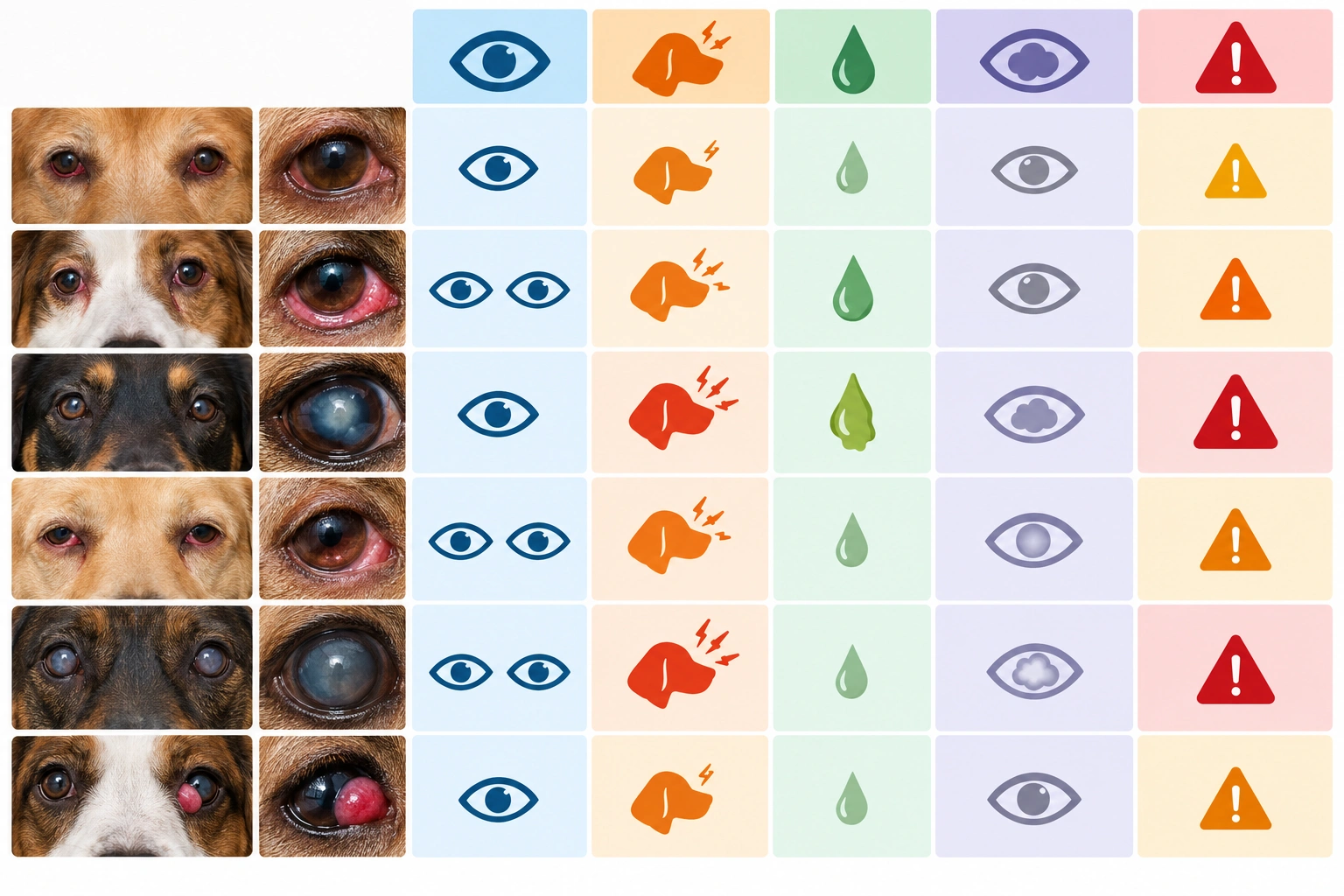
A useful comparison is that both eyes being mildly pink often fits irritation or allergies, while one eye that suddenly turns red is more suspicious for a scratch, foreign body, ulcer, or internal eye problem. Border Collies are active dogs, so exposure to brush, dust, wind, and accidental bumps is common — and those same situations can also lead to injuries that are easy to underestimate.
Is Any Redness Ever Normal?
A tiny amount of pinkness can happen after a short-lived irritant, like dust, wind, or a bit of shampoo near the eye. If the redness fades quickly, the dog is comfortable, and there’s no discharge or squinting, it may simply have been a temporary irritation.
What is not normal is redness that sticks around, keeps returning, or comes with any sign that the eye hurts. Dogs hide discomfort well. By the time you see squinting, pawing, or light sensitivity, the problem is usually more than a cosmetic change.
A good way to judge the situation is to ask three questions:
- Is it one eye or both?
- Is the dog acting painful or bothered?
- Is the redness getting better, worse, or staying the same?
If the answer points toward pain, worsening, or one-sided redness, treat it as a veterinary problem rather than something to watch casually.
Common Causes of Red Eyes in Dogs, from Mild to Serious
Redness in the white of the eye can come from blood vessels becoming enlarged, inflamed, or irritated. Conjunctivitis is a symptom pattern, not a final diagnosis, and it can be caused by allergies, infection, or another underlying eye issue. The cause matters because the treatment changes completely depending on whether you’re dealing with allergies, infection, trauma, or pressure inside the eye. Glaucoma and uveitis are especially urgent compared with many of the other causes in this list.
Here’s the practical order I think through when a dog presents with red eyes:
1. Environmental irritation
Dust, wind, smoke, pollen, grass seeds, shampoo, or a bit of debris can make the eye look red and watery. These cases often cause mild discomfort rather than obvious pain. They’re more likely to affect both eyes if the trigger is in the environment.
2. Allergies
Allergies commonly cause red, itchy, watery eyes. Dogs may also rub their face or have other allergy signs like licking paws or sneezing. The irritation is often bilateral and gradual rather than sudden.
3. Conjunctivitis
Conjunctivitis, often called pinkeye, makes the eye look red or pink and irritated. It can happen with infection, allergies, or other underlying eye problems. The tricky part is that conjunctivitis can look straightforward while a more serious issue is hiding underneath, so a vet still needs to rule out corneal damage or deeper inflammation.
4. Dry eye
Dry eye, or keratoconjunctivitis sicca, happens when the eye does not produce enough tears. That leaves the surface irritated and inflamed. You may see redness plus thick or sticky discharge and a dull-looking eye surface.
5. Foreign body
A blade of grass, dirt, sand, or a small piece of debris can scratch or irritate the eye until removed. Foreign bodies often cause sudden redness in one eye, along with blinking, pawing, and squinting.
6. Trauma or scratch
A branch, rough play, or a collision can injure the eye. Trauma can cause redness, tearing, swelling, and pain. A scratch on the cornea can be especially serious because it can become an ulcer.
7. Cherry eye
Cherry eye is a swollen third eyelid gland that becomes visible as a red mass near the inner corner of the eye. It may look like the eye itself is red, but the problem is actually the protruding tissue. It needs veterinary treatment, not home squeezing or massage.
8. Corneal ulcer
A corneal ulcer is an open sore on the surface of the eye. It can be caused by scratches, dry eye, infection, or foreign material. This is painful and can worsen quickly, so it needs prompt veterinary attention.
9. Uveitis
Uveitis is inflammation inside the eye. It often causes pain, redness, squinting, light sensitivity, and sometimes a cloudy appearance. It is not a “wait and see” problem because the underlying causes can be serious.
10. Glaucoma
Glaucoma involves increased pressure inside the eye and is one of the biggest emergencies in canine eye care. It can cause a very red eye, cloudiness, pain, a dilated pupil, and vision loss. Damage can happen fast, so this is a same-day or emergency situation.
For a broader overview of red-eye causes, VCA Hospitals’ eye health resources are a solid starting point, and this Border Collie-specific guide on why dogs get red eyes can help you compare symptoms at home before you call.
How to Tell Allergies or Irritation from Infection or Injury
The pattern often gives you the first clue.
More likely allergies or irritation
- Both eyes are red
- The dog seems itchy rather than painful
- The redness came on gradually
- Discharge is watery, not thick
- The dog is otherwise acting normal
More likely infection or conjunctivitis
- Redness is paired with discharge
- Eyelids look sticky or crusted
- The eye keeps watering
- The redness persists beyond a brief exposure to irritants
More likely injury, scratch, or foreign body
- One eye is affected
- The redness appeared suddenly
- The dog is squinting or keeping the eye closed
- Pawing, rubbing, or blinking is obvious
- The dog reacted after running through brush, playing rough, or being hit in the face
A key trade-off here is that allergies can look mild but still need treatment if they keep recurring, while injury can look minor at first and still be vision-threatening. That’s why one-sided redness with pain gets more concern than mild redness in both eyes.
Red-Flag Symptoms That Mean the Dog Needs a Vet Now
Some symptoms move the problem from “monitor closely” to “get help today.”
Seek veterinary care promptly if you see:
- Squinting or keeping the eye closed
- Pawing or rubbing at the eye
- Watery, yellow, green, or thick discharge
- Cloudiness
- Swelling around the eye
- Obvious pain
- Vision changes
- Unequal pupils
- A bulging eye
- A suddenly very red eye
- A red eye after trauma
- A red eye that is getting worse instead of better
The reason these signs matter is that they often point to corneal injury, glaucoma, uveitis, or another problem that can worsen within hours. A dog that is only a little pink and comfortable is a different situation from a dog that is keeping one eye shut and bumping into furniture.
If the eye looks clouded, the pupil looks abnormal, or the dog seems unable to see well, that’s not a “wait until next week” issue.
When Same-Day Vet Care Is Enough vs When It’s an Emergency
A same-day appointment is usually appropriate when the eye is red and there is discharge, mild swelling, or persistent irritation, but the dog is still comfortable enough to keep the eye open and is acting normally otherwise.
Emergency care is the better choice when you suspect:
– Glaucoma
– A corneal ulcer with severe pain
– A significant injury
– Bleeding in or around the eye
– A bulging eye
– Sudden vision loss or major vision change
– A very painful eye that is worsening quickly
Here’s the simplest decision framework I use:
- Mild redness, both eyes, no pain, no discharge: monitor briefly and contact your vet if it doesn’t clear quickly.
- Redness plus discharge, blinking, or repeated rubbing: book a same-day vet visit.
- Sudden one-eye redness with squinting, cloudiness, or a strange pupil: treat as urgent.
- Severe pain, bulging, marked cloudiness, or obvious vision loss: go to emergency care.
For emergency triage language that matches this guidance, GSVS’s emergency eye guide is consistent with the signs that should raise concern quickly.
What You Can Safely Do at Home Right Now
Your job at home is not to fix the eye — it’s to prevent things from getting worse before the vet exam.
Safe steps:
– Stop the dog from rubbing the eye. Use an e-collar if you have one.
– Keep the dog calm and indoors if wind, dust, or grass exposure seems to be aggravating the eye.
– Check for obvious discharge around the eyelids and gently wipe only the surrounding area if needed.
– Note which eye is affected, when it started, and whether the redness is changing.
– Take a clear photo if the redness comes and goes; it helps the vet compare progression.
If there is mild, clearly superficial irritation and the dog is comfortable, a vet may later recommend flushing. Do not rinse the eye if it is painful, cloudy, possibly scratched, or if you suspect a corneal ulcer or chemical exposure. In those cases, even gentle flushing can make things worse or delay proper care.
If the eye is painful, cloudy, or the dog is squinting, leave it alone until a veterinarian examines it.
What Not to Do: Eye Drops, Human Medicines, and Risky Home Remedies
This is where people often make the problem worse.
Do not use:
– Human redness-relief drops
– Human allergy drops unless your vet specifically instructs you
– Steroid eye drops
– Leftover prescription drops from another pet
– Saline or cleaning products that are not meant for eyes
– Honey, herbal remedies, or random ointments
The biggest risk is that some drops can mask symptoms, delay the right diagnosis, or make a corneal ulcer worse. Steroid drops are especially risky if the cornea is damaged. If a foreign body is embedded or the cornea is scratched, trying to remove it yourself can cause more trauma.
How Veterinarians Diagnose the Cause of Red Eyes
A vet is trying to answer one question: Is this simple irritation, or is the eye itself injured or diseased?
Common parts of the exam include:
– Looking at the eyelids, third eyelid, and cornea
– Checking for discharge or foreign material
– Fluorescein stain to look for scratches or ulcers on the cornea
– Tear testing if dry eye is suspected
– Pressure measurement to check for glaucoma or other pressure-related problems
– Sometimes a more detailed eye exam or referral
This is why even a “small” red-eye problem may need a real exam. The surface can look mildly irritated while the cornea, pressure, or inside of the eye tells a very different story.
How Treatment Differs by Cause
Treatment depends on the diagnosis, and that’s exactly why guessing is risky.
- Allergies or irritation: removing the trigger, soothing the eye as directed, and sometimes anti-inflammatory or allergy treatment
- Conjunctivitis: treatment based on whether the cause is bacterial, allergic, or secondary to another eye problem
- Dry eye: tear-supporting medication and ongoing management
- Foreign body: removal plus treatment for surface irritation or damage
- Corneal ulcer: pain control, eye medication, and close follow-up
- Uveitis: treatment aimed at inflammation and the underlying cause
- Glaucoma: urgent pressure-lowering treatment and often specialist care
- Cherry eye: management or surgical correction, depending on the case
The important trade-off is that home care may be enough for very mild irritation, but prescription treatment is often necessary once the eye is inflamed, painful, or damaged. That’s not over-treatment — it’s what protects vision.
Border Collie Eye Concerns and Why Recurrence Matters
Border Collies are active, intelligent, and often outdoors a lot, which means their eyes get exposed to more dust, grass, branches, and wind than some couch-loving breeds. That alone raises the chance of irritation and scratches.
Just as important, Border Collies can have recurring eye redness from repeated exposure or minor injury, so a pattern that keeps coming back should not be brushed off. If redness keeps returning, if one eye seems to flare up repeatedly, or if the dog ever seems to see differently, the threshold for veterinary evaluation should be low.
If you want a broader breed-health context, the AKC’s dog health guidance is useful for general owner education, and Border Collie owners who want to stay ahead of recurring eye issues should keep a close eye on any pattern, not just single episodes.
When to See a Veterinary Ophthalmologist
A general veterinarian can handle many eye problems, but a veterinary ophthalmologist is worth considering when:
- The redness keeps coming back
- The diagnosis is unclear
- The dog has suspected glaucoma
- There is corneal disease that isn’t healing as expected
- Vision seems reduced
- The eye problem is severe or unusual
- Standard treatment isn’t working
That referral step matters because some eye diseases need specialized tools and experience to protect vision. If your dog’s eye problem is recurring, painful, or affecting sight, specialist care can save time and reduce the chance of long-term damage.
Key Takeaways for Deciding What to Do Next
Use this simple rule set:
- Mild redness in both eyes, no pain, no discharge, acting normal: monitor briefly and reduce irritation.
- Redness with discharge, squinting, rubbing, or persistent irritation: call your vet for a same-day visit.
- One very red eye, cloudiness, a strange pupil, obvious pain, or vision changes: urgent veterinary care.
- Bulging eye, severe swelling, or sudden worsening: emergency care.
The safest move is to treat eye redness as a symptom, not a diagnosis. A quick exam can separate a minor irritation from a corneal ulcer, uveitis, or glaucoma before the problem has a chance to cost your dog vision.
FAQs
Can red eyes in dogs go away on their own?
Sometimes mild irritation does settle if the trigger is brief and the eye is otherwise comfortable. But if the redness lasts, keeps returning, or comes with pain or discharge, it needs a vet exam.
Should I rinse my dog’s eye with water?
Only if your vet has told you to do so or you are dealing with a clearly minor surface irritant and the dog is comfortable. If the eye is painful, cloudy, or the dog is squinting, leave it alone and get veterinary help.
Is one red eye more serious than both red eyes?
Often, yes. One-sided redness is more suspicious for a scratch, foreign body, or internal eye problem. Both eyes are more likely to fit allergies or environmental irritation, though not always.
Can conjunctivitis be mistaken for something worse?
Absolutely. Conjunctivitis can look similar to corneal ulcers, uveitis, or glaucoma early on. That’s why a red eye with pain, cloudiness, or vision changes should not be assumed to be “just pinkeye.”
When should I worry about Border Collie eye redness specifically?
Worry sooner if it keeps happening, affects one eye repeatedly, or seems to change your dog’s vision or comfort. Border Collies can be exposed to more minor eye irritants and injuries, but recurring redness deserves a proper exam.
Can I use human eye drops?
No, not unless your veterinarian specifically tells you to. Human eye drops can be the wrong medication, hide symptoms, or make certain eye diseases worse.
How fast can eye problems get serious?
Some eye conditions worsen quickly, especially injuries, pressure-related problems, or bleeding inside the eye. If the eye is painful or vision seems off, don’t wait to see if it “sorts itself out.”
Where can I read more about dog eye health?
A practical next step is to review this site’s guide on what red eyes in dogs can mean and compare it with your dog’s exact symptoms before calling your vet.
