
Why Does My Dog Have Red Eyes? A Practical Guide to Causes, Urgency, and What to Do Next

A red eye in a dog can be a harmless irritation, or it can be the first sign of a painful eye problem that needs treatment fast. The tricky part is that redness itself does not tell you which one you’re dealing with. You have to read the pattern: one eye or both, watery or thick discharge, squinting or comfort, sudden or gradual onset.
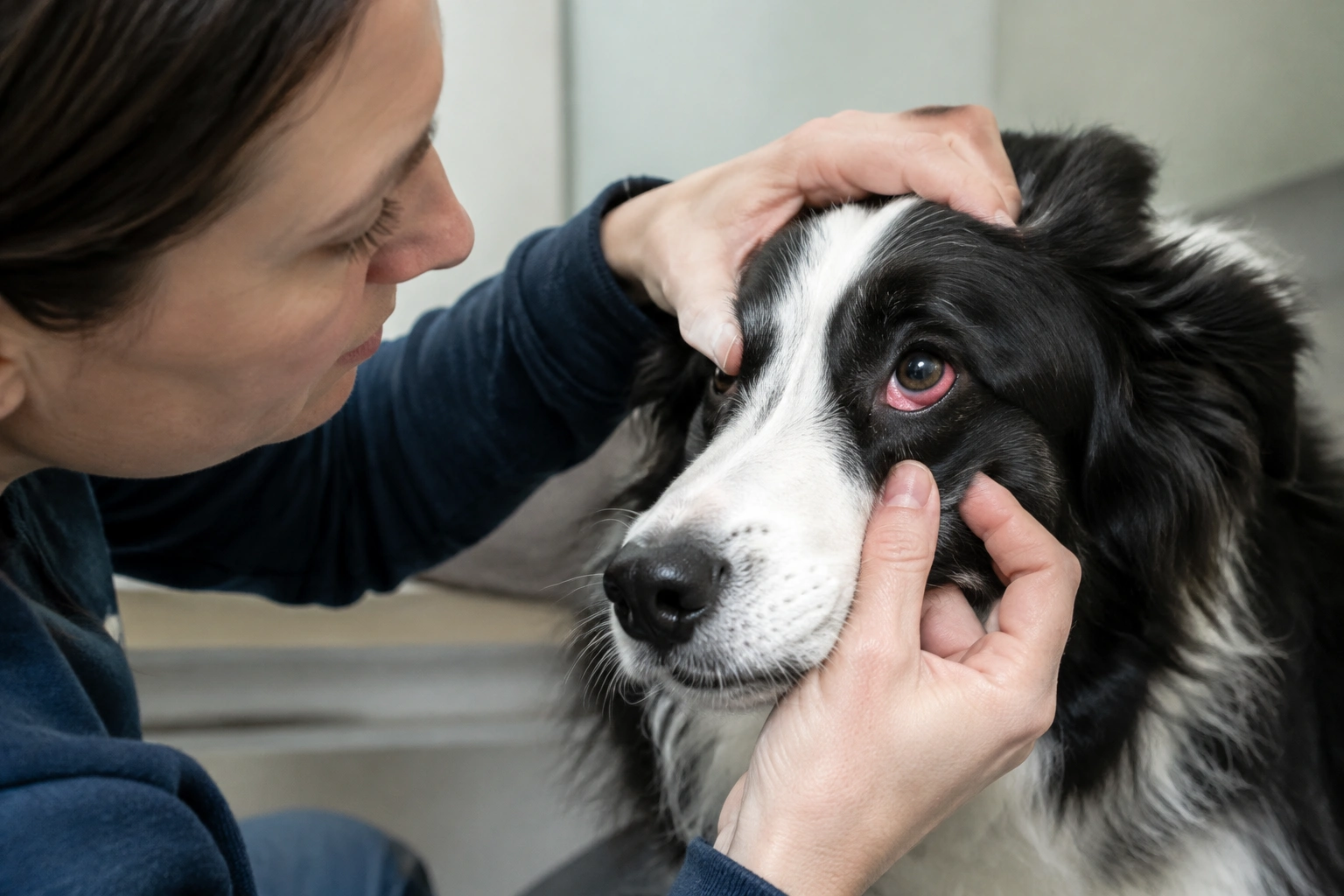
For dogs that spend a lot of time outdoors, that distinction matters because dust, grass, or a minor scrape around the eye can happen after a busy day outside. That does not mean every red eye is serious. It does mean you should not dismiss a painful-looking eye as “just irritation.”
Here’s the fast rule I use: if the eye is red but your dog is comfortable, blinking normally, and otherwise acting fine, a brief period of cautious observation may be reasonable. If the eye is red and your dog is squinting, pawing, keeping it closed, or the eye looks cloudy or swollen, treat it as urgent.
Why Dog Eyes Turn Red: The Fastest Way to Judge How Serious It Is
Redness happens when blood vessels in or around the eye become enlarged or inflamed. That can happen from something simple, like pollen or a bit of dust, or from something more serious, like a corneal ulcer, glaucoma, or uveitis. Veterinary sources note that many different problems can cause red eyes, and some can become vision-threatening without prompt care.
The quickest way to sort the possibilities is to look at four things:
- Pain: Is your dog squinting, pawing, or keeping the eye shut?
- Discharge: Is it watery, sticky, or thick yellow-green?
- Pattern: Is one eye red or are both eyes red?
- Timing: Did it start suddenly, or has it been building for days?
That combination often tells you more than the redness itself. A dog with both eyes mildly red and watery after a windy walk is usually pointing you toward irritation or allergies. A dog with one red eye, obvious squinting, and a paw going straight to the face is much more concerning for a scratch or foreign body.
One Red Eye vs. Both Eyes: What the Pattern Usually Suggests
The number of eyes involved is one of the most useful clues you have.
One red eye
When redness is limited to one eye, I think first about a local problem:
- something stuck in the eye
- a scratch or corneal ulcer
- trauma from running through brush or bumping into something
- a blocked tear duct or drainage issue
- early glaucoma or uveitis
One-eye redness is more suspicious when the dog is clearly uncomfortable. If your dog came in from tall grass, is blinking hard, and keeps rubbing one side of the face, assume the eye has been irritated until a vet proves otherwise.
Both eyes
When both eyes are red, the cause is more often something affecting the whole body or both eyes at once, such as:
- allergies
- environmental irritants like dust, smoke, or pollen
- upper respiratory infection
- dry eye
- conjunctivitis
Both eyes being red does not automatically mean “mild,” but it does make allergies or irritation more likely than a single foreign body.
Why this matters
A one-eye problem often needs a closer look because a scratch or ulcer can worsen if the dog keeps rubbing. A two-eye problem may respond to removing the trigger, but it can also signal a deeper issue like dry eye or infection. The pattern helps you decide whether this is a “watch for a few hours” situation or a “book the vet today” situation.
Common Causes of Red Eyes in Dogs, Ranked by Likelihood and Risk
Allergies and environmental irritation
Pollen, dust, grass, dander, smoke, and even wind can irritate a dog’s eyes. Allergy-related redness often comes with watery eyes, mild itching, and face rubbing. Both eyes are usually involved.
This is one of the more common and less alarming explanations, especially if your dog otherwise seems bright and comfortable. Still, “less alarming” does not mean “ignore it.” If the redness keeps returning, the eye becomes more swollen, or discharge thickens, the problem may be moving beyond simple irritation.
Conjunctivitis and infection
Conjunctivitis is inflammation of the tissues around the eye and can be caused by bacteria, viruses, or other irritants. It often brings redness plus discharge. In many cases, the eye looks sticky, crusted, or mildly swollen.
A useful clue is the discharge quality:
- Watery discharge leans more toward allergy or irritation.
- Thicker mucus or yellow-green discharge leans more toward infection or more significant inflammation.
Infections can develop alongside other problems too, so discharge should not be used as the only clue. A red, uncomfortable eye with discharge deserves a vet exam rather than guesswork.
Foreign bodies, scratches, and trauma
A blade of grass, dirt, sand, or a scratch from a branch can leave an eye red and painful. This is especially relevant for active dogs that run through rough cover or brush past hedges. A foreign object can keep irritating the eye until it is removed, and a scratch can become worse if the dog keeps rubbing.
This is where owners often underestimate the problem. A dog may look “just a little red,” but if the eye is being held partly closed or the dog is blinking hard, pain is already part of the picture.
Dry eye, also called keratoconjunctivitis sicca
Dry eye happens when the tear film is not doing its job. The eye loses protection, becomes chronically irritated, and may produce sticky discharge. Over time, the surface of the eye can become damaged.
Dry eye often looks less dramatic than trauma, which is why it gets missed. A dog may have ongoing redness, thick discharge, and repeated discomfort that comes and goes. If redness keeps returning, especially in both eyes, dry eye should be on your list.
Glaucoma and uveitis
These are the conditions I take most seriously because they can threaten vision and cause significant pain. Glaucoma involves increased pressure inside the eye. Uveitis is inflammation inside the eye itself.
Redness with cloudiness, a changed eye color, a dilated pupil, or obvious pain is a red flag. Veterinary sources describe glaucoma as a very painful condition that needs immediate care. If the eye also looks larger, hazy, or suddenly different from the other eye, do not wait.
Less common but important causes
Red eyes can also be linked to broader illnesses, including distemper, diabetes, hyperthyroidism, tumors, or certain cancers. These are not the first things most owners should assume, but they matter when redness is recurrent, unexplained, or paired with other signs like illness, weight change, or vision problems.
Red-Flag Symptoms That Mean Your Dog Needs Same-Day or Emergency Vet Care
Some signs move a red eye from “monitor” to “get help now.”
Seek same-day veterinary care if you notice:
- squinting or keeping the eye closed
- pawing at the eye or rubbing the face repeatedly
- thick discharge or crusting
- swelling around the eye
- redness that appeared suddenly
- cloudiness, blue haze, or a change in eye color
- a larger or oddly shaped pupil
- obvious light sensitivity
- any change in vision or bumping into things
Go to an emergency vet sooner rather than later if the eye looks severely painful, the cornea looks cloudy or damaged, there is bleeding, or you suspect a penetrating injury. A red eye can become a vision problem quickly when the surface of the eye is involved.
A simple decision rule: redness plus pain is urgent until proven otherwise.
What You Can Safely Do in the First Hour
If the eye is red but your dog is still comfortable, there are a few safe steps you can take before the vet visit.
- Stop the rubbing. If your dog is pawing at the eye, use an e-collar or cone if you have one.
- Check the surroundings. Look for grass seeds, dust, or anything obvious near the eye, but do not pry the eyelids open forcefully.
- Observe both eyes. Compare them. Is one more swollen, cloudy, or sensitive to light?
- Take a clear photo. This helps you track whether the redness is worsening and gives your vet a before-and-after reference.
- If the eye looks mildly irritated and there is no obvious trauma, gentle flushing with sterile saline may be reasonable. Stop if your dog resists strongly or the eye seems very painful.

The trade-off here is simple: a gentle flush can remove a small irritant, but too much handling can make a scratch or ulcer worse. If you are unsure whether the eye is injured, keep hands off and let the vet examine it.
What Not to Do: Human Eye Drops, Home Remedies, and Other Common Mistakes
This is the section that prevents a lot of avoidable trouble.
Do not use human eye drops unless your vet tells you to
Human eye medications can be unsafe for dogs, especially if the real issue is a corneal ulcer, glaucoma, or another condition that needs a specific prescription. Some drops can mask pain, delay diagnosis, or make the eye worse.
Do not use leftover antibiotic or steroid drops
Leftover medication from a previous problem is not a shortcut. Steroid-containing drops are particularly risky if the cornea is scratched or ulcerated. A dog’s eye needs the right diagnosis before medication is chosen.
Do not try home remedies in the eye
No tea, no herbal rinses, no peroxide, no saline contact lens solution unless your vet says it is appropriate. The eye is too delicate for improvisation.
Do not assume “no discharge” means “no problem”
A painful eye can be red without much discharge. Squinting and light sensitivity matter just as much as goo or crust.
For general guidance on dog eye care and when symptoms merit a vet visit, the ASPCA offers helpful pet-health resources, and VCA Hospitals has veterinary articles that explain common eye conditions in practical language.
How Veterinarians Diagnose the Cause of Red Eyes
A vet usually starts with a close look at the eye and the surrounding tissue, then chooses tests based on what they see.
Common steps include:
- Fluorescein stain: a dye test that helps reveal a corneal scratch or ulcer
- Tear testing: checks whether tear production is too low, which matters for dry eye
- Pressure measurement: helps evaluate glaucoma or other pressure-related problems
- Pupil and light response checks: useful when uveitis or vision changes are suspected
These tests matter because the treatment changes depending on the cause. A scratch, a dry eye problem, and glaucoma may all look like “red eye” to an owner, but they are not treated the same way.
Treatment Paths by Cause: What Usually Happens Next
Treatment depends on the diagnosis, but here is the practical version.
Allergies or irritation
The vet may recommend removing the trigger, flushing the eye, or using medication that calms inflammation. If the problem is recurring, the goal is to identify the cause rather than keep treating flare-ups.
Infection or conjunctivitis
Treatment may involve medicated eye drops or ointment, and sometimes oral medication if the infection is part of a broader illness. The exact choice depends on whether the problem is bacterial, viral, or secondary to something else.
Foreign body or scratch
If something is trapped in the eye, the vet removes it safely. A corneal scratch or ulcer may need protective medication and close follow-up. This is where a cone often becomes part of the plan, because rubbing can turn a minor injury into a much bigger one.
Dry eye
Dry eye usually needs ongoing management, not a one-time fix. The vet may prescribe medication to support tear production and protect the cornea.
Glaucoma or uveitis
These conditions need prompt treatment, and glaucoma in particular is time-sensitive. Depending on the cause and severity, treatment may involve medication, pressure control, and sometimes surgery.
Border Collie Eye Concerns Worth Knowing
Border Collies are not the breed most people think of when they hear “eye problems,” but that does not mean their eyes are trouble-free. For this breed, the practical concern is less about one single famous condition and more about how active, outdoor life increases the odds of irritation, scratches, and foreign material getting into the eye.
If redness keeps coming back, or if it is paired with vision changes, light sensitivity, or unusual pupil size, that deserves a deeper look. Recurrent eye problems are worth mentioning to your vet even if each episode seems minor at first.
If you want a broader reference on dog eye discharge and what different types can mean, see our guide on why dog eyes have discharge and our practical breakdown of what eye boogers in dogs usually mean.
When Monitoring Is Reasonable vs. When Waiting Is Risky
A short period of monitoring can be reasonable when:
- the redness is mild
- both eyes are affected
- your dog is not squinting or rubbing
- there is no cloudiness
- discharge is watery rather than thick
- your dog is otherwise acting normal
Waiting becomes risky when:
- one eye is clearly worse than the other
- pain is obvious
- the eye looks cloudy
- the pupil looks abnormal
- symptoms started suddenly
- the problem is getting worse instead of better
The practical trade-off is this: a calm, comfortable dog with mild bilateral redness may let you watch closely for a short time, but a painful one-eye problem should not be “observed” overnight. Eye problems can change faster than owners expect.
When to See a Veterinarian
For red eyes, the professional you need is usually a veterinarian. See a vet promptly if the eye is painful, cloudy, swollen, or not improving quickly. If your dog is repeatedly rubbing the face, use a cone until the vet can examine the eye.
FAQ
Can allergies cause red eyes in dogs?
Yes. Environmental allergens like pollen, dust, and grass can irritate the eyes and usually cause watery eyes, mild redness, and rubbing.
Is one red eye worse than both red eyes?
Not automatically, but one red eye is more suspicious for a local problem like a foreign body, scratch, or trauma. Both eyes red often points more toward allergies or irritation.
Can I use saline to rinse my dog’s eye?
A gentle rinse with sterile saline may be reasonable if the eye looks mildly irritated and there is no obvious injury. If the dog is squinting, painful, or keeping the eye shut, skip the flushing and see a vet.
Should I worry if the eye is red but my dog seems fine?
If there is no pain, no cloudiness, and no discharge beyond mild watering, brief monitoring may be reasonable. If the redness persists, spreads, or returns, it needs a vet check.
What if my dog keeps rubbing the eye?
Use a cone to stop self-trauma and arrange a veterinary exam. Rubbing can turn a minor problem into a corneal injury.
Are red eyes always an emergency?
No, but some are. Redness with pain, cloudiness, swelling, a changed pupil, or vision changes should be treated as urgent.
Can red eyes go away on their own?
Mild irritation sometimes settles once the trigger is gone. Painful, cloudy, or one-sided red eyes should not be left to “see what happens.”
What test checks for a corneal ulcer?
A vet commonly uses a fluorescein stain to look for scratches or ulcers on the cornea.
If you remember only one thing, make it this: redness is a clue, not a diagnosis. The real decision comes from the rest of the picture — pain, discharge, one eye or both, and how suddenly it started.
