
Why Your Dog’s Eyes Have Discharge: What’s Normal, What’s Not, and What to Do Next

Eye discharge is one of those small symptoms that can mean very different things. Sometimes it’s just a little tear film or dried debris after sleep. Other times it’s the first sign of irritation, infection, a scratch on the cornea, or a tear drainage problem that needs veterinary attention.
If you live with a Border Collie, you may notice this sooner than most people would. They’re active, outdoorsy dogs, so dust, wind, grass seeds, and minor eye irritants are common parts of their day. That does not mean every bit of discharge is a problem. It does mean you should know how to read the pattern.
Quick answer: normal vs concerning eye discharge
A small amount of clear or slightly whitish discharge, especially after sleep, can be normal. If it wipes away easily and your dog’s eye is otherwise comfortable, bright, and open, you can usually monitor it.
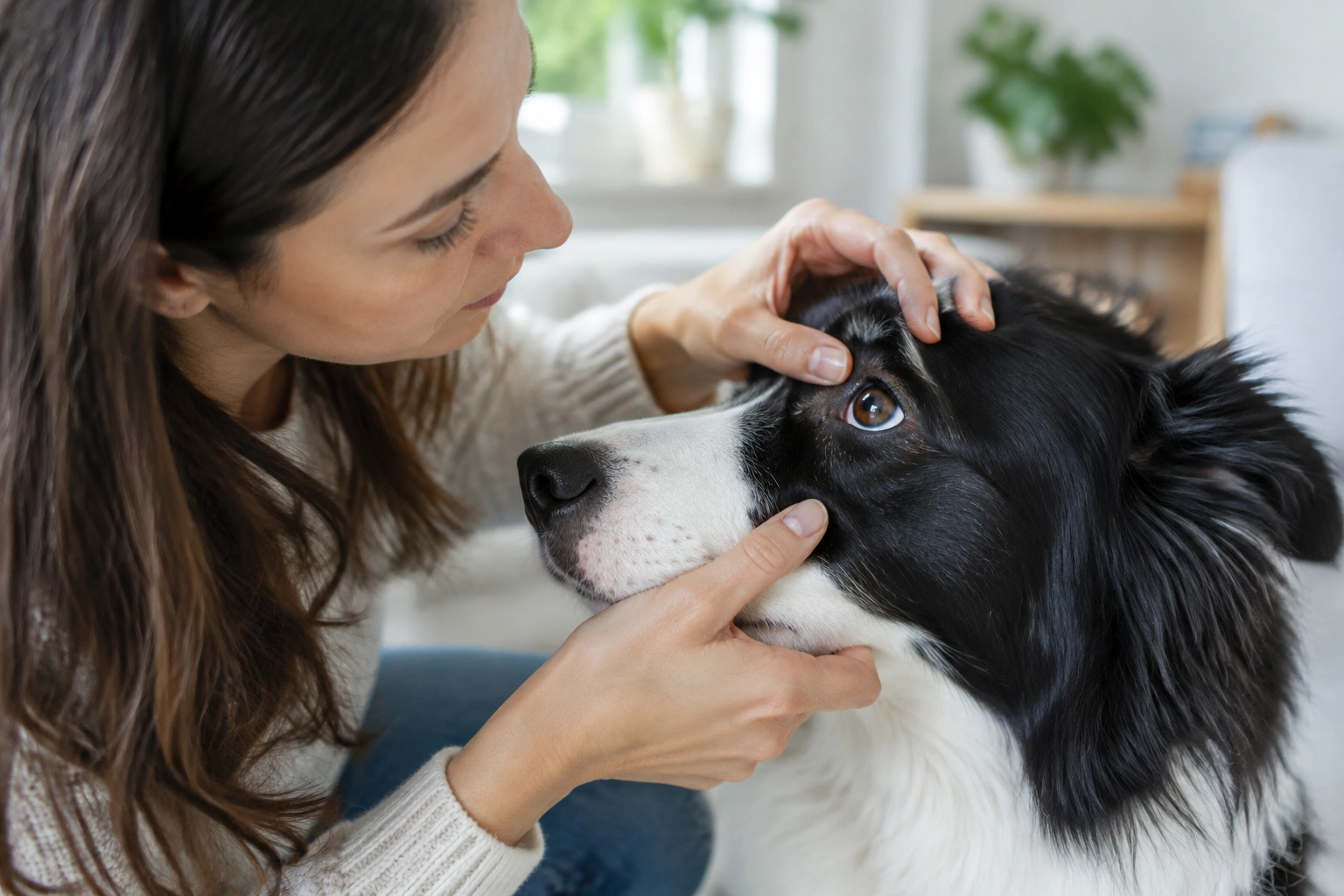
What raises concern is not just the discharge itself, but the company it keeps:
- yellow or green discharge
- thick mucus-like discharge
- redness
- squinting or keeping the eye closed
- pawing at the face
- swelling around the eye
- cloudiness
- bad odor
- light sensitivity
- vision changes
A useful rule: clear and mild without pain is often watch-and-clean territory; colored, thick, smelly, or painful discharge needs a vet visit sooner rather than later.
If one eye is involved, think harder about a local problem such as a foreign body, scratch, or blocked tear drainage. If both eyes are involved, allergies, irritation, or dry eye move higher on the list.
What different eye discharge colors and textures can mean
The color and texture tell you a lot, but they do not give a final diagnosis. Think of them as clues.
Clear, watery discharge
Clear discharge often points to mild irritation, wind, dust, smoke, or allergies. It can also show up when a dog’s eye is trying to flush out a tiny irritant. If it improves after a gentle rinse and doesn’t come with redness or squinting, it may be minor.
Even so, persistent clear discharge or discharge that keeps showing up in just one eye can still warrant a vet visit if it does not resolve.
White or cloudy mucus
White, stringy, or mucus-like discharge makes me think more about ongoing irritation or tear film problems. Dry eye, also called keratoconjunctivitis sicca, is one possibility. So is conjunctivitis, especially if the eye is red or sticky.
Yellow or green discharge
Yellow or green discharge is more concerning because it often suggests infection or more significant inflammation. If it is paired with redness, squinting, pain, or swelling, it deserves prompt veterinary attention rather than a wait-and-see approach.
Thick crusts around the eye
Crusting can happen when discharge dries overnight, but recurring crusting during the day usually means the eye is producing too much discharge to stay comfortable. That can happen with allergies, infection, dry eye, or a blocked tear duct.
Bloody discharge
Blood is not a normal eye discharge color. It can happen after trauma or a serious eye injury. Treat it as urgent.
Common causes of eye discharge in dogs
There is no single reason a dog develops eye discharge. The most common causes are usually mechanical, inflammatory, or infectious.
Allergies
Allergies can cause watery eyes, mild redness, and rubbing. In many dogs, both eyes are affected. Seasonal pollen, dust, mold, and even household irritants can play a role.
The trade-off here is simple: if the discharge is mild and both eyes are watery, allergies are plausible. But if one eye is much worse, or the eye is painful, don’t assume it’s “just allergies.”
Environmental irritants
Wind, dust, smoke, shampoo residue, or a speck of debris can trigger temporary tearing. Dogs that run hard outdoors may get this more often than less active dogs.
A practical example: a dog comes in from a windy field with watery eyes, no redness, and no squinting. After a gentle saline rinse, the discharge settles. That pattern fits irritation more than disease.
Conjunctivitis
Conjunctivitis means inflammation of the tissue around the eye. It can be caused by allergies, infection, irritants, or other underlying eye problems. Redness and discharge are common, but the cause behind the conjunctivitis matters because treatment differs.
Dry eye
Dry eye sounds backward, but it often causes more discharge, not less. When the tear film is poor, the eye becomes irritated and may produce thick mucus. Dogs may blink more, squint, or develop a dull-looking eye surface.
Foreign body
Grass seeds, dust, and tiny bits of plant material can get trapped under the eyelid or on the surface of the eye. This often causes sudden discomfort, usually in one eye. If your dog suddenly starts pawing at one eye or keeping it shut after being outside, think foreign body or scratch first.
Corneal injury or ulcer
A scratch on the cornea can look like “just discharge” at first, but it is one of the more serious causes because it is painful and can worsen quickly. Squinting, tearing, and light sensitivity are common clues.
Blocked tear duct
If tears are not draining normally, they can overflow onto the face and leave wetness or crust. This is more likely when the discharge is chronic and mostly affects one side, though both sides can be involved.
For a broader look at common eye debris and what it means, see our guide to why dogs get so many eye boogers.
Symptoms that make eye discharge more serious
The discharge itself matters, but these signs matter even more:
- Squinting or holding the eye shut: usually means pain
- Pawing at the eye or rubbing the face: often means irritation, a scratch, or a foreign body
- Cloudiness on the eye surface: can signal corneal disease or other serious eye problems
- Redness: suggests inflammation
- Swelling around the eye: can happen with infection, trauma, or a bite/sting
- Light sensitivity: a dog that turns away from bright light may be in real discomfort
- Bad smell: not normal and may suggest infection
- Vision changes: bumping into things, hesitation on stairs, or seeming startled can indicate more than simple discharge
A dog can still eat, wag, and seem “mostly fine” while having a painful eye problem. That’s why eye symptoms deserve attention even when the rest of the dog looks normal.
When you can monitor at home and when you should call the vet
Use this decision framework:
Home monitoring is reasonable when:
- discharge is clear or slightly white
- the eye is not red or swollen
- your dog is not squinting
- there is no pawing or obvious pain
- your dog is acting normally
- the problem improves after gentle cleaning
- it appears after a short exposure to wind, dust, or similar irritation
In that situation, clean the eye gently, watch for changes, and reassess over the next day.
Call your vet the same day when:
- discharge is yellow, green, thick, or recurring
- only one eye is affected and it is not improving
- redness is present
- the eye looks dry, dull, or sticky
- the discharge returns quickly after cleaning
- your dog has severe squinting or obvious discomfort
- the eye looks suddenly cloudy
Seek urgent or emergency care when:
- your dog cannot open the eye
- there is a visibly injured eye or obvious trauma
- the eye is bleeding
- you suspect a corneal ulcer or a foreign body that is stuck or not rinsing away
- swelling is sudden or severe
- vision seems impaired
- your dog is in obvious pain
If you are on the fence between “wait and see” and “go now,” eye pain pushes the decision toward the vet.
How to clean your dog’s eyes safely at home
For mild discharge, gentle cleaning can help. Keep it simple.
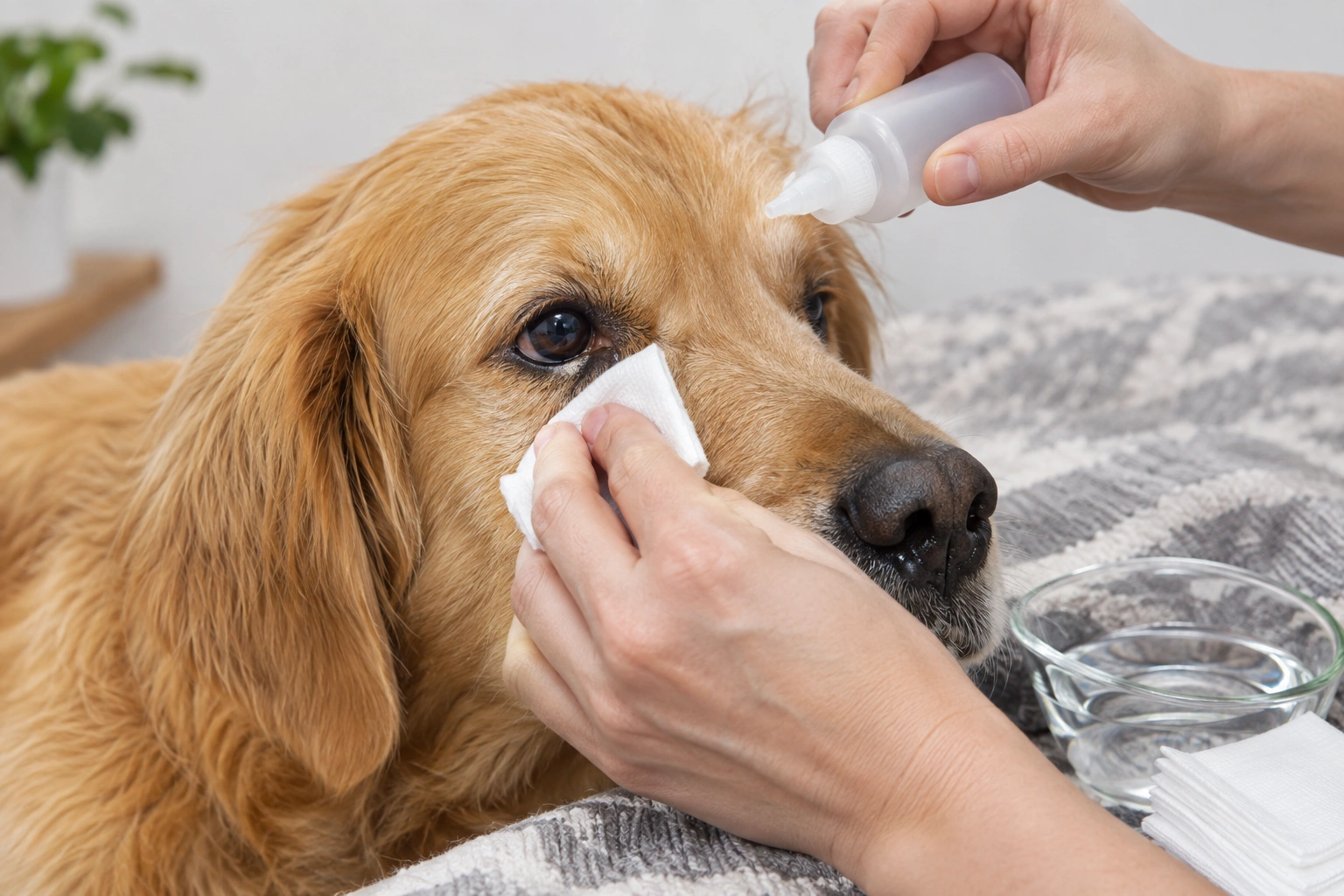
What to use
- sterile saline solution
- a clean, soft cloth or gauze
- a warm compress that is only warm, never hot
How to do it
- Wash your hands.
- Soften the discharge with sterile saline or a warm compress.
- Wipe from the inner corner outward using a clean piece of gauze or cloth.
- Use a fresh pad for each wipe so you do not spread debris.
- Stop if the dog pulls away sharply, blinks hard, or seems painful.
Do not force the eye open. If the eye is painful, pressure and rubbing can make things worse.
What not to use
- human eye drops unless your veterinarian told you to
- leftover prescriptions from another pet or person
- hydrogen peroxide
- alcohol
- scented wipes
- essential oils
- rough cotton balls that leave fibers behind
The safest home care is boring: gentle, clean, and limited to mild cases.
Breed-related eye sensitivity and predisposition
Border Collies are active dogs that can pick up irritants regularly. Their outdoor time matters more than their breed label in many cases.
That said, breed can matter in a few ways across dogs generally. Dogs with prominent eyes, short muzzles, or facial structure that exposes the eye more can be more vulnerable to irritation, poor tear flow, or injury. Some breeds may also be more prone to tear drainage issues or dry eye, depending on their anatomy and health history.
For Border Collie owners, the practical takeaway is this: if your dog spends time in grass, brush, wind, or dusty areas, eye discharge may show up more often. That doesn’t make it normal to ignore. It means you should know your dog’s baseline so you can spot a change quickly.
Common mistakes that make eye problems worse
These are the errors I see most often:
Waiting too long
People often assume discharge is harmless because the dog is still eating and moving normally. That can delay treatment for a scratch, ulcer, or infection.
Rubbing the eye
Rubbing can worsen a corneal injury and push debris around the surface.
Using human products
Human eye medications are not automatically safe for dogs. Some can mask symptoms or worsen certain conditions.
Treating both eyes the same
One eye only often points to a local problem. Both eyes together often suggest irritation, allergies, or a systemic issue. That difference matters.
Ignoring pain signals
Squinting, blinking, and pawing are easy to dismiss. In eye problems, they are often the clearest warning signs.
When to see a veterinarian or certified trainer
For eye discharge, the professional you need is usually a veterinarian, not a trainer. A certified trainer can help with handling if your dog resists eye care, but the medical question belongs with the vet.
Book a veterinary exam promptly if the discharge is colored, persistent, one-sided and worsening, or paired with redness, pain, cloudiness, or vision changes. If your dog is hard to handle for eye cleaning, ask your vet for a safe handling plan so you can avoid turning a medical issue into a struggle.
For general dog care reference, the ASPCA’s pet care resources and VCA Hospitals’ eye health information are useful starting points, and the American Kennel Club also offers practical breed and health guidance.
Bottom line
If your dog’s eye discharge is clear, mild, and not paired with pain, you can often clean it gently and monitor. If it is yellow, green, thick, one-sided, smelly, or linked to squinting, redness, swelling, cloudiness, or vision changes, it needs veterinary attention.
With eyes, the safest habit is to judge the whole picture, not the discharge alone.