
Why Do Dogs’ Eyes Get Watery? Causes, Warning Signs, and What to Do Next

Watery eyes are common in dogs, but “common” does not mean “always harmless.” Sometimes the issue is simple irritation from wind, dust, or pollen. Other times it points to a blocked tear duct, a scratch on the cornea, an infection, or an eyelid problem that needs treatment.
If you live with a Border Collie, you may notice this more after a run through grass, a windy walk, or a dusty play session. Border Collies are not a flat-faced breed, so they are not naturally as prone to tear overflow as some brachycephalic dogs. Even so, any dog can develop watery eyes when the eye surface is irritated or the tear drainage system is not working properly.
The practical question is not just “Why are my dog’s eyes watery?” It is: does this look like mild, temporary tearing, or does it need a vet visit now?
Why a Dog’s Eyes Get Watery: Normal Tearing vs. a Problem
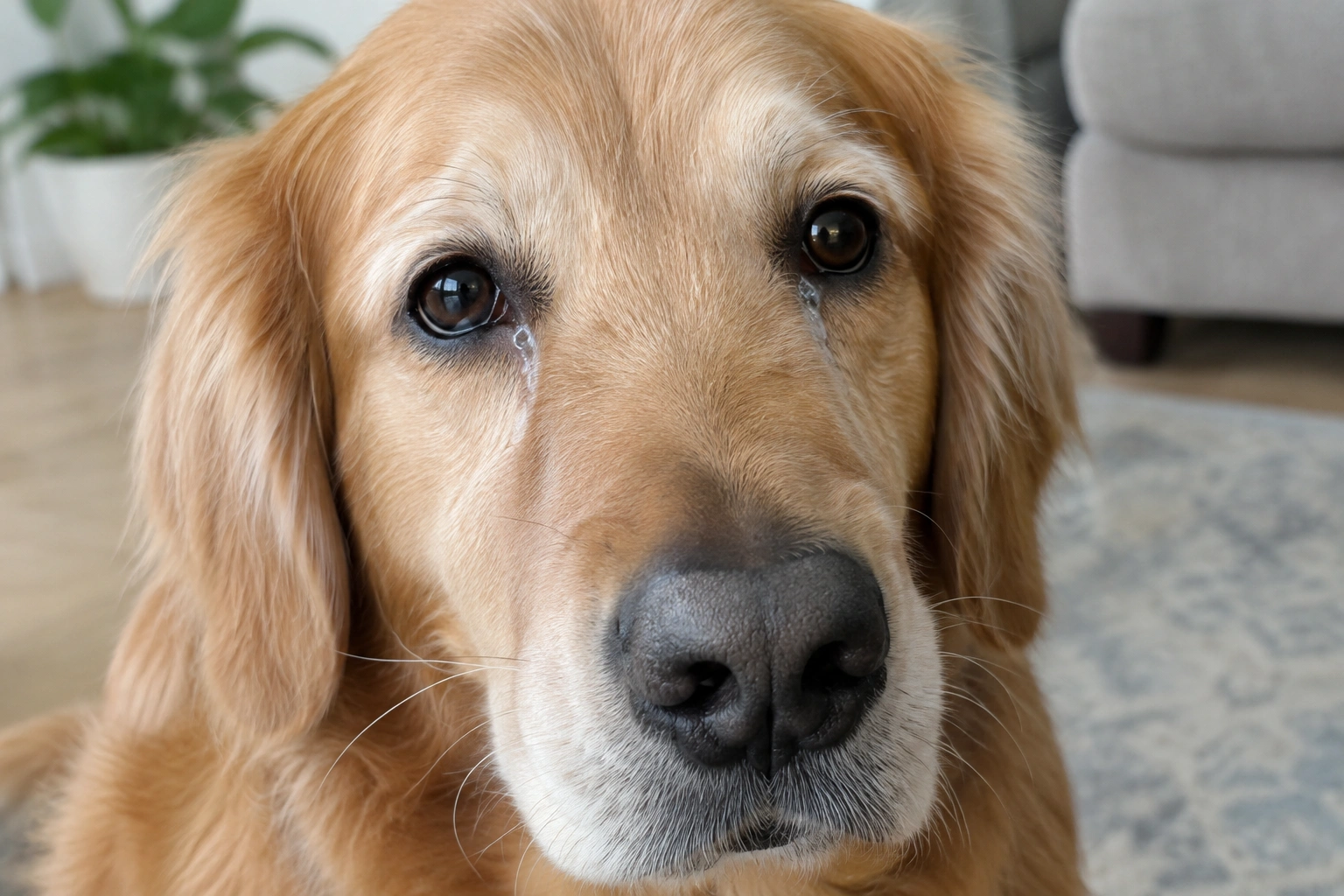
Dogs need tears. Tears protect the eye, keep the cornea moist, and help wash away tiny bits of dust and debris. A little clear moisture, especially after sleep or after being outside in wind, can be normal.
The problem starts when tears are produced in excess or when they cannot drain properly. That condition is often called epiphora. In other words, the eye may be making too many tears, or the drainage system may be blocked, so the tears spill onto the face instead of draining normally. PetMD explains epiphora in dogs here.
A useful rule:
– Clear, mild, short-lived tearing after a walk or exposure to dust may be minor.
– Persistent wetness, staining, redness, squinting, or colored discharge is a different category and deserves closer attention.
Watery eyes can also leave the fur damp for long enough to cause reddish-brown staining. That staining is often associated with tear pigments called porphyrins, though tear staining can have more than one contributing factor and is not explained by porphyrins alone. Chronic moisture can also irritate the skin around the eye and create odor or secondary skin problems.
The Most Common Causes of Watery Eyes in Dogs
There are several common reasons a dog’s eyes water. The pattern of the discharge, how long it has been happening, and whether one or both eyes are affected all help narrow the cause.
Environmental irritation and allergies
Clear tearing can happen when the eye is reacting to dust, wind, pollen, or other irritants. This is often the first thing to consider if your dog was just outside and then started tearing.
A typical scenario is a dog who comes in from a windy walk with both eyes looking shiny and wet, but otherwise acts normal. If the tearing settles once the dog is indoors and away from the trigger, that points more toward irritation than injury.
Allergies can also cause watery eyes, especially when they come with itchiness, rubbing, or seasonal patterns. Allergies are more likely to affect both eyes than just one.
Debris or a foreign body
A grass seed, tiny piece of plant material, or speck of dirt can irritate the eye enough to trigger lots of tearing. This is one reason one eye may water more than the other.
If your dog has been running through brush, digging, or playing in long grass, think about a foreign body first. If the eye is also squinting or the dog keeps pawing at it, treat that as more than simple irritation.
Blocked tear ducts
Tears normally drain through tiny ducts near the inner corner of the eye. When those ducts are blocked, tears spill down the face instead of draining properly. That can create chronic wetness even when the eye itself is not severely inflamed.
Blocked drainage is one reason some dogs seem to have “always watery” eyes without obvious pain. It still needs a vet’s evaluation if it persists, because the cause may be structural or linked to inflammation.
Conjunctivitis and other infections
Conjunctivitis is inflammation of the tissues around the eye. It can happen with infection, irritation, or underlying eye disease. Watery eyes may be an early sign, but discharge often becomes thicker or more noticeable as the condition develops.
If you want a deeper look at that condition specifically, see our guide to pink eye in dogs.
Corneal scratches and ulcers
A scratch on the cornea can cause strong tearing because the eye is trying to protect itself. Corneal ulcers are more serious and can be very painful. These are not problems to watch casually at home if there is squinting, redness, or rubbing.
A dog with a corneal injury may keep one eye partly shut, avoid bright light, or paw at the face. That is your cue to move from observation to veterinary care.
Eyelid or eyelash problems
Some dogs have eyelids or eyelashes that rub the eye surface. PDSA lists eyelash problems and eyelid problems among common causes of weepy eyes in dogs, along with eye infections, corneal ulcers, dry eye, wind exposure, and foreign material such as a grass seed. PDSA’s overview is useful here.
These structural issues can create ongoing tearing because the eye is being mechanically irritated. If a dog keeps getting watery eyes in the same eye, that pattern is worth investigating.
What One Watery Eye vs. Both Eyes Usually Means
Laterality gives you a useful clue.
Both eyes watering often points toward something affecting both eyes at once, such as:
– wind
– dust
– pollen
– general irritation
– allergies
One eye watering more than the other is more suspicious for:
– a foreign body
– a scratch
– a blocked tear duct
– an eyelid or eyelash issue
– localized infection or injury
This is not a perfect rule, but it helps you decide how urgently to act. If both eyes are mildly watery after a dusty walk and the dog is otherwise normal, you can usually clean the face, monitor, and watch for improvement. If one eye is tearing heavily and the dog is squinting, that is a different problem.
Breed and Anatomy Factors That Make Tearing More Common
Some dogs are simply built in a way that makes tears more likely to spill over the face. Flat-faced breeds are the classic example because their facial structure can affect how tears drain and how the eye surface is exposed.
That said, anatomy does not rule out disease. A dog may have a naturally tear-prone face and still develop a scratch, infection, or blocked duct on top of that.
Border Collies are not usually in the high-risk “flat-faced” category, but they are active dogs. That may increase the chances of encountering dust, seeds, grass awns, and other irritants while running, herding, or playing outdoors. In practice, that means you should not assume repeated tearing is “just the breed” if it keeps happening.
Symptoms That Suggest Pain, Infection, or a More Serious Eye Problem
Watery eyes become much more concerning when they show up with other signs.
Look for:
– squinting or keeping the eye partly closed
– redness
– pawing or rubbing at the eye
– light sensitivity
– cloudiness
– swelling around the eye
– thick yellow or green discharge
– an odor
– obvious discomfort
– vision changes
A practical comparison helps here:

| Pattern | More likely explanation | Next step |
|---|---|---|
| Clear tears in both eyes after wind or dust | Mild irritation or allergies | Clean gently and monitor |
| One watery eye after brush or rough play | Foreign body or scratch | Vet visit soon |
| Watery eyes plus yellow/green discharge | Infection or more serious inflammation | Vet visit |
| Watery eyes plus squinting, cloudiness, or pain | Corneal injury or other urgent eye problem | Urgent vet care |
The biggest mistake is waiting too long because the discharge is still “watery.” Pain, redness, and squinting matter more than the exact amount of moisture.
How to Clean a Dog’s Watery Eyes Safely at Home
If the discharge is mild and clear, gentle cleaning is reasonable.
Use:
– clean cotton pads or soft gauze
– sterile saline or a vet-approved eye-cleaning product
– clean hands
Do this:
1. Moisten the pad with saline.
2. Wipe from the inner corner outward.
3. Use a fresh pad for each eye.
4. Pat dry instead of rubbing.
5. Stop if the dog resists because the eye seems painful.
Do not use:
– human eye drops unless your vet specifically told you to
– leftover medication from another pet
– hydrogen peroxide
– strong herbal rinses
– anything that could sting or contaminate the eye
If you need a visual target for where the moisture collects, think of the fur just under the inner corner of the eye. That is usually where tear overflow shows first.
The goal of home cleaning is not to “treat” the cause. It is to remove moisture and debris while you watch for improvement. If the eye keeps watering after cleaning, or if the dog acts uncomfortable, that is a sign the problem is still active.
When Watery Eyes Can Be Monitored and When a Vet Visit Is the Better Call
Home monitoring makes sense when all of these are true:
– the discharge is clear
– the dog is comfortable
– there is no redness or swelling
– both eyes are mildly affected
– the problem started after a likely irritant, like wind or dust
– it improves quickly after cleaning and rest
A vet visit is the better call when:
– the tearing lasts more than a short period
– only one eye is involved
– the discharge becomes sticky, yellow, or green
– the eye looks red or swollen
– your dog is rubbing, squinting, or avoiding light
– the eye looks cloudy
– the problem keeps coming back
If you are stuck deciding, use this rule: clear and improving can be watched; painful, one-sided, or worsening needs an exam. For mild tearing that does not clearly improve after cleaning and a short observation period, especially if it is only in one eye, plan on a vet visit the same day or within 24 hours.
When Watery Eyes Are an Emergency
Some eye problems should be treated as urgent.
Seek prompt veterinary care if you see:
– sudden cloudiness
– marked redness
– obvious pain
– severe swelling
– trauma to the eye or face
– a suspected scratch from brush or a claw
– sudden vision changes
– a dog that cannot keep the eye open
Do not try to pull out a suspected foreign body yourself. Do not keep wiping repeatedly if the eye seems painful. Repeated rubbing can make a corneal injury worse.
What a Veterinarian Typically Checks and How Treatment Is Chosen
A vet will usually start with an ophthalmic exam and look for signs of irritation, injury, infection, or abnormal drainage. Depending on the case, they may use a fluorescein stain to check for corneal scratches or ulcers, measure tear production with a Schirmer tear test if dry eye is a concern, inspect the eyelids and eyelashes for rubbing or inward-turning hairs, and evaluate tear drainage if a blocked duct is suspected. Those findings help the vet decide whether the main issue is surface irritation, a corneal injury, poor tear production, or a drainage problem.
Treatment depends on the cause, not just the symptom of tearing.
Common examples:
– Irritation or allergies: reducing exposure and using vet-recommended support
– Foreign body: safe removal under proper conditions
– Infection or conjunctivitis: medication based on the diagnosis
– Corneal ulcer or scratch: eye-specific treatment and protection
– Blocked tear duct or structural issue: further evaluation and targeted management
That is why it is risky to guess. Two dogs can both have watery eyes and need completely different care.
For general eye-discharge context, the AKC’s eye health resources and VCA Hospitals’ pet health information are useful starting points for owners who want to understand the broader picture before a vet visit.
Common Mistakes That Make Watery Eyes Worse
Three habits cause a lot of trouble:
1. Using human eye products
Some products are unsafe for dogs, and others can mask a serious problem without fixing it.
2. Ignoring one-sided tearing
One watery eye is often the clue that something local is wrong.
3. Waiting through pain
If the dog is squinting, pawing, or sensitive to light, the eye needs attention sooner rather than later.
A fourth mistake is wiping too hard. The skin around the eye is delicate, and aggressive rubbing can make irritation worse.
A Simple Decision Framework for Owners
If you want a fast way to think through it, use this sequence:
-
Is the discharge clear or colored?
Clear is less concerning than yellow, green, or sticky discharge. -
Is it one eye or both?
Both eyes often suggest irritation or allergies; one eye raises suspicion for injury or blockage. -
Is the dog comfortable?
Squinting, rubbing, or avoiding light shifts the case toward veterinary care. -
Did it start after a likely trigger?
Wind, dust, grass, or play can explain mild cases, but not persistent ones. -
Is it improving?
If it is not clearly improving after gentle cleaning and a short watch period, get it checked.
That framework will not diagnose the cause, but it will help you avoid the two biggest errors: overreacting to mild irritation and underreacting to an actual eye problem.
Watery eyes are one of those symptoms that look minor until they are not. When the eye is comfortable and the tearing is clear, you may be dealing with nothing more than irritation. When the tearing comes with pain, redness, cloudiness, or one-sided persistence, the next step is not more wiping — it is a veterinary exam.
