
Why Do Old Dogs Stop Eating? A Practical Guide for Senior Dog Owners

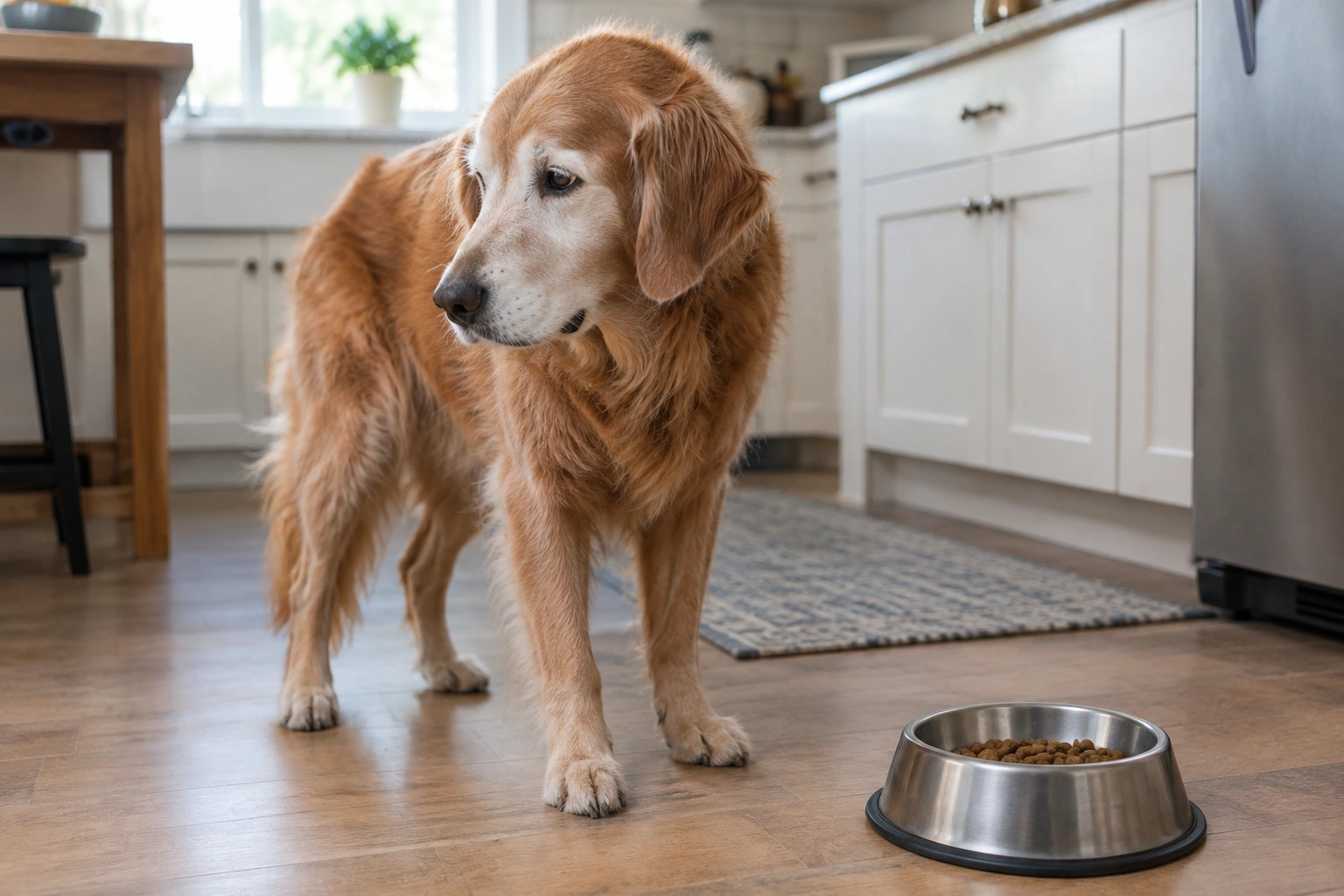
When an older dog suddenly turns away from food, the cause is often more than “just being fussy.” In senior dogs, appetite loss can include pain, nausea, dental disease, medication side effects, stress, or an underlying illness that needs treatment.
The job is not to guess. The job is to sort the problem quickly into one of three buckets:
- Likely minor and brief
- Needs a vet visit soon
- Needs urgent or emergency care
That distinction matters because a senior dog that skips a meal may be fine for a short period, but a senior dog that refuses food and also looks weak, painful, or dehydrated should not be watched for long.
Is It Normal for an Old Dog to Stop Eating?
A small appetite change can happen with age. Some older dogs slow down, move less, and burn fewer calories. Their routine may also become more sensitive to change. A dog that picks at breakfast once, then eats normally later, is not automatically in crisis.
But there is a big difference between eating a little less and stopping altogether.
A few examples:
- Probably lower concern: your senior dog skips one meal, then eats treats, drinks water, and acts normal.
- More concerning: your dog eats only soft food, leaves kibble behind, or begins refusing meals over several days.
- High concern: your dog refuses all food, especially if the change is sudden.
In general, a small decrease in appetite can happen with normal aging, while a clear or persistent refusal to eat is more likely to point to a medical problem. That does not mean appetite loss should be written off as normal. It means older dogs need closer monitoring, not less.
For a broader look at the age stage itself, see our guide on how old senior dogs are.
A useful rule of thumb
If your dog is still interested in food but eating less, think “watch closely and call the vet if it continues.”
If your dog is not interested in food at all, think “this needs a real explanation.”
How Long Can a Senior Dog Go Without Eating?
This is where owners often wait too long.
A senior dog that has not eaten for about 24 hours should generally be discussed with a veterinarian, especially if the dog is drinking but still not eating. That does not mean every dog who misses one meal needs the emergency clinic right away. It does mean that senior dogs have less margin for error than younger dogs.
A practical rule of thumb is:
- One missed meal, otherwise normal: short home observation may be reasonable.
- Still not eating by the next day, even if drinking: call your vet for same-day or next-day guidance.
- Complete refusal to eat, especially if sudden: call sooner.
- Not eating plus other symptoms: same-day or emergency care, depending on severity.
If your dog is drinking normally but not eating, that is somewhat reassuring, but it does not make the problem harmless. If the refusal continues into the next day, a veterinary exam is usually the safer next step.
The reason for the lower threshold is simple: older dogs are more likely to have chronic disease, pain, or nausea hiding under the surface. Appetite loss can be one of the first visible signs.
Red-Flag Symptoms That Make Appetite Loss Urgent
Food refusal becomes much more serious when it is paired with other changes.
Treat appetite loss as urgent if your senior dog also has any of these:
- vomiting
- diarrhea
- lethargy or marked tiredness
- weakness
- obvious pain
- a swollen or bloated abdomen
- trouble breathing
- collapse
- dehydration
- not drinking water
- repeated lip-licking, drooling, or signs of nausea
- rapid weight loss
- pale gums
These signs tell you the problem may be more than a simple appetite dip. A dog that is not eating because of pain, intestinal disease, breathing trouble, or organ disease can worsen quickly if you wait.
A practical example
If your older dog refuses breakfast but still follows you around, drinks water, and seems interested in a walk, that is different from a dog that hides under a table, vomits, and will not touch water. The second dog needs prompt veterinary advice.
Common Medical Causes of Appetite Loss in Older Dogs
Once a dog is in the senior stage, there are many medical reasons food stops being appealing. The main point is this: loss of appetite is a symptom, not a diagnosis.
Dental disease and mouth pain
Dental disease is one of the most common reasons dogs stop eating. Wobbly teeth, tooth abscesses, fractures, gum disease, and oral infections can make chewing painful. Some dogs still act hungry but walk away from the bowl because biting hurts.
Clues that point toward mouth pain:
- bad breath
- drooling
- chewing on one side
- dropping food
- preferring soft food
- pawing at the mouth
- reluctance to chew hard treats
If a dog suddenly accepts only soft food, the mouth deserves a close look.
Pain elsewhere in the body
Arthritis, back pain, abdominal pain, or even pain from an injury can reduce appetite. Some dogs do not refuse food because they are “picky”; they refuse because moving to the bowl, standing to eat, or swallowing is uncomfortable.
A dog with arthritis may seem hungry but stop at the bowl because the posture hurts. That is easy to miss if you only watch the food dish.
Nausea and gastrointestinal disease
Nausea is a major appetite killer. Dogs may not vomit every time they feel sick. They may simply sniff food and walk away, lick their lips, swallow repeatedly, or seem interested one moment and then lose interest.
Gastrointestinal disease, pancreatitis, infections, and other digestive problems can all interfere with eating.
Kidney disease and liver disease
Kidney and liver disease are both common concerns in older dogs and can cause reduced appetite. These conditions often show up gradually, sometimes before an owner notices anything else.
Watch for patterns like:
- eating less over several days
- drinking more than usual
- weight loss
- vomiting
- lethargy
- changes in urination
Cancer
Cancer can suppress appetite directly or indirectly through pain, nausea, inflammation, or general illness. Sometimes appetite loss appears before a clear diagnosis exists, which is why ongoing refusal to eat should not be brushed off.
Infection
Infections can make a dog feel unwell enough to stop eating. Fever, weakness, and reduced interest in food can all go together.
Medication side effects
Medication prescribed for another problem can also suppress appetite. If the timing matches a new drug, dose change, or recent treatment, tell your vet exactly when the change started.
Heart disease and breathing trouble
Heart disease can also be associated with appetite loss, especially if the dog feels unwell or has trouble breathing. A dog that is working harder to breathe may have little interest in food.
Non-Medical Causes: Stress, Routine Changes, and Food Changes
Not every appetite dip is a disease. Senior dogs can be sensitive to disruption.
Common non-medical triggers include:
- a new feeding location
- changes in routine
- a new pet in the home
- travel
- visitors or noise
- a sudden food switch
- stress or anxiety
These causes are more plausible when the dog is otherwise bright, drinking, and active.
But here is the trade-off: stress can explain a short-term dip, not a persistent refusal. If a “stressful week” is the only explanation and your dog keeps not eating, the problem deserves a medical check.
Age-Related Decline vs Disease-Related Appetite Loss
This comparison helps owners avoid two common mistakes: dismissing illness as aging, or panicking over every skipped meal.
| Pattern | More likely age-related or minor | More likely medical problem |
|---|---|---|
| One missed meal | Yes | Sometimes |
| Gradual eating less over time | Possible | Also possible |
| Sudden refusal to eat | Less likely | More concerning |
| Still drinking and acting normal | More reassuring | Less reassuring |
| Weight loss | Needs attention | Concerning |
| Bad breath, drooling, chewing changes | Less likely | Strongly suggests mouth pain |
| Vomiting, diarrhea, weakness, pain | No | Urgent |
| Eating only soft food | Could be preference | Could be dental pain |
The pattern matters as much as the food bowl itself.
What You Can Safely Try at Home First
If your senior dog is otherwise stable, there are a few low-risk steps you can try while arranging veterinary advice.
Offer food in a more appealing form
Try:
- warming the food slightly so the smell is stronger
- offering canned or softer food if chewing seems uncomfortable
- hand-feeding a small amount if your dog seems willing
- feeding in a quiet, low-stress area
These steps can help if the problem is mild nausea, dental discomfort, or stress. They are not a substitute for care if the dog continues refusing meals.
Check hydration
Water matters as much as food in the short term. If your dog is not drinking, that is a bigger concern. If water intake has changed, tell the vet.
Keep the routine calm
Feed at the usual time, in the usual place, without turning mealtime into a struggle. Repeated pressure can create food aversion in some dogs, especially if they already feel unwell.
What not to do
Avoid these common mistakes:
- giving human medications unless your veterinarian specifically told you to
- forcing large meals
- trying multiple appetite supplements without veterinary guidance
- changing foods repeatedly over and over in a short period
- assuming a supplement will fix an unexplained appetite loss
Do not force-feed without guidance
Force-feeding can backfire if the dog is nauseated, in pain, or at risk of aspiration. It can also delay diagnosis by making the problem look less urgent than it is.
When to Change Food, Try Soft Food, or Avoid More Changes
A brief change can be useful when the dog’s issue seems mild and temporary. But there is a point where changing foods becomes noise instead of help.
A reasonable short-term change
If your dog is otherwise stable and seems to struggle with chewing, a softer food or warmed meal may help for a day or two.
When to stop changing things
If your dog is still not eating after a short trial, stop rotating foods and call the vet. Constant switching can make it harder to tell whether the dog is nauseated, painful, or simply refusing because of the food itself.
The real trade-off
- Pros of trying softer or warmer food: may get calories in and improve comfort
- Cons: may hide a medical issue if you keep changing foods instead of getting help
Use the food adjustment as a short bridge, not a long-term plan when the cause is unknown.
How to Support Appetite Safely in Aging Dogs
Longer term, the safest approach is to support appetite without guessing at the cause.
That means:
- treating dental disease promptly
- managing pain properly
- reviewing medications when appetite changes
- keeping meals consistent
- monitoring weight and body condition
- paying attention to drinking habits
- following your vet’s feeding advice for any diagnosed illness
Common appetite-support options owners ask about may include:
- softened or canned food if chewing is uncomfortable
- warming meals to improve aroma and palatability
- low-sodium broth only if your veterinarian says it is appropriate
- prescription diets when a disease such as kidney disease, liver disease, or gastrointestinal illness is part of the problem
- prescription appetite stimulants when your veterinarian decides they are appropriate for the dog’s condition
These options can help in some cases, but they should match the underlying cause. For example, a dog with nausea may need treatment for nausea first, while a dog with dental pain may need a different plan entirely.
RSPCA notes that older dogs are more at risk of obesity, and extra weight can worsen heart disease and osteoarthritis. That matters because appetite changes and body-condition changes often go together in senior dogs. A dog that is eating less may be losing muscle, not just “getting leaner.”
For practical senior-dog care beyond food, our guide to senior dog health and care can help you track the bigger picture.
What a Veterinarian May Check or Test
Knowing what the vet may do helps owners act faster.
At the visit, a veterinarian may first triage how urgent the problem is by checking hydration, pain, gum color, temperature, and overall attitude. If your dog is dehydrated, painful, or has not eaten for several days, the vet may prioritize stabilization before or alongside testing.
A veterinarian may:
- examine the mouth and teeth
- check for pain
- review medications
- ask about recent diet changes
- assess hydration and body condition
- listen to the heart and lungs
- palpate the abdomen
- recommend bloodwork
- recommend urinalysis
- suggest imaging such as X-rays or ultrasound if needed
That workup is designed to separate mouth pain, nausea, infection, organ disease, and other causes that can look similar at home.
The point is not to “run every test.” It is to find the reason the appetite changed so the right problem gets treated.
For general senior-dog feeding principles after the cause is known, VCA’s feeding mature and senior dogs guidance is a useful reference.
When to Call the Vet vs Go to the Emergency Clinic
Use this decision rule:
Call your regular vet soon if:
- your senior dog skipped one meal but is otherwise normal
- appetite is reduced for more than a day
- your dog is eating less and losing weight
- your dog is eating only soft food or is suspiciously selective
- a new medication started before the appetite change
Go to urgent or emergency care if:
- your dog will not eat and also vomits
- your dog has diarrhea and is weak
- your dog is bloated
- your dog is struggling to breathe
- your dog collapses
- your dog seems dehydrated or cannot keep water down
- your dog is in obvious pain
- your dog is very lethargic or unresponsive
If you are unsure where the line falls, err on the side of a same-day call. Senior dogs can deteriorate faster than owners expect.
How to Support Appetite Safely in Aging Dogs
Longer term, the safest approach is to support appetite without guessing at the cause.
That means:
- treating dental disease promptly
- managing pain properly
- reviewing medications when appetite changes
- keeping meals consistent
- monitoring weight and body condition
- paying attention to drinking habits
- following your vet’s feeding advice for any diagnosed illness
RSPCA notes that older dogs are more at risk of obesity, and extra weight can worsen heart disease and osteoarthritis. That matters because appetite changes and body-condition changes often go together in senior dogs. A dog that is eating less may be losing muscle, not just “getting leaner.”
For practical senior-dog care beyond food, our guide to senior dog health and care can help you track the bigger picture.
FAQs
Is it normal for an old dog to stop eating?
No. A brief dip can happen, but a senior dog that truly stops eating should not be assumed to be “just old.” Persistent appetite loss needs a veterinary explanation.
How long can a senior dog go without eating?
A senior dog that has not eaten for about 24 hours should generally be discussed with a veterinarian. If the refusal is complete or comes with other symptoms, do not wait that long.
What should I feed a dog that refuses to eat?
If your dog is otherwise stable, a short trial of warmed or softer food may help. If that does not work quickly, or if your dog seems sick, call the vet instead of keeping food-switching.
Could dental disease cause my older dog to stop eating?
Yes. Dental pain and oral infection are common reasons older dogs avoid food, especially hard kibble or chewy treats.
When is not eating an emergency?
When appetite loss comes with vomiting, diarrhea, weakness, pain, bloating, trouble breathing, collapse, dehydration, or refusal to drink.
Should I hand-feed my senior dog?
Hand-feeding can help a mildly reluctant dog, but it should not replace veterinary care if the dog is clearly unwell or continues refusing food.
Final Takeaway
If you are asking why do old dogs stop eating, the safest answer is this: sometimes it is a brief appetite dip, but in a senior dog it is often a sign of pain, nausea, dental disease, medication side effects, or internal illness. Watch the pattern, check for red flags, and do not wait too long if the refusal is complete or persistent.
