
Why Does My Dog Have Black Spots on His Skin? A Practical Guide for Owners

Black spots on a dog’s skin can mean something harmless, something temporary, or something that needs treatment. The tricky part is that the same dark color can show up in very different situations: normal pigmentation, flea dirt, irritation-related darkening, infection, or parasite problems.
For Border Collie owners, this may come up during grooming or when you part the hair to check the skin more closely. That is why the first question is not “What is the spot called?” but “What does the skin around it look and feel like?”
If the skin is flat, stable, and otherwise healthy, the spots may simply be pigment. If the area is itchy, red, smelly, crusted, or losing hair, the spots are more likely a clue that something underneath needs attention.
What Black Spots on a Dog’s Skin Can Mean
“Black spots” is a description, not a diagnosis. The same phrase can refer to:
- normal skin pigment
- flea dirt sitting on the coat
- darkening caused by repeated irritation
- a skin infection
- parasite-related inflammation
- a lesion that needs a vet exam
A useful rule: color alone tells you very little; texture and symptoms tell you much more. Flat, unchanged dark spots on otherwise normal skin are far less concerning than spots that are raised, scabby, moist, painful, or spreading.
One reason this happens is hyperpigmentation, which is a darkening of the skin caused by extra pigment. Veterinary sources describe it as a common reaction to chronic inflammation rather than a disease by itself. In other words, the dark color is often the result of a problem, not the problem itself. PetMD explains hyperpigmentation in dogs as a darkening and thickening of the skin, often showing up as black spots, splotches, or patches. PetMD
First Check: Are the Spots Flat Pigment, Flea Dirt, or a Skin Lesion?
Before you assume the worst, do a quick hands-on check.
What to look for
Part the coat and ask:
- Is the spot flat or raised?
- Does it feel smooth, rough, velvety, or crusty?
- Is the skin underneath red, moist, or normal?
- Does your dog react when you touch it?
- Are there signs of scratching, licking, or biting nearby?
That small inspection usually separates harmless pigment from skin disease.
A simple comparison table
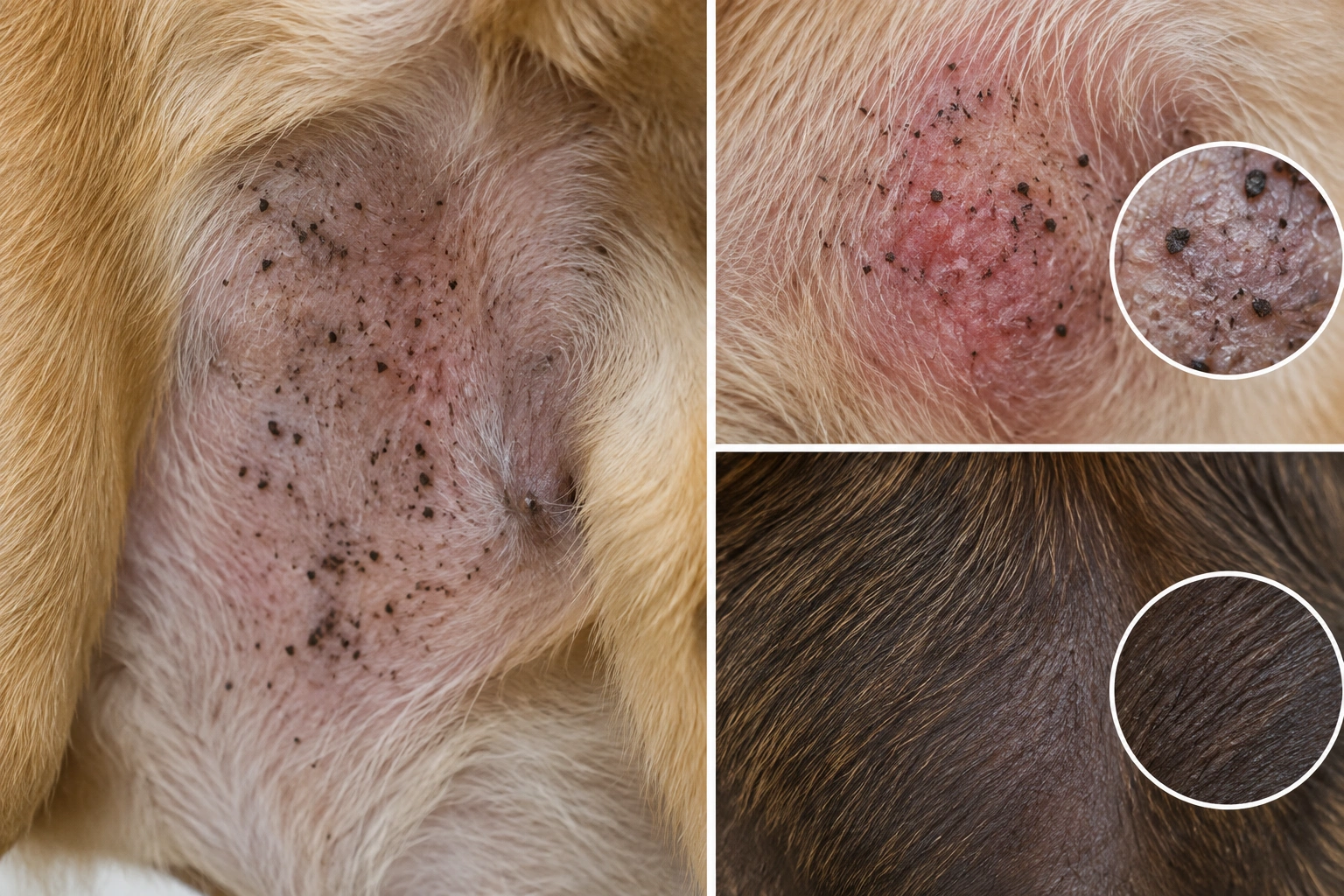
| What you see | More likely meaning | Clues that support it | What to do next |
|---|---|---|---|
| Flat, stable dark speckling | Normal pigmentation | No itch, no odor, no redness, no hair loss | Monitor and recheck over time |
| Black specks that brush off | Flea dirt | Specks on coat, especially near tail base or belly; may smear reddish-brown when wet | Check for fleas and start flea control if needed |
| Dark, thickened skin | Hyperpigmentation from irritation | History of licking, scratching, or repeated inflammation | Look for the underlying cause |
| Dark spots with redness or odor | Infection or dermatitis | Itch, discharge, crusts, hair loss | Vet visit is usually warranted |
| Dark spots with intense itching | Allergies or parasites | Ongoing scratching, chewing, or restlessness | Veterinary exam needed |
If you want one practical test for flea dirt, put a few of the black specks on a damp white paper towel. Flea dirt often turns reddish-brown because it contains digested blood. That does not prove the dog has a major infestation, but it does make fleas much more likely than pigmentation.
For general coat and skin context in Border Collies, it helps to understand how their double coat hides skin changes. Our guide on what type of coat a Border Collie has explains why skin issues can be easy to miss until they become more obvious.
Normal Pigmentation and Breed-Related Color Changes
Some dogs simply have darker skin in certain areas. That can be completely normal.
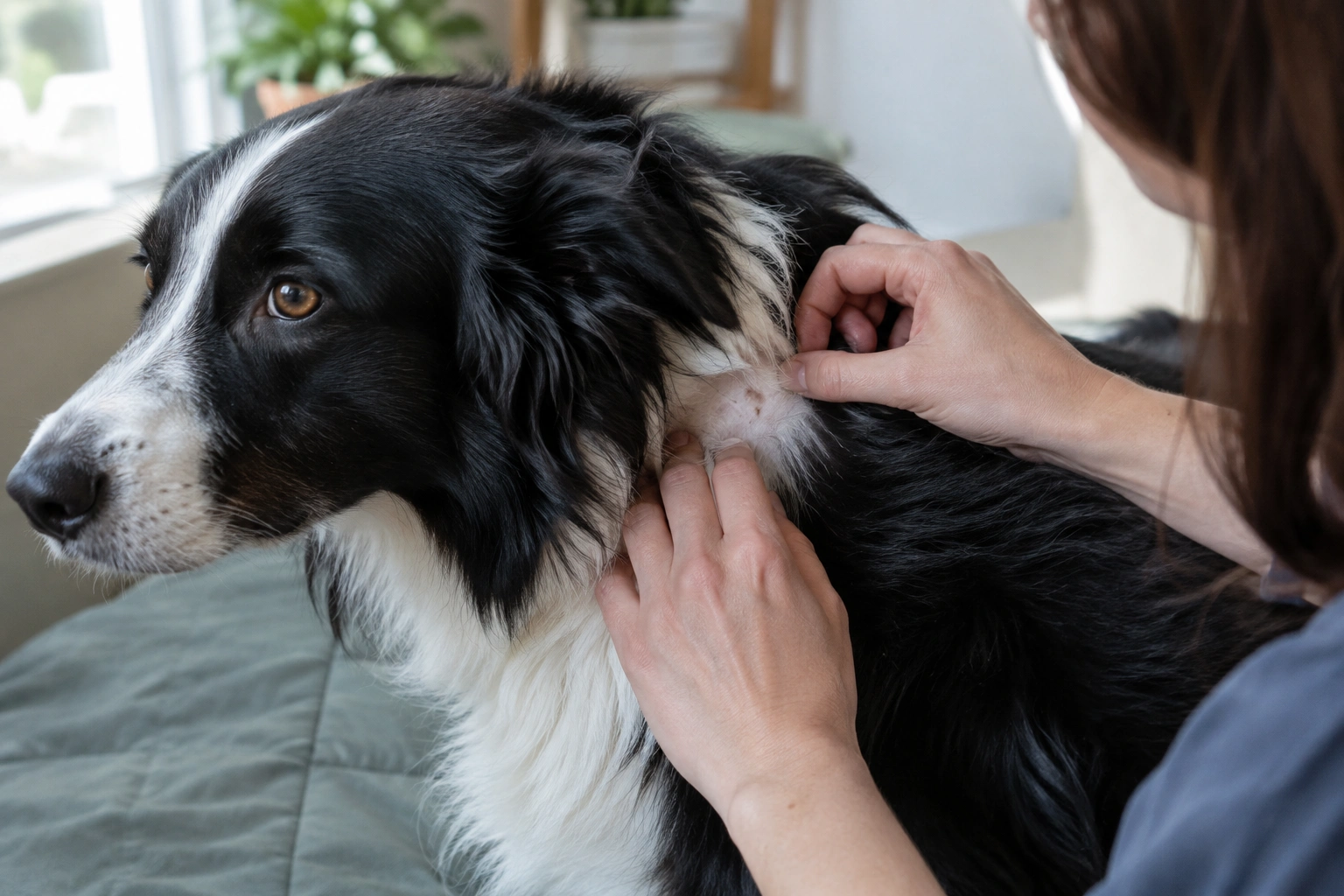
You may see this on:
- the belly
- the groin
- the armpits
- around the lips or eyelids
- areas where the skin is naturally thinner or more exposed
Normal pigmentation is usually:
- flat
- not itchy
- not painful
- not smelly
- not spreading quickly
- not paired with hair loss or redness
The key difference is stability. Normal pigment tends to stay about the same. If the area changes shape, gets rough, or becomes irritated, it is no longer something to dismiss as “just color.”
When Darkening Is a Reaction to Irritation or Healing
Veterinary dermatology sources describe hyperpigmentation as a response to skin aggression, chronic inflammation, or long-term irritation. The skin can darken while it is trying to protect and repair itself.
That matters because the black color is often the last stage of a longer problem. The dog may have been:
- licking one spot for weeks
- scratching because of allergies
- rubbing against a harness or collar
- dealing with a past rash that never fully settled
In these cases, the skin may feel thicker, rougher, or even velvety. That thickened feel is a clue that the process has been going on for a while.
Common Medical Causes: Fleas, Allergies, Infection, and Mites
This is the part most owners need to sort through carefully. The spot itself is less useful than the pattern around it.
Fleas and flea-related irritation
Fleas can cause itching, skin irritation, and flea dirt. If you see black specks mainly around the lower back, tail base, belly, or thighs, fleas move higher on the list.
Clues that fit fleas:
- scratching or biting at the skin
- specks that brush off
- irritation along the back end
- other pets in the home itching too
If flea dirt is present, the next step is flea control, not guessing. Even if you do not see live fleas, the dirt can be enough to justify action.
Allergies
Allergies often show up as itch first, then skin changes later. Over time, repeated scratching and licking can produce darkened skin.
Common patterns include:
- belly irritation
- armpits
- paws
- ears
- groin
Allergies are worth considering when the dog is itchy but the skin is not obviously infected yet. If the dog is constantly licking paws or rubbing the face, the black spots may be part of a larger inflammatory pattern.
Bacterial skin infection
A bacterial infection often makes the skin look and feel more angry than simple pigmentation. Watch for:
- redness
- pimples or pustules
- crusts
- discharge
- odor
- soreness
If the area smells bad or has a greasy, inflamed look, infection moves up the list quickly.
Yeast infection
Yeast can create dark, irritated skin too, often with:
- a strong odor
- greasy texture
- redness
- itch
- darkened skin in skin folds or moist areas
Yeast problems often sit on top of another issue, such as allergies or chronic moisture.
Mites and mange
Parasites such as mites can cause intense itching, hair loss, and skin inflammation. The darkening may be secondary to the irritation, not the parasite itself.
If your dog is very itchy, losing hair, or developing scabs, mites belong in the differential list and should not be ruled out at home.
How to Tell Flea Dirt Apart from True Skin Spots
This is one of the most useful distinctions you can make without a clinic visit.
Flea dirt
- sits on the coat rather than in the skin
- may move or brush off
- often appears as loose black specks
- can smear reddish-brown when wet
True pigmentation or skin darkening
- is part of the skin
- does not brush away
- stays in place when you part the hair
- may be flat, thickened, or rough
If you are unsure, use a damp white paper towel. Flea dirt often leaves a rusty-brown stain. Normal skin pigment does not.
That test is not a full diagnosis, but it helps you decide whether flea control is worth starting right away.
Red Flags That Make Black Spots More Concerning
Book a veterinary exam sooner rather than later if the dark spots come with any of these:
- intense itching
- redness
- hair loss
- scabs or crusts
- discharge or pus
- bad odor
- pain when touched
- swelling
- rapid spreading
- open sores
- a dog that seems uncomfortable, restless, or unable to settle
The combination matters. A single flat dark patch on healthy skin is very different from dark spots plus odor and hair loss.
If the dog is licking, scratching, or chewing the area enough to damage the skin, waiting usually makes the problem harder to treat. The longer inflammation continues, the more likely the skin is to thicken and darken.
What a Veterinarian May Do to Find the Cause
A vet is usually trying to answer one question: what is driving the skin change?
The workup may include:
- a close skin exam
- a skin scraping to look for mites
- cytology to check for yeast or bacteria
- fungal testing if needed
- allergy discussion or testing in some cases
- hormone testing if the pattern suggests a deeper medical issue
Cytology is especially helpful because it can quickly show whether bacteria or yeast are part of the problem. That matters because dark skin from chronic irritation needs a different approach than dark skin caused by infection.
The treatment is aimed at the cause, not the pigment itself. If the trigger is fleas, allergy, infection, or mites, the skin often improves only after that issue is controlled.
What to Do at Home While You Monitor
If the spots are flat, not itchy, and the skin looks healthy, home monitoring is reasonable for a short period.
Safe steps
- Take clear photos in the same light once a week.
- Note whether the spots are spreading or changing texture.
- Check for fleas or flea dirt.
- Keep up with parasite prevention if your vet already has your dog on a plan.
- Prevent licking or scratching if the area is getting irritated.
What not to do
- Do not apply human creams, antiseptics, or steroid products without veterinary guidance.
- Do not assume all dark spots are harmless if the dog is uncomfortable.
- Do not keep trying random products if the skin is getting worse.
A good home-monitoring rule is simple: if the area looks the same, feels the same, and your dog is acting normal, you can watch it. If any of those three change, the balance shifts toward a vet visit.
When to See a Veterinarian
For this topic, the professional you need is usually a veterinarian or veterinary dermatologist.
See a vet now if:
- the spots are new and spreading
- your dog is itchy or painful
- there is hair loss, odor, crusting, or discharge
- the skin is thick, red, or inflamed
- flea control has not solved the problem
- the cause is unclear after a few days of observation
A Border Collie that is constantly licking or scratching may also need help reducing the behaviors that keep the skin inflamed, but that comes after the medical cause is addressed. In skin cases, the physical problem drives the behavior more often than the other way around.
The Practical Bottom Line
Black spots on a dog’s skin are often harmless pigment, but they can also be the visible sign of flea dirt, allergies, infection, mites, or chronic irritation. The fastest way to sort it out is to look at the whole picture: flat or raised, itchy or not, smelly or clean, stable or spreading.
If the skin is healthy and the spots are stable, monitoring is reasonable. If the area is irritated, painful, or changing, get it checked. The pigment itself is usually not the treatment target; the underlying cause is.
For a broader skin-care context, the ASPCA’s dog care resources and VCA Hospitals’ pet health library are useful places to cross-check general guidance.
Frequently Asked Questions
Are black spots on my dog’s skin normal?
Sometimes, yes. Flat, stable, non-itchy dark spots can be normal pigmentation. If the skin is red, smelly, crusty, painful, or losing hair, it is less likely to be harmless.
Can black spots mean my dog has fleas?
They can. Flea dirt often looks like black specks and may smear reddish-brown when wet. If you also see itching or irritation near the tail base or belly, fleas become more likely.
Why is my dog’s skin turning black in one area?
That pattern often fits hyperpigmentation from repeated irritation, licking, scratching, or chronic inflammation. The darkening is usually a sign that the skin has been under stress.
Do black spots always need treatment?
No. Stable pigment changes may only need monitoring. Treatment is needed when the spots are tied to fleas, infection, parasites, allergies, or another skin disorder.
How fast can dark spots spread?
That depends on the cause. Pigment changes may stay stable for a long time, while infection, parasites, or active inflammation can worsen quickly.