
Why Dogs Get Diarrhea: A Practical Guide to Causes, Red Flags, and What to Do Next

Diarrhea is a symptom, not a diagnosis. That matters, because the same loose stool can come from something minor, like a sudden treat change, or something that needs a vet, like parasites, infection, or dehydration. The job is not to guess perfectly. The job is to sort the situation fast enough to make a good decision.

For Border Collies and other active dogs, common culprits can include scavenging, rich treats, a sudden food switch, stress, or a stomach bug picked up from the environment. But active dogs also tend to get into more things, which means “probably just an upset stomach” is not always a safe assumption.
If your dog is otherwise bright, drinking, and only had one or two loose stools, you may be dealing with a short-lived digestive upset. If the diarrhea is repeated, watery, bloody, paired with vomiting, or your dog seems weak or uncomfortable, the picture changes quickly.
Why Dog Diarrhea Happens: The Fastest Way to Narrow the Cause
The fastest way to think about diarrhea is to ask three questions:
- How sudden was it?
- What changed recently?
- How sick does the dog seem overall?
A one-off episode after scavenging from the trash points in a different direction than loose stool that has returned for several days. A dog that is still playful and eating is different from a dog that is quiet, nauseous, or refusing water.
Here is the practical rule: the more the stool changes, the more the dog’s behavior matters. A messy stool by itself is less concerning than messy stool plus vomiting, blood, lethargy, or dehydration.
Acute vs. chronic diarrhea
- Acute diarrhea appears suddenly and may settle within a short time.
- Chronic or recurrent diarrhea keeps coming back or lasts long enough that “wait and see” stops being useful.
That distinction matters because a brief upset stomach often has a simple trigger, while recurring diarrhea raises the odds of parasites, food intolerance, inflammatory disease, or another underlying problem.
First Triage: Is This Mild, Monitorable Diarrhea or a Vet-Now Situation?
Use the stool pattern and the dog’s condition together.
Usually reasonable to monitor at home if:
- Your dog had one or a few loose stools
- There is no blood
- There is no vomiting
- Your dog is bright, drinking, and alert
- Appetite is mostly normal
- The diarrhea started after a likely trigger such as a diet change, rich treat, or scavenging incident
Contact a veterinarian sooner if:
- Diarrhea is repeated over the day
- It lasts beyond a short period instead of improving
- Your dog is a puppy, senior, or already unwell
- There is vomiting, even if mild
- Your dog seems tired, painful, or off food
- You suspect parasites, contaminated water, or exposure to another sick animal
Seek urgent veterinary care if you see:
- Blood in the stool
- Black, tarry stool
- Repeated vomiting
- Marked lethargy
- Weakness or collapse
- Signs of dehydration, such as tacky gums, sunken eyes, or not wanting to drink
- A swollen or painful abdomen
A useful way to judge urgency is this: one loose stool in a dog that is acting normal is not the same problem as four watery stools plus vomiting and quiet behavior. The combination is what changes the risk.
For a broader reference on digestive upset and safe next steps, the ASPCA’s pet care guidance is a useful starting point, especially when you are deciding whether a problem is minor or urgent.
Most Common Non-Emergency Causes: Diet Changes, Scavenging, Treats, and Rich Foods
The most common short-term cause is often something the dog ate.
Sudden food changes
A fast switch from one food to another can upset the gut because the digestive system needs time to adapt. Even a food that is perfectly fine for the dog can cause loose stool if the change is abrupt.
If you recently changed foods and diarrhea started soon after, that timing is a strong clue. A gradual transition is usually easier on the stomach than an overnight switch.
Scavenging and garbage raids
Border Collies are often quick, clever, and opportunistic. That is useful in training, but it can also mean a fast mouth and a stomach that pays the price. Trash, compost, dropped food on walks, and mystery snacks from the yard can all trigger diarrhea.
The risk is not only “bad food.” It is also the mix of:
– Fatty leftovers
– Spoiled food
– Non-food items
– Sudden overload of unfamiliar ingredients
Rich treats and table scraps
A dog that seems fine on its normal diet may still get diarrhea after:
– Fatty table scraps
– New chews
– Rich training treats
– Large amounts of people food during holidays or visitors
This is one reason I tell owners to think in terms of dose and change, not just “good food versus bad food.” Even a decent treat can be too much if the dog is not used to it.
Why this often causes a brief episode
Dietary diarrhea is often short-lived because the trigger is temporary. Once the gut settles and the offending food is removed, the stool may improve quickly. If it does not, stop assuming food is the full explanation and widen the search.
Stress, Excitement, and Stress Colitis: When Emotions Show Up in the Gut
Some dogs get loose stool when life gets hectic. Moves, boarding, fireworks, travel, new routines, visitors, and long days without enough downtime can all affect digestion.
Stress-related diarrhea often appears:
– During or after a stressful event
– In dogs that are highly alert or anxious
– Alongside changes in appetite, rest, or behavior
Border Collies and other active dogs may face more exposure to these triggers simply because their routines often involve more movement, stimulation, and new environments. Individual temperament matters too. Some dogs are more reactive to change than others, regardless of breed.
How to tell stress from something more serious
Stress is more plausible when:
– The timing fits a known event
– The dog is otherwise bright
– The stool improves as the environment settles
Stress is less convincing when:
– Diarrhea keeps returning
– There is vomiting, blood, or lethargy
– The dog seems painful or refuses water
Stress can be part of the story, but it should not be used as a catch-all explanation if the symptoms are escalating.
Parasites, Worms, and Infectious Causes: When to Suspect More Than an Upset Stomach
If diarrhea is persistent, recurrent, foul-smelling, or linked to exposure risks, parasites and infection move higher on the list.
Parasites and worms
Dogs can pick up intestinal parasites through contaminated ground, water, feces, or infected prey. A fecal test is often the quickest way for a vet to narrow this down.
Clues that make parasites more likely include:
– Recurrent loose stool
– Mucus in the stool
– A history of exposure to soil, standing water, or other animals
– Weight loss or poor body condition over time
Infectious causes
Bacterial, viral, or other infectious problems can also cause diarrhea, especially when the dog has been exposed to other animals, dirty water, or contaminated environments.
The key point is not to try to label the exact organism at home. It is to recognize when the pattern no longer looks like a simple diet upset.
If you suspect parasites or infection, bring a fresh stool sample to the vet if you can. A fecal test can save time and help avoid guessing.
Food Intolerance, Food Allergy, and Medication Side Effects
Not every recurring diarrhea problem is infection or scavenging.
Food intolerance vs. food allergy
These are not always easy to separate at home, but the pattern helps.
- Food intolerance often causes digestive upset without dramatic skin signs.
- Food allergy can involve the gut, skin, ears, or all three.
If diarrhea keeps returning after the same ingredient or food type, that is a clue worth discussing with your veterinarian. The issue may not be the amount of food; it may be the dog’s reaction to a specific ingredient.
Medication side effects
Some medications can upset the stomach and cause loose stool. If diarrhea started after a new prescription, supplement, or over-the-counter product, that timing matters.
Do not assume the medication is harmless just because it was recommended elsewhere. If the diarrhea is significant, call the prescribing vet and report exactly when it started.
What to Do at Home Right Now: Hydration, Rest, Bland Food, and What to Avoid
If your dog is alert, drinking, and not showing red flags, short-term home care can be sensible while you watch the pattern.
Focus on hydration first
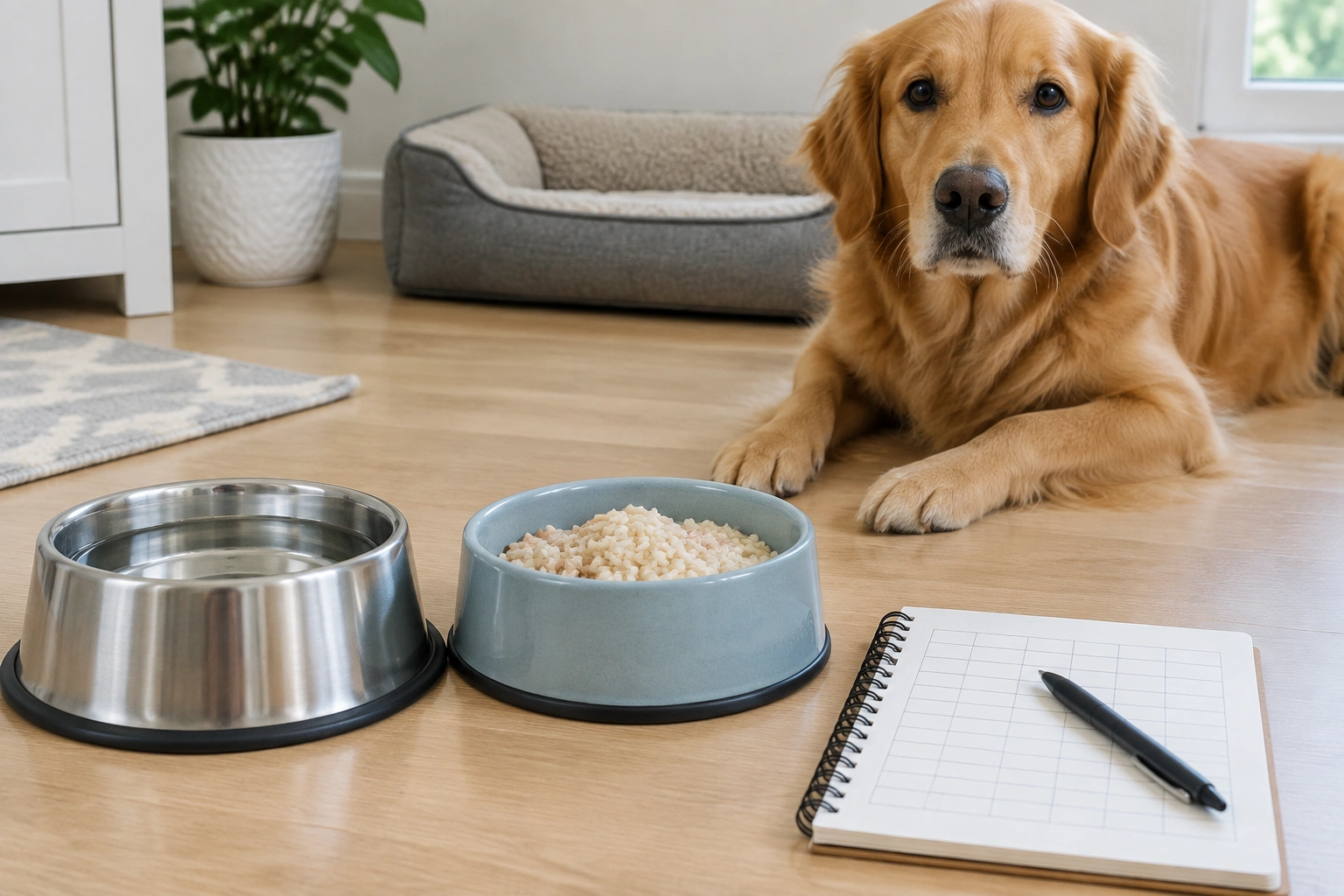
Loose stool can dehydrate a dog faster than many owners realize, especially if vomiting is also present. Make fresh water available and watch whether your dog is actually drinking.
If your dog is reluctant to drink, that changes the urgency.
Pause food briefly only in mild cases
For an otherwise healthy adult dog with mild diarrhea and no vomiting, a short food break of about 8 to 12 hours may be reasonable before starting a bland diet. Do not fast puppies, toy breeds, seniors, dogs with diabetes, or any dog that is weak, vomiting, or has another medical condition unless your vet specifically tells you to.
Rest the gut with a bland diet
A bland diet usually means plain, easy-to-digest food in small portions, such as boiled chicken or turkey with plain white rice, or a veterinarian-recommended gastrointestinal diet. Keep it simple and low-fat. Offer small meals rather than one large meal, and return to the normal diet gradually once the stool is improving.
Keep notes while you monitor
Track:
– Number of diarrhea episodes
– Whether the stool is watery, soft, or has mucus
– Any vomiting
– Appetite
– Water intake
– Energy level
– Any likely trigger, such as a new treat or trash raid
That information is useful if the problem does not clear quickly.
What to avoid unless your vet says otherwise
Do not give:
– Dairy
– Fatty foods
– Table scraps
– New treats or chews
– Human anti-diarrheal drugs
– Bismuth/Pepto-like products
– Any medication or supplement not approved by your veterinarian
If you want a deeper walkthrough of safe options, see what to feed a dog with diarrhea.
What Not to Do: Human Anti-Diarrheal Drugs, Rich Foods, and Delayed Action
The most common mistakes are usually well-intentioned.
Do not give human anti-diarrheal medication unless a vet tells you to
Some human products are unsafe for dogs, and even when a drug is not outright dangerous, it may mask a problem that needs treatment. If your dog is sick enough that you are considering medication, that is already a good reason to call a veterinarian.
Do not keep feeding treats or table scraps
This is a common trap. Owners see diarrhea, then try to “tempt” the dog with tastier food. If the gut is already irritated, rich extras can prolong the problem.
Do not wait through red flags
Waiting is reasonable only when the dog is otherwise normal and the symptoms are mild. If the dog is getting worse, the stool is bloody, or vomiting is part of the picture, delay is the wrong move.
How Long Is Too Long? Acute vs. Chronic Diarrhea and the Time Thresholds That Matter
Duration matters as much as appearance.
A practical time threshold
- Monitor at home for up to 24 hours if your adult dog has mild diarrhea, is otherwise acting normal, and is drinking.
- Call your vet the same day if the diarrhea is worsening, is happening more than a few times in a day, or is paired with vomiting, lethargy, pain, or poor drinking.
- Do not wait beyond 24 hours for a puppy, senior dog, or dog with another health problem.
- If diarrhea lasts more than 48 hours in an adult dog, or keeps coming back, it should be evaluated even if it seems only moderately bad.
A brief episode
A single loose stool or a short run of mild diarrhea in an otherwise normal dog may be watched closely at home for a short period, especially when there is a clear trigger.
Ongoing diarrhea
If diarrhea continues instead of improving, the odds shift away from a simple one-off issue. At that point, veterinary advice is more appropriate than continued guessing.
Recurrent diarrhea
If the problem comes and goes, the pattern itself is a clue. Recurrent diarrhea is often not solved by another day of the same home approach. It needs a more deliberate look at diet, parasites, intolerance, and underlying disease.
A practical rule: if the dog is not clearly improving, the problem is no longer behaving like a minor upset.
What to Track for the Vet: Stool Sample, Timing, Appetite, Behavior, and Exposures
Good notes make a vet visit more efficient.
Bring or write down:
– When the diarrhea started
– How many times it has happened
– Whether there is blood or mucus
– Whether the dog is vomiting
– What the dog ate in the last day or two
– Any scavenging, garbage access, or new treats
– Any stress event or routine change
– Whether other pets are sick
– Whether the dog is drinking and urinating normally
If possible, bring a fresh stool sample. That can help the vet check for parasites or other intestinal issues without delay.
Special Risk Groups and Exposure Context: Puppies, Seniors, Border Collies, and Active Dogs
Some dogs deserve a lower threshold for action.
Puppies and seniors
Puppies can become unwell faster because they have less reserve. Senior dogs may also dehydrate more easily or have other conditions that complicate recovery.
Active dogs and scavengers
Border Collies and other busy dogs often have more exposure risk simply because they move a lot, investigate more, and can be quick enough to swallow something before you stop them. That does not mean diarrhea is automatically serious. It means the history matters more.
If your dog had access to:
– Trash
– Compost
– Puddles or standing water
– Wildlife droppings
– Unknown food on a walk
then infection, parasites, or dietary indiscretion become more plausible.
When Diarrhea Is Recurrent or Chronic: Why Repeated Loose Stool Needs a Different Approach
A dog that keeps having diarrhea is not the same as a dog with a single upset stomach.
Repeated episodes can point to:
– Food intolerance
– Parasites
– Ongoing exposure to something irritating
– A deeper gastrointestinal problem
This is where the decision shifts from “What can I do tonight?” to “What is causing the pattern?” If the same issue keeps returning, the most useful next step is veterinary evaluation rather than another round of trial and error.
For general dog health and preventive care guidance, VCA Hospitals has useful owner-facing resources written with practical decision-making in mind.
When to See a Veterinarian
For diarrhea, this is mainly a veterinary issue. See a veterinarian promptly if your dog has blood in the stool, repeated vomiting, marked lethargy, dehydration, abdominal pain, black stool, or diarrhea that is not improving. Puppies, seniors, and dogs with other health problems should be seen sooner.
A certified trainer is not the right professional for the diarrhea itself, but behavior support can help if stress, scavenging, or counter-surfing is part of the pattern. Preventing repeat access to trash, food scraps, or unsafe outdoor items can reduce future episodes.
Quick Decision Summary
If your dog had one mild episode, is drinking, and seems normal, monitor closely and remove obvious food triggers.
If diarrhea is repeated, bloody, paired with vomiting, or your dog seems weak, call a veterinarian.
If the problem keeps coming back, stop treating it like a one-off stomach upset and look for the underlying cause.
Frequently Asked Questions
Why would my dog have diarrhea suddenly?
The most common reasons are diet changes, scavenging, rich treats, stress, parasites, or infection.
Can stress really cause diarrhea in dogs?
Yes. Stress can trigger loose stool, especially around travel, boarding, routine changes, or loud events. If it keeps happening or comes with other symptoms, don’t assume stress is the only cause.
Should I withhold food when my dog has diarrhea?
Sometimes a short rest from food is used in mild cases, but the safer approach depends on the dog’s age, condition, and whether vomiting is also present. If you are unsure, ask your vet.
When is diarrhea an emergency?
Blood, black stool, repeated vomiting, collapse, marked weakness, severe dehydration, or abdominal pain are urgent warning signs.
Should I bring a stool sample to the vet?
Yes, if you can do so safely. A fresh sample can help check for parasites and other intestinal causes.
