
Why Dogs Put Their Bum Toward You When Sleeping: What It Usually Means

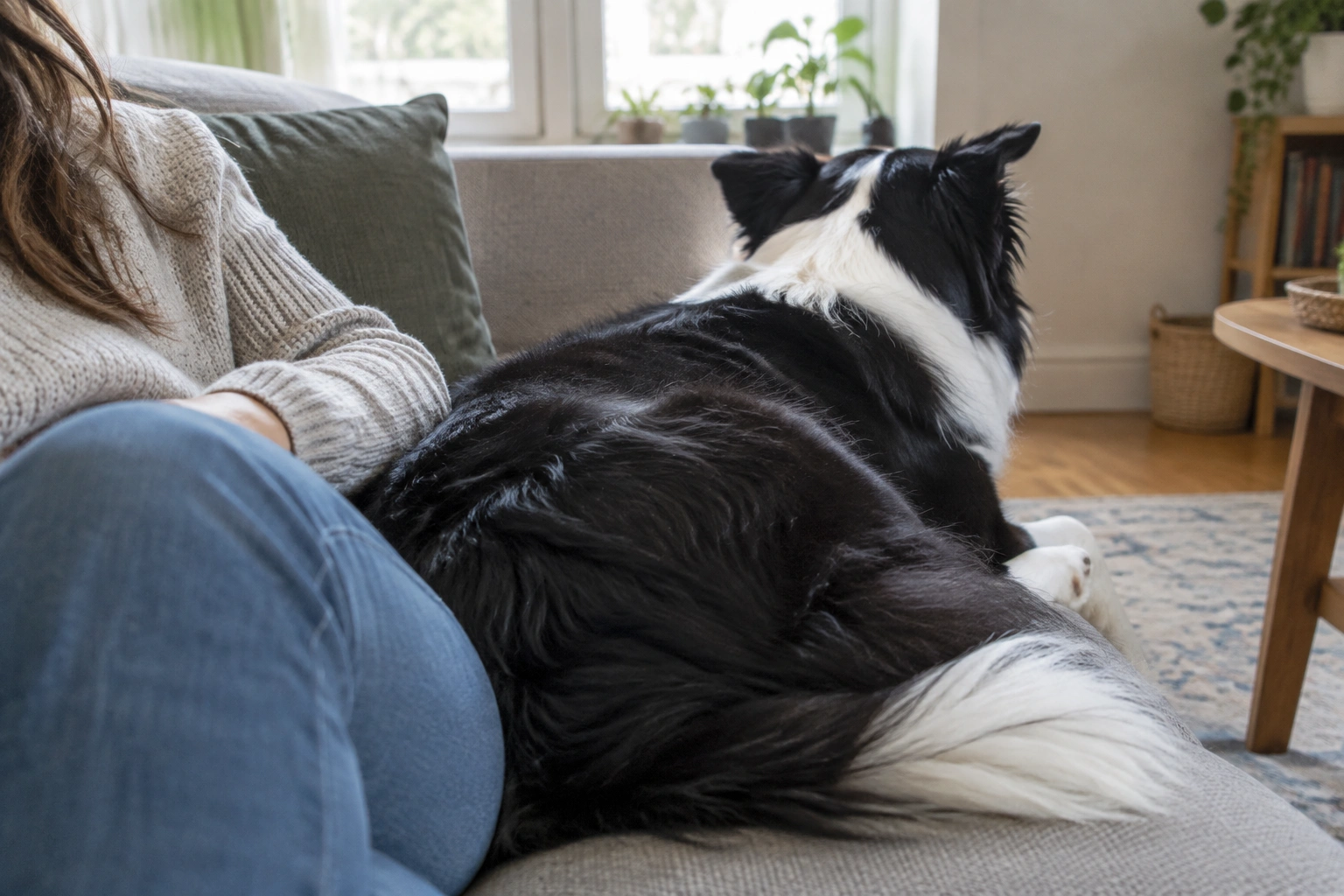
If your dog sleeps with their bum facing you, this is usually normal and harmless unless it comes with restlessness, stiffness, or other symptoms. The most likely explanation is simple: they feel comfortable enough to relax near you and have chosen a sleeping position that works for them. In many cases, it is a normal, low-drama bit of canine body language rather than a message you need to decode line by line.
That said, the posture can mean a few different things depending on the rest of the body. A loose, breathing-even dog that settles quickly is very different from a dog that keeps shifting, stiffens up, or seems unable to fully relax. Context matters more than the position itself.
Quick Answer: What It Usually Means
A dog turning their back or bum toward you while sleeping usually points to one or more of these:
- they feel safe enough to rest near you
- they prefer that body orientation
- they want to face the room, door, or noises
- they are simply warm, comfortable, or making use of the space
The important part is that this posture alone does not prove affection, guarding, dominance, anxiety, or pain. It can fit several explanations, and the rest of the dog’s body language decides which one is most likely.
If your dog is calm, sleeps well, and seems normal the rest of the day, this is usually nothing to worry about.
Why Dogs Choose This Sleeping Position
Dogs do not sleep the way humans do. They shift positions based on comfort, temperature, room layout, and what they want to monitor. A sleeping dog may rotate, stretch out, curl up, or turn away from you simply because that is the most practical way to settle.
One useful way to think about it is this: dogs are balancing rest and awareness. Even when they are asleep, many dogs prefer a setup that lets them keep part of the room in view or keep their body in a position that feels easy to wake from.
That can explain why a dog might place their back toward you. If they are already choosing to lie beside you, they are not trying to be alone. They are choosing proximity without necessarily needing to face you.
In a practical sense, this often comes down to three things:
- comfort — the dog likes the surface, angle, or space
- security — the dog is relaxed enough to sleep near you
- orientation — the dog prefers to face outward toward the room
A simple example
A Border Collie lies beside the sofa, tucks their rear toward your knees, and falls asleep within a minute. Their breathing stays steady, their muscles look loose, and they do not keep getting up. That is almost certainly normal sleep behavior.
Trust, Bonding, and Social Comfort
Many owners read this posture as a sign of trust, and that is often a fair interpretation. Dogs generally do not expose vulnerable parts of their body when they feel unsafe. When a dog lies on their side or settles with their back toward you, they may be showing that they are comfortable enough to let their guard down.
That does not mean the dog is “being rude” or rejecting you. Humans tend to read face-to-face contact as closeness, but dogs do not organize social space the same way we do. For a dog, being near you may be the meaningful part. The direction they face may just be the practical part.
This is why the same posture can look different depending on the dog:
- one dog turns away and immediately sleeps deeply, which suggests comfort
- another dog keeps one ear up and wakes at every sound, which suggests mild vigilance
If the dog is loose, settled, and content, turning away can be a good sign. It often means your presence is normal and safe enough that they do not need to keep checking on you.
For a broader general reference on relaxed canine resting signals, the AKC’s guide to dog body language can be a useful starting point.
Protective or Alert Orientation: When the Posture May Be About the Room
Sometimes the bum-facing-you position is less about you and more about the environment. A dog may choose to face the door, hallway, or open part of the room while keeping their back near you. That can look protective, but it is usually better described as environmental awareness.
This matters because a dog can be calm and still be oriented toward the room. That is different from anxious guarding. A calm, observant dog will often look settled, then drift off. A worried or over-alert dog tends to keep checking, tensing, or waking frequently.
The trade-off here is easy to miss: the dog may be sleeping near you for comfort while also positioning themselves to monitor the room. Those two things can happen at once.
Signs of relaxed awareness
- body is loose
- breathing is slow and regular
- ears may move occasionally, but the dog does not keep popping up
- the dog resettles easily after a noise
Signs it is more than simple awareness
- repeated head lifts
- sudden waking at every sound
- stiff posture
- inability to stay asleep for long
A dog that wants a view of the room is not necessarily anxious. But if the vigilance is constant, the sleep is broken, or the dog seems unable to settle, that is a different picture.
Border Collie Context: Why Herding Dogs May Do This More Often
Border Collies are often more environmentally tuned in than many breeds. Many herding dogs notice movement, sound, and changes in the room quickly. That does not mean every Border Collie is nervous or protective, but it does mean they may be more deliberate about where they position themselves when resting.
A Border Collie may:
- choose a spot with a clear view of the room
- sleep lightly in a place where they can wake quickly
- rotate positions often before settling
- place their back toward a person while facing outward
This can look very intentional, but it is often just a blend of awareness and habit. Herding breeds are frequently more “on” than the average couch potato breed, even when they are tired. They may want to rest close to you without fully switching off.
That is why Border Collie owners should avoid over-interpreting this posture. A working-minded dog can look watchful without necessarily being worried.
How to Tell Normal Relaxed Sleeping From a Concerning Pattern
The posture itself is not the question. The question is whether the dog is truly resting.
Here is a practical comparison:
| Normal relaxed sleeping | Concerning pattern |
|---|---|
| Loose muscles | Stiff body |
| Steady, quiet breathing | Rapid, shallow, or irregular breathing |
| Settles once and stays down | Repeated repositioning |
| Sleeps for decent stretches | Wakes often or cannot stay asleep |
| Resumes normal behavior on waking | Seems sore, grumpy, or slow after sleep |
| Chooses the position consistently | New or sudden change in sleep posture |
A useful rule: if your dog looks comfortable enough to stay there, they usually are. If they keep trying to find a better position, the body is probably telling you something is off.
When the Behavior Could Point to Pain, Stress, or Illness
A dog sleeping with their bum toward you is not a pain sign by itself. But the posture can appear alongside discomfort if the dog is trying to guard a sore area or avoid pressure on a painful spot. In that case, the issue is not just that they turned away; it is that they keep choosing a position that protects the body from discomfort.
Watch for the following red flags:
- stiffness when lying down or standing up
- whining, grumbling, or restlessness at bedtime
- limping or reluctance to jump, climb, or lie down
- frequent shifting during the night
- panting when the room is not warm
- a sudden change in preferred sleeping position
- avoidance of touch in certain areas
- lethargy, low appetite, or general “not themselves” behavior
If a dog starts sleeping this way after previously doing something different, that change matters more than the posture alone. New sleep habits can be a response to soreness, anxiety, or illness.
For help spotting pain-related behavior, VCA Hospitals’ pet health resources are a solid reference point.
What Owners Should Do: Ignore, Monitor, or Change the Sleeping Setup
In most cases, the best response is to leave the dog alone. If they have chosen the position, they probably do not need you to rearrange them.
Here is a simple decision framework:
Ignore it
Do this if:
– the dog is relaxed
– sleep is steady
– there are no other symptoms
– the habit has been consistent for a while
Monitor it
Do this if:
– the posture is new
– the dog seems a little restless
– they are waking more often than usual
– you are noticing a broader change in behavior
Monitoring means watching for patterns, not hovering. Over the next few days, note whether the dog sleeps better in a different spot, after exercise, or on a different bed.
Change the sleeping setup
Consider this if:
– the dog seems cramped
– the bed is too small
– the room is noisy
– they keep rotating because they cannot get comfortable
Sometimes the fix is practical, not behavioral. A larger bed, a quieter corner, or a warmer/cooler surface can change the way a dog positions themselves at night.
If you suspect the issue is not behavior but the sleep environment, it may help to review related comfort problems like why dogs tear up their beds or other signs of restlessness.
When to See a Veterinarian or Certified Trainer
Contact a veterinarian if the posture comes with any of the following:
- pain signs
- new stiffness
- limping
- repeated nighttime waking
- lethargy
- appetite changes
- sudden anxiety
- a clear change in sleep habits that lasts more than a short period
A certified trainer or behavior professional can help if the dog seems persistently hypervigilant at night or is unable to settle in the home environment. That is especially useful when the issue looks behavioral rather than medical.
Do not wait for the posture to “prove” something. If the dog is showing a cluster of changes, the sleep position may just be one piece of the picture.
Bottom Line
If your dog sleeps with their bum toward you and they look relaxed, consistent, and otherwise normal, ignore it. If the behavior is new or changing, monitor it. If it comes with stiffness, restlessness, or other symptoms, contact a vet.
FAQ
Is my dog showing affection by turning away from me?
Possibly, but not always in a human sense. It more reliably means they are comfortable enough to sleep near you.
Does this mean my dog is protecting me?
Sometimes a dog may orient toward the room, but that is different from deliberate guarding. Most of the time, it is just a comfortable sleeping direction.
Should I move my dog if they sleep this way?
Usually no. If they are settled and relaxed, let them keep the position they chose.
Is this common in Border Collies?
It can be. Border Collies are often more alert to their surroundings, so they may choose sleeping positions that let them monitor the room.
When should I worry?
Worry if the posture is new and comes with stiffness, pain, frequent waking, or other changes in behavior.
