
Why Your Border Collie Might Not Be Eating: A Practical Guide for Owners

If your Border Collie has skipped a meal, the first question is not “How do I get food into him?” It is “Is this a normal appetite dip, a feeding problem, or a sign of illness?”
In many cases, a Border Collie that is otherwise bright, drinking, and acting normal has a temporary reason for refusing food: stress, a recent routine change, too many treats, or food that has gone stale or unappealing. But appetite loss can also be the first visible sign of dental pain, nausea, gastrointestinal upset, parasites, infection, or another medical issue.
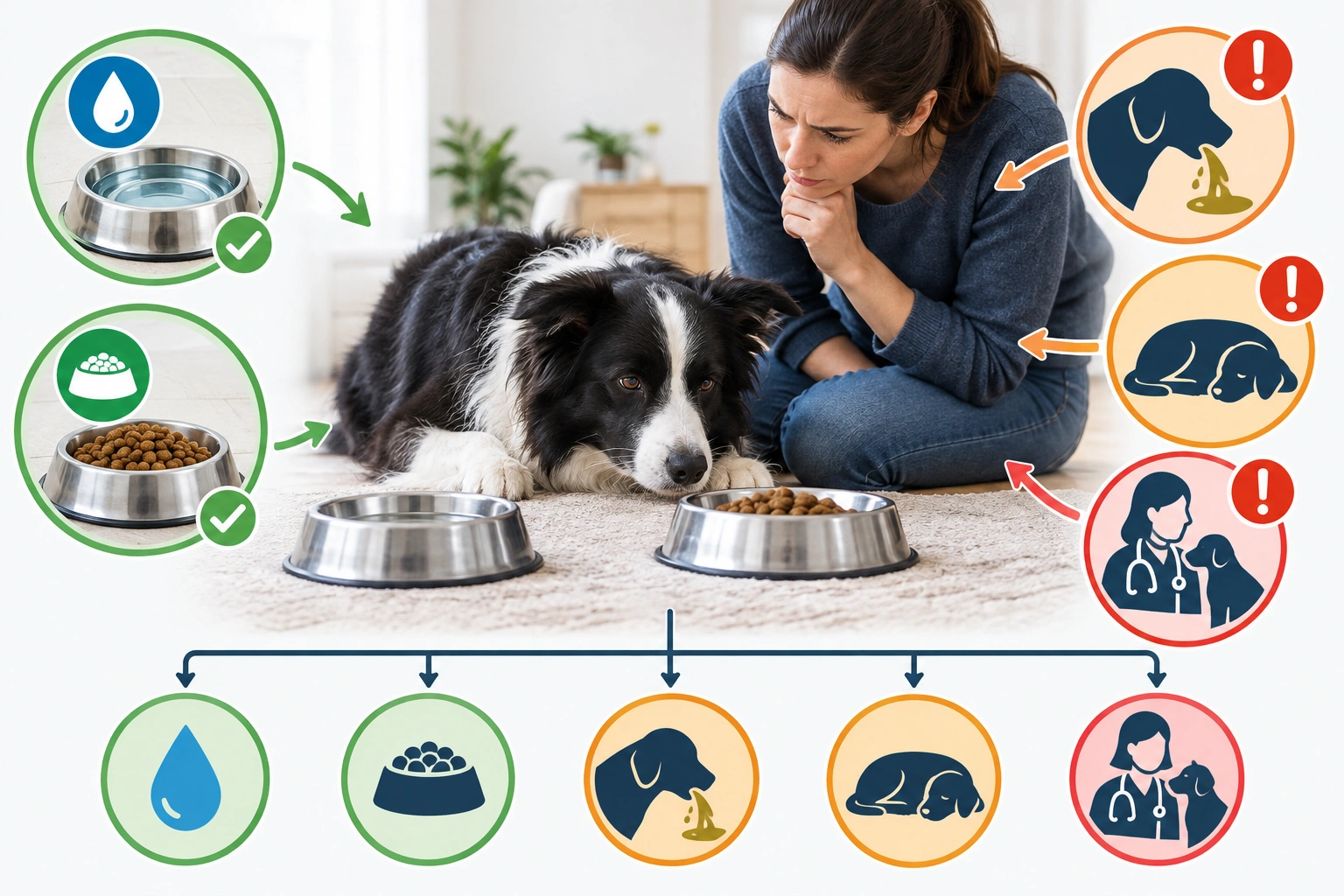
The useful way to think about it is this: one missed meal can be worth watching; food refusal plus other symptoms deserves more attention; refusal to eat and drink is more urgent still.
Quick Answer: What It Usually Means When a Border Collie Stops Eating
A Border Collie that suddenly stops eating is often dealing with one of three broad situations:
-
Temporary appetite loss
The dog is stressed, overstimulated, tired, or thrown off by a change in routine. -
Picky or selective eating
The dog has learned that skipping meals sometimes leads to better food, more treats, or attention. -
Illness or pain
The dog wants to eat but feels unwell enough that food is unappealing.
The difference matters because the next step is different in each case. A dog that is bright and drinking may be watched briefly at home. A dog that is not eating and also vomiting, has diarrhea, seems painful, or is unusually tired should be seen by a veterinarian sooner.
Quick Triage: Watch, Call, or Go Now
- Monitor at home for a short time if your adult Border Collie skips one meal but is otherwise normal, drinking, and acting like itself.
- Call your veterinarian within 24 hours if the refusal lasts more than 24 hours in an adult dog, or sooner if the dog is a puppy, senior, or has a medical condition.
- Seek urgent care immediately if your dog will not eat and has vomiting, diarrhea, lethargy, pain, dehydration, a bloated abdomen, repeated retching, collapse, or will not drink water.
How Long Can a Border Collie Go Without Eating Before It Becomes Concerning?
A single skipped meal is not automatically an emergency. Many healthy dogs will occasionally eat less for a day when their routine changes or they are stressed.
What matters more is the pattern:
- Adult dog with no other symptoms: monitor after one missed meal, but call your veterinarian if the refusal lasts longer than 24 hours.
- Puppy: do not wait a full day if a puppy refuses food; call your veterinarian the same day.
- Senior dog or dog with a medical condition: call your veterinarian sooner, even after a short appetite drop.
- Any dog with vomiting, diarrhea, lethargy, pain, or not drinking: treat it as more urgent than simple picky eating.
A practical rule: the longer the refusal continues, the less likely it is to be “just picky.” If a dog is still drinking water, has normal energy, and is using the bathroom normally, that leans more toward a short-term issue. If water intake drops too, the situation becomes more concerning.
Border Collie-Specific Reasons They May Skip Meals
Border Collies are not just energetic dogs; they are often highly tuned in to their environment. That can affect appetite in ways owners do not always expect.
High arousal can suppress appetite
A Border Collie that has been running, training, herding, traveling, or overstimulated may be too keyed up to settle down and eat. After intense exercise or a high-energy training session, some dogs need a quiet period before food becomes interesting again. That effect is usually temporary, especially if the dog otherwise settles, drinks, and returns to normal later.
Routine changes matter more than many owners realize
These dogs often notice changes quickly. A new feeding time, a different room, a move, guests in the house, a new schedule, or even a different bowl location can make a dog hesitate at mealtime.
The Kennel Club notes that a dog may not eat because the bowl is in a noisy or busy place, because the bowl is awkward to eat from, because the dog is not hungry, or because it dislikes the food. It also points out that hand-feeding can be more engaging for some dogs than eating from a bowl. That does not mean hand-feeding is always the answer, but it does show how much context can matter for a focused breed like this. See their guidance on common reasons dogs refuse food.
Workload changes can shift appetite
A Border Collie that suddenly gets much more exercise may be hungrier later, while one that is less active than usual may not need as much food. Appetite can also vary with activity, age, body condition, and overall health. That is one reason there is no single feeding amount that fits every Border Collie.
Common Non-Medical Causes of Not Eating
Before assuming illness, look for the feeding and environment issues that commonly suppress appetite.
Too many treats or snacks
This is one of the easiest problems to miss. If a dog gets training treats, table scraps, chew treats, or extra bites during the day, dinner may not look very appealing. A dog that fills up on “bonus food” can turn into a selective eater fast.
If you are trying to figure out whether hunger is the issue, remove snacks for a day and keep meals predictable. If the dog suddenly becomes more interested in food, the problem may have been appetite suppression rather than sickness.
A recent food change
PetMD notes that every food has a different caloric value, so there is no one-size-fits-all feeding amount for Border Collies, and that a slow transition is best when changing brands or flavors. They also advise following the manufacturer’s feeding guide and checking with a veterinarian if you are unsure about the right amount for a new food. Their Border Collie feeding guidance is here: PetMD Border Collie care and nutrition.
A sudden switch can upset the stomach or simply make the food unfamiliar. If appetite dropped right after a change, the timing matters.
Stale or unappealing food
Dogs notice freshness. Kibble that has been left open too long, stored poorly, or gone rancid may be rejected. Wet food that has been sitting out too long can also become unappealing.
Bowl placement and bowl type
A slippery bowl that slides across the floor, a bowl placed near a noisy appliance, or a feeding spot with too much foot traffic can all interfere with eating. This is especially relevant for dogs that are already a little anxious or distracted.
Stress, travel, and household disruption
Boarding, visitors, new pets, loud construction, changes in training, and travel can all reduce appetite temporarily. In these cases, the dog often still wants water and may eat later once the environment settles.
Medical Reasons a Border Collie May Refuse Food
When a dog will not eat because something feels wrong physically, the refusal is usually not about preference. It is about discomfort.
Dental pain
Dogs with dental disease, a broken tooth, sore gums, or mouth pain may approach food and then back away, chew on one side, drop kibble, or favor softer foods. Bad breath, pawing at the mouth, or sudden reluctance to chew are clues.
Gastrointestinal upset
Nausea, vomiting, diarrhea, or abdominal discomfort commonly reduce appetite. The dog may sniff food and walk away, lick lips, swallow repeatedly, or seem restless.
Parasites or infection
Internal parasites and infections can affect appetite, especially if the dog also has loose stool, vomiting, weight loss, or low energy.
Pain elsewhere in the body
A dog does not always need a stomach problem to stop eating. Pain from injury, inflammation, or another illness can be enough to shut down appetite.
More serious disease
Appetite loss can be part of a broader medical problem. That is why not eating becomes more concerning when it is paired with lethargy, dehydration, vomiting, diarrhea, or visible distress.
Picky Eating vs. Illness: How to Tell the Difference
This is the decision most owners are trying to make.
| Clue | More like picky/selective eating | More like illness |
|---|---|---|
| Energy | Normal, alert, interested in surroundings | Low, quiet, withdrawn, weak |
| Water intake | Drinking normally | Drinking less or not at all |
| Vomiting/diarrhea | Absent | Present or recurring |
| Behavior around food | Refuses kibble but may take treats | Refuses most food, even favorites |
| Mouth/chewing | Normal chewing | Dropping food, chewing oddly, mouth pain |
| Timing | Starts after treats, schedule changes, or food change | Starts suddenly with no obvious feeding reason |
| Trend | Comes and goes | Persists or worsens |
A dog that refuses kibble but eagerly eats treats is often telling you the issue may be preference, reinforcement, or routine. A dog that turns away from food entirely, especially if it also seems off, is more likely to be sick.
One caution: a dog can be both picky and unwell. If the appetite problem is new or unusual, do not assume behavior explains everything.
Owner Checklist Before You Call the Vet

Use this quick check to sort out nausea, pain, and dehydration signs:
- Nausea clues: lip licking, repeated swallowing, drooling, sniffing food and walking away
- Pain clues: hunched posture, reluctance to move, whining, guarding the belly, chewing oddly, pawing at the mouth
- Dehydration clues: dry or tacky gums, less drinking, sunken eyes, weakness, darker urine, skin that seems slow to spring back
- Urgent warning signs: vomiting, diarrhea, bloated abdomen, collapse, repeated retching, or refusal to drink
If you see more than one of these signs, do not wait to “see what happens.”
Warning Signs That Mean You Should Call the Vet Now
Some symptoms move the situation out of “monitor at home” territory.
Call your veterinarian promptly if your Border Collie is not eating and also has any of the following:
- Vomiting
- Diarrhea
- Lethargy or unusual sleepiness
- Signs of pain
- Dehydration or dry gums
- Refusal to drink water
- Bloated or distended abdomen
- Rapid weight loss
- Repeated retching
- Obvious distress or collapse
If your dog will not eat and will not drink, that is more urgent than food refusal alone.
This is also the point where home experiments stop being helpful. If the dog is sick, adding more food changes, more treats, or more waiting can delay care.
What You Can Safely Do at Home for a Short Time
If your Border Collie is otherwise bright and you are dealing with a short-term appetite dip, keep the troubleshooting simple.
Check the food first
Make sure the food is fresh, properly stored, and not recently changed. If you opened a new bag or switched formulas right before the appetite drop, that detail matters.
Remove treats for a short window
If the dog has been getting plenty of snacks, pause them. This helps you see whether the dog is truly hungry and avoids reinforcing the habit of waiting for something better.
Keep the schedule steady
Offer meals at the usual time and pick the food up after a reasonable period rather than letting it sit all day. A consistent routine is often more useful than grazing.
Make the feeding area calmer
Move the bowl to a quieter place if the current spot is busy or noisy. For some Border Collies, this small environmental change is enough to restore interest.
Avoid rapid food switching
If the dog is otherwise normal, do not bounce from one food to another every day. Frequent switching can make picky eating worse and can muddy the picture if stomach upset is already part of the problem.
Do not keep adding toppers or coaxing repeatedly
It can be tempting to keep mixing in toppers, broth, or special extras, or to repeatedly coax the dog to eat. That may make the dog even more selective and can mask whether the problem is appetite loss or illness. If your dog is truly not interested, step back and reassess rather than escalating every meal.
Common Mistakes That Can Make Appetite Problems Worse
The biggest mistakes are usually well-intentioned.
Offering richer and richer foods too quickly
When owners panic, they often escalate to toppers, table food, or multiple new foods. That can teach the dog to hold out for something better.
Force-feeding without veterinary advice
If the dog is nauseous or painful, force-feeding can create more stress and does not solve the underlying problem.
Ignoring water intake
A dog that still drinks is in a different category from a dog that refuses both food and water. Water tells you a lot about urgency.
Overlooking a recent stressor
A move, new schedule, loud event, or change in exercise can be enough to suppress appetite temporarily. If you miss the trigger, you may keep chasing food when the real fix is lowering stress and restoring routine.
What to Track Before You Contact the Veterinarian
If you do need to call, a few details make the conversation much more useful:
- How long the dog has not eaten
- Whether the dog is drinking water
- Any vomiting or diarrhea
- Energy level compared with normal
- Stool quality and frequency
- Any signs of pain or mouth discomfort
- Recent diet change, treats, travel, or stress
- Weight loss, if noticeable
- Whether the dog will eat anything at all, or only certain foods
This is the fastest way to help your vet separate a simple appetite dip from a more serious problem.
When to Ask Your Veterinarian
If your Border Collie has refused food for more than 24 hours, or the pattern keeps repeating, call your veterinarian even if the dog seems mostly normal. That is especially true for puppies, seniors, dogs with medical conditions, or any dog that has also become quieter, pickier, or less interested in water.
If the dog is acting normal, drinking, and had an obvious reason to skip a meal, your vet may recommend short-term monitoring. If there are red flags, they may want to examine the dog sooner.
For owners trying to understand the bigger picture of Border Collie care and behavior, our guide on what not to do to a Border Collie is useful background, especially when routine changes or overhandling may be part of the problem.
FAQs
Is it normal for a Border Collie to skip a meal?
Yes, occasionally. A single missed meal can happen with stress, excitement, routine changes, or reduced hunger. The concern rises if it continues, repeats often, or comes with other symptoms.
Should I leave food out all day if my Border Collie won’t eat?
Usually not, if selective eating is becoming a pattern. A consistent mealtime routine is often more helpful than free-feeding, because it keeps the dog from learning that food will always be available later.
Will hand-feeding help?
Sometimes. It can be useful for a dog that is distracted or unsure, but if you use it too often, it can also make the dog more selective. Think of it as a short-term tool, not a long-term fix.
What if my Border Collie only eats treats?
That often means the dog has learned that refusing meals leads to better options. It can also mean the dog feels unwell. If the pattern is new, or the dog is also off in other ways, speak with your vet.
How do I know if my dog is nauseous?
Common clues include lip licking, swallowing repeatedly, refusing food, drooling, or acting interested in food and then walking away. Nausea can happen with many illnesses, so it is worth taking seriously if it lasts.
Should I switch foods right away?
Not automatically. If the dog is otherwise normal, first check freshness, treats, feeding location, and recent changes. If you do switch foods, do it gradually rather than abruptly, unless your veterinarian tells you otherwise.
When is it an emergency?
If your Border Collie will not eat and also has vomiting, diarrhea, lethargy, pain, a bloated abdomen, or refuses water, contact a veterinarian promptly.
A Border Collie that is not eating is not always a crisis, but it is always information. The job is to read that information in context: energy, water intake, stool, pain, and recent changes. That is what separates a short-lived appetite dip from something that needs medical attention.