
Why Is My Dog’s Eye Tearing? Causes, Warning Signs, and What to Do Next

A watery eye in a dog can be harmless for a short time, or it can be the first clue that something is irritating the eye, blocking drainage, or damaging the surface of the cornea. Normal tearing is brief, mild, and comfortable; abnormal tearing is persistent, one-sided, or linked to pain or discharge. The useful question is not just “why is my dog’s eye tearing?” but “does this look like brief irritation, or does it need a vet exam now?”
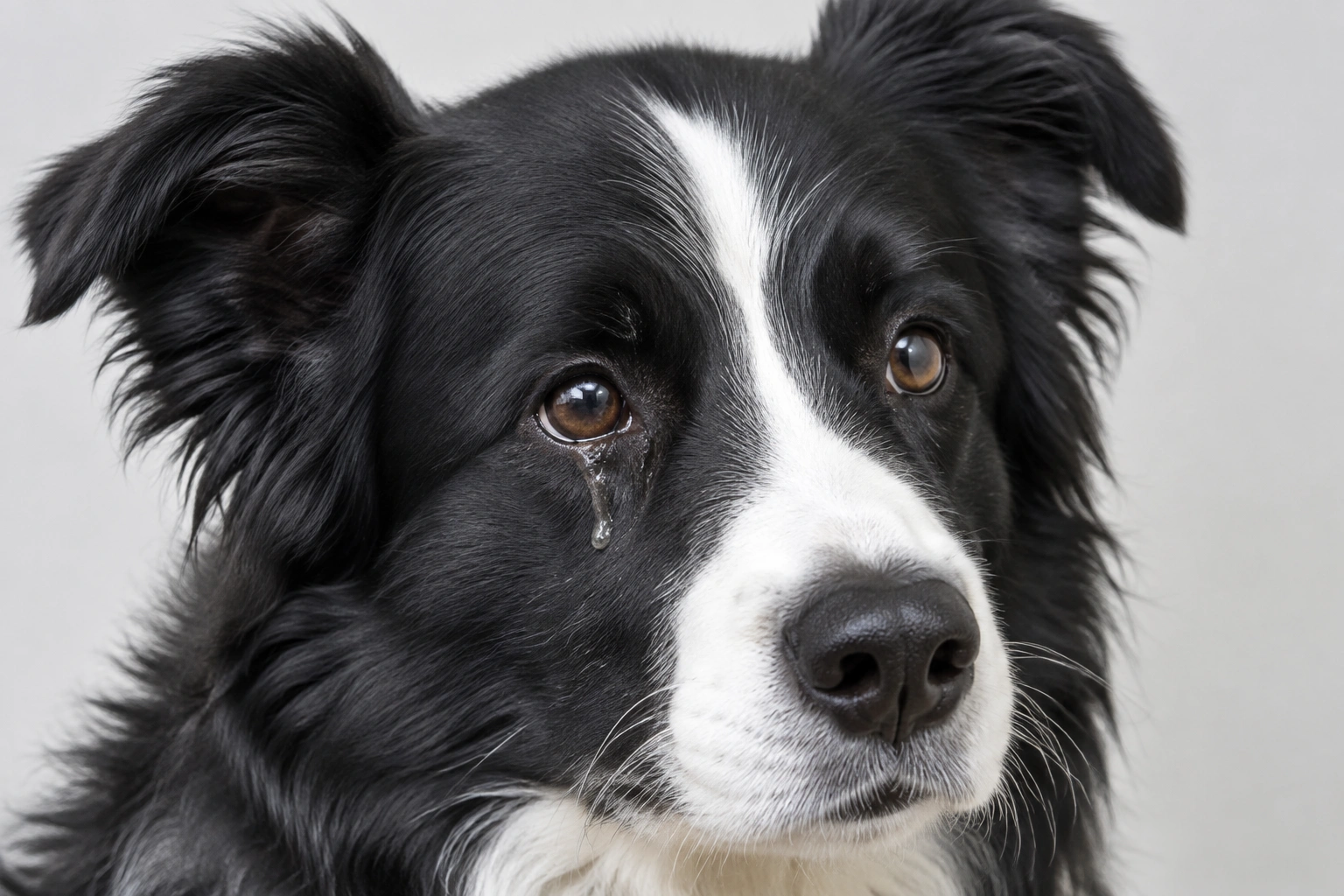
In Border Collies, I pay close attention to eye changes because this breed is active, outdoors often, and quick to pick up dust, seeds, grass awns, and wind irritation on walks or while working. That does not mean every watery eye is serious. It does mean you should read the pattern carefully.
What a Tearing Eye Means in Dogs
The veterinary term for excessive tearing is epiphora. Some tearing is normal. Dogs need tears to lubricate the eye, wash away debris, and protect the surface.
The problem starts when the eye makes too many tears, or when tears are produced normally but do not drain well. That is why a dog may have wet fur under one eye even if the eye itself does not look dramatically red.
A practical way to think about it:
- Short-lived tearing after wind, dust, or grooming often points to mild irritation.
- Persistent tearing suggests something is still bothering the eye.
- Tearing with pain, redness, or discharge deserves faster veterinary attention.
Normal vs. Abnormal Tearing: The Decision Rules
A dog’s eye is more likely to be a minor irritation when all of these are true:
- the discharge is clear and watery
- the dog opens the eye normally
- there is no squinting or pawing
- the eye is not cloudy or swollen
- the tearing improves after the irritant is gone
It becomes more concerning when one or more of these happen:
- tearing lasts more than a brief period
- the problem keeps returning
- only one eye is affected
- the dog seems uncomfortable
- discharge becomes thick, colored, or sticky
If you want a simple rule: clear tears without pain can sometimes be watched briefly; tearing plus discomfort should be checked sooner.
One Eye vs. Both Eyes: Why the Pattern Matters
When one eye is tearing much more than the other, that often points to a local problem in that eye. Common examples include a foreign body, a corneal scratch, an eyelid or eyelash abnormality, or a blocked tear duct.
When both eyes are watery, the cause is more likely to be something that affects both sides at once, such as environmental irritation or allergies.
That pattern is not absolute, but it helps you think more clearly:
- One watery eye after brush, grass, or rough play = suspect local irritation or injury
- Both watery eyes during pollen season = think environmental or allergic
- One eye tearing with squinting = treat as more urgent until proven otherwise
Common Causes of Watery Eyes in Dogs
There are several common reasons a dog’s eye tears more than usual.
Environmental irritation
Dust, smoke, wind, shampoo, and tiny debris can all irritate the eye. This is common after a walk on a windy day or after grooming if product gets near the eye.
What it usually looks like:
– clear tearing
– mild redness
– dog otherwise acting normal
– improvement after the irritant is removed
Allergies
Allergies can make the eyes watery, itchy, and red. Dogs with allergies may also rub their face, sneeze, or have other skin signs.
Allergic tearing is more likely when:
– both eyes are involved
– symptoms come and go with seasons or exposures
– the dog seems itchy, not just watery
Conjunctivitis
Conjunctivitis means inflammation of the tissues around the eye. It can come from infection, irritation, or other causes. It often brings redness and discharge, and the discharge may become thicker than simple tears.
Foreign body
A seed, blade of grass, dirt, or other small object can get trapped under the eyelid or on the eye surface. This often causes sudden tearing in one eye.
Clues that make me suspicious:
– sudden onset
– one eye only
– pawing at the face
– squinting after outdoor activity
Corneal scratch or injury
A scratch on the cornea can be very painful. Dogs may tear heavily, squint, keep the eye partly closed, or avoid light.
This is one of the reasons I take “just a watery eye” seriously when the dog is clearly uncomfortable.
Blocked tear duct or drainage problem
Tears normally drain through small channels near the inner corner of the eye. If those channels are blocked or narrowed, tears spill onto the face instead of draining away.
This may cause:
– chronic wetness below the eye
– tear staining
– repeated tearing without much redness
Eyelid or eyelash abnormalities
If the eyelid or lashes rub the eye surface, the eye may constantly produce tears as a response to irritation. These problems can be subtle and easy to miss without a proper exam.
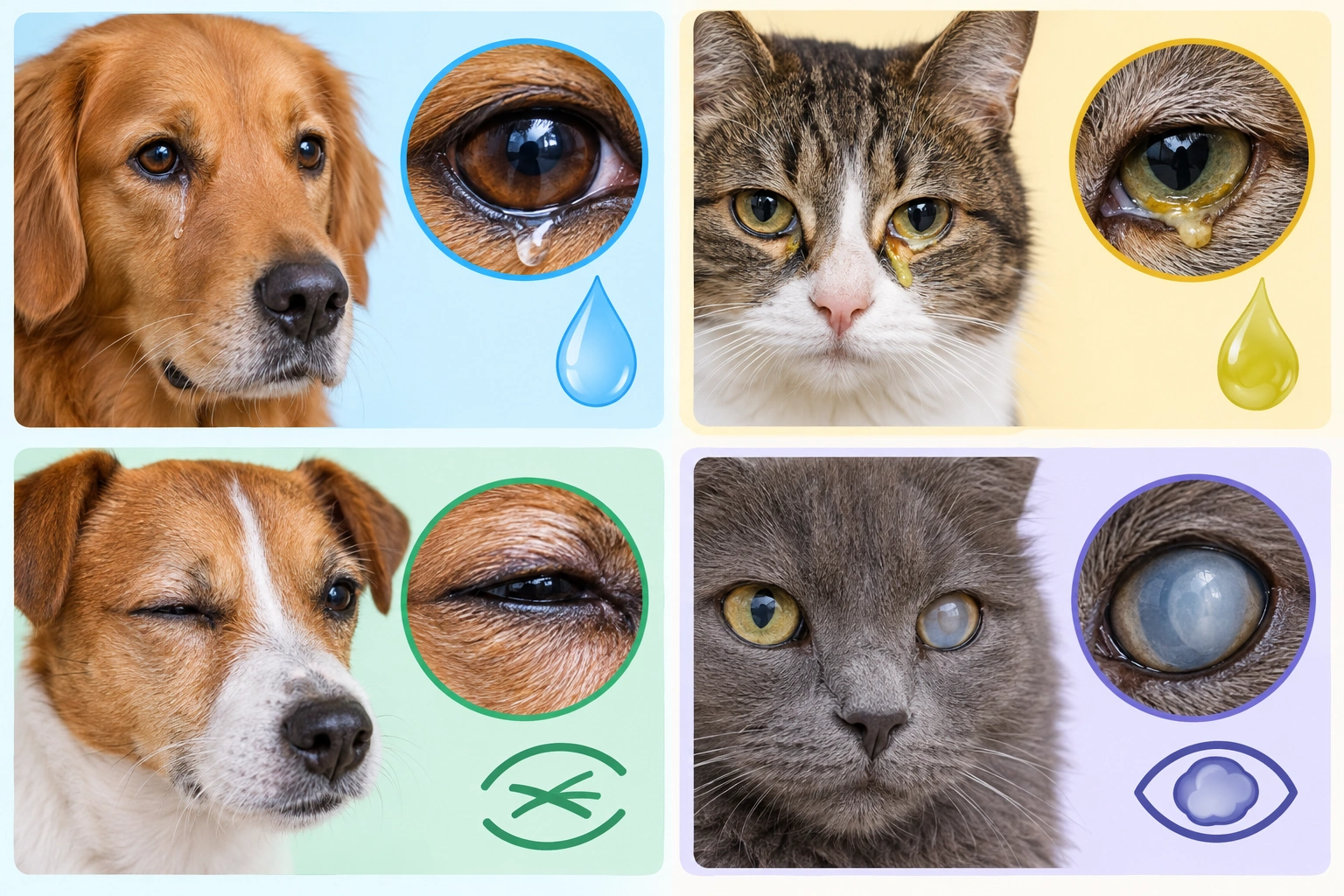
Clear Tears vs. Thick Yellow or Green Discharge
This is one of the most useful distinctions you can make at home.
| What you see | More likely meaning | How urgent it feels |
|---|---|---|
| Clear, watery tears | Irritation, allergies, mild debris, or drainage issue | Often can be monitored briefly if the dog is comfortable |
| Sticky white or mucus-like discharge | Ongoing irritation or inflammation | Needs vet attention if persistent |
| Thick yellow or green discharge | Infection or more significant inflammation | Vet visit soon, especially if there is redness or pain |
| Blood-tinged discharge | Injury or trauma may be involved | Prompt veterinary evaluation |
The key point is this: tear staining and watery eyes are not the same as infected discharge. A wet face under the eye can come from drainage problems or chronic tearing without infection. Thick colored discharge changes the picture.
Red Flags That Mean the Eye May Be Painful or At Risk
Some signs move the problem from “watch and clean” into “call the vet now.”
Look for:
- squinting
- keeping the eye closed
- pawing at the eye
- visible pain or head-shyness
- cloudiness on the eye surface
- swelling around the eye
- redness that is more than mild
- sudden change in vision or bumping into objects
- obvious trauma
- discharge that becomes thick, yellow, or green
A dog with a corneal scratch, foreign body, or more serious eye disease may look miserable even if the eye only seems “watery” at first glance. If the eye is painful, do not wait to see if it settles on its own.
For general eye-care context, it is best to rely on a veterinarian’s exam rather than guessing from appearance alone.
What You Can Safely Do at Home Right Now
If the eye is only mildly watery and your dog is otherwise comfortable, these are the safest first steps:
- Gently wipe away tears with clean gauze or a soft damp cloth.
- Use sterile saline if you need to rinse away surface debris.
- Keep the area clean and dry so moisture does not sit on the fur.
- Reduce obvious irritants like dust, smoke, or shampoo residue.
- Watch closely for change over the next several hours.
If the tearing followed a windy walk, a grooming session, or a dusty yard, a gentle rinse can help remove surface irritants. If the eye improves quickly and stays comfortable, that supports a minor irritation.
If the eye does not improve quickly after gentle cleaning, or if any pain signs appear, contact your veterinarian rather than continuing home care. Home rinsing should not delay an exam if symptoms persist or worsen.
A practical example
A Border Collie comes in from a windy trail run with one watery eye and a little redness. The dog opens the eye normally, does not paw at it, and the tearing settles after a gentle saline rinse. That pattern fits mild irritation far better than a major eye injury.
If you want a deeper walk-through of safe first aid for eye discharge, my related guide on how to treat a dog eye infection at home safely explains what is reasonable to do before a vet visit and where the line is.
What Not to Do With a Tearing Eye
Some common “helpful” actions can make the problem worse.
Do not:
- use human eye drops unless a veterinarian told you to
- use leftover antibiotic or steroid drops
- rub the eye
- pull at something you think is stuck in the eye
- use cotton swabs near the eyeball
- keep cleaning aggressively if the eye is getting more painful
The biggest risk is masking a corneal injury or worsening a scratch. Steroid drops, in particular, can be dangerous if the cornea is damaged. If you suspect an embedded foreign body, leave it alone and get veterinary help.
When to Call the Vet and When It Is Urgent
Here is the decision framework I use.
Reasonable to monitor briefly at home
- clear tears only
- dog is comfortable
- no squinting or pawing
- no cloudiness
- no trauma
- symptoms improve after gentle cleaning
If the dog is otherwise comfortable but the eye is actively irritated, a short monitoring window is reasonable only if the symptoms are mild and improving. If there is no quick improvement, move to a vet visit.
Call the vet soon
- tearing lasts longer than a short period
- the same eye keeps tearing repeatedly
- there is redness, sticky discharge, or swelling
- tear staining is becoming chronic
- you are unsure whether the eye is painful
Same-day or urgent veterinary care
- the dog is squinting or keeping the eye closed
- the eye looks cloudy
- the dog is pawing at it repeatedly
- there was trauma, rough play, or brush contact
- discharge is thick yellow or green
- vision seems affected
- a foreign body is suspected
- a corneal scratch is suspected, even if the discharge is still clear
If the eye looks injured or the dog seems painful, do not wait for “tomorrow to see if it improves.”
How Veterinarians Diagnose the Cause
A vet will usually begin with a close eye exam and a history of when the tearing started, whether it is one eye or both, and whether there was outdoor exposure, trauma, or grooming.
Common tests may include:
- fluorescein stain test to check for corneal scratches or ulcers
- tear drainage assessment if a blocked tear duct is suspected
- eyelid and eyelash evaluation
- examination for foreign material under the eyelids
- checks for redness, cloudiness, and signs of inflammation
The fluorescein stain test matters because a scratch can be easy to miss without it. A dog may seem only mildly irritated while the cornea is actually injured.
Veterinarians also use the exam to tell clear tears from infected discharge. Clear tears are usually thin and watery, while infected discharge is more likely to be thick, sticky, or colored, often with more redness, swelling, or discomfort. That is one reason a home comparison table can help, but it cannot replace an exam.
Treatment Options Based on the Underlying Cause
Treatment depends on the cause, which is why generic eye drops are a bad gamble.
- Environmental irritation: removing the irritant, flushing the eye, and monitoring
- Allergies: addressing the trigger and, when needed, vet-directed medication
- Conjunctivitis: treatment based on whether the cause is infectious, inflammatory, or another underlying problem
- Corneal scratch: pain control and treatment to protect the cornea
- Foreign body: removal by a veterinarian if needed
- Blocked tear duct: evaluation of the drainage pathway and cause-specific treatment
- Eyelid or eyelash abnormality: may need medical management or surgery
Some problems improve quickly once the cause is treated; others need follow-up because they recur if the underlying issue is not fixed. If surgery is recommended, it is usually because the anatomy or drainage problem is not something drops can solve.
Tear Staining and Chronic Moisture: What It Does and Does Not Mean
Tear staining is the rust-colored or brownish staining that can appear on the fur under a dog’s eyes. It tells you there has been ongoing moisture, but it does not tell you why.
That distinction matters.
Tear staining can be:
– mostly cosmetic
– a sign of chronic tearing
– linked to drainage issues
– associated with ongoing irritation that deserves a vet exam
If the staining is mild and the eye is otherwise normal, it may not be an emergency. But if staining keeps returning, the underlying cause still needs attention. Chronic wetness can hide discomfort, skin irritation, or a drainage problem.
Border Collies and Breed-Related Context
Border Collies are not the first breed I think of for severe tear-drainage disease, but they are active enough to encounter the kinds of environmental triggers that cause watery eyes: dust, grass, wind, and rough outdoor play.
That means a Border Collie with tearing should be judged by the pattern, not by assumptions:
- brief tearing after outdoor exposure often suggests irritation
- recurrent one-eye tearing deserves a closer look
- tearing with squinting or cloudiness should be treated as a medical issue, not a grooming nuisance
If your Border Collie is repeatedly getting watery eyes on walks or after time in brush, think about exposure first, but do not stop there if it keeps happening.
A Simple Way to Decide Your Next Step
Use this quick filter:
- Clear tears, comfortable dog, short duration: clean gently and observe
- One eye, sudden onset, after outdoor activity: suspect a local irritant or foreign body and watch closely
- Redness, squinting, pawing, or cloudiness: veterinary exam needed
- Thick yellow or green discharge: vet visit soon
- Closed eye or obvious pain: urgent care
That is the practical answer to “why is my dog’s eye tearing?” Sometimes it is just a windy walk. Sometimes it is the first sign of a scratch, infection, or drainage problem. The difference is in the details.
Frequently Asked Questions
Can allergies make a dog’s eye water?
Yes. Allergies can cause watery, itchy eyes, often in both eyes, especially when other allergy signs are present.
Is tear staining always a health problem?
No. Tear staining means the area has been wet for a while, but it does not tell you the cause. Persistent staining still deserves attention if it keeps returning.
Why is only one eye tearing?
One-eye tearing often points to a local issue such as a foreign body, scratch, blocked tear duct, or eyelid problem.
Can I use saline on my dog’s eye?
Sterile saline is generally the safest home rinse for mild surface debris, but stop if the eye seems painful or gets worse.
When is a watery eye urgent?
If the dog is squinting, pawing, keeping the eye closed, has cloudiness, thick colored discharge, or appears to have vision changes, get veterinary help promptly.