
Why Is My Dog’s Skin Turning Black? Common Causes, Warning Signs, and What to Do

If you’ve noticed dark patches, black spots, or skin that seems to be changing color on your dog, the first thing to know is this: the color change itself is usually not the problem. In many dogs, black skin is a sign that the skin has been irritated, inflamed, or damaged for a while. That darkening is often called hyperpigmentation, and it can happen after repeated itching, licking, infection, or other chronic skin stress.
The key clue is often change over time, not just the presence of black skin. A patch that has always looked dark may be normal pigmentation, while skin that becomes darker after irritation or infection deserves attention.
For Border Collies and other active, outdoor dogs, that can matter because small skin problems may be more likely to keep getting rubbed, wet, or irritated. A bit of licking after a walk, a mild allergy flare, or a yeast overgrowth in a damp area can turn into a skin change that looks alarming later. The goal is not to guess at the color. It’s to figure out what caused the skin to change in the first place.
What black skin on a dog actually means
Black skin in dogs is not a diagnosis. It’s a description.
A dog’s skin may darken because pigment increases in response to inflammation, which is why you may hear veterinarians talk about hyperpigmentation or post-inflammatory hyperpigmentation. In plain language, the skin has been under stress long enough that it has changed color. The original trigger may now be gone, but the darkening can remain.
That is why two dogs can both have black skin and need very different care. One may simply have naturally dark skin in a hairless or thin-haired area. Another may have darkened skin because of an allergy, infection, parasites, or a hormone problem. The color alone does not tell you which one is which.
A useful way to think about it is this: if the skin is dark but otherwise calm, stable, and always looked that way, it may be normal pigmentation. If the skin has changed over time, especially with itch, odor, hair loss, redness, thickening, or pain, it deserves a closer look.
When black skin is normal versus a sign of trouble
Some dogs naturally have darker skin in certain areas, especially around the belly, groin, lips, or armpits. If that pigmentation has always been there and the skin is smooth, comfortable, and unchanged, it may be normal.
Trouble is more likely when the darkening is:
– new or spreading
– limited to one area that gets rubbed or licked
– paired with itching, redness, or odor
– accompanied by hair loss, scabs, or thickened skin
– showing up after a rash or infection
A simple decision rule helps here:
- Stable, lifelong dark skin with no symptoms: often normal
- Dark skin after weeks of licking, scratching, or rash: likely post-inflammatory change
- Dark skin with smell, grease, redness, or moisture: infection becomes more likely
- Dark skin with hair loss, body-wide changes, or repeated flare-ups: think beyond a local skin problem and consider hormonal disease or chronic allergy
New darkening with inflammation is usually the skin’s response to a chronic problem, not a separate disease on its own. If the dark area is getting worse instead of settling down, don’t wait for it to “just fade.” The skin is usually telling you the trigger is still active.
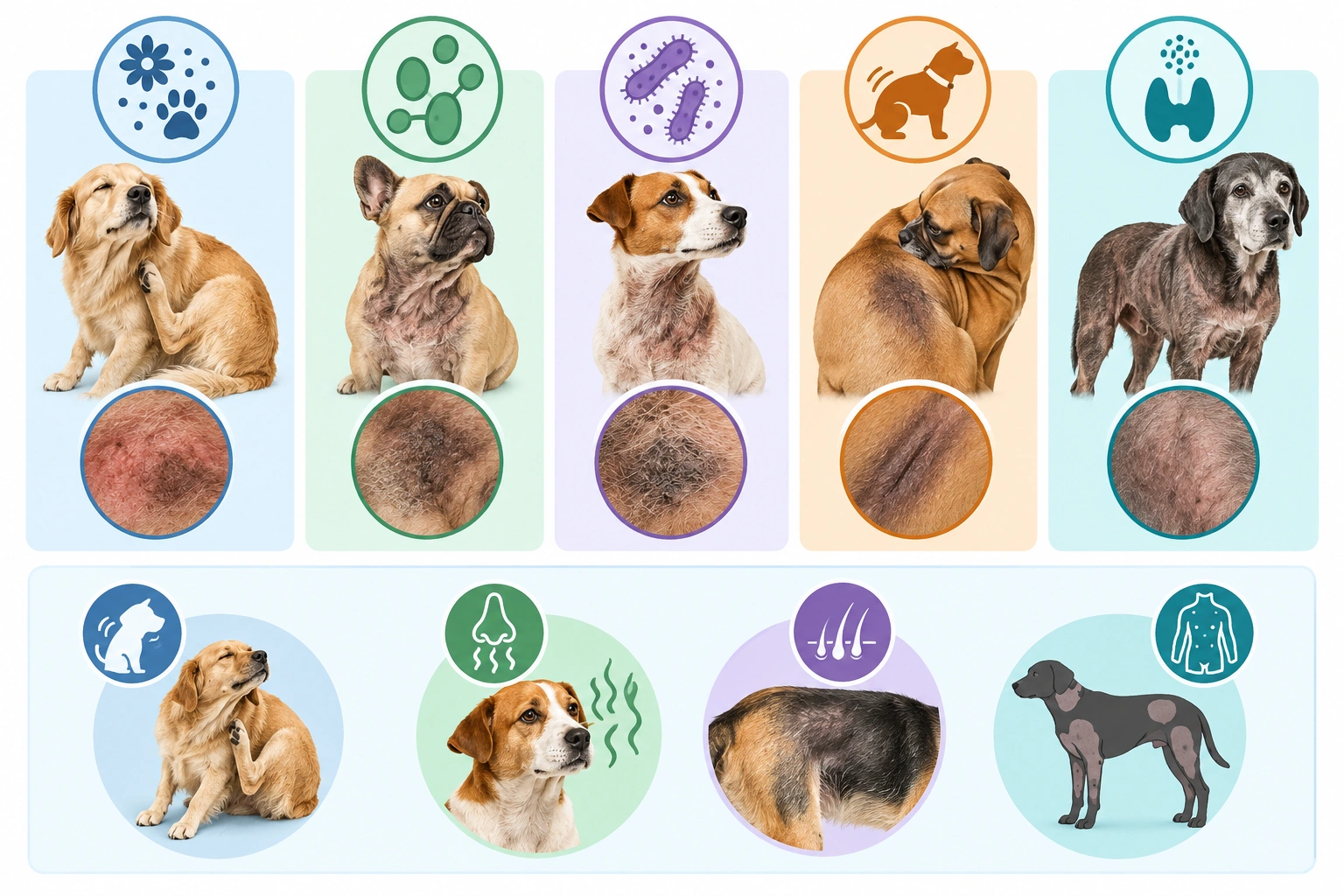
The most common causes of darkened skin in dogs
Chronic irritation and repeated self-trauma
This is one of the most common pathways to black skin. A dog scratches, licks, or rubs the same spot over and over. The skin gets inflamed. Over time, the area thickens and darkens.
You’ll often see this on the paws, belly, armpits, groin, or around the collar line. The darkening is not the injury itself; it is the skin’s response to ongoing injury.
Allergies
Allergies can drive itching first, then darkening later. The dog may lick paws, scratch ears, chew the belly, or rub the face. If that goes on for weeks or months, the skin can become darker and thicker.

This is especially relevant in dogs that get repeated flare-ups rather than one isolated rash. Border Collies can certainly have allergies, and active dogs may spend more time exposed to grass, wet ground, or rubbing from gear that keeps irritated skin from settling down.
Yeast infection
Yeast overgrowth often brings a musty or greasy odor, redness, itch, and darkened skin. It likes warm, moist areas such as skin folds, armpits, groin, and between the toes. The skin may look brown-black, feel sticky, or seem oily.
If the smell is strong, that is a useful clue. Yeast infections and bacterial infections can both darken skin, but yeast more often comes with a greasy feel and distinct odor.
For a deeper look at this problem, see our guide on how to get rid of a yeast infection in dogs.
Bacterial skin infection
Bacterial infections can also lead to darkened skin, especially when they follow scratching, allergy flares, or moisture trapped against the skin. The skin may look red at first, then crusty, scabby, or thickened later.
A bacterial infection may not smell as “musty” as yeast, but it can still have an unpleasant odor and may ooze, scab, or feel sore. If the dog seems painful when touched, infection climbs higher on the list.
Parasites such as mange or fleas
Parasites can start the whole cycle by causing itch and inflammation. Fleas, mites, and mange may lead to repeated scratching, skin damage, and eventually darkening after the skin has been irritated for some time.
With mange, hair loss and intense itch are common clues, though the pattern depends on the type. Fleas can be easy to miss if the dog is fastidious about grooming or if the infestation is light. The key point is that parasites often create the inflammation that later leaves behind dark skin.
Friction and pressure
Sometimes the cause is mechanical rather than infectious. Areas that rub against harness straps, collars, bedding, hard floors, or the dog’s own skin folds can darken over time.
This tends to be localized and predictable:
– collar line on the neck
– elbow calluses
– armpits where a harness rubs
– groin or belly folds that stay damp
If the skin is dark only where pressure or rubbing happens, friction may be the main issue. If the area is also itchy, smelly, or hairless, friction may be only part of the story.
Endocrine disease such as hypothyroidism or Cushing’s disease
Hormonal disease can show up on the skin before owners realize anything systemic is wrong. Hypothyroidism and Cushing’s disease may contribute to thinning coat, recurring infections, darkened skin, and changes in texture.
These problems are more suspicious when the skin change is not isolated. Look for:
– recurrent skin infections
– hair loss or thin coat
– lethargy
– weight changes
– changes in thirst or appetite
– skin that seems fragile or slow to heal
Hormonal disease is not the most common cause of a single dark patch, but it becomes more important when the problem is widespread, recurring, or paired with other body-wide signs.
How the symptoms help narrow the cause
The skin color change matters less than the pattern around it. These clues usually point the vet in the right direction:
- Itching first, darkening later: allergy, parasites, or chronic irritation
- Musty odor and greasy skin: yeast is more likely
- Redness, crusts, and soreness: bacterial infection or significant dermatitis
- Hair loss plus thickened skin: chronic inflammation or hormonal disease
- Licking in one spot only: friction, allergy, or local pain
- Widespread darkening with thin coat: think endocrine disease or long-term skin disease
A good rule is to ask whether the skin is simply darker or whether it also looks and behaves differently. Texture, smell, moisture, and comfort level are often more useful than color alone.
Breed and body-location clues that matter
Where the darkening appears can be just as helpful as how it looks.
- Armpits and groin often point toward allergies, yeast, or friction
- Paws and between the toes often suggest allergies, licking, or yeast
- Ears plus skin changes elsewhere can support an allergy pattern
- Collar line or harness area suggests rubbing
- Skin folds raise the chance of moisture-related yeast or bacterial overgrowth
- Elbows and pressure points can darken from repeated contact with hard surfaces
Breed matters too, not because one breed “gets black skin,” but because some dogs are more likely to live with the skin problems that lead there. Dogs prone to allergies, recurrent yeast, or chronic skin irritation are more likely to develop hyperpigmentation over time. Border Collies are not the classic breed people think of for skin disease, but their activity level and time outdoors can increase exposure to friction, grass, dampness, and seasonal allergens.
When to monitor at home and when to book a vet visit
If the skin is dark but the dog is comfortable, eating normally, and the area is stable, a short period of monitoring may be reasonable. That is especially true if the spot matches a friction area or a place that has always been pigmented.
Book a veterinary visit soon if:
– the darkening is new or spreading
– your dog is itchy, licking, or scratching
– there is odor, grease, redness, discharge, or scabbing
– hair is falling out
– the skin feels thick, painful, or warm
– the dog has repeated skin problems
– there are signs of lethargy, weight change, or other body-wide symptoms
Seek urgent veterinary care if the swelling is rapidly worsening, the pain is severe, there is facial swelling or hives, the skin is open or oozing, or your dog seems systemically ill (for example, weak, very lethargic, vomiting, or not acting like itself). Those signs move the problem from “watch and wait” into “find the cause.”
What a veterinarian may do to diagnose the cause
A vet usually starts with a careful skin exam and a history of where the problem began, how fast it changed, and what the dog has been doing to the area. From there, testing may include:
- Skin cytology to look for yeast or bacteria
- Skin scraping if mites or mange are suspected
- Fungal testing when ringworm or another fungal issue is possible
- Bloodwork if hypothyroidism, Cushing’s disease, or another systemic problem is on the table
- Allergy evaluation when the pattern fits recurring itch or chronic dermatitis
These tests matter because a dark patch can look similar whether the cause is allergy, infection, parasites, or hormone disease. Treating the color without identifying the trigger often leads to the same problem coming back.
For general guidance on skin and parasite issues, the ASPCA’s pet care resources and VCA Hospitals’ dermatology information are useful starting points.
Treatment depends on the underlying problem
There is no single treatment for black skin because the darkening is usually secondary to something else.
Common treatment paths may include:
– parasite control if fleas or mites are involved
– medicated shampoos or wipes for yeast or bacterial overgrowth
– antibiotics or antifungals when infection is confirmed
– allergy management to reduce the itch-inflammation cycle
– hormone treatment if bloodwork points to hypothyroidism or Cushing’s disease
– changes to collars, harnesses, bedding, or moisture exposure when friction is part of the problem
The practical trade-off is this: symptom relief alone may make the dog more comfortable fast, but it may not stop recurrence. Testing and targeted treatment take more effort up front, but they are usually what breaks the cycle.
Avoid using human creams or random over-the-counter products unless your vet tells you to. Some can irritate already inflamed skin, and others can mask the real problem long enough for it to worsen.
Will the dark skin go away?
Sometimes yes, sometimes only partly, and sometimes slowly.
If the darkening is post-inflammatory, the original cause has to be controlled first. Even then, pigment may fade over weeks or months rather than days. In some dogs, especially if the skin has been inflamed for a long time, some darkening may remain.
That is why “the skin looks black now” is not the same as “the skin is permanently damaged.” The prognosis depends on whether the trigger was short-lived irritation, an ongoing allergy, a stubborn infection, or a hormonal issue that needs longer-term management.
What to track before the appointment
A little observation before the vet visit can save time and improve the diagnosis. Write down:
- when you first noticed the change
- whether it is spreading or staying in one place
- whether your dog is itchy, licking, or chewing
- any odor, grease, redness, scabs, or discharge
- where the problem is located
- any new food, shampoo, bedding, collar, or harness
- whether your dog has had previous skin issues
- what you have already tried and whether it helped
If you can, take photos every few days. Skin changes are easier to judge when you can compare them side by side.
How to reduce recurrence after treatment
Once the cause is identified, prevention is mostly about stopping the inflammation from coming back.
That usually means:
– keeping parasite control consistent
– treating allergy flares early instead of waiting for the skin to break down
– drying damp areas after swims or muddy walks
– checking harness and collar fit so rubbing does not keep irritating the same spot
– watching for early signs like paw licking, odor, or redness before the skin darkens again
This is where many owners lose ground. They notice the black skin, try to lighten it, and miss the real pattern. The better approach is to treat the trigger, then watch the skin that was damaged by it.
When to See a Veterinarian or Certified Trainer
If the dark skin is tied to repeated licking, scratching, or restlessness, a trainer can help you reduce self-trauma while the vet addresses the medical cause. That is especially useful when the dog is making the skin worse during recovery.
See a veterinarian promptly if the skin change is new, spreading, painful, smelly, or paired with hair loss, lethargy, or heavy itching. Those signs move the problem from “watch and wait” into “find the cause.”
FAQs
Is black skin on a dog always bad?
No. Some dogs have naturally darker skin in certain areas. The concern is new, spreading, or symptom-heavy darkening.
Can allergies make a dog’s skin turn black?
Yes. Ongoing itch and inflammation from allergies can lead to post-inflammatory hyperpigmentation over time.
Does black skin mean yeast infection?
Not always, but yeast is a common possibility when dark skin comes with odor, grease, and itch.
Can I treat it at home?
Only if the skin change is mild, stable, and not paired with other symptoms. If there is odor, pain, itching, hair loss, or spreading, a vet visit is the safer move.
How long does it take to improve?
That depends on the cause and how long the skin has been inflamed. The underlying problem may improve before the dark pigment fades.
Why does the skin stay black after the rash is gone?
Because pigment changes can remain after inflammation settles. That is post-inflammatory hyperpigmentation, and it may fade slowly or not completely.
Could this be a hormone problem?
Yes, especially if the skin change is widespread or comes with coat thinning, recurrent infections, weight change, or lethargy.
What test is most useful first?
Often a skin exam plus cytology gives the quickest clue, but your vet may add scraping, fungal testing, or bloodwork depending on the pattern.
Can friction alone cause black skin?
Yes. Repeated rubbing from collars, harnesses, or pressure points can darken skin over time, especially if the area stays irritated.
When should I stop waiting?
If the area is getting worse, your dog is clearly uncomfortable, or there are signs like odor, discharge, scabs, or hair loss, stop waiting and book the exam.
