
Why My Dog’s Eye Is Red: A Practical Guide to Causes, Urgency, and Next Steps

A red eye in a dog is one of those problems that can look minor and still turn serious fast. Sometimes it’s simple irritation. Sometimes it’s a scratch, a foreign body, or a pressure problem that needs treatment the same day.
If you own a Border Collie, this is worth taking seriously. Active dogs spend time in brush, grass, dust, and branches, which means eye injuries are not rare. A dog may come back from a run with one eye half-closed, red, and watery after a twig, seed head, or bit of debris gets in there.
The goal here is not to guess the diagnosis at home. It’s to help you decide what to do next without making the eye worse.
Quick Triage: Is Your Dog’s Red Eye an Emergency?
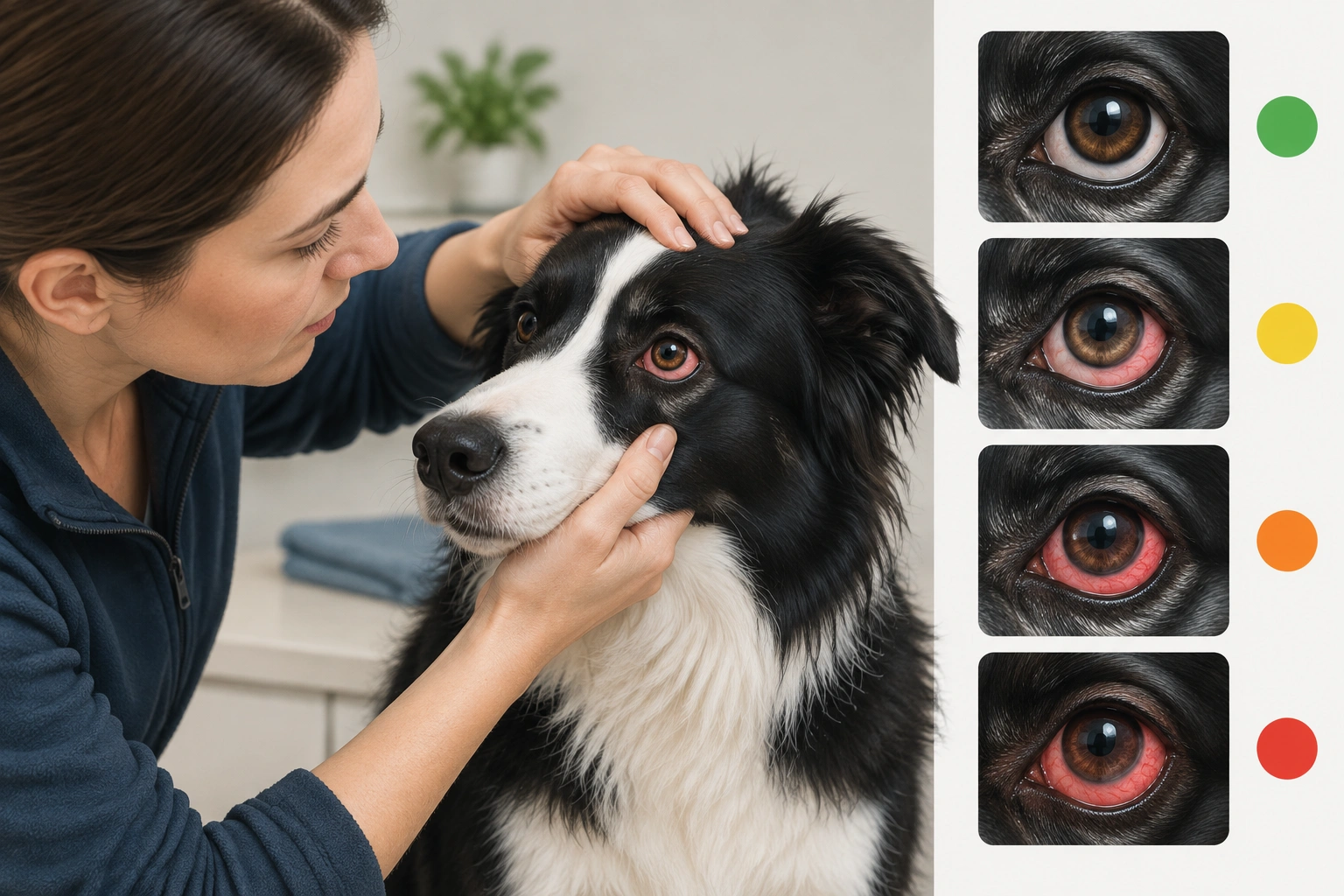
Use symptoms, not just color, to judge urgency.
Go to an emergency vet now if you see any of these:
- The eye is cloudy, blue, white, or suddenly discolored
- Your dog is squinting hard, keeping the eye shut, or acting painful
- The eye looks bulging, very swollen, or misshapen
- There was trauma: a scratch, twig, fight, fall, or impact
- Your dog is pawing at the eye constantly
- You notice vision changes: bumping into things, hesitation in dim light, or obvious confusion
- The redness came on suddenly and severely
Those signs raise concern for problems like a corneal ulcer, uveitis, glaucoma, or a significant injury. Those are not “wait and see” issues.
Call your vet the same day if:
- The eye is red and uncomfortable, but not severely painful
- There is yellow or green discharge
- The redness is getting worse over a few hours
- Only one eye is affected and it came on suddenly
- Your dog is rubbing the eye or blinking more than usual
You may be able to monitor briefly if:
- The redness is mild
- Your dog is acting normal
- There is no squinting, discharge, cloudiness, swelling, or pawing
- The eye looks better within a short period after a safe rinse or rest
If you’re unsure, treat it as more serious. Eyes are one of those places where a cautious decision is usually the right one.
Why a Dog’s Eye Turns Red: The Most Common Causes
Redness happens when blood vessels in or around the eye become inflamed or enlarged. That can happen for many reasons, and the eye often looks similar even when the cause is very different.
1. Irritation or a foreign body
Dust, grass seed, sand, eyelash, or a tiny bit of debris can make the eye red and uncomfortable until it’s removed. This is especially plausible after outdoor exercise.
A dog with a foreign body usually blinks a lot, squints, or keeps one eye partly closed. If the object is stuck or embedded, do not try to dig it out.
2. Allergies
Allergies can cause redness, watering, and itchiness, often in both eyes. Seasonal pollen, dust, and environmental irritants are common triggers. If both eyes are red and your dog otherwise seems comfortable, allergies move higher on the list.
3. Conjunctivitis
Conjunctivitis, often called pinkeye, can make the eye look red or pink and irritated. It may be caused by infection, allergies, or irritation. Discharge matters here: clear tearing is less concerning than thick yellow or green discharge, which suggests infection or more serious inflammation.
4. Dry eye
Dry eye, or keratoconjunctivitis sicca (KCS), happens when a dog produces too few tears. The eye can look red, sticky, and irritated because it loses the normal protection tears provide. This usually needs veterinary treatment, not home remedies.
5. Corneal ulcer
A corneal ulcer is a scratch or open sore on the surface of the eye. It can start from a scratch, foreign body, or rubbing. This is one of the reasons I do not like owners assuming “it’s just irritation” when the dog is squinting.
6. Uveitis
Uveitis means inflammation inside the eye. It can be painful and may make the eye look red, cloudy, or unusually sensitive to light. This needs veterinary evaluation.
7. Glaucoma
Glaucoma is a pressure problem inside the eye. It is painful and can threaten vision quickly. A red eye with cloudiness, swelling, or a bulging appearance should be treated as urgent until proven otherwise.
8. Eyelid problems or injury
Entropion, where the eyelid rolls inward, and ectropion, where the eyelid rolls outward, can both contribute to irritation and redness. Eyelid injuries can also cause a red eye, especially if the lid itself is swollen or cut.
For a broader veterinary overview of eye redness causes, the VCA Hospitals eye health resources are a useful reference point, and the AKC’s dog eye health guidance is helpful for owners learning what symptoms matter most.
One Red Eye vs. Both Eyes: What That Pattern Suggests
The pattern can give you a clue, but it does not replace an exam.
One red eye
A single red eye often points to a local problem:
– foreign body
– scratch
– corneal ulcer
– eyelid injury
– something stuck under the lid
That’s especially true if it started suddenly after outdoor activity.
Both red eyes
When both eyes are red, the cause is more likely to be generalized:
– allergies
– environmental irritation
– some infections
– dry eye in some cases
That said, exceptions happen. A dog can still have an injury in both eyes, or a systemic issue that shows up in the eyes. So “both eyes are red” does not automatically mean “mild.”
Sudden vs. gradual onset
- Sudden redness is more suspicious for injury, a foreign body, or pressure-related disease.
- Gradual redness can fit allergies, dry eye, or a slower-moving infection.
A sudden change is one of the biggest reasons I would not delay care.
Which Symptoms Make a Red Eye More Serious
The eye itself may look red, but the surrounding behavior often tells you more.
Squinting or keeping the eye closed
This is a pain sign until proven otherwise. Dogs do not usually squint for no reason. A dog that is tightly closing one eye needs a vet exam sooner rather than later.
Pawing or rubbing
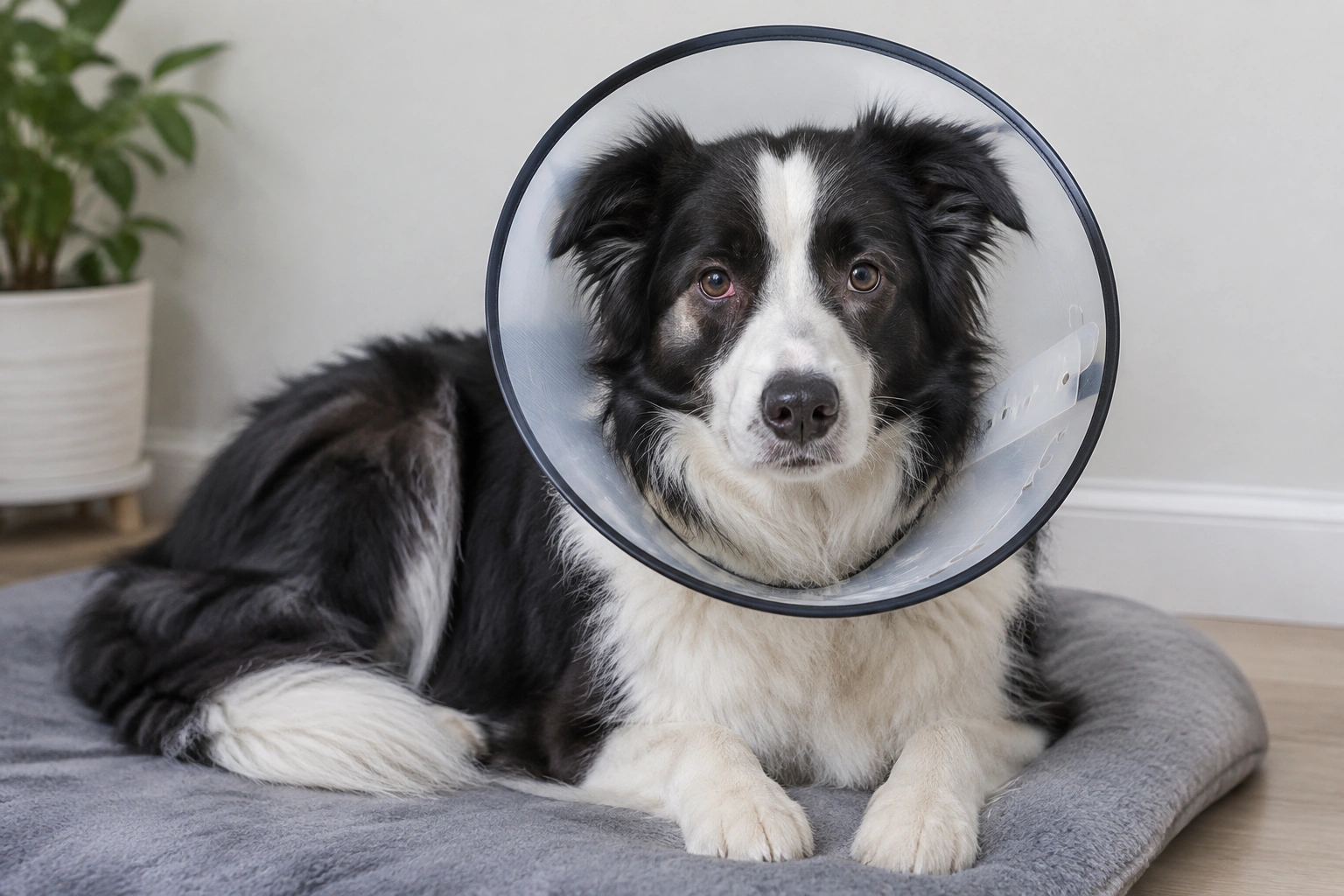
Rubbing can turn a small problem into a bigger one. A dog with a scratch can deepen the injury by rubbing the cornea. If your dog is rubbing, a cone is often the safest move while you arrange care.
Yellow or green discharge
Thick discharge is more concerning than clear tearing. It can point to infection or significant inflammation.
Cloudiness
A cloudy eye is a red flag. It can go with corneal ulcers, glaucoma, or inflammation inside the eye.
Swelling or a bulging eye
Swelling around the eye may come from irritation, allergy, infection, or injury. A bulging eye is more concerning and needs urgent attention.
Vision changes
If your dog seems disoriented, bumps into furniture, or hesitates on stairs, treat that as urgent. Vision changes push the problem into a different category.
What You Can Safely Do at Home Before the Vet Visit
Home care should be limited and protective.
Use an e-collar if your dog is rubbing
This is one of the most useful steps you can take. Preventing self-trauma can stop a scratch from getting worse.
Consider a gentle saline rinse
A sterile saline rinse or veterinary eye wash can sometimes help flush out mild dust or loose debris. Use only sterile saline/eye wash, and keep it to a gentle rinse if the eye seems mildly irritated.
Do not use tap water. Do not use cotton swabs. And if the eye is painful, cloudy, or you suspect an embedded object, do not keep repeating the rinse or trying to flush it out at home.
If the eye looks damaged, get the dog seen.
Keep the dog calm
No rough play, no running through brush, no swimming. Movement and rubbing can aggravate the eye.
Watch the change
A mild irritant should improve, not steadily worsen. If redness is still there, or the dog becomes squinty, that is your signal to move from monitoring to veterinary care.
If you’re dealing with a suspected minor eye irritation, this companion guide on safe first aid for a dog eye infection can help you avoid common mistakes while you wait to be seen.
What Not to Put in a Dog’s Eye
This part matters because the wrong product can make the problem harder to treat.
Do not use human eye drops
Human products are not automatically safe for dogs. Some can irritate the eye further, and others can mask a serious condition.
Do not use steroid drops unless a vet prescribed them
Steroids can be dangerous if the dog has a corneal ulcer or certain infections. That is one reason vets want to examine the eye before treatment.
Do not try to remove an embedded object with tweezers or fingers
If something is stuck, pulling at it can worsen the injury. An object that looks easy to grab may actually be anchored in the tissue.
Do not use leftover medication
A previous prescription may be wrong for the current problem. Eye disease is one area where guessing can backfire quickly.
How Vets Diagnose the Cause of Redness
A red eye is a symptom, not a diagnosis. Vets usually work through a few practical checks to narrow down the cause.
Eye exam
The vet looks at the eyelids, the surface of the eye, the discharge, and the surrounding tissues. They also ask about timing, trauma, outdoor exposure, and whether one or both eyes are affected.
Eyelid eversion and slit-lamp exam
When available, vets may evert the eyelids and use a slit-lamp exam to look for hidden foreign bodies or corneal injury that can be easy to miss on a quick look.
Fluorescein stain
This dye helps reveal a corneal ulcer or scratch. If the surface is damaged, the stain shows it.
Eye pressure check
This is important when glaucoma or uveitis is a concern. Pressure clues can change the urgency fast.
Tear testing or infection evaluation
If dry eye or infection is suspected, the vet may test tear production or look for signs that point toward bacterial or viral involvement.
The key point: two red eyes can look similar from the outside while needing very different treatment.
Treatment Depends on the Underlying Cause
This is why the diagnosis matters.
Foreign body or debris
If the eye contains loose debris, the vet may remove it and treat the irritation afterward. If the object is embedded, the eye may need more careful handling.
Conjunctivitis or infection
Treatment may include prescription drops or ointment, depending on the cause. Not all conjunctivitis is bacterial, so treatment should match the diagnosis.
Dry eye
Dry eye often requires ongoing medication to support tear production and protect the surface of the eye.
Corneal ulcer
Ulcers may need pain relief, protective medication, and close follow-up. Some ulcers heal with medical treatment; others need more intervention if they are deep or not improving.
Glaucoma or severe trauma
These can require urgent treatment and, in some cases, surgery. The reason these cases are treated aggressively is simple: vision can be lost if pressure or injury is not controlled.
Border Collie and Other Active Dog Considerations
Border Collies are athletic, fast-moving, and often work in environments where eye injuries are more likely. Brush, tall grass, dust, and sudden turns through vegetation all increase the chance of a scratch or foreign body.
That means a “came back from the field with one red eye” story deserves extra caution. A mild allergy is still possible, but a sudden one-eyed problem after outdoor activity should make you think about a scratch or debris first.
If your dog is the sort that charges through hedges, runs through tall grass, or works livestock, I would be quicker to use a cone and book a vet visit than to assume it will settle on its own.
When It’s Reasonable to Watch and Wait
This is the narrow zone where a short watch period makes sense.
You can monitor briefly if:
– the redness is mild
– your dog is comfortable
– there is no squinting
– there is no discharge beyond mild tearing
– the eye is not cloudy
– there was no obvious injury
– the dog is acting normal otherwise
What improvement should look like:
– less redness
– less blinking
– less rubbing
– normal behavior returning quickly
If the eye is the same or worse later in the day, stop watching and get it checked.
When to Call the Vet Same Day or Go to Emergency Care
Use this rule of thumb:
- Same-day vet visit for persistent redness, discharge, a one-eyed problem, or rubbing
- Emergency care for pain, cloudiness, swelling, trauma, bulging, or vision changes
Do not wait overnight if the dog is clearly uncomfortable. Eye problems can move quickly, and some causes can threaten vision.
When to See a Veterinarian or Certified Trainer
For eye redness, a veterinarian is the right professional. A certified trainer is not the right person for the medical problem itself, though a trainer can help later if your dog needs support tolerating an e-collar or recovery routine.
If you are on the fence, ask yourself one question: Is this just a slightly red eye, or is my dog acting like the eye hurts?
If it hurts, treat it as urgent.
FAQs
Why is my dog’s eye red all of a sudden?
A sudden red eye is often linked to irritation, a foreign body, a scratch, or another injury. Because sudden changes can also signal more serious eye disease, it is worth a same-day vet call if the eye looks painful or cloudy.
Is a red eye in dogs an emergency?
Not always, but it can be. A red eye becomes urgent when it comes with squinting, pain, cloudiness, swelling, discharge, trauma, or vision changes.
Can I flush my dog’s eye at home?
A gentle rinse with sterile saline or veterinary eye wash may be reasonable for mild irritation if the eye is not very painful and you do not suspect an embedded object. If the dog is squinting hard, the eye looks cloudy, or pain is present, do not keep rinsing at home and get veterinary help.
Should I use human eye drops?
No, not unless your veterinarian specifically told you to. Human drops can be wrong for the cause and may make some eye problems worse.
Does one red eye mean something different from both eyes being red?
Usually, yes. One red eye more often suggests a local problem like a scratch or foreign body. Both eyes being red more often points toward allergies or environmental irritation, though exceptions exist.
Why is my dog squinting with a red eye?
Squinting usually means pain or significant irritation. That can happen with a scratch, ulcer, foreign body, or inflammation inside the eye, and it should be checked promptly.
Can a red eye get worse quickly?
Yes. Some eye conditions progress fast enough to threaten vision, which is why a painful, cloudy, or suddenly red eye should not be put off.
A red eye is one of those symptoms that rewards quick, calm action. If you focus on pain, cloudiness, discharge, and behavior, you’ll usually make the right call: monitor briefly, call the vet today, or go in right away.
