
How to Treat Yeasty Odor on Dogs: A Practical Guide for Owners

A dog that smells musty, sour, or like corn chips is usually telling you something about the skin, ears, or paws. Sometimes that smell is yeast. Sometimes it is bacteria, trapped moisture, wax, or another problem entirely. The smell alone is not a diagnosis, and a vet exam or microscopy may be needed to tell yeast from bacterial infection or otitis externa, especially in ears and paws.
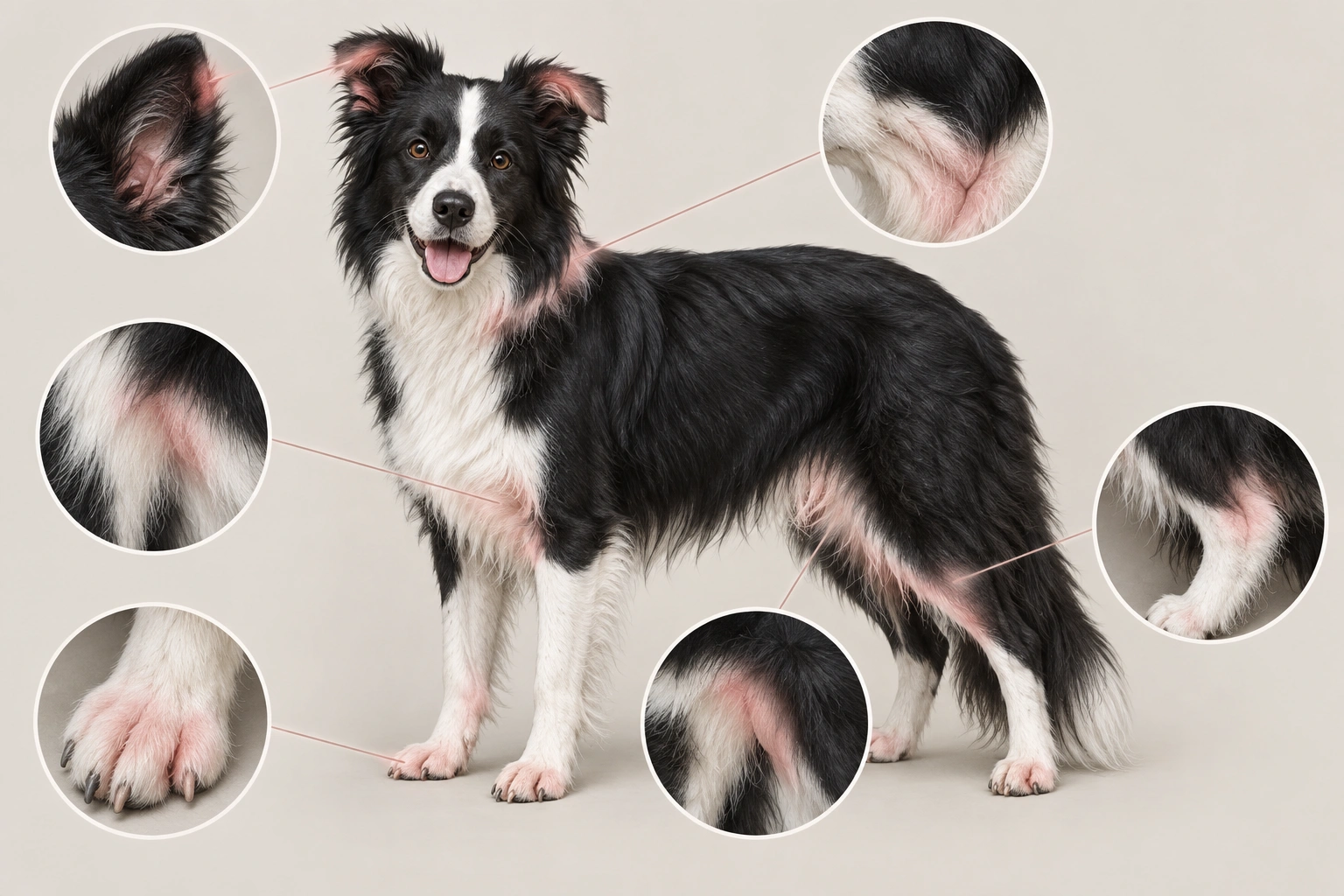
For Border Collies and other active dogs that often get wet, this matters because repeated moisture and drying cycles can irritate skin and trap moisture in the wrong places. If you handle the problem early and correctly, you can often reduce the odor fast. If you guess wrong, the smell usually comes back.
What a Yeasty Smell on a Dog Usually Means
Yeast on dogs is commonly linked to Malassezia, a yeast that normally lives on the skin in small amounts. Trouble starts when the skin environment changes and yeast overgrows. That can happen when the skin stays moist, oily, inflamed, or irritated.
The smell people describe is often musty, greasy, sweetish, or “corn-chip” like. That description can be a useful clue, but it should never be your only clue. A dog can smell yeasty and still have a bacterial skin infection, an ear infection, or even a dental issue that is making the whole dog smell off.
A useful decision rule is this: if the odor is mild and the skin looks mostly normal, you may be dealing with a surface problem that responds to careful cleaning and drying. If the odor is strong, recurring, painful, or paired with redness and discharge, assume there is more going on than surface dirt.
[Image placeholder: yeast-prone paws and ears on a dog]
Where Yeast Usually Shows Up on Dogs
Yeast tends to thrive in places that are warm, damp, and hard to air out. The most common spots are:
Ears
Yeast ear infections often show up as a musty odor, head shaking, dark wax, or ear scratching. This is one of the clearest times to stop guessing and get a vet exam, because ear problems can involve the ear canal deeply. Veterinary sources describe this type of ear infection as otitis externa, and it often needs targeted treatment rather than a generic skin wash.
Paws
Paws are a classic yeast location because moisture gets trapped between the toes, especially after rain, swimming, or muddy walks. Dogs may lick their feet, chew at them, or have a brownish staining between the toes.
Armpits, groin, and skin folds
These areas stay warm and rub against themselves. If your dog smells yeasty under the front legs or around the inner thighs, check for redness, moist skin, or a slick/greasy feel.
Coat and body skin
Some dogs develop a greasy coat with widespread odor, especially if they have allergies or oily skin. In those cases, the smell is not just “on the fur.” It reflects what is happening at the skin level.
Yeast Smell vs. Bacterial Infection vs. Other Causes
A quick comparison helps you avoid treating the wrong problem.
| Clue | More suggestive of yeast | More suggestive of bacteria or another issue |
|---|---|---|
| Smell | Musty, greasy, corn-chip, sour-sweet | Sharper, foul, rotten, pus-like |
| Skin look | Red, irritated, greasy, flaky | Hot, swollen, crusty, oozing, painful |
| Ears | Waxy odor, itching, head shaking | Discharge, pain, strong odor, swelling |
| Paws | Licking, chewing, odor between toes | Raw skin, open sores, limping |
| Response to cleaning | Brief improvement, then returns | Little or no improvement; may worsen |
Here is the key trade-off: yeast can often be managed with antifungal cleansing, but bacterial infections and ear disease usually need a vet diagnosis. If you treat every odor like yeast, you can miss a deeper infection.
When Home Care Is Reasonable and When It Is Not
Home care makes sense only when the problem is mild, localized, and your dog is otherwise comfortable. Think: a slightly smelly paw after a wet hike, or a mildly musty coat with no redness, pain, or discharge.
Home care is not the right move if you see any of these:
- head shaking or ear pain
- swelling in the ear flap or canal
- raw, bleeding, or very red skin
- pus, thick discharge, or a strong worsening smell
- limping, intense licking, or obvious discomfort
- repeated episodes that keep coming back
If the odor returns every few weeks, that usually points to an underlying trigger such as allergies, chronic moisture, or skin irritation. In other words, the smell is a symptom, not the whole problem.
How to Treat Mild Yeast Smell at Home Safely
For mild, surface-level odor, the goal is simple: clean gently, dry thoroughly, and avoid irritating the skin.
1) Dry the area first
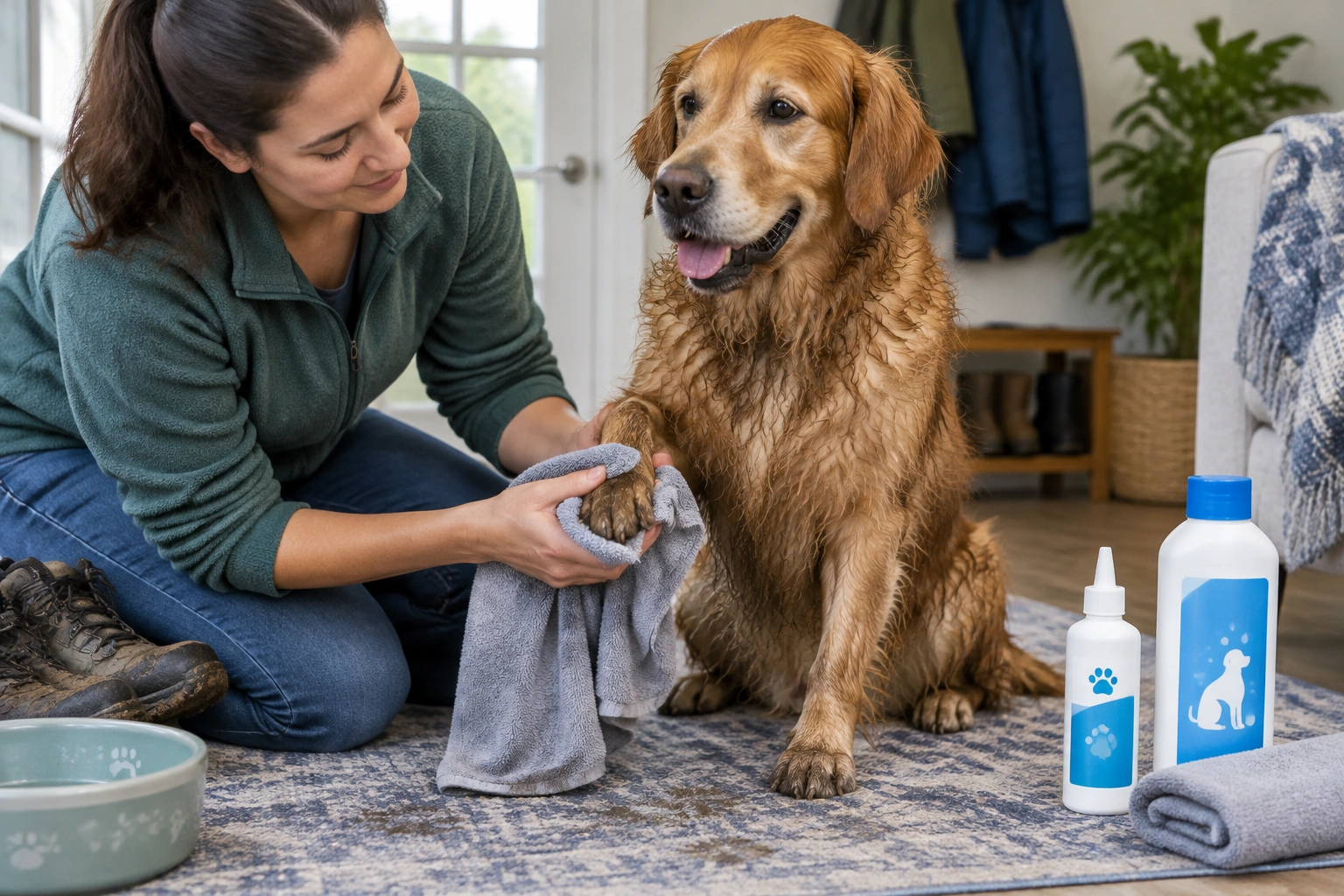
Moisture feeds yeast. After rain, swims, or baths, dry your dog well, especially the groin, armpits, feet, ears, and skin folds. For a Border Collie that spends time outdoors, this step alone can make a noticeable difference.
2) Use dog-safe cleansing, not harsh household products
A gentle dog shampoo or a veterinary antifungal wash is safer than improvised remedies. Avoid human products, strong soaps, and anything that burns, stings, or leaves the skin more irritated than before.
3) Don’t scrub the skin raw
Over-washing and aggressive rubbing can damage the skin barrier. That makes yeast and irritation easier to maintain, not harder.
4) Watch the response over a short window
If the smell improves a little after cleaning but returns quickly, that is a sign you need a more targeted product or a vet evaluation.
Best Dog-Safe Products for Yeast-Prone Areas
For mild yeast-related skin odor, medicated shampoos and wipes are often more useful than random home remedies. Veterinary guidance commonly points to ingredients such as chlorhexidine, miconazole, and ketoconazole. In greasy dogs, a degreasing shampoo containing selenium sulfide or benzoyl peroxide may be used first, followed by an antifungal shampoo.
That order matters because oily skin can block better contact with the antifungal ingredients. You are basically removing the film that lets yeast hang on.
Choose the product based on the body area:
- Skin and coat: shampoos are usually the best fit when odor is spread across larger areas or the coat feels greasy.
- Paws: antifungal wipes or topical mousses can be practical for mild, localized problems between the toes, especially when a full bath is not convenient.
- Skin folds: wipes or mousses may be easier than shampoo if the issue is limited and the skin is only mildly affected.
Some shampoos need contact time before rinsing; one veterinary source notes that certain products are left on for 10 minutes. Follow the label or your veterinarian’s instructions exactly.
For ears, choose only an ear product specifically made for dogs and only use it if your veterinarian has confirmed the ear canal is safe for home cleaning. Do not put skin shampoos, wipes, mousses, peroxide, vinegar, or other non-ear products into the ear canal. If the ear is painful, swollen, very smelly, or has discharge, skip home cleaning and see the vet.
How to Clean Ears, Paws, and Skin Folds Without Making Things Worse
Different body areas need different handling.
Ears
Use only a dog-safe ear cleaner if your vet has said the ear can be cleaned at home. Do not push cotton swabs deep into the ear canal. If the ear smells bad and your dog is shaking its head or seems painful, skip home treatment and book the vet visit. Ear flushing or deeper cleaning should only happen if the eardrum is intact and the ear is not painful.
Paws
Wipe between the toes, then dry carefully. If the skin is only mildly irritated, this may be enough to keep the smell from building. If the paws are red, thickened, or very itchy, they may need medicated wipes or prescription therapy.
Skin folds
Clean gently, then dry completely. The mistake here is leaving the fold damp after wiping. A clean fold that stays wet is still a yeast-friendly fold.
A practical way to think about it: cleaning removes debris, but drying changes the environment yeast needs to keep multiplying.
Why Yeast Keeps Coming Back
When yeast keeps returning, the root cause is usually still active. The most common drivers are:
- Allergies: food allergies and environmental allergies can keep the skin inflamed and make yeast easier to overgrow.
- Chronic moisture: wet paws, damp ears, swimming, rain, and poor drying can all create the right conditions for yeast.
- Grooming and coat care: infrequent grooming, trapped debris, or coats that stay damp too long can also contribute.
That is why successful treatment often means treating the trigger, not just the smell. VCA notes that dogs with yeast hypersensitivity may benefit from immunotherapy in the context of allergic disease management, which is a more long-term strategy aimed at reducing the immune system’s overreaction.
This is also where diet questions come up. Food changes may help some dogs, but only when a true food sensitivity is part of the picture. If the trigger is environmental allergy, wet feet, or chronic ear inflammation, diet alone will not solve it.
When to See a Veterinarian or Certified Trainer
For this topic, the professional you need is a veterinarian, not a trainer. A trainer can help with handling or cooperative care if your dog resists ear cleaning, but the odor itself needs medical assessment when it is persistent or severe.
Book a vet exam if:
- the smell is strong or getting worse
- there is ear discharge, head shaking, or pain
- the skin is red, raw, or swollen
- the problem affects multiple body areas
- the smell keeps returning after home care
A vet may examine the skin or ear discharge under a microscope, which helps distinguish yeast from bacteria and other causes. For more serious infections, prescription antifungal medications may be needed, including oral options such as ketoconazole, fluconazole, or terbinafine. Those drugs are used when the problem is deeper, widespread, or resistant.
If you want a fuller step-by-step overview of treatment options, see How to Get Rid of a Yeast Infection in Dogs: A Practical Guide for Owners.
How to Prevent Yeast Odor From Returning
Prevention is mostly about reducing the conditions yeast likes.
- Dry thoroughly after baths, swims, and rainy walks.
- Pay extra attention to paws, ears, groin, armpits, and folds.
- Keep grooming regular so dirt and moisture do not sit in the coat.
- If your dog has recurring itchiness, ask your vet about allergy management.
- Use the right product for the right area instead of one “all-purpose” fix.
The trade-off is simple: frequent cleaning can help, but too much cleaning can irritate skin. The goal is not to strip the coat. The goal is to keep the skin dry, calm, and less hospitable to yeast.
Common Mistakes That Make Yeast Worse
A few mistakes show up again and again:
- treating smell alone as proof of yeast
- using human products on skin or in ears
- putting the wrong product into the ear canal
- stopping treatment as soon as the odor fades
- relying on unproven remedies that sting or irritate
Some natural ideas online are not harmless just because they are “natural.” Vinegar, lemon juice, essential oils, and similar DIY mixes can irritate skin or ears, especially if the skin is already inflamed. If a product burns, it is not helping.
For general dog health concerns that can smell similar or overlap with skin issues, it can also help to rule out dental causes. Our guide on why a dog’s breath smells so bad explains when odor points to the mouth instead of the skin.
Final Takeaway
If your dog smells yeasty, think in two steps: identify the body area, then decide whether this looks mild enough for careful home cleaning or serious enough for veterinary care. Mild paw or coat odor may improve with drying and dog-safe antifungal products. Ear odor, pain, discharge, or recurring smell usually needs a vet exam. The faster you match the treatment to the body area and the underlying trigger, the faster the smell tends to stay gone.
FAQs
Is a yeasty smell on a dog dangerous?
Not usually by itself, but it can signal an infection or an underlying skin problem that needs treatment.
Can I use vinegar to treat yeast smell on my dog?
I would not use vinegar without veterinary guidance. It can sting irritated skin and may make ear problems worse.
How long does it take to get rid of the smell?
Mild cases may improve quickly with proper cleaning and drying, but stubborn or recurring cases can take longer because the underlying cause still needs attention.
Can yeast smell spread from one dog to another?
The smell itself is not contagious in the way people often assume. The bigger issue is the dog’s skin condition, not the odor.
What if the smell is mainly from the ears?
That needs a vet check more often than not. Ear odor plus head shaking, wax, or pain is a common otitis externa pattern.
Do Border Collies get yeast problems often?
They can, especially if they spend a lot of time outdoors, get wet often, or have allergies that keep the skin inflamed.