
Why Are My Puppy’s Eyes Watering? Causes, Warning Signs, and What to Do

Puppy eyes that water now and then are not unusual. A little clear tearing after wind, dust, or a bath can be a simple irritation that settles quickly. But watery eyes can also be the first sign of a scratch, infection, blocked tear drainage, or something stuck in the eye.
The useful question is not just “why are my puppy’s eyes watering?” It is “what pattern am I seeing, and does it look mild or urgent?” That distinction matters because eye problems can change fast in puppies, and a painful eye is one of those issues where waiting can cost comfort and, in some cases, vision.
This guide will help you sort normal-looking tearing from symptoms that need a vet, clean the eyes safely, and decide when home monitoring is reasonable.
Why puppy eyes water: what can be normal, and what is not
Clear tears are the eye’s natural rinse system. They protect the surface, wash away dust, and drain through a small passage called the nasolacrimal duct into the nose. In very young puppies, a little clear tearing can be normal, especially after mild irritation, because the eye surface and tear drainage system are still developing. When tear production is slightly increased or drainage is a little off, you may see damp fur under the eye without any other signs.
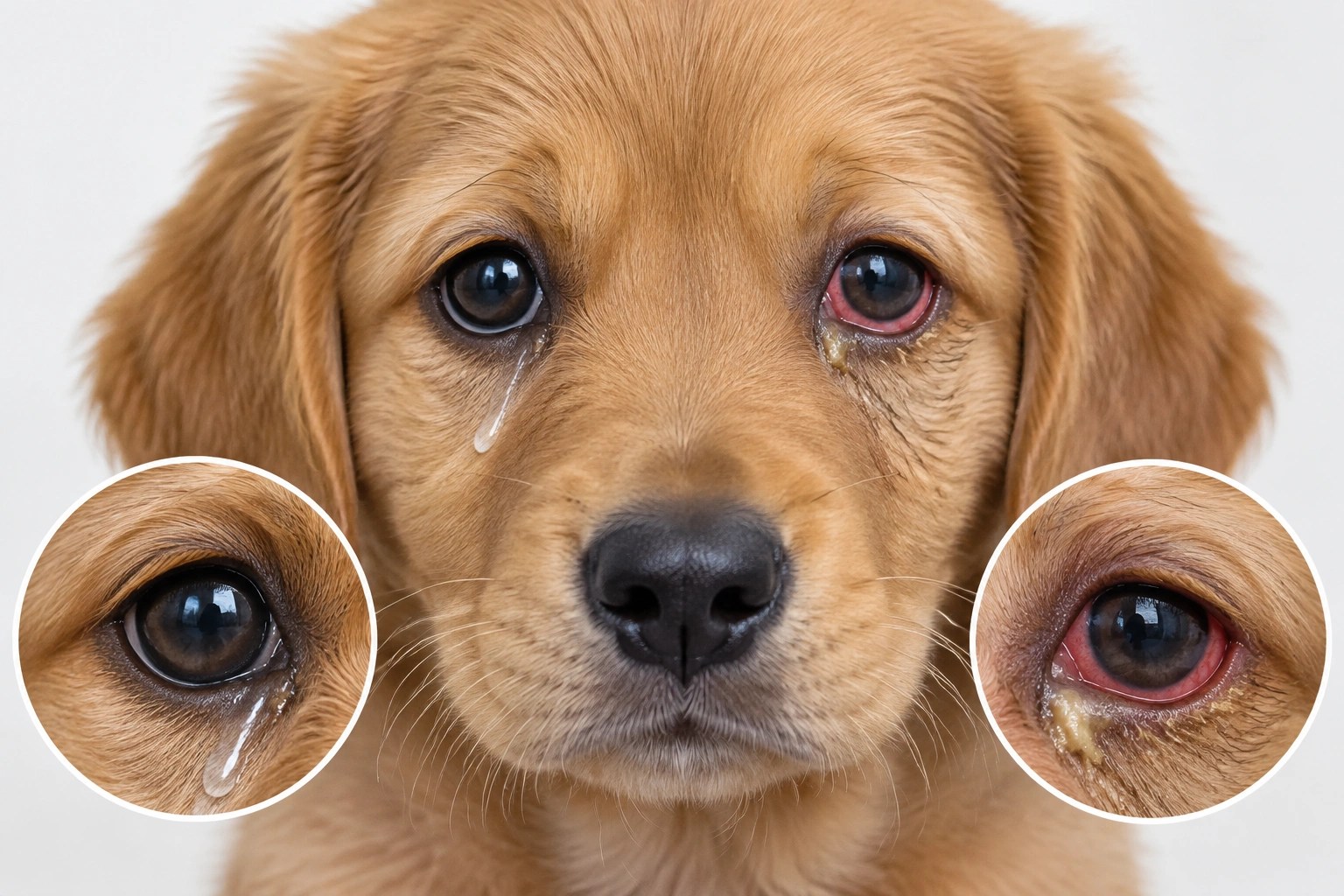
That kind of watering is usually different from eye discharge that is thick, sticky, yellow, green, or foul-smelling. Those colors suggest inflammation or infection more than simple overflow. Chronic moisture can also stain the fur reddish-brown and irritate the skin around the eyes over time. PetMD on epiphora in dogs
Clear tearing alone is not automatically abnormal; the main concerns are persistence, one-sided tearing, or watering that comes with redness, squinting, pawing, cloudiness, or pain. A practical rule: if the eye is just wet, but the puppy is comfortable, bright, and not rubbing at the face, you can often watch closely for a short period.
The most common reasons a puppy’s eyes water
There are several common causes, and the pattern often gives you the best clue.
Environmental irritation
Dust, wind, smoke, shampoo, and even a bit of grass debris can make a puppy’s eyes water. This is especially likely if the tearing started after a walk, a bath, grooming, or time outdoors on a windy day.
This type of irritation often affects both eyes because the trigger is in the air or on the face. If the puppy settles after the area is rinsed or cleaned gently, and there is no redness or pain, that supports a mild irritant rather than a deeper eye injury.
Allergies
Allergies can make eyes water, and they may come with mild redness or repeated rubbing. In puppies, eye watering from allergies is often part of a broader pattern that may include itchy skin, sneezing, or face rubbing.
Allergies tend to affect both eyes more often than one eye alone. That does not prove allergies, but it does make a local injury less likely.
A foreign body
A blade of grass, dust particle, hair, or other small object can get under the eyelid and keep the eye watering. This often causes one eye to tear more than the other, and the puppy may blink hard, squint, or paw at the face.
If the puppy is clearly uncomfortable, do not keep poking around with fingers or cotton swabs. A stuck foreign body can scratch the cornea, and rough handling can make the damage worse.
A scratch or corneal ulcer
A corneal scratch is a surface injury to the clear front of the eye. A corneal ulcer is a deeper wound in that surface. Both can cause tearing, squinting, redness, and sensitivity to light.
These are important because puppies often rub at the eye once it hurts, and that rubbing can turn a small scratch into a bigger problem. One eye watering heavily, especially with squinting or the eye held partly closed, is a pattern that deserves prompt veterinary attention.
Conjunctivitis or other infection
Conjunctivitis means inflammation of the tissue around the eye. Infections can cause watery eyes at first, then thicker discharge, redness, and stickiness around the lids. Morning crusting, yellow-green discharge, and an eye that looks inflamed are all more concerning than simple clear tearing.
Infectious eye problems need diagnosis rather than guesswork, because treatment depends on the cause. Some eye medications are not safe for certain corneal injuries, which is one reason not to self-treat with leftover drops.
Blocked tear drainage
Sometimes the problem is not too many tears but poor drainage. The tear system can overflow if the drainage pathway is narrowed or blocked. That can create chronic wetness, tear staining, and damp skin under the eye even when the eye itself does not look very inflamed.
This is one reason some puppies seem to have “always watery” eyes without obvious pain. It still deserves a vet check if it keeps happening, because a drainage issue can be structural rather than temporary.
How to read the pattern: one eye vs both eyes, clear vs colored discharge
This comparison helps you decide what is most likely and how urgent it is.
| Pattern | More likely possibilities | What it usually looks like | Urgency |
|---|---|---|---|
| One eye watering, clear tears | Foreign body, scratch, blocked drainage, local irritation | One side wetter, possible pawing or blinking | Same day if painful or persistent |
| Both eyes watering, clear tears | Wind, dust, shampoo, allergies | Symmetric tearing, otherwise normal behavior | Monitor briefly if mild |
| Yellow or green discharge | Infection or more significant inflammation | Sticky lids, crusting, odor possible | Vet visit soon, often prompt |
| Squinting or keeping eye closed | Corneal scratch, ulcer, pain | Light sensitivity, blinking, face rubbing | Urgent same day |
| Redness, swelling, cloudiness | Inflammation, injury, ulcer, more serious eye disease | Eye looks angry, dull, or hazy | Urgent same day |
| Tear staining without pain | Chronic overflow or drainage issue | Brownish staining under the eye | Routine vet visit if ongoing |
A simple decision rule: clear tearing without pain can often be watched for a short time; colored discharge, squinting, swelling, or cloudiness should move you toward veterinary care quickly.
Signs the eye problem is more than mild irritation
Some signs mean you should not “wait and see” for long.
Watch for:
– squinting or blinking hard
– keeping the eye closed
– pawing at the eye or rubbing the face on carpet
– obvious redness
– swelling around the eyelids
– cloudiness in the eye
– sensitivity to light
– yellow, green, or foul-smelling discharge
– whining, wincing, or pulling away when the face is touched
These signs suggest pain, inflammation, or injury rather than simple watering. South Seminole Animal Hospital specifically lists yellow or green discharge with odor, squinting, pain, redness, swelling, pawing, and vision issues as symptoms that should prompt veterinary attention. South Seminole Animal Hospital guidance
If the eye looks cloudy, the puppy is clearly uncomfortable, or the eye is being held shut, that is a same-day problem. Chemical exposure, sudden swelling, or suspected trauma should be treated as urgent as well.
Safe home care for mild watering
If the puppy is bright, comfortable, and only has mild clear tearing, you can do a few safe things at home while you monitor.
Clean gently, not aggressively
Use sterile saline or a vet-approved eye rinse on a clean gauze pad or soft cotton pad. Wipe from the inner corner outward, using light pressure. Use a fresh pad for each eye so you do not move debris from one side to the other.
Do not scrub. The goal is to remove moisture and loose debris, not to “clean deeply.” Eye tissue is delicate, and over-wiping can worsen irritation.
Remove likely irritants
If the tearing started after a bath, rinse away any shampoo residue from the face with lukewarm water, keeping water out of the eye itself as much as possible. If the puppy was outside in wind or dust, bring them indoors and see whether the tearing settles over the next few hours.
Watch the pattern
If mild clear tearing does not improve within 24 hours, or if it gets worse at any point, call your vet. If the tearing improves after the irritant is removed, that supports a mild trigger. If it stays the same, gets worse, or any pain signs appear, stop home care and call the vet.
Avoid common mistakes
Do not use human eye drops unless your veterinarian tells you to. Do not try to pull out something that looks stuck on the eye surface. Do not use scented wipes, alcohol, peroxide, or rough cloths near the eye.
The main trade-off here is simple: light cleaning can help a mild irritant, but aggressive cleaning can turn a small problem into a larger one.
When watery eyes need a vet visit
Use urgency, not guesswork.
Same-day veterinary care
Book the puppy in the same day if you see:
– squinting or the eye held closed
– cloudiness
– marked redness or swelling
– thick yellow or green discharge
– obvious pain
– pawing that keeps happening
– a known injury or suspected scratch
Prompt but not emergency care
A vet visit soon is sensible if:
– one eye keeps watering for more than a short period
– tear staining is persistent
– the eye looks mildly red but not painful
– discharge keeps returning after cleaning
– the puppy had a recent bath, walk, or grooming exposure and is not improving
Emergency care
Go to urgent or emergency care if the puppy seems severely painful, the eye suddenly becomes cloudy, there is trauma, chemical exposure, or vision seems affected.
What a veterinarian may check and treat
A vet will usually start with a careful eye exam and then choose tests based on what they see. Common steps may include fluorescein stain testing to look for a corneal scratch or ulcer, eyelid and eyelash inspection for hairs or lashes rubbing the eye, and tear drainage assessment to see whether the tear ducts are overflowing or blocked. The vet may also check under the lids for debris or a foreign body.
Depending on the cause, treatment may include prescription drops or ointment, anti-inflammatory medication, flushing the eye or tear ducts, or other targeted therapy.
The important point is that the treatment depends on the cause. A scratch, infection, and blocked tear drainage do not get managed the same way.
Breed and anatomy considerations, including Border Collies
Border Collies are not one of the classic breeds known for chronic tearing from flat-faced anatomy. In general, breed shape matters more in some dogs than others. Brachycephalic breeds such as Pugs, Shih Tzus, Bulldogs, and Boxers are more prone to watery eyes because of shallow eye sockets and prominent eyes. Parrish Veterinary Clinic on watery eyes
That said, any puppy can have tear drainage issues, irritation, or eye injuries. Facial hair around the eyes, eyelid shape, or eyelashes that rub the surface can also contribute to watery eyes in puppies. For a Border Collie puppy, repeated watering is less likely to be “just how the breed is” and more worth checking if it keeps happening. Chronic dampness under the eye can also cause skin irritation and odor over time. Mar Vista Animal Medical Center on runny eyes
Common mistakes that make the problem worse
Three mistakes come up again and again:
- Using the wrong drops. Human eye medications can be unsafe or simply inappropriate.
- Rubbing the eye. Even a gentle-looking rub can worsen a scratch.
- Trying to fish out debris. If something is stuck, leave it alone and let the vet remove it safely.
A fourth mistake is waiting too long because the discharge is clear. Clear tears can still come from pain or injury, so the color alone is not enough.
A practical decision framework for puppy eye watering
Use this quick filter:
- Clear tears, both eyes, no pain, no redness: likely mild irritation; clean gently and monitor briefly.
- One eye, repeated tearing, pawing, or blinking: think foreign body, scratch, or drainage issue; call the vet.
- Yellow or green discharge, odor, redness, or swelling: possible infection or significant inflammation; book a vet visit soon.
- Squinting, cloudiness, or the eye closed: treat as urgent same-day care.
If you are unsure, choose the more cautious path. Eye problems are one area where “wait and see” can be the wrong gamble.
FAQ
Is clear watery discharge always normal?
No. Clear tears can be mild and temporary, but they can also happen with irritation, a scratch, or drainage problems. The rest of the signs matter.
Why is only one eye watering?
One-sided watering often points to a local issue such as a foreign body, scratch, or blocked drainage. That pattern deserves more attention than both eyes watering after wind or dust.
What does yellow or green discharge mean?
It usually suggests infection or more significant inflammation, especially if the discharge is sticky or has an odor.
Can watery eyes affect vision?
They can, especially if the cause is a scratch, ulcer, or cloudiness. Anything that changes the appearance of the eye or makes the puppy keep it closed should be checked promptly.
Should I clean my puppy’s eyes every day?
Only if there is a reason, such as mild tearing or tear staining. Over-cleaning can irritate the skin. If the eyes need repeated cleaning, ask your vet why the tearing is happening.
If you want a broader overview of eye redness and related warning signs, see our guide to treating bloodshot eyes in dogs and our companion article on why dogs’ eyes get watery.