
Why Is My Dog Peeing More Than Usual? A Practical Guide for Dog Owners

If your dog is suddenly asking to go out more often, having accidents, or leaving only tiny amounts of urine each time, don’t assume it’s “just a phase.” That change can come from something simple, like a routine disruption, but it can also be an early sign of illness.
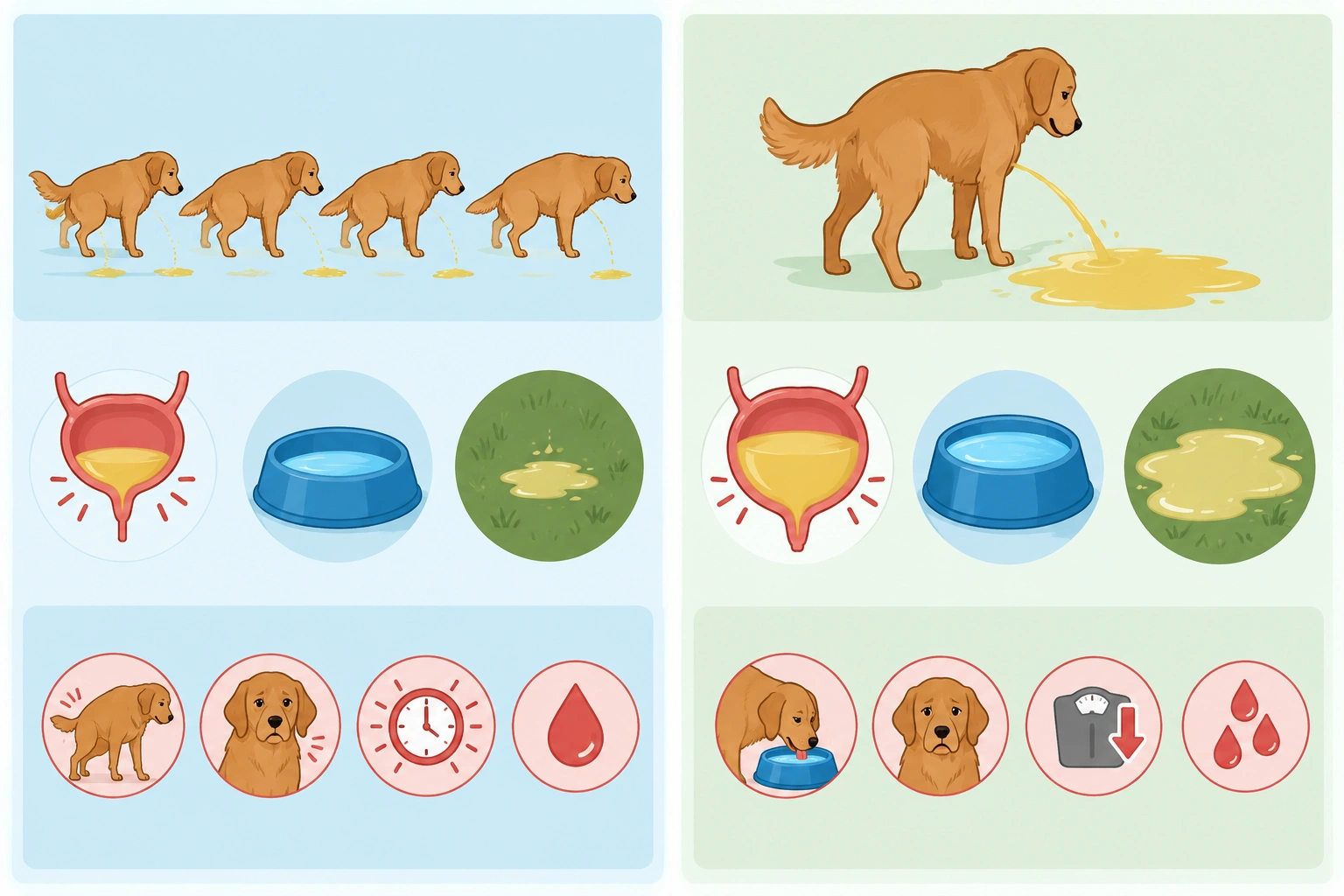
The first job is to figure out what pattern you’re actually seeing:
- More frequent urination: the dog wants to pee often, but may only pass small amounts.
- More urine overall: the dog is producing larger volumes, often because they are drinking more.
- Accidents indoors: the dog may be unable to hold it, may not have had enough opportunity, or may be leaking urine.
- Increased drinking and increased peeing together: this is more concerning than peeing alone and deserves prompt attention.
That distinction matters because it changes the likely cause. A dog that keeps squatting every few minutes and passing tiny amounts is not the same as a dog that empties a full bladder repeatedly because they are drinking excessively. VEG makes this difference clear: frequent urination means the dog is trying to pee more often than usual but may only produce small amounts each time.
For Border Collie owners, this can be especially confusing. These dogs are active, alert, and sensitive to changes in routine, so stress or schedule disruption can muddy the picture. But a Border Collie’s temperament should never be used to explain away signs that point to a urinary or metabolic problem.
What Normal Urination Looks Like in Dogs
There is no single “normal” number that fits every dog. Age, size, water intake, exercise, weather, and routine all affect how often a dog needs to go.
A useful way to think about it:
- Puppies usually pee more often than adults because their bladders are small and they are still learning control. Petfolk notes that puppies naturally pee more frequently than adult dogs.
- Adult dogs should usually settle into a more predictable pattern, though active dogs, small breeds, and dogs that drink more will still need more bathroom breaks.
- Senior dogs may need to go out more often because age changes bladder control and can also uncover medical issues.
Size matters too. Purina notes that smaller breeds, such as Chihuahuas, have much smaller bladders than a larger dog like a Labrador. That principle applies broadly: smaller bodies tend to need more frequent breaks.
A practical benchmark can help: many healthy dogs drink roughly 1 ounce of water per pound of body weight per day; consistently much more than that may be worth a call to your vet, though normal intake still varies with size, age, diet, heat, exercise, and whether your dog eats wet or dry food. If your dog’s drinking is clearly higher than usual, that matters even more than the exact number.
A useful rule is this: if your dog’s bathroom pattern has changed clearly from their own normal, pay attention even if the dog still seems “fine.” A sudden change is often more important than the exact number of trips outside.
Water intake and urination are related, but not identical
A dog can pee more because they are drinking more, or they can pee more because something is irritating the urinary tract. Those are not the same problem.
If your dog is drinking noticeably more, that raises the stakes. PDSA lists several possible causes of increased drinking and peeing, including a urine or bladder problem, diabetes, Cushing’s disease, kidney disease, certain cancers, liver disease, pyometra in dogs, and some medications.
First: Is Your Dog Drinking More, Peeing More, or Both?
This is the most useful question you can answer before calling the vet.
If the dog is drinking more and peeing more
That pattern suggests the body is making or handling urine differently. Common medical causes include:
- diabetes mellitus
- kidney disease
- Cushing’s disease
- liver disease
- certain medications
- some cancers
- diabetes insipidus
Cushing’s disease is a good example of why this matters. The AKC says it is usually caused by a tumor in the pituitary gland, mostly occurs in older dogs, and causes dogs to drink and urinate more than usual.
If the dog is peeing often but not drinking more
That pattern often points more toward a bladder or urinary tract problem, or a behavioral issue like marking or stress-related urgency. It can also happen when a dog feels the need to urinate but only passes small amounts.
If the dog is peeing inside but seems otherwise normal
That may be a housetraining issue, a schedule problem, or a sign that the dog cannot hold urine as well as before. It is not safe to assume it is only behavioral if the change is new.
Medical Causes That Can Make a Dog Pee More Often
Here’s the part you do not want to guess at. Several medical problems can look similar at home.
Urinary tract infection or bladder inflammation
A urinary tract problem often causes urgency, frequent squatting, and small amounts of urine. You may also see licking at the genitals, discomfort, or blood in the urine.
A dog with a UTI may often act as if they need to go constantly, but each trip produces very little. That is a different pattern from a dog who is producing large volumes because they are drinking excessively.
Diabetes mellitus
Diabetes often causes increased thirst and increased urination. Owners sometimes notice the water bowl emptying faster before they notice the bathroom changes. Weight loss, hunger changes, or low energy can also appear, though not every dog shows all of these signs right away.
Kidney disease
Kidney disease can reduce the body’s ability to concentrate urine, so the dog drinks more and pees more. This is one reason older dogs with a new urinary pattern should not be written off as “just aging.”
Cushing’s disease
As noted above, Cushing’s disease is usually caused by a pituitary tumor and mostly occurs in older dogs. The classic clue is increased drinking and urination. It may be subtle at first, then become more obvious over time.
Bladder stones or urinary crystal problems
Urinary crystals, bladder stones, and infection are related but not the same. Crystals are tiny mineral formations that may be found on urinalysis; stones are larger mineral masses that can irritate the bladder or block urine flow; and infection is caused by bacteria, which may occur with or without crystals or stones. Some urine pH patterns can be a clue, but pH alone does not explain every case or directly determine whether a dog will form stones.
Signs can include increased thirst, urinary frequency, urgency, bloody urine, or inappropriate urination. If a dog is straining, producing tiny amounts, or showing blood, think beyond simple “frequent peeing.” Stones can irritate the bladder and, in some cases, obstruct urine flow.
Diabetes insipidus
This is less common, but it can cause large amounts of dilute urine and increased drinking. The important point for owners is not to diagnose it at home, but to recognize that not all “peeing a lot” is the same problem.
Prostate disease
In intact male dogs, prostate issues can affect urination. You may see straining, changes in urine flow, or repeated attempts to urinate. This is one reason older male dogs with urinary changes should be examined rather than monitored indefinitely.
Medication side effects
Some medications can increase thirst or urination. PDSA specifically notes steroids, some anti-seizure medications, and some heart medications. If the timing lines up with a new prescription, tell your vet exactly when the change started.
Behavioral and Environmental Causes of Frequent Urination
Not every urinary change is medical, but behavior should only be considered after you look at the pattern carefully.
Marking
Marking usually involves small amounts of urine in specific places, often in response to a new dog, new smells, household changes, or outdoor triggers. The dog may be otherwise normal and still need to go out as usual.
Anxiety and stress
Stress can increase urgency or cause accidents, especially after a move, boarding, visitors, a new pet, or a disrupted schedule. Border Collies may be sensitive to environmental change, so even a shift that seems small to you may matter to them.
Excitement and routine disruption
A dog that gets over-aroused may forget to empty the bladder properly or may be too distracted to settle. That can look like “peeing more,” when the real issue is incomplete emptying or poor timing.
Incomplete housetraining
This is more likely in puppies, but it can also happen after a big schedule change. The key difference is that a training issue should not create pain, blood, lethargy, or increased thirst. If those show up, stop thinking in training terms and call the vet.
Age Matters: Puppies, Adult Dogs, and Senior Dogs
| Age group | More likely explanations | What makes it concerning |
|---|---|---|
| Puppies | Small bladder, immature control, excitement, schedule issues | Blood, straining, repeated tiny urinations, lethargy, vomiting, increased thirst |
| Adult dogs | UTI, stress, marking, diet or routine changes, medications | Sudden change from normal, accidents plus thirst, pain, or frequent small amounts |
| Senior dogs | Kidney disease, diabetes, Cushing’s disease, prostate problems, bladder issues | New nighttime urination, weight loss, appetite change, weakness, or obvious discomfort |
A puppy having accidents is not automatically sick. A senior dog suddenly waking you at night to urinate is much more likely to need medical evaluation.
Purina notes that a dog’s urination needs may change as it ages, and that some medical conditions and medications can influence bathroom habits. That is why age is a clue, not a diagnosis.
Red Flags That Mean You Should Call a Vet Now
Do not wait and “see what happens” if you notice any of these:
- straining to urinate
- repeated squatting with only tiny amounts coming out
- blood in the urine
- obvious pain or crying when peeing
- vomiting
- lethargy or weakness
- reduced appetite
- fever
- sudden increase in thirst along with frequent urination
- inability to urinate
The most urgent situation is a dog that seems unable to pass urine or is only producing tiny amounts repeatedly while straining. That can become an emergency quickly.
If the dog is otherwise bright, eating, and drinking normally, you may have a short window to monitor and collect information. But if any red flag appears, call your veterinarian the same day.
What a Veterinarian Will Likely Ask and Test For
Expect the vet to ask about:
- when the change started
- whether the dog is drinking more
- whether the urine volume is large or small
- whether there is blood, odor change, or accidents indoors
- any recent stress, travel, boarding, or household changes
- medications, including recent starts or dose changes
- appetite, weight, energy level, vomiting, or diarrhea
The most common first test is a urinalysis. That helps check for infection, blood, crystals, glucose, concentration, and other clues. Depending on the findings, the vet may also recommend bloodwork or imaging.
That step matters because the same symptom can come from very different problems. A dog with a UTI, diabetes, or kidney disease may all pee more, but the next step is not the same for each one.
How to Monitor Urination and Water Intake at Home Before the Appointment
If your dog is stable, a short period of tracking can help your vet a lot.
Record these four things
- Time of each urination
- Approximate amount: small, medium, or large
- Context: after excitement, after drinking, during a walk, indoors, overnight
- Appearance: normal, pale, dark, bloody, cloudy, strong smell, or straining
Also measure water intake over 24 hours if you can. Refill the bowl with a measured amount and note how much is left at the end of the day. If there are multiple pets, separate them if possible so you know what your dog actually drank.
What makes the log useful
A log helps you answer questions like:
- Is the dog peeing often, or just drinking more?
- Are the accidents random or tied to stress?
- Is the dog producing tiny amounts or full bladder-emptying pees?
- Is the problem worse at night?
That information can save time in the exam room and reduce guesswork.
When It Is Reasonable to Watch and Wait Versus Act Immediately
Use this decision rule:
A brief watch-and-track period is reasonable if:
- your dog is otherwise bright and comfortable
- there is no blood in the urine
- no straining or pain is present
- appetite and energy are normal
- the change is mild and very recent
- there is a clear possible trigger, such as a schedule disruption
Call the vet promptly if:
- the change lasts more than 24 hours
- it is getting worse
- your dog is drinking noticeably more
- accidents are new in an adult or senior dog
- the urine looks abnormal
- you are not sure whether the dog is producing small amounts or large volumes
Seek urgent care if:
- the dog cannot urinate
- there is repeated straining
- the dog is vomiting, weak, or very lethargic
- there is obvious pain or blood
The trade-off here is simple: a short period of observation can be useful, but only if you are not ignoring warning signs.
Border Collie-Specific Factors That Can Confuse the Picture
Border Collies are often active, highly tuned in, and quick to react to changes around them. That can create false leads.
A few examples:
- More exercise can mean more drinking, especially after hot weather or intense play.
- Stress and routine changes can trigger accidents or urgency.
- High arousal can make a dog forget to empty the bladder fully.
- Sensitivity to household changes can make a normally clean dog start having indoor accidents.
Those explanations are plausible, but they are not a free pass to skip medical screening. If a Border Collie suddenly starts peeing more and also drinks more, wakes at night, strains, or has accidents that are out of character, treat it as a health question first.
For owners dealing with indoor accidents alongside frequent urination, this related guide may help you think through crate, schedule, and medical red flags together: How to Get a Dog to Stop Peeing in the Kennel.
The Bottom Line
If your dog is peeing more than usual, the key question is not just “how often?” but what kind of change you’re seeing. Small frequent pees, large-volume pees, and accidents in the house point to different causes. Drinking more along with peeing more raises concern for medical issues such as diabetes, kidney disease, Cushing’s disease, or a urinary problem. Frequent tiny urinations, straining, or blood are especially important warning signs.
If you want a broader look at the drinking-and-peeing pattern together, this companion guide goes deeper: Why Is My Dog Drinking and Peeing So Much? What It Means and What to Do Next.
When in doubt, track the pattern for a day, do not restrict water unless your vet tells you to, and call for advice sooner rather than later if the change is sudden or paired with any red-flag symptom. Do not try to test the problem by withholding water at home, because that can worsen dehydration and delay care for conditions like diabetes, kidney disease, or urinary blockage.