
Why Your Puppy Isn’t Eating His Food: A Practical Guide for Worried Owners

A puppy skipping a meal can mean almost nothing — or it can be the first sign that something is wrong. The job is to sort those two possibilities quickly, without guessing, overfeeding treats, or changing foods so often that you make the problem harder to read.
With puppies, appetite matters more than it does in adult dogs. They have smaller reserves, faster energy use, and less room to “wait and see” if a real problem is developing. That does not mean every missed meal is an emergency. It does mean you should look at the whole picture: age, behavior, recent changes, and any other symptoms.
For Border Collie puppies, this gets even more interesting. They can be sensitive to routine changes, easily distracted, and quick to shut down when the environment feels busy or unfamiliar. That can look like pickiness, but it can also hide stress or discomfort.
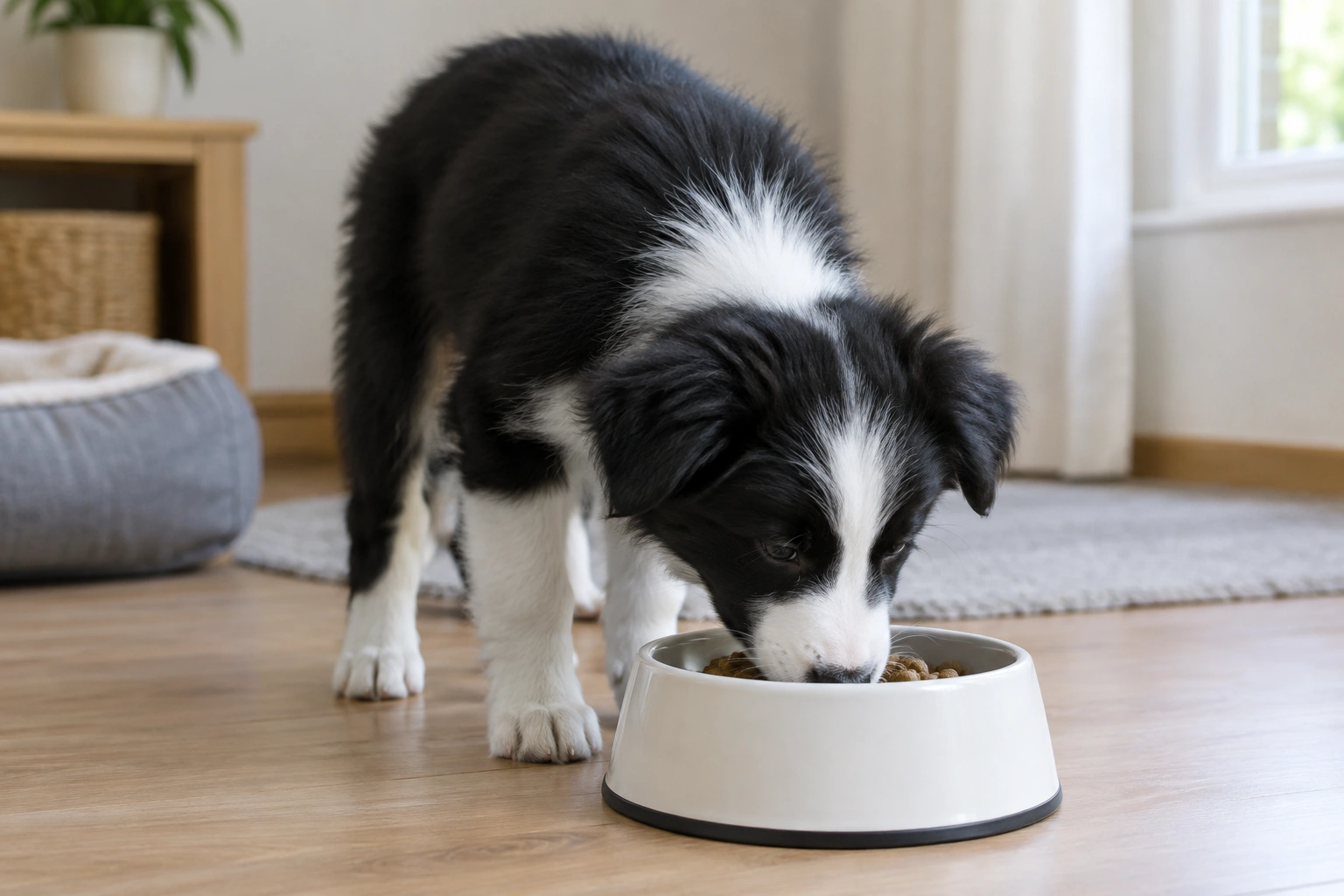
What a missed meal actually means
A puppy not eating his food can fall into three different buckets:
- Single missed meal: one meal is skipped, but the puppy otherwise acts normal.
- Reduced appetite: the puppy nibbles, eats less than usual, or eats only part of the meal.
- True refusal: the puppy ignores food repeatedly or shows no interest at all.
That distinction matters because the response changes with each one. A single missed meal in an otherwise bright, playful puppy may justify a short period of observation. Repeated refusal, especially with any illness sign, deserves a veterinary call sooner.
A useful mental check is this: is the puppy only refusing food, or is the whole dog off? If energy, stool, water intake, and behavior are all normal, the issue is more likely to be temporary. If appetite drops along with lethargy, vomiting, diarrhea, pain, or dehydration, assume it is medical until proven otherwise.
When not eating is normal, and when it is not
Puppies can skip food for reasons that are not dangerous. Common non-medical causes include stress, teething, an upset stomach, a sudden change in routine, or a feeding area that feels too busy or uncomfortable. The Kennel Club notes that puppies in a new home may eat less because they are nervous about the environment or the people around them.
Here is a practical way to judge urgency:
| Situation | What it may mean | Urgency | What to do |
|---|---|---|---|
| Puppy skipped one meal but is bright, drinking, and normal otherwise | Temporary appetite dip, stress, or mild pickiness | Monitor | Observe closely, check the feeding setup, and try one calm mealtime |
| Puppy is eating treats but not meals | Treat overload, learned pickiness, or stress; sometimes illness | Monitor if otherwise normal; call the vet if it continues or any other symptom appears | Cut treats back once and watch for other symptoms |
| Puppy recently changed homes or routines | Stress or adjustment | Monitor | Keep the environment quiet and routine predictable |
| Puppy refuses food and also vomits, has diarrhea, or seems tired | Possible illness | Call a veterinarian the same day | Contact your vet promptly |
| Puppy will not eat and has a swollen abdomen, retching, or pain | Emergency concern | Urgent emergency care now | Seek urgent veterinary care immediately |
Age matters too. Very young puppies can go downhill faster than older ones, so the threshold for waiting should be lower. A simple rule is:
- Under 12 weeks old: if a puppy misses a meal and seems unwell, or has not eaten for about 12 hours, call a vet the same day.
- Older puppies that are bright and acting normal: one missed meal can usually be monitored briefly.
- Any puppy with vomiting, diarrhea, lethargy, pain, bloating, or dehydration: do not wait for the next meal.
Red-flag symptoms that mean call the vet now
Do not keep troubleshooting at home if you see any of these:
- vomiting
- diarrhea
- lethargy or unusual quietness
- signs of pain
- bloated or swollen abdomen
- inability to keep water down
- dehydration
- weight loss
- repeated refusal to eat
These signs move the problem out of the “watch and wait” category. If your puppy is also very young, the timeline becomes even more urgent. A puppy that is weak, dehydrated, or having repeated digestive signs should be assessed the same day.
A bloated abdomen is especially concerning. If your puppy looks swollen, is trying to retch, or seems distressed, treat it as urgent rather than trying toppers, warm food, or hand-feeding.
Common reasons puppies stop eating their food
The most common explanations are usually simpler than people fear.
Stress and routine changes
A new home, new people, loud noises, overheating, separation anxiety, or moving the feeding area can all make a puppy hesitate at mealtime. Environmental stressors like these can reduce appetite. Some puppies also need time to settle after a move before they eat normally.
Teething discomfort
Teething can make chewing less appealing for a short period. A puppy may approach the bowl, sniff, then walk away, or chew slowly and drop kibble. That does not automatically mean the food is wrong. It may mean the mouth is sore enough that texture matters for a few days.
Too many treats or chews
If a puppy has had a lot of training treats, chews, or table scraps, the meal may simply not be interesting enough. This is one of the most common self-created appetite problems. The puppy is not “being stubborn” so much as not being hungry enough for the regular meal.
Food freshness, temperature, and sudden diet changes
A puppy may refuse food if it is stale, cold, or switched too abruptly. Sudden diet changes, stale food, or food that is too cold can all reduce appetite. A new puppy may also refuse food if it is different from what the breeder or adoption facility offered. If the previous food was a quality puppy food, feeding that same food first can be a reasonable starting point.
Illness or dental discomfort
Illness and dental issues are also common reasons a dog stops eating. Small Door Veterinary recommends checking the mouth for anything stuck in the teeth or gums and watching for foul smell, loose teeth, or heavy tartar buildup. In a puppy, obvious dental disease is less common than in an older dog, but mouth pain, a stuck object, or a sore gum can still interfere with eating.
Check the food, bowl, and feeding setup first
Before you change the diet, inspect the basics. This is the fastest way to rule out a fixable problem.
Food quality and storage
Check whether the food smells stale, looks odd, or has been stored poorly. Kibble that has been sitting open for too long can lose appeal. If you recently opened a new bag and the puppy suddenly stopped eating, compare it with the previous one. Storage conditions matter more than many owners realize.
Bowl cleanliness and bowl type
Wash the bowl thoroughly. Some dogs dislike the smell or residue left behind by oily food. Also consider the bowl itself. A noisy metal bowl on a hard floor can bother a sensitive puppy.
Feeding location
Choose a calm, low-distraction spot. A puppy that ignores food in a busy kitchen may eat more readily in a quiet room. That does not mean the dog is spoiled. It means the environment is competing with the meal.
A good rule: if the puppy keeps scanning the room, start there. The problem may be noise, movement, or social pressure rather than appetite.
Step-by-step troubleshooting: what to try first
Use this order. It keeps you from making too many changes at once.
1) Check for illness signs first
If the puppy has vomiting, diarrhea, lethargy, pain, bloating, or cannot keep water down, stop the home experiments and call a veterinarian.
2) Review the last 24 hours
Ask three questions:
– Did anything change in the home or routine?
– Did the puppy get more treats, chews, or table scraps than usual?
– Was the food changed recently?
Often the answer is obvious once you slow down and map the day.
3) Make the meal easier to notice and easier to eat
Try a quieter feeding area, a clean bowl, and fresh food at room temperature. If the puppy is teething or seems unsure about texture, you can try a small amount of wet food or soften kibble slightly. Keep the change modest so you can tell whether it helped.
4) Tighten the treat budget
If the puppy is filling up on training rewards, reduce them for a day or two and see whether meal interest returns.
5) Try short-term hand-feeding only if the puppy seems otherwise well
Hand-feeding can help a nervous puppy get started, especially after a move or during a stressful day. The trade-off is that it can create a habit if you lean on it too long. Use it as a bridge, not a permanent feeding style.
Safe appetite-boosting tactics that usually help
These are low-risk and worth trying when the puppy is otherwise acting normal.
Scheduled meals
Offer food at set times instead of leaving it down all day. Scheduled feeding helps you see whether appetite is real or just grazing behavior. It also makes it easier to spot a problem early.
Reduce distractions
Feed in the same quiet spot each time. For sensitive Border Collie puppies, calm is not a luxury. It is often the difference between eating and refusing.
Warm the food slightly
A little warmth can make food smell more appealing, especially if the puppy is hesitant. Keep it safe and only slightly warmed, not hot.
Use a small amount of topper, not a full overhaul
A modest topper can help a reluctant eater, but too much can create a new problem: the puppy learns to wait for the “good stuff.” If you use toppers, keep them limited and temporary.
Try wet food if dry food is being ignored
Wet food is often more aromatic and can be easier for a teething puppy to accept. Dry food is convenient and common, but wet food may be more appealing for a short period. The trade-off is that wet food can be less practical and should not become a constant rescue tool unless your vet or nutrition plan supports it.
Dry food vs wet food, and when to change foods
A food change can help if the issue is palatability, but changing too quickly can upset the stomach. If you are switching foods, do it gradually over seven to 10 days.
That creates a simple decision point:
- If the puppy is new to your home and you know the previous food: use that food first if it was a quality puppy diet.
- If the puppy has been on the current food for a while and now refuses it: look at environment, treats, and freshness before switching.
- If the food clearly seems wrong or the puppy is repeatedly refusing it: change gradually rather than swapping back and forth.
Repeated food hopping is usually a mistake. It makes it harder to know whether the real issue was taste, stress, or stomach upset.
How long a puppy can go without eating
There is no single safe clock for every puppy, because age and overall condition matter. A healthy, older puppy that missed one meal is different from a tiny puppy that has not eaten at all and seems quiet.
Use this simple rule:
- Very young puppies under 12 weeks: if they miss a meal and are not acting normal, or if they have not eaten for about 12 hours, call a vet the same day.
- Older puppies that are bright, drinking, and acting normal: one missed meal can usually be monitored briefly.
- Any puppy with vomiting, diarrhea, lethargy, pain, bloating, or dehydration: call the vet the same day, and seek urgent care if the puppy is distressed or worsening.
Border Collie puppies: why they may seem extra picky
Border Collies are not automatically picky eaters, but they are often highly aware of their surroundings. That can make appetite look inconsistent when the real issue is sensitivity.
A Border Collie puppy may refuse food because:
– the room is too busy
– the feeding routine keeps changing
– the puppy is overaroused from play or training
– the dog is stressed by new people or a new home
– the puppy is distracted by movement and sound
That does not mean you should dismiss the refusal as “just Border Collie behavior.” It means you should control the environment carefully before assuming the food itself is the issue.
When to stop home fixes and get veterinary help
Home adjustments are useful only if the puppy still seems otherwise well. Stop trying to solve it yourself and call a veterinarian if:
- the puppy keeps refusing food after a reasonable short trial of calm, simple fixes
- any red-flag symptom appears
- the puppy is younger and declining quickly
- the puppy is drinking less, vomiting, or having diarrhea
- the mouth looks painful or abnormal
- the abdomen looks swollen or the puppy seems distressed
If your puppy is eating treats but not meals, that can be a clue, but it is not proof of a behavior problem. Some medical issues still allow a puppy to take high-value items while rejecting regular food. That is why the overall picture matters more than one detail.
Preventing future mealtime refusals
Once the puppy is eating again, stabilize the routine.
Keep meals at predictable times. Limit treats so they do not replace actual hunger. Avoid rapid food switches unless you are doing a proper transition. Keep the feeding area calm and consistent.
That kind of routine does not just prevent fussiness. It also makes future appetite changes easier to interpret. When a puppy with a steady routine suddenly stops eating, you notice sooner — and that can matter.
For a related deeper look, see our guide on how to safely get a dog eating again and our article on whether dogs get sick of their food. If the problem is happening in an older dog rather than a puppy, our piece on a senior dog not eating may also help.
Frequently asked questions
Is it normal for a puppy to skip a meal?
Yes, sometimes. A single missed meal can happen because of stress, a new environment, teething, or a feeding setup that is too distracting. What matters is whether the puppy seems otherwise normal.
Why is my puppy not eating his food but will eat treats?
That pattern can point to treat overload, learned pickiness, stress, or sometimes illness. If the puppy is bright and otherwise normal, reducing treats is a sensible first move. If the puppy also seems unwell, call a vet.
Should I warm my puppy’s food?
A little warmth can help because it improves smell. Keep it only slightly warm. Hot food can burn the mouth and make the problem worse.
Should I switch from dry food to wet food?
Wet food may be more appealing for a reluctant eater, especially during teething or after stress. Dry food is still perfectly normal and convenient. If you switch foods, do it gradually rather than all at once.
How long can a puppy go without eating before I call the vet?
If a puppy under 12 weeks old has not eaten for about 12 hours, call a vet the same day. For older puppies, one missed meal can sometimes be monitored if the puppy is otherwise normal, but vomiting, diarrhea, lethargy, pain, or bloating means you should call sooner.
Could teething make my puppy stop eating?
Yes. Teething can make chewing uncomfortable and reduce interest in hard kibble for a short time. If the puppy otherwise seems well, softer texture or a small amount of wet food may help temporarily.
Why does my puppy ignore food in the bowl but eat when I hand-feed?
Hand-feeding can make food feel safer or more engaging, especially in a nervous puppy. The trade-off is that it can become a habit. Use it briefly if needed, then return to the bowl once the puppy is comfortable.
Is this common in Border Collie puppies?
It can be, especially when they are overstimulated, distracted, or stressed by change. But breed sensitivity should never be used to explain away vomiting, lethargy, bloating, or repeated refusal to eat.
When should I stop trying home fixes?
Stop when the puppy seems unwell, when red-flag symptoms appear, or when the problem is not improving quickly enough for a young puppy. At that point, a veterinary exam is the safer decision.