
How to Keep a Border Collie Stable During Bathing

Quick Answer
To keep a Border Collie stable during bathing, use a firmly secured non-slip mat, prepare a dry and safe entry area, and guide your dog into a comfortable standing position. Apply lukewarm water gently, support your dog without force, and reward calm cooperation. If your dog slips, panics, or struggles to stand, stop the bath and address the cause before continuing.
A Border Collie may be remarkably agile outdoors but surprisingly unsteady inside a bathtub. Smooth surfaces, wet paws, unfamiliar sounds, and sudden movements can make an ordinary bath difficult.
Keeping your dog stable involves more than preventing slips. You also need to help your Border Collie feel secure enough to stand naturally without scrambling, freezing, or trying to escape.
Prepare a Stable Bathing Area Before Starting
A secure bathing setup reduces the amount of physical support your dog needs. Prepare the bathtub, bathroom floor, and washing supplies before bringing your Border Collie into the room.
Secure the Bathtub Floor
Place a textured, non-slip rubber mat inside the tub. Choose one that accommodates your dog’s natural standing position without forcing the front or rear paws onto exposed slippery flooring.
If the mat uses suction cups, check whether your bathtub surface is compatible. Suction cups generally work best on smooth, clean surfaces, and some textured or refinished tubs prevent reliable attachment.
Press the mat into place according to its instructions. Test the corners and center for movement before allowing your dog to step onto it.
If you need help choosing and positioning a suitable surface, the guide to preventing bathtub slipping covers traction in greater detail.
Make the Entry and Exit Secure
Stable footing must continue outside the bathtub. Place a non-slip, absorbent mat where your Border Collie will enter and exit.
Keep loose towels, shampoo bottles, and electrical grooming tools away from the walking route. Wipe up spills promptly, and avoid positioning your dog where a sudden movement could cause a fall.
If your Border Collie cannot comfortably step over the tub wall, use a suitable low-entry washing area or assistance rather than encouraging a risky jump.
Keep Supplies Within Reach
Prepare dog shampoo, a rinsing container or gentle shower attachment, towels, treats, and a brush beforehand. Having everything nearby allows you to stay close to your dog throughout the bath.
Brush out loose hair and manageable tangles first. According to VCA Animal Hospitals’ grooming guidance, coat tangles can become more difficult to remove after bathing.
How to Keep Your Border Collie Steady While Bathing
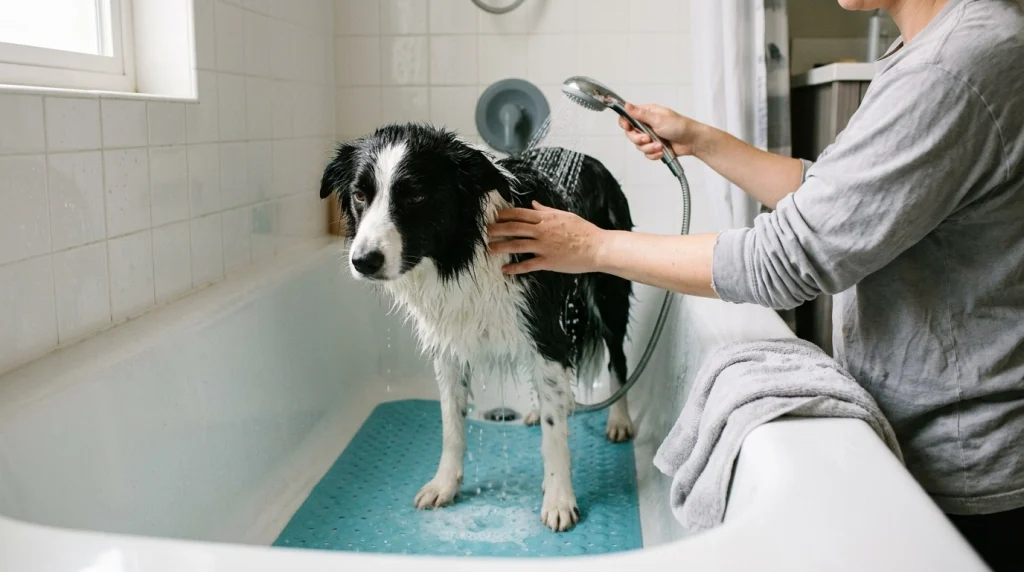
Follow a predictable sequence that minimizes sudden movements and allows your dog to maintain balance independently.
- Introduce the bathing space calmly. Let your Border Collie approach the prepared area without rushing. Reward voluntary entry or small steps toward it.
- Position all four paws securely. Before adding water, check that your dog can stand comfortably with the front and hind paws supported by the mat.
- Begin with gentle water contact. Use lukewarm water and low pressure, starting around the body rather than spraying the face.
- Keep one hand available for guidance. If your dog accepts gentle contact, position your hand near the shoulder or chest to guide movement. Avoid pulling or bearing down on the dog.
- Wash in manageable sections. Work along the back, sides, chest, and legs while allowing your dog to reposition naturally when necessary.
- Rinse thoroughly. Remove shampoo without abruptly turning the dog or directing a strong spray toward sensitive areas.
- Guide a controlled exit. Turn off the water, prepare a towel, and help your Border Collie move onto secure flooring without jumping.
Throughout the process, watch how your dog distributes weight. A comfortable dog should be able to make small adjustments without scrambling or repeatedly losing traction.
Practical Tip
For a nervous Border Collie, practice standing on the dry bath mat before introducing water. Reward a relaxed four-paw stance, then gradually introduce the washing equipment in separate short sessions.
Support Your Dog Without Forcing Them to Stay Still
Gentle support can help your Border Collie feel secure, but restraint should never substitute for reliable footing.
Stand close enough to respond if your dog begins moving unexpectedly. When appropriate, use a relaxed hand near the chest or side for guidance while allowing normal posture and movement.
Do not pull upward on the collar, force the head into position, or hold the legs rigidly. These actions can interfere with balance or increase fear.
A dog that continually struggles against your hands may be signaling discomfort rather than disobedience. Pause and check the floor, water temperature, handling, and available space.
The Cornell University cooperative-care guidance emphasizes gradual exposure, predictability, and positive reinforcement rather than forcing animals through stressful grooming procedures.
Keep Water Pressure and Temperature Comfortable
Water can affect stability indirectly. A sudden cold spray, loud shower attachment, or unexpected stream near the face may cause a Border Collie to twist, retreat, or attempt to jump.
Check the temperature on your wrist before wetting the coat. Use comfortably lukewarm water, avoiding extremes.
Begin with a gentle stream or a small container of water. Wet the body gradually, watching for tension or avoidance.
When washing the head, use a damp cloth if your dog dislikes direct spraying. Avoid directing water into the eyes, ears, or nose.
There is usually no need to fill the bathtub with deep standing water. Controlled rinsing with effective drainage gives your dog a more predictable environment.
For the full washing sequence, follow a separate safe bathtub setup guide rather than extending a stressful session just to finish every grooming task.
Why Does a Border Collie Keep Moving During a Bath?
Repeated movement is not always an obedience issue. A Border Collie may reposition because its paws are slipping, the water feels uncomfortable, or it wants to escape an unfamiliar experience.
These common patterns can help you decide what to change.
| What You Notice | Possible Explanation | What to Do |
|---|---|---|
| Paws sliding sideways | Insufficient traction | Stop and check the mat and surface |
| Backing away from the spray | Water pressure, sound, or discomfort | Reduce pressure and reintroduce water gradually |
| Freezing or trembling | Fear, cold, or physical discomfort | Pause and assess before continuing |
| Repeatedly trying to climb out | Distress or desire to escape | End the session safely and practice in smaller stages |
| One leg repeatedly giving way | Possible pain or mobility difficulty | Stop and seek veterinary evaluation |
These observations are clues, not diagnoses. A slipping paw and a painful joint can sometimes produce similar-looking movements, so persistent instability deserves closer attention.
Teach Your Border Collie to Stand Calmly Before Bath Day
Practicing outside the actual bath is often easier than teaching a new behavior while your dog is already wet or worried.
Start on a non-slip mat in a quiet room. Reward your Border Collie for approaching it and voluntarily placing all four paws on the surface.
Once the dog is comfortable, introduce a simple cue such as “stand” or “mat.” Reward brief moments of relaxed standing, then allow your dog to step away.
Next, practice gentle handling around the shoulders, paws, and sides. Keep sessions short enough that your dog remains willing to participate.
Gradually move the practice into the bathroom, beginning with the water turned off. Later, introduce the sound of running water without immediately wetting the coat.
The aim is not to make your Border Collie motionless. It is to develop a comfortable stance and predictable routine that make bathing easier.
Use Rewards Without Distracting From Safety
Small treats or a securely positioned dog-safe lick mat can encourage cooperation. Rewards should support calm behavior, not distract a panicking dog while you continue washing.
Use dog-safe foods and check ingredients carefully. Products containing xylitol must never be offered to dogs.
If your Border Collie stops accepting familiar rewards, repeatedly tries to escape, or appears increasingly distressed, stop and return to an easier training stage.
Common Mistakes That Make Bathing Less Stable
Even a well-prepared bathing area can become difficult if the washing process encourages sudden movements.
- Using a loose mat: A mat that slides, curls, or bunches can create another hazard instead of improving traction.
- Rushing the entry: Forcing a reluctant dog over a high bathtub wall may cause scrambling before washing begins.
- Pulling on the collar: Upward or sideways pulling can disturb normal balance and increase resistance.
- Using sudden water pressure: An unexpected spray can trigger a sharp turn or escape attempt.
- Overlooking the exit: Wet paws can slip immediately after leaving the tub if the surrounding floor is unprotected.
- Continuing through panic: Completing a bath by force can make future sessions more difficult.
Preventing these problems requires preparation and observation rather than increasingly firm control.
Safety Warning
Never leave your Border Collie unattended in a bathtub, even with a non-slip mat. If your dog loses balance or attempts to escape, turn off the water and help them reach a secure surface. Do not attempt to keep bathing by physically overpowering them.
What if Your Border Collie Still Cannot Stand Securely?
If instability continues after you have corrected the surface and reduced stress, stop the bath instead of repeatedly repositioning the dog.
Observe whether the problem occurs only inside the bathtub or also on ordinary household flooring.
If your dog walks normally elsewhere but becomes unstable in the tub, inspect the mat’s grip, the amount of standing space, and whether the dog is attempting to avoid the water.
If you notice limping, unusual weakness, repeated falling, obvious pain, or difficulty bearing weight outside the bath, arrange a veterinary assessment. Sudden inability to stand, collapse, or severe weakness warrants urgent veterinary care.
For dogs with mobility limitations, a low-entry grooming area or professional assistance may be safer than a conventional bathtub.
Keep Your Border Collie Stable After the Bath
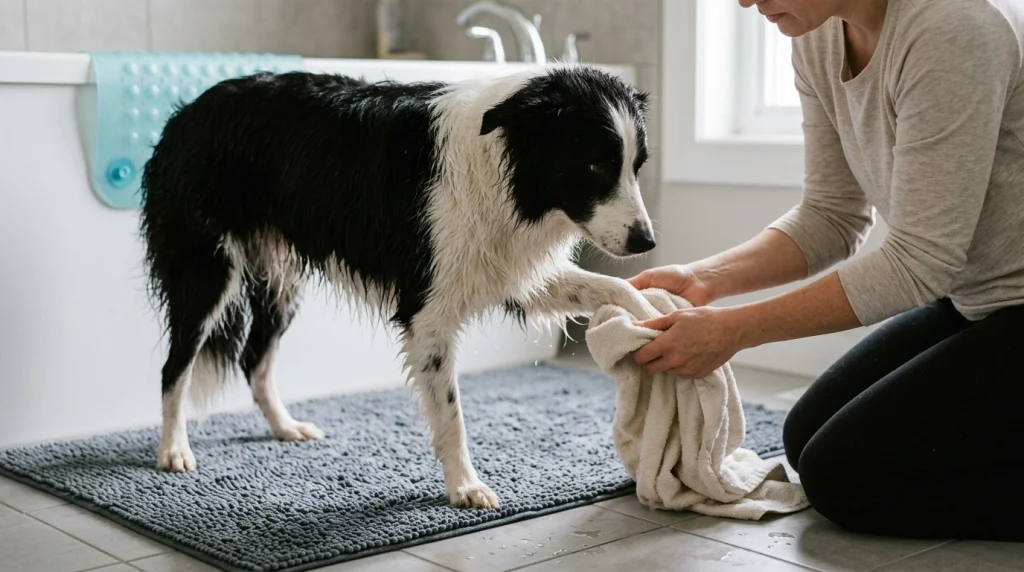
Bathing safety does not end when you turn off the water. A wet Border Collie may shake vigorously, turn quickly, or move onto slippery tiles.
Have a towel ready before opening the bathing area. Gently blot excess water from the coat while your dog remains on secure footing.
Guide your dog out slowly onto the prepared non-slip floor mat. Dry the paws, especially between the toes, before allowing free movement across smooth flooring.
Because Border Collies have double coats, moisture can remain beneath the outer hair. Continue drying in a comfortable, secure location rather than rushing your dog onto a slippery floor.
Remove the bathtub mat after use, rinse away hair and shampoo residue, and allow it to dry according to the manufacturer’s care instructions.
Related Product: Non-Slip Dog Bath Mat
Textured Non-Slip Dog Bath Mat
A properly fitted bath mat can improve your Border Collie’s footing during washing. Look for a textured surface, appropriate standing-area coverage, adequate drainage, and a secure attachment method compatible with your bathtub. Always test the mat before use.
Affiliate disclosure: We may earn a commission from qualifying purchases at no additional cost to you.
Frequently Asked Questions
Should I hold my Border Collie while bathing?
Use gentle contact to guide your Border Collie if they are comfortable with handling, but do not rely on holding them upright. A secure standing surface and voluntary cooperation are safer foundations than forceful restraint.
Can I use a regular towel instead of a non-slip bath mat?
A loose towel is not an ideal substitute because it can bunch up or slide when wet. Choose a bath-safe traction surface that remains secure under your dog’s paws.
Is it normal for a Border Collie to shake during bathing?
Shaking may occur because of cold, fear, or discomfort. Check the water temperature and your dog’s behavior. Persistent trembling or other signs of illness require veterinary attention.
Should my Border Collie sit or stand during a bath?
Standing is often convenient for washing and rinsing the coat, provided all four paws have secure footing. Allow a comfortable sitting position when appropriate rather than forcing a dog to stand continuously.
What if my Border Collie refuses to enter the bathtub?
Do not force entry. Practice approaching the bathroom, stepping onto a dry mat, and entering the bathing area voluntarily. Introduce water gradually once your dog is comfortable with the earlier steps.
Can older Border Collies need extra bathing support?
Yes. Older dogs may have reduced mobility, stiffness, or other conditions that affect balance. Use secure footing and an accessible washing area, and seek veterinary advice if instability or discomfort is apparent.
Final Thoughts
Keeping a Border Collie stable during bathing starts with secure footing, gentle water control, and predictable handling. A properly fitted non-slip mat helps, but patient preparation and positive training are equally important.
Focus on helping your dog feel comfortable rather than making them remain perfectly still. If balance problems persist despite a safe setup, pause bathing and investigate the underlying cause before trying again.