
How to Keep a Border Collie Safe in the Bathtub

Quick Answer
To keep a Border Collie safe in the bathtub, place a secure non-slip mat on the tub floor, use lukewarm water, keep the water shallow, and stay beside your dog throughout the bath. Introduce each step calmly, prevent jumping, and avoid spraying water into the eyes or ears. If your Border Collie becomes frightened or struggles to escape, stop and help them out safely rather than forcing the bath.
A Border Collie can be confident outdoors yet nervous in a bathtub. Smooth surfaces, running water, unfamiliar sounds, and limited room to move can make bathing stressful.
The biggest concern is not getting the coat perfectly clean. It is keeping your dog steady, comfortable, and under control without causing fear or injury.
How Do You Make a Bathtub Safe for a Border Collie?
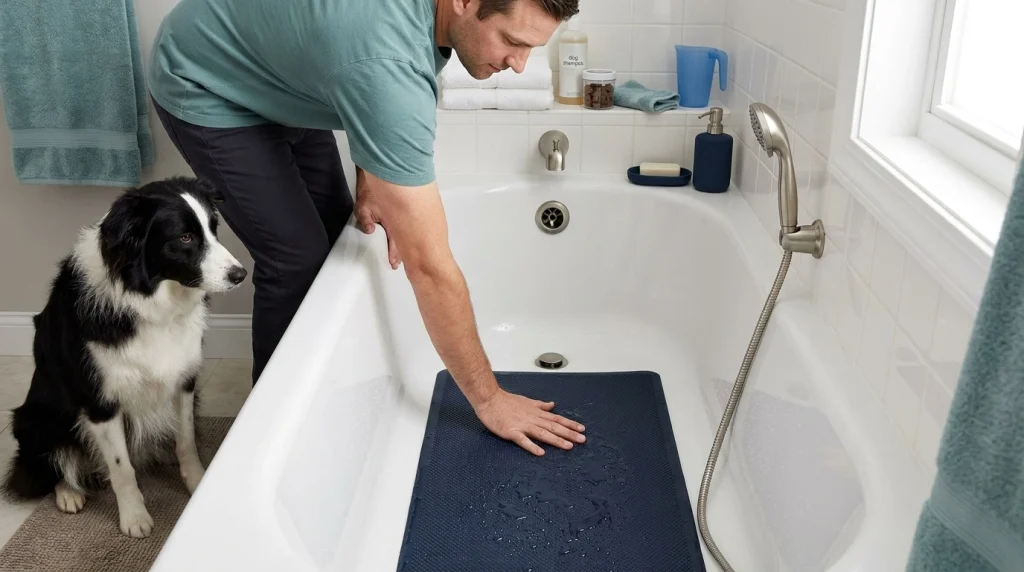
Start by making the bathtub stable, quiet, and easy to enter. A few changes before turning on the water can prevent many common bathing problems.
1. Place a non-slip mat on the bathtub floor
A smooth tub becomes slippery when wet. Your Border Collie may spread their legs, scramble for traction, or panic if their paws slide.
Choose a rubber or textured non-slip mat that lies flat and stays securely in place. Check that it does not shift when your dog moves.
A loose towel is less reliable because it may bunch up or slide. If you use one as a temporary solution, make sure it provides stable traction throughout the bath.
2. Remove anything that could fall or cause injury
Keep shampoo bottles, razors, cleaning products, and other bathroom items away from the tub edge. A startled dog can knock objects over or step on them.
Close nearby cabinets, clear the floor, and keep electrical appliances away from water.
3. Keep the water shallow and comfortably warm
You do not need to fill the bathtub to wash a Border Collie. A handheld sprayer or cup can wet the coat while the drain remains open.
Use lukewarm water rather than hot water. Test the flow with your hand or wrist before directing it toward your dog.
The ASPCA’s dog grooming guidance recommends lukewarm water and avoiding direct water spray into a dog’s ears, eyes, or nose.
4. Prepare supplies before bringing your dog inside
Keep dog shampoo, towels, treats, a washcloth, and a rinsing cup within reach. This prevents you from leaving your Border Collie unattended to find something.
Brush away loose fur and manageable tangles first. Our guide on bathing before grooming explains why coat preparation matters before washing.
Safety Tip
Test the non-slip mat while it is wet, not just when dry. Check that it stays flat and secure before your Border Collie steps onto it.
How to Bathe a Border Collie Safely: Step by Step
A safe bath should follow a predictable sequence. Work slowly enough that your dog can stay balanced and understand what is happening.
- Help your dog enter calmly. Let your Border Collie approach the tub. For a dog that can step in comfortably, provide steady support and avoid rushing. Use a stable ramp or appropriate assistance if needed.
- Establish secure footing. Allow your dog to stand on the non-slip mat before introducing water. Reward relaxed standing.
- Introduce water gradually. Start with a gentle stream near the paws or lower body. Keep the spray pressure low.
- Wet the coat carefully. Move toward the shoulders, back, chest, and belly. Avoid sudden sprays toward the face.
- Apply dog-specific shampoo. Massage gently through the coat. Do not use human shampoo unless your veterinarian specifically directs you to.
- Rinse thoroughly. Work through the dense undercoat until shampoo residue is removed. Keep water away from the eyes and ear canals.
- Turn off the water before exiting. Blot the paws and body, then help your dog leave without jumping or scrambling over the tub edge.
Do not leave your Border Collie alone, even briefly. An unexpected noise or sudden movement can turn a calm bath into an escape attempt.
For more detail about washing the double coat, see our Border Collie bathing guide. The priority here is keeping every movement safe.
How Do You Stop a Border Collie From Slipping or Jumping Out?
Prevent slipping by providing reliable paw traction and preventing escape attempts by reducing fear. Physical restraint alone does not solve either problem.
If your dog begins scrambling, immediately reduce the water flow and give them a chance to regain balance.
A Border Collie may try to jump when startled by a showerhead, trapped in an uncomfortable position, or frightened by the sound of running water.
To reduce this risk:
- Keep the bath area quiet and avoid sudden movements.
- Maintain gentle supervision close enough to offer steady support.
- Do not pull your dog upward by the collar or front legs.
- Do not tether your dog to an unattended or fixed attachment that could cause choking or entanglement.
- Use a controlled, supported exit instead of letting your dog leap over the edge.
A helper may be useful for a large, nervous, or highly active Border Collie. One person can focus on calm support while the other handles rinsing.
If the dog repeatedly attempts to escape, stop the bath. Continuing while they struggle increases the chance of slipping, injury, or a negative association with bathing.
Warning
Never leave a Border Collie unattended in a bathtub or rely on a collar, tether, or grooming restraint as a substitute for supervision. A frightened dog can slip, become entangled, or injure themselves while trying to escape.
What If Your Border Collie Is Afraid of the Bathtub?
If your Border Collie is frightened, practice entering the bathroom and standing in a dry bathtub before attempting a full wash.
Some dogs dislike water itself. Others are concerned about the tub surface, echoing sounds, handling, or the showerhead.
Watch your dog’s body language. Possible stress signals include:
- A tucked tail or crouched posture
- Trying repeatedly to leave the bathtub
- Trembling when the room is not cold
- Repeated lip licking, yawning, or panting
- Freezing, growling, or avoiding contact
These behaviors should be interpreted in context. A single yawn does not prove fear, but several signs together may indicate that your dog is uncomfortable.
VCA Animal Hospitals explains these responses in its guide to signs of stress in dogs.
Practice without water first
Begin by rewarding your dog for calmly entering the bathroom. Then introduce the dry bathtub and non-slip mat.
When your dog is comfortable, briefly turn on the water away from them and reward calm behavior. Gradually introduce gentle contact with water during later practice sessions.
Keep sessions short. If your dog becomes tense, return to an easier step instead of pushing forward.
Do not assume treats will overcome severe fear. A dog that refuses food, freezes, or struggles to escape may need a slower training plan.
How Can You Protect Your Border Collie’s Eyes, Ears, and Skin?
Keep water pressure gentle, avoid spraying the face, and use a shampoo formulated for dogs.
A damp washcloth is usually easier to control around the muzzle and eyes than a handheld showerhead.
Never aim water directly into the ear canals. After bathing, gently dry the outer ears with a towel. Do not insert cotton swabs deep into the ears.
Border Collies have a double coat that can make complete rinsing difficult. Part thick areas with your fingers so clean water reaches the skin and removes shampoo.
Residue can contribute to irritation, especially around the chest, belly, legs, and dense undercoat.
If itching, redness, or flaking develops after a bath, our guide to dry skin after bathing covers possible causes and appropriate next steps.
How Do You Get a Border Collie Out of the Bathtub Safely?
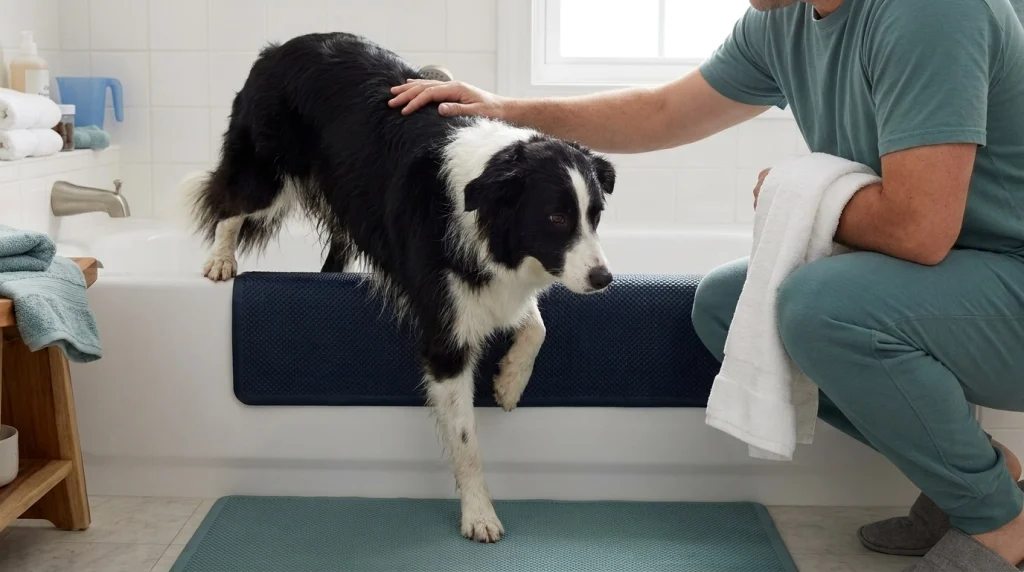
The safest exit is slow, supported, and onto a dry, non-slip surface. Many bathing accidents can happen when a wet dog tries to jump out too quickly.
- Turn off the shower and allow your dog to settle.
- Blot excess water from the body and paws while the dog has secure footing.
- Place a dry, stable non-slip mat outside the bathtub.
- Guide your dog out slowly, supporting their balance as needed.
- Keep the dog away from slippery tiles until the paws are dry.
Do not attempt to lift a struggling adult Border Collie alone if you cannot safely support their weight. Ask for assistance or use an appropriate non-slip entry and exit aid.
Once outside, towel-dry the coat thoroughly. A Border Collie’s undercoat can remain damp even when the outer fur looks dry.
Our guide to drying a Border Collie explains how to remove moisture safely from the dense coat.
When Should You Stop the Bath or Ask for Help?
Stop bathing if your Border Collie cannot stand securely, becomes extremely distressed, appears painful, or repeatedly makes dangerous attempts to escape.
Use this quick decision guide:
| Situation | Safest Response |
|---|---|
| Mild hesitation | Pause, reward calm behavior, and proceed only if comfortable. |
| Paws slipping repeatedly | Stop water flow and fix the footing before continuing. |
| Panic or frantic escape attempts | End the session and help the dog exit safely. |
| Limping, pain, or inability to bear weight | Stop and seek prompt veterinary advice. |
| Repeated severe bath fear | Consider a veterinarian, qualified force-free trainer, or experienced groomer. |
For dogs with arthritis, recent surgery, mobility limitations, or known pain, ask your veterinarian about safe handling before attempting bathtub bathing.
A walk-in shower or professional grooming arrangement may be safer than a high-sided bathtub for some dogs.
Common Bathtub Safety Mistakes to Avoid
Even a well-behaved Border Collie can become unsettled by small changes during bathing. These mistakes are worth checking before every session.
- Using a bare bathtub: Wet paws may lose traction on smooth surfaces.
- Turning on a strong shower suddenly: Noise and pressure may startle a nervous dog.
- Using hot water: Excessive heat can cause discomfort and potentially harm the skin.
- Pulling or restraining forcefully: This may increase panic and create injury risks.
- Allowing an uncontrolled jump: Landing on wet tiles can cause slipping.
- Rushing the drying stage: Wet paws and damp undercoat can create problems after bathing.
The most useful habit is to assess your dog’s footing and comfort before each new step. If either changes, adjust the process immediately.
Related Product
Non-Slip Dog Bath Mat
A properly fitted, textured non-slip mat can provide steadier footing for your Border Collie during bathing. Choose one that stays secure when wet and fits your bathtub.
As an Amazon Associate, we earn from qualifying purchases.
Frequently Asked Questions
Can I bathe a Border Collie in a regular household bathtub?
Yes. A regular bathtub can work if your Border Collie fits comfortably, can stand securely, and can enter and exit without unsafe jumping. Use a non-slip mat and remain close throughout the bath.
Should I put water in the tub before my Border Collie gets in?
A deep bath is unnecessary. For a nervous dog, starting with a dry tub and introducing a gentle water flow gradually may be less frightening. If using standing water, keep it shallow and avoid making the dog wade through deep water.
Can I use a regular bath mat for my Border Collie?
Only if it is suitable for use inside a wet bathtub and provides reliable traction. A bathroom floor mat may become unstable when submerged or placed on smooth enamel. A securely fitted, water-safe rubber mat is preferable.
What should I do if my Border Collie refuses to enter the tub?
Do not force entry. Practice approaching the bathtub, stepping onto a dry non-slip surface, and accepting treats without running water. If your dog remains highly fearful, a qualified trainer or professional groomer may help.
Is a handheld showerhead safe for a Border Collie?
Yes, when used with low water pressure and comfortable lukewarm water. Keep the spray away from the eyes, nose, and ear canals. A cup may be easier for a dog frightened by shower noise.
Is it safer to bathe a Border Collie in a shower instead?
A walk-in shower can be safer for a dog that struggles to climb over a bathtub wall, provided the floor has good traction and water cannot escape into slippery surrounding areas. The better location is whichever allows secure footing, calm handling, and safe entry and exit.
Final Thoughts
Keeping a Border Collie safe in the bathtub comes down to secure footing, comfortable water, calm handling, and a controlled exit. Prepare the bathing area before you begin, watch your dog’s behavior, and never force a frightened dog to continue.
A successful bath is one your Border Collie can complete without slipping, panicking, or getting hurt. Clean fur matters, but safety and trust come first.
