
Best Food for a Border Collie With Allergies: A Practical Feeding Guide

Border Collies are active, intelligent dogs, but when allergies enter the picture, feeding gets complicated fast. The goal is not to find a magic “hypoallergenic” bag and hope for the best. The goal is to choose a diet that removes likely triggers, stays nutritionally complete, and gives you a clean way to judge whether symptoms are actually improving.
What to Feed a Border Collie With Allergies: The Short Answer
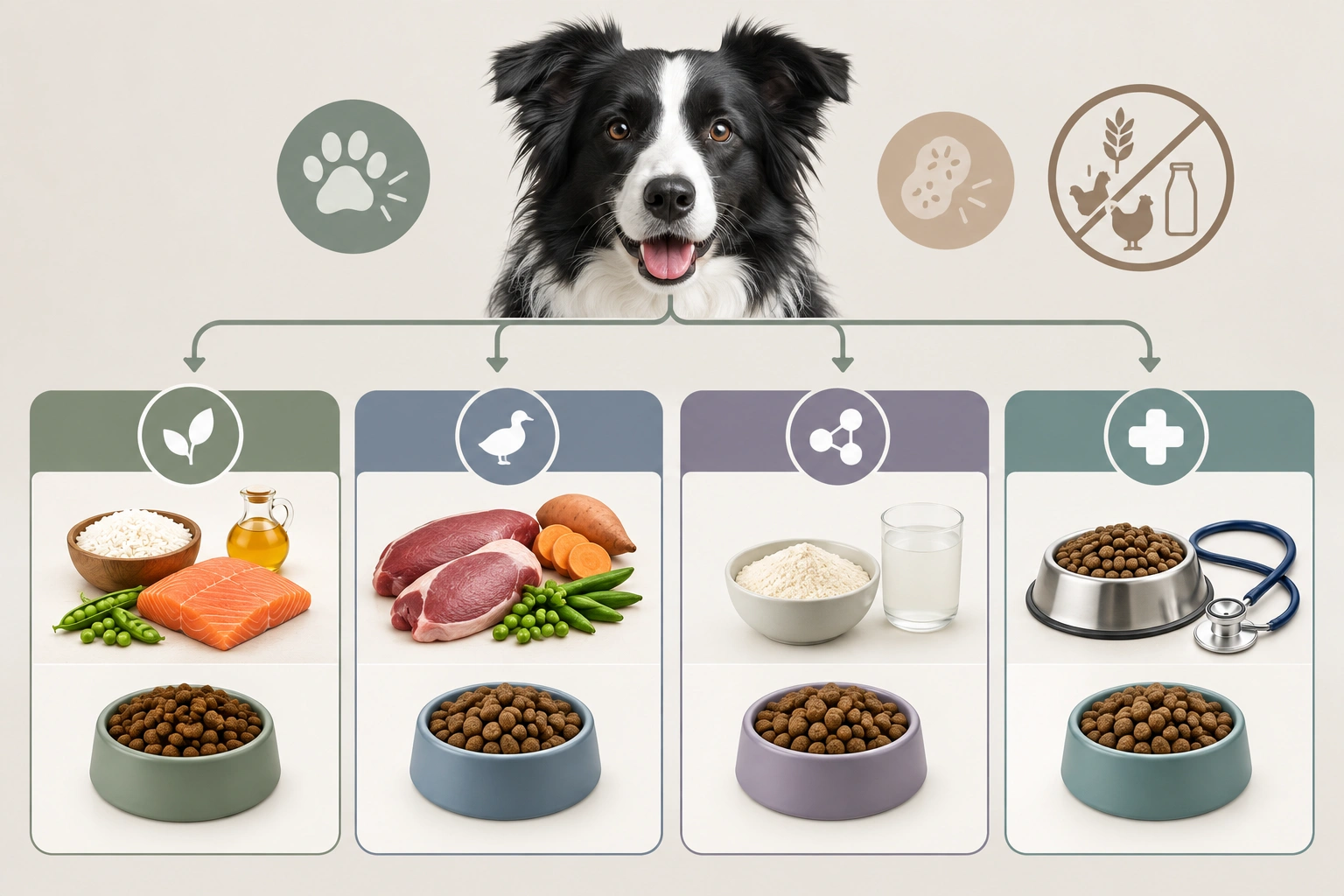
If your Border Collie has suspected food allergies, the most reliable starting point is usually one of these three paths:
- A veterinary hydrolyzed diet if symptoms are significant, long-standing, or you want the cleanest elimination trial.
- A limited-ingredient or novel-protein diet if symptoms are milder and you’re trying a careful over-the-counter approach first.
- A prescription diet guided by your veterinarian if your dog has repeated flare-ups, multiple suspected triggers, or a history that makes home trialing messy.
For many dogs, the “best” food is not the trendiest formula. It is the one that removes the ingredient most likely causing trouble and keeps everything else consistent long enough to see a real pattern.
Quick decision tree
– Skin-only symptoms (itching, paw licking, mild ear issues, no ongoing vomiting/diarrhea): start with a carefully selected limited-ingredient or novel-protein diet if your vet thinks a home trial is reasonable.
– Skin plus GI symptoms (itching plus loose stool, vomiting, gas, or appetite changes): a veterinary-guided hydrolyzed or prescription elimination diet is usually the cleaner first choice.
– Severe, recurrent, or complicated symptoms (repeated ear infections, skin infections, weight loss, blood in stool, open sores, or multiple failed food changes): see your veterinarian before starting; a prescription or dermatology-guided trial is often the better first step.
A Border Collie with itchy skin, paw licking, and ear debris may respond to a diet built around a protein the dog has not eaten much before, such as duck, rabbit, venison, or fish. That is a reasonable trial strategy, not a guarantee. If the dog has already cycled through several proteins, a hydrolyzed diet is often the more dependable veterinary diagnostic tool because the protein is broken down into pieces the immune system is less likely to recognize.
If you want a broader overview of breed-appropriate nutrition before narrowing down allergy options, see our guide to the best food for Border Collie.
How to Tell Food Allergies From Environmental Allergies or Food Intolerance
This distinction matters because the wrong assumption leads to the wrong diet trial.
Food allergy
A true food allergy is an immune reaction to a specific ingredient, usually a protein. In dogs, the signs often show up as:
- itching that does not settle
- paw licking
- ear redness or recurrent ear infections
- face rubbing
- skin infections that keep coming back
- sometimes vomiting or diarrhea
Food intolerance
Food intolerance is different. It is not a classic immune allergy. Instead, the dog may have trouble digesting a food or ingredient. That often looks more like:
- soft stool
- gas
- stomach upset
- occasional vomiting
- inconsistent appetite
A dog can have both skin and digestive signs, but the pattern helps. Skin-only problems are often mistaken for food allergy when the real issue is environmental irritation, fleas, or seasonal allergens. On the other hand, a Border Collie with recurring loose stools after certain foods may be dealing more with intolerance than allergy.
Environmental allergy
Environmental allergies often flare with seasons or exposures rather than meals. If the itching is worst during pollen-heavy months, after walks in grass, or with no change when food changes, food may not be the main driver.
A useful rule: if your dog improves a little on a new food but still scratches the same way during pollen season, that does not prove the food was the problem. It may mean the dog has environmental allergies too.
Common Allergy Symptoms in Border Collies
Border Collies are not uniquely “food allergy dogs” in the way some breeds are discussed online, but they can absolutely develop food-related issues like any other dog. The signs owners usually notice first are practical, not dramatic.
Watch for these patterns
- Paw licking or chewing
- Scratching around the face, ears, belly, or hindquarters
- Recurrent ear infections or waxy ears
- Red, inflamed skin
- Frequent hot spots or skin infections
- Soft stool, diarrhea, gas, or vomiting
- A dull coat or increased shedding if skin inflammation is ongoing
One important detail: itching alone does not confirm a food allergy. Fleas, pollen, mites, yeast, and bacterial skin infections can look very similar. That is why a diet change should be treated as a test, not a guess.
Ingredients That Commonly Trigger Reactions in Dogs
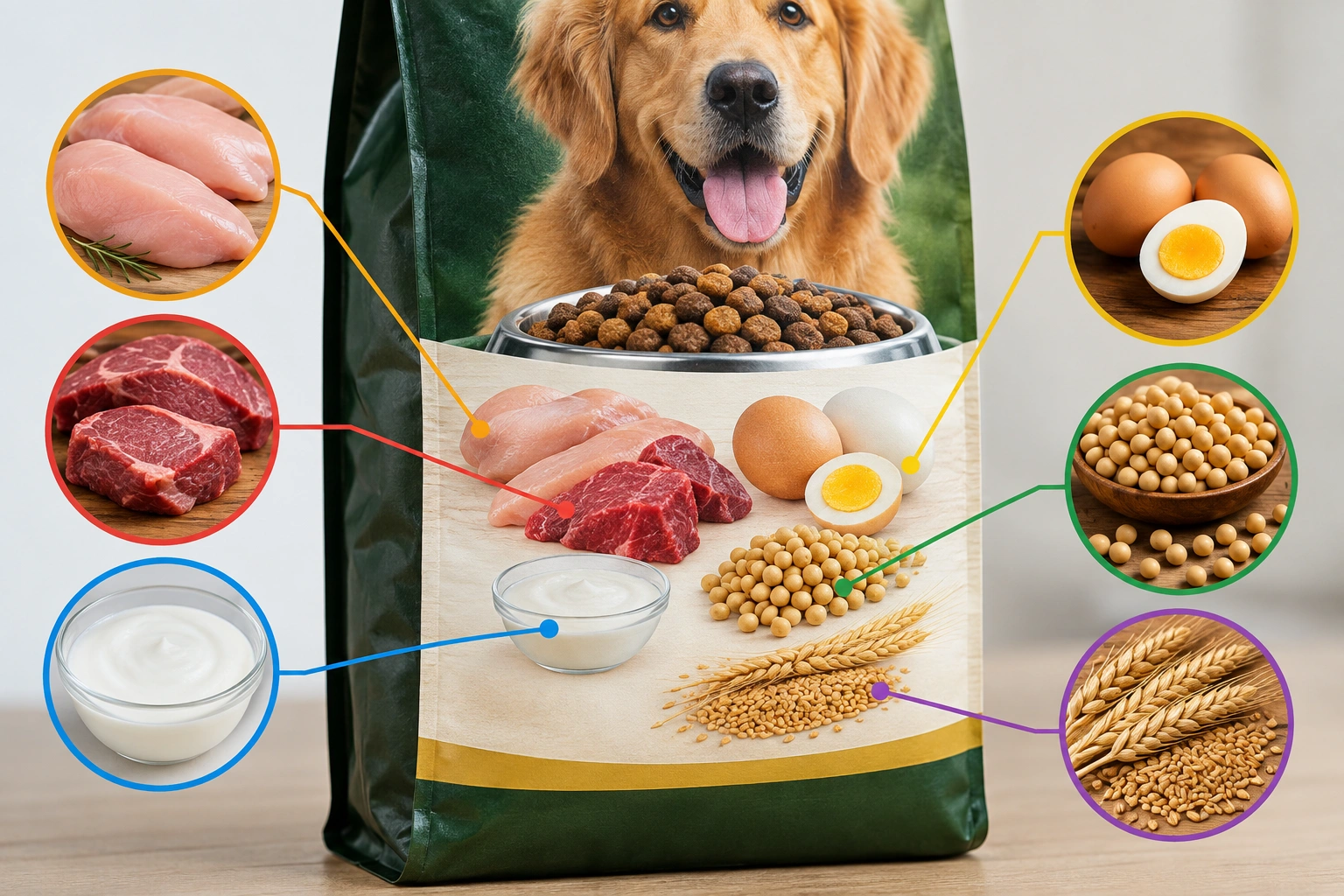
The most commonly reported food allergens in dogs are often beef, chicken, and dairy, though the exact pattern can vary by study and by the dogs being evaluated. Other ingredients such as lamb, egg, and fish can also trigger reactions, though they are reported less often. Grain-triggered allergy appears to be less common than protein-triggered reactions, but grains can still matter for some dogs.
That means the usual suspects to check first are:
- chicken
- beef
- dairy
- egg
- wheat
- soy
- sometimes fish or lamb, especially if the dog has eaten them for a long time
A useful practical point: allergens are not always obvious from the front of the bag. Chicken can hide in chicken fat, chicken broth, poultry meal, poultry digest, natural flavor, or animal digest. Beef may appear in flavorings or broths. Dairy can show up in whey, casein, cheese ingredients, or milk solids. Egg may be listed as albumen or egg product. Soy can appear as soy protein, soy flour, or soy lecithin.
If your dog is highly sensitive, the ingredient panel matters more than the marketing claim on the front. It also helps to remember that strict trials can be affected by cross-contamination if a food is made in a facility that handles multiple proteins, so label reading is only part of the picture.
Best Diet Types for an Allergic Border Collie
Here is the decision framework I use when owners ask what to feed first.
| Diet type | Best for | Pros | Trade-offs |
|---|---|---|---|
| Limited-ingredient diet | Mild to moderate suspicion, fewer ingredients needed | Simpler label, easier to monitor | Not automatically hypoallergenic; may still contain a trigger |
| Novel-protein diet | Dog has eaten common proteins for years | Reduces exposure to common triggers | Some dogs later react to the new protein too |
| Hydrolyzed diet | Strong suspicion, repeated symptoms, true elimination trial | Most controlled approach for diagnosis | Costly, less palatable for some dogs, usually veterinary-guided |
| Prescription diet | Complex cases or dogs with multiple issues | Highest control and consistency | Requires vet involvement and is often more expensive |
Limited-ingredient diets
These diets usually use fewer ingredients and often one main protein plus one main carbohydrate. That can make it easier to spot patterns. The limitation is that “limited ingredient” does not guarantee safety. A limited-ingredient food can still use chicken, beef, or another trigger.
Novel-protein diets
A novel protein is simply a protein your dog has not eaten much before. Duck, rabbit, venison, and sometimes fish are common examples. These diets can work well when the dog has already been exposed to chicken, beef, and lamb for years.
The trade-off is that a novel protein is only novel until your dog eats it long enough.
Hydrolyzed diets
Hydrolyzed protein diets break proteins into tiny pieces so the immune system is less likely to recognize them. That is why they are often used in elimination trials and more severe cases.
They are not glamorous, and many dogs do not find them as exciting as regular food. But if you need the most diagnostically useful option, they are often the cleanest choice.
Prescription diets
Prescription diets are worth considering when the symptoms are persistent, the dog has multiple suspected triggers, or the owner needs tighter control over the trial. They are not automatically better for every dog, but they are often better for getting a clear answer.
How to Choose Between Chicken-Free, Grain-Free, and Grain-Inclusive Foods
This is where a lot of owners get sidetracked.
Chicken-free
Chicken-free can help if chicken is the trigger. It is not a cure-all. If the dog is reacting to beef, dairy, or something else entirely, removing chicken alone may do nothing.
Grain-free
Grain-free is not the default answer for food allergies. Grain-triggered allergy appears to be less common than protein-triggered reactions, and some dogs do better on grain-free food because the formula also changed the protein source, not because grains were the real issue.
If you switch to grain-free and the dog improves, ask what else changed. Was it the protein? The fat source? The treat situation? The ingredient count? Was there less cross-contact?
Grain-inclusive
A grain-inclusive diet can still be an excellent choice for an allergic dog if the grains are not the problem. In many cases, a well-formulated grain-inclusive food with the right protein is a better choice than a grain-free formula built around a trigger ingredient.
The practical takeaway: choose the food based on the likely protein trigger first, then look at the rest of the formula.
Best Protein and Carb Choices for Sensitive Border Collies
There is no universal “safest” protein, but some choices are often used because they are less commonly associated with prior exposure.
Proteins to consider
- duck
- rabbit
- venison
- fish
- turkey, if your dog has not eaten much of it before
If your Border Collie has already eaten chicken for years, moving to chicken-free can be a sensible first test. If the dog has eaten chicken, beef, lamb, and fish, a hydrolyzed diet may be more efficient than guessing again.
Carbohydrates that often work well
- potatoes
- sweet potatoes
- rice
- oats, if tolerated
- peas or legumes in some formulas, though these are not ideal for every dog
Digestibility matters because Border Collies are active. A dog that burns through calories quickly still needs enough energy, but the food also has to sit well. Highly active dogs often do well with diets that are both allergy-aware and easy to digest, rather than simply “low ingredient.”
Fish-based diets
Fish-based diets can be useful when the dog has not had much fish before. They may also be appealing for dogs that need a palatable option. Still, fish is not automatically safe for all allergic dogs. Some dogs react to fish too, especially if it has been a regular protein in the past.
How Border Collie Activity Level Affects Food Choice
A Border Collie that hikes, trains, herds, or plays hard can lose condition quickly if the allergy diet is too low in calories or not digestible enough. That is the balancing act.
You want a food that is:
- simple enough to support the allergy trial
- calorie-dense enough to maintain body condition
- digestible enough for an active dog
- complete and balanced for the life stage
If you choose a very restrictive formula but your dog starts dropping weight, that is a sign the food may not be practical long term. In that case, a more controlled prescription option or a carefully chosen higher-calorie novel-protein diet may be a better fit.
For help estimating how much food your Border Collie may need once you choose a formula, our Border Collie feeding chart and food amount by weight guide can help you compare daily intake with body condition.
How to Read a Dog Food Label for Hidden Allergens
When you are shopping for an allergic dog, the front of the bag is the least useful part.
Check the full ingredient list for hidden sources
Look for:
– chicken, chicken fat, chicken broth, poultry meal, poultry digest, or natural flavor
– beef, beef fat, beef broth, meat meal, or beef digest
– dairy ingredients such as whey, casein, cheese, milk solids, or lactose
– egg, egg product, or albumen
– soy, soy protein, soy flour, or soy lecithin
– wheat, wheat gluten, wheat flour, or brewer’s yeast in some formulas
– flavorings, broths, digests, and animal-based supplements
Watch for cross-contact clues
If a food is made in a facility that handles multiple proteins, that may matter for a very sensitive dog. Cross-contamination is not always a problem, but it can be relevant during a strict elimination trial. If the label or manufacturer information mentions shared equipment or shared lines, that is worth factoring into your choice.
Don’t let the label language mislead you
Terms like “sensitive stomach,” “skin support,” or “limited ingredient” are not guarantees. They are marketing descriptions, not proof that the formula avoids your dog’s actual trigger.
A better habit is to ask two questions:
1. What protein is this food built around?
2. What ingredients are hidden in flavorings, fats, digests, or supplements?
How to Start an Elimination Diet the Right Way
If your veterinarian agrees that a food trial makes sense, keep it strict.
A simple trial structure
- Pick one diet.
- Feed only that diet for the trial period.
- Remove all other foods, treats, chews, table scraps, and flavored supplements.
- Use the same water source and keep the rest of the routine as steady as possible.
What breaks a trial
A single flavored chew or chicken-based treat can muddy the results. So can switching between two “allergy-friendly” foods because one seems boring. The point is not variety. The point is clarity.
What is allowed during a strict trial
Usually, only the trial diet itself is allowed unless your veterinarian gives other instructions. That means:
– no flavored treats
– no rawhide or chews with unknown proteins
– no table food
– no flavored toothpaste, supplements, or pill pockets unless approved by your vet
If you need training rewards, ask your veterinarian whether you can use the trial kibble as treats or whether a specific approved option is acceptable.
How to transition
If your dog has a sensitive stomach, transition gradually over about a week unless your veterinarian says otherwise. For example, mix the new food with the old food for several days, then slowly increase the new formula. Once the trial begins, stop the old food completely.
If your dog has severe symptoms and your vet wants a strict diagnostic trial, the transition plan may be different. Follow the veterinary plan, not internet advice.
How Long It Takes to Know Whether a New Food Is Working
Do not judge the food after three or four days.
A realistic elimination trial usually needs 8 to 12 weeks of strict feeding before you judge the result. Some dogs show early improvement in GI signs within days to a couple of weeks, but skin and ear symptoms often take longer to settle. If the trial is not strict, the clock does not really start.
A practical way to track progress:
– note itching frequency
– record ear redness or debris
– track stool quality
– watch paw licking
– take weekly photos of problem areas
What counts as success? In general, look for a clear, sustained improvement rather than perfection. That might mean itch is much less frequent, ear problems stop recurring, stool becomes consistently normal, or the dog needs far less scratching and licking than before. If symptoms improve only a little, then plateau, the trial may be only partially successful or the dog may have more than one issue.
When is the trial considered a failure? If the diet has been truly strict for the full trial period and there is no meaningful improvement, the food is less likely to be the main problem. If the dog is clearly worse, that is useful information too, but it can mean the food is wrong, a hidden ingredient slipped in, cross-contamination occurred, or an unrelated issue such as infection is still driving the symptoms.
When to Ask Your Veterinarian
Get veterinary help sooner rather than later if your Border Collie has:
- persistent itching
- recurrent ear infections
- vomiting or diarrhea that keeps returning
- weight loss
- poor coat quality
- blood in stool
- facial swelling
- signs of dehydration
- severe skin infection or open sores
A veterinarian or veterinary dermatologist can help separate food allergy from environmental allergy, infection, or another medical problem. That matters because a diet trial is useful only if the dog is healthy enough to interpret the result.
When routine vet input is enough
A routine appointment is often enough if your dog has mild skin-only symptoms, no major illness, and you want help choosing between a limited-ingredient, novel-protein, or hydrolyzed diet.
When to seek prompt veterinary or dermatology referral before any home trial
Do not wait to start a DIY trial if your dog has:
– severe itching that is disrupting sleep or daily life
– repeated ear infections
– ongoing vomiting or diarrhea
– open sores, hot spots, or significant skin infection
– weight loss, dehydration, or blood in stool
– several failed food changes already
For dogs with long-standing symptoms or multiple failed food changes, a supervised elimination diet is usually worth it. It saves time and reduces guesswork.
Common Mistakes That Keep Allergy Trials From Working
The most common failure points are simple:
- switching foods too quickly
- using treats or chews outside the trial diet
- assuming grain-free automatically means allergy-safe
- choosing a food based on the front label instead of the ingredient panel
- changing food, treats, and supplements all at once
- stopping the trial before enough time has passed
- ignoring environmental allergies when food changes do not help
If the trial is not strict, the results are not trustworthy. That is frustrating, but it is also fixable.
FAQ
Is chicken-free food always the best choice for an allergic Border Collie?
No. Chicken is a common trigger, but not the only one. If your dog reacts to beef, dairy, or something else, chicken-free food may not solve the issue.
Are grain-free foods necessary?
Usually not. Grain-triggered allergy appears to be less common than many owners assume. Grain-free only helps if grains are part of the problem, or if the formula also removes the real trigger.
What is the most reliable food for diagnosing allergies?
A hydrolyzed diet is often the most controlled choice for an elimination trial, especially when symptoms are persistent or multiple ingredients may be involved.
Can I use a limited-ingredient food for a trial?
Yes, but only if the protein and all other ingredients avoid your dog’s likely triggers. Limited ingredient does not automatically mean hypoallergenic.
How do I know whether the problem is food or environment?
If the symptoms track with seasons, outdoor exposure, or only partially improve on a new food, environmental allergies may be part of the picture. A vet can help sort that out.
Should I keep feeding the same protein forever if my dog improves?
Not necessarily. Some dogs do well long term on the same formula, but if the diet is too restrictive or no longer appropriate for body condition, activity, or life stage, it may need to be reassessed with your vet.
What if my Border Collie has both itching and loose stool?
That combination makes food more worth investigating, but it still does not prove food allergy. A strict trial is the cleanest way to sort it out.
Can I switch between brands if they look similar?
Not during a trial. If the goal is to identify a trigger, consistency matters more than variety.
How do I know when the trial has failed?
If you have been strict for 8 to 12 weeks and there is no meaningful improvement, the diet is less likely to be the main cause. Your vet may want to look for infections, environmental allergies, or another medical issue.
Should I start with an over-the-counter food or a prescription diet?
If symptoms are mild and skin-only, an over-the-counter limited-ingredient or novel-protein food may be a reasonable first step with vet guidance. If symptoms are severe, recurrent, or involve GI signs, a prescription or hydrolyzed diet is usually the cleaner first choice.
