
Why Dogs’ Eyes Weep: Causes, Warning Signs, and What to Do Next

A dog’s watery eyes can be nothing more than a brief reaction to wind or dust. They can also be an early clue that something in the eye is painful, irritated, or not draining properly.
For Border Collie owners, this matters because active dogs spend a lot of time in grass, brush, and wind. That means they are often exposed to the small irritants that can trigger tearing — but repeated weeping should not be brushed off as “just how their eyes are.”
The useful question is not simply, “Why are my dog’s eyes watering?” It is, “What pattern am I seeing, and does it point to a mild irritation or a problem that needs a vet?”
Why Dogs’ Eyes Weep: What’s Normal and What Isn’t
A little clear tearing can be normal. Dogs, like people, produce tears to keep the eye surface moist and to wash away dust. If the tears are brief, clear, and not paired with discomfort, they may simply reflect a passing irritant.
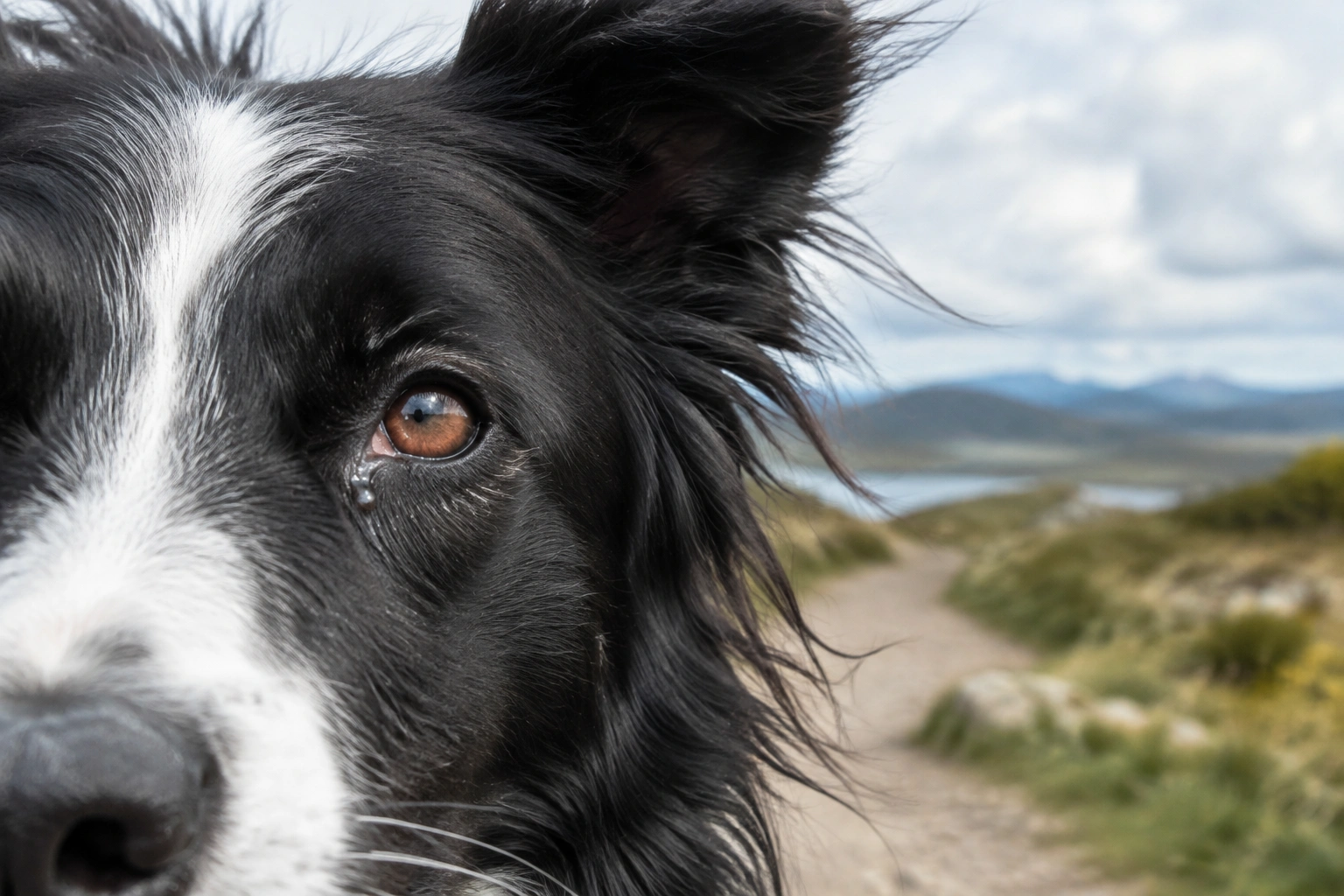
What is less normal is persistent tearing, especially if the eye looks red, the dog is squinting, or the discharge changes from watery to thick or colored. Those details matter more than the fact that the eye is wet.
It also helps to separate tear overflow/tear staining from true eye discharge. Tear overflow is usually clear tears that spill onto the face and leave damp fur or staining around the eyes; it can be harmless if the dog is comfortable and the tearing is mild. True discharge is material coming from an irritated or diseased eye, such as thicker mucus, yellow or green fluid, or tearing paired with redness, squinting, or pain.
A practical way to think about it:
- Likely mild: clear tears, both eyes affected, no pain, no redness, and the dog acts normal.
- More concerning: one eye only, repeated tearing, crusting, redness, pawing, blinking, or any sign the eye hurts.
That difference helps you decide whether you can watch the eye briefly at home or whether it needs a veterinary exam.
How to Judge Severity by the Pattern of Tearing
The first clue is whether one eye or both eyes are involved.
- Both eyes watery often points to irritation from the environment, such as wind, dust, smoke, or allergens.
- One eye watery raises more concern for a foreign body, scratch, eyelid problem, or something affecting drainage on that side.
The second clue is the type of discharge.
- Clear and watery usually fits irritation, allergies, or overflow tears.
- Thick, yellow, or green discharge is more concerning for infection or a more serious eye problem.
- Crusting around the eyelids suggests the discharge is lingering long enough to dry, which is another reason to watch closely.
The third clue is comfort. A dog that is tearing but otherwise relaxed is different from a dog that is blinking hard, keeping the eye partly closed, or rubbing at the face.
What to do next by pattern:
- Clear tears in both eyes, dog comfortable: clean gently and monitor for a short time.
- Clear tears in one eye, but dog otherwise comfortable: clean gently, then call your vet if it keeps happening or returns after activity.
- Thick, yellow, or green discharge: arrange a vet visit.
- Any tearing with squinting, pawing, redness, or cloudiness: call the vet promptly.
- Sudden severe tearing after trauma, chemical exposure, or a visibly stuck object: seek same-day or immediate veterinary care.
A simple rule works well here: if the eye looks wet but the dog looks comfortable, you can often observe for a short time. If the eye looks wet and the dog looks uncomfortable, treat it as a vet problem until proven otherwise.
Common Causes of Watery Eyes in Dogs
Watery eyes can come from several different causes, and the right response depends on which one is most likely.
Environmental irritation
Dust, wind, smoke, pollen, and bits of plant material can all irritate the eye surface. This is especially easy to see after a walk in long grass or on a windy day. In those cases, both eyes may water, and the tearing may settle once the irritant is gone.
Allergies
Allergies can cause watery eyes, often along with itching, rubbing, or other signs of seasonal discomfort. Allergic tearing is more likely to affect both eyes and may come and go with weather or pollen changes.
Blocked or poorly draining tear ducts
Tears normally drain through small passages near the inner corner of the eye. If drainage is narrowed or blocked, tears can overflow onto the face even when the eye itself is not especially inflamed. This is one reason some dogs seem to “weep” more than others without obvious pain.
Conjunctivitis
Conjunctivitis means inflammation of the tissue around the eye. It can cause watery discharge at first and may later become thicker or more colored. If you want a deeper look at that specific problem, see our guide on do dogs get pink eye.
Foreign bodies
A grass seed, bit of dirt, or other debris can sit under the eyelid and keep the eye watering. This often causes one-sided tearing, blinking, and pawing at the face. In a dog that runs through brush, this is a common practical concern.
Corneal scratches or ulcers
The cornea is the clear front surface of the eye. If it gets scratched, the eye may water heavily and the dog may squint or avoid light. A corneal ulcer is more serious and needs veterinary attention.
Eyelid or eyelash abnormalities
Some dogs have eyelids or eyelashes that rub the eye surface. Conditions such as entropion or distichiasis can lead to repeated irritation and chronic tearing. In these cases, the problem is not just excess tears — it is ongoing friction.
Breed-Related Eye Anatomy and Why Some Dogs Tear More
Some dogs are more likely to show tear overflow because of the way their faces are built or because hair grows close to the eye.
Dogs with facial structure that changes how tears drain, or dogs with eyelids that roll inward or lashes that touch the eye, may tear more often. That does not mean the tearing is harmless. It means the eye may be under repeated low-grade stress.
For Border Collies, the issue is often less about a breed-specific eye disorder and more about activity and environment. A dog that spends time in grass, brush, dust, and wind has more chances to get debris in the eye or develop irritation after outdoor exposure. If tearing keeps returning after those outings, it is worth checking for a mechanical cause rather than assuming it is just normal moisture.
Repeated tearing also matters because chronic irritation can lead owners to normalize a problem that should be examined. If the same eye keeps watering, especially in the same conditions, there is usually a reason.
What Discharge Color and Consistency Can Tell You
Discharge is one of the best clues you have at home.
| What you see | What it may suggest | How concerned to be |
|---|---|---|
| Clear, thin tears | Mild irritation, wind, dust, allergies, overflow tears | Often monitor briefly |
| Watery discharge from both eyes | Environmental irritation or allergies | Usually less urgent unless other signs appear |
| Watery discharge from one eye | Foreign body, scratch, drainage problem, eyelid issue | More concerning |
| Thick yellow or green discharge | Infection or more serious inflammation | Vet visit recommended |
| Crusting, redness, squinting, or pawing | Pain or significant irritation | Prompt veterinary attention |
Color alone does not diagnose the cause, but it changes the odds. Clear tears with a calm dog are very different from thick discharge with a painful, red eye.
Safe At-Home Cleaning and Observation
If the eye looks mildly watery and your dog is comfortable, gentle cleaning around the eye is reasonable.
Use a clean, soft cloth or gauze moistened with sterile saline or plain lukewarm water. Wipe around the eye, not across the eyeball. Use a fresh piece of cloth for each eye so you do not move debris from one side to the other.
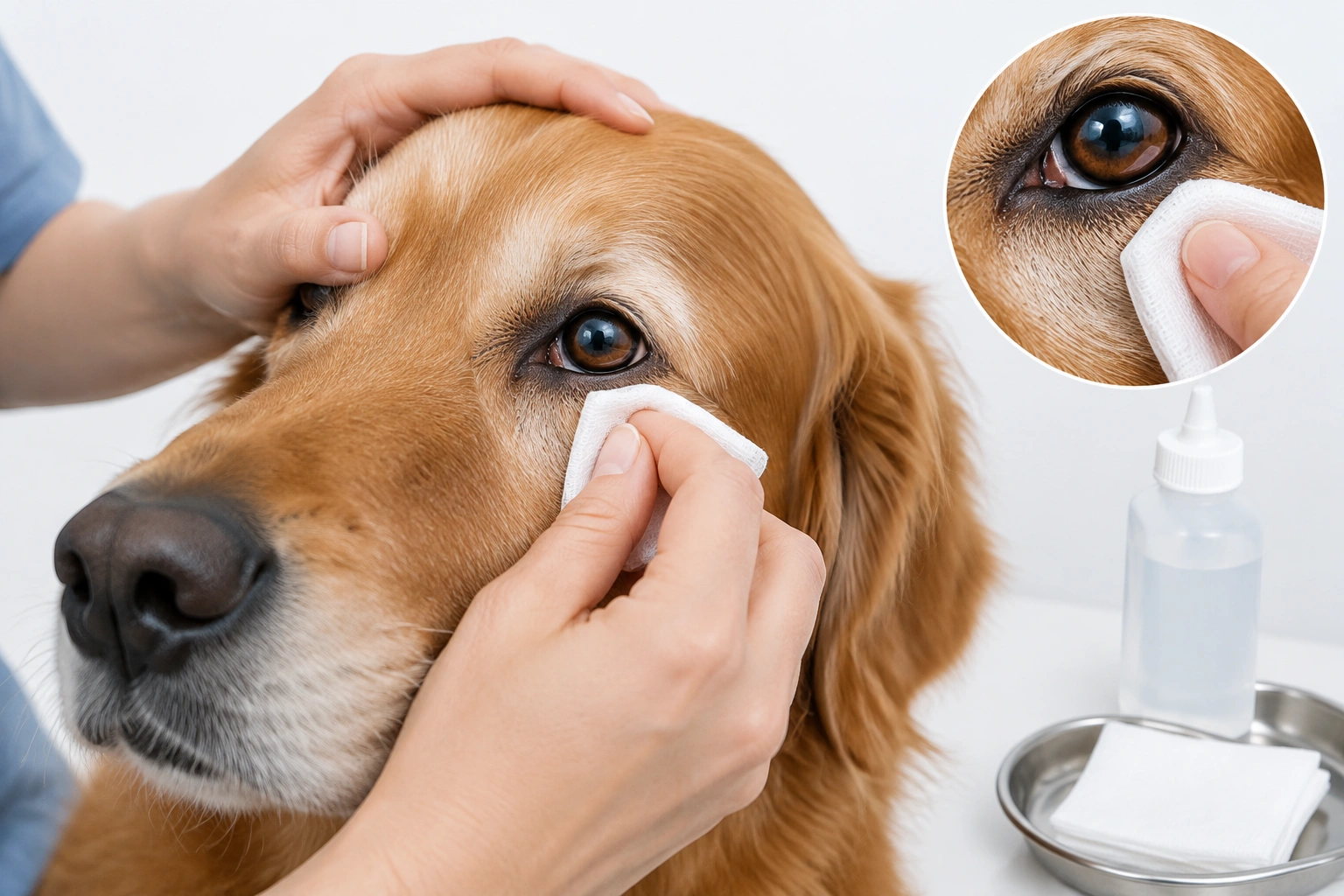
A few practical rules keep this safe:
- Do not press on the eye.
- Do not try to pull out anything that seems stuck in the eye.
- Do not use human eye drops unless a veterinarian has told you to.
- Do not use peroxide, alcohol, or harsh cleaners near the eye.
If your dog resists, blinks hard, or pulls away, stop. That reaction can mean the eye is painful, and forcing the issue can make things worse.
After cleaning, watch what happens over the next few hours. If the tearing settles and your dog stays comfortable, it was probably minor. If it returns quickly or gets worse, the eye deserves a veterinary look.
When Watery Eyes Need a Vet Visit
A veterinary exam is the right next step when the tearing is persistent, one-sided, or paired with discomfort.
Call your vet promptly if you notice:
- redness that does not settle
- squinting or frequent blinking
- pawing at the eye
- swelling around the eye
- thick or colored discharge
- cloudiness on the eye surface
- tearing that keeps returning
- a known trigger such as a grass seed, scratch, or debris
One-sided tearing deserves special attention because it is more likely to involve a foreign body, scratch, or eyelid issue than a simple environmental reaction.
A vet may look at the eye under light, check the eyelids, and use tests to see whether the cornea is damaged or whether tear drainage is working properly. That kind of exam is what separates “looks irritated” from “safe to watch.”
When Eye Discharge Is an Emergency
Some eye signs should be treated as urgent, not routine.
Seek immediate veterinary care if your dog:
- keeps the eye closed
- seems in obvious pain
- has marked swelling
- has a cloudy or blue-looking eye surface
- is suddenly very sensitive to light
- may have a foreign body stuck in the eye
- may have scratched the eye badly
- has possible chemical exposure to the eye
- has a sudden traumatic eye injury
- has a visibly protruding or stuck object in the eye
- has worsening discharge plus lethargy or distress
These signs can point to a corneal ulcer, serious injury, chemical irritation, or another problem that should not wait. If the tearing started suddenly after trauma or exposure to a chemical irritant, treat it as urgent.
If you are unsure whether it is urgent, err on the side of a same-day call. Eye problems are one of the places where waiting for “tomorrow” can be a bad trade.
How to Prevent Recurrent Eye Irritation
Prevention is mostly about reducing repeat irritation and noticing changes early.
A few habits help:
- Check your dog’s eyes after windy walks, tall grass, or dusty outings.
- Keep the hair around the eyes trimmed if it is constantly brushing the surface.
- Watch for repeated one-sided tearing, which often means a specific cause is being missed.
- Clean away tear residue gently before it hardens and rubs the skin.
- Pay attention to seasonal patterns, since allergies often show up the same way each year.
If your dog keeps getting watery eyes in the same setting, the goal is not endless cleaning. The goal is to find out why the eye keeps getting irritated.
For broader eye warning signs, our guide on why are my dog’s eyes red can help you compare tearing with redness and decide what matters most.
A Practical Way to Decide What to Do Next
When you notice watery eyes, use this quick decision framework:
-
Is the discharge clear or colored?
Clear is less alarming than yellow or green. -
Is one eye affected or both?
One eye points more toward a local problem. -
Does the dog seem comfortable?
Squinting, pawing, blinking, or closing the eye changes the picture. -
Is there redness, swelling, or cloudiness?
If yes, do not treat it as simple tearing. -
Did it start after wind, dust, grass, debris, trauma, or chemical exposure?
That clue helps separate mild irritation from something deeper.
If the answer is mostly “clear, both eyes, comfortable,” you can usually monitor briefly and clean gently. If the answer includes “one eye, colored discharge, pain, cloudiness, trauma, chemical exposure, or a stuck object,” move toward veterinary care.
FAQs
Why do dogs’ eyes weep?
Dogs’ eyes weep when they produce extra tears or when tears do not drain normally. Mild irritation, allergies, debris, blocked tear drainage, and some eye problems can all cause it.
Is clear watery discharge normal?
Sometimes, yes. Brief clear tearing can happen after wind, dust, or mild irritation. If it keeps happening or comes with redness or discomfort, it should be checked.
What does yellow or green discharge mean?
Thick yellow or green discharge is more concerning than clear tears. It can point to infection or significant inflammation and should be assessed by a veterinarian.
Should I worry if only one eye is watery?
One watery eye is more suspicious than both eyes watering. It can happen with a scratch, foreign body, tear drainage issue, or eyelid problem.
Can I use human eye drops on my dog?
Not unless your veterinarian tells you to. Some human products are unsafe for dogs or can make the problem harder to diagnose.
When is a watery eye an emergency?
Treat it as urgent if the eye is held closed, looks cloudy, is very swollen, your dog seems in pain, or there may be a chemical exposure, trauma, or something stuck in the eye.
Do Border Collies get watery eyes more often?
Border Collies are not known for one single tear problem, but their active lifestyle can expose them to wind, dust, grass seeds, and debris. That makes careful observation especially useful.
Can watery eyes happen with sneezing or a runny nose?
Yes. If tearing comes with sneezing or nasal symptoms, allergies or an upper respiratory issue may be part of the picture, though an eye problem can still be present too.
For a broader veterinary reference on eye irritation and discharge, the VCA Hospitals eye care guidance and the ASPCA pet health resources are helpful starting points, especially when you are deciding whether a symptom is minor or needs an exam.