
How Long Can a Dog Go Without Food or Water? A Practical Guide for Worried Owners

If your dog has stopped eating or drinking, the first question is usually the same: how long can a dog go without food or water before it becomes dangerous? The short answer is that water is the bigger emergency. A healthy adult dog may tolerate missing food longer than missing water, but the window can shrink fast if your dog is a puppy, senior, already sick, vomiting, has diarrhea, or is in hot weather.
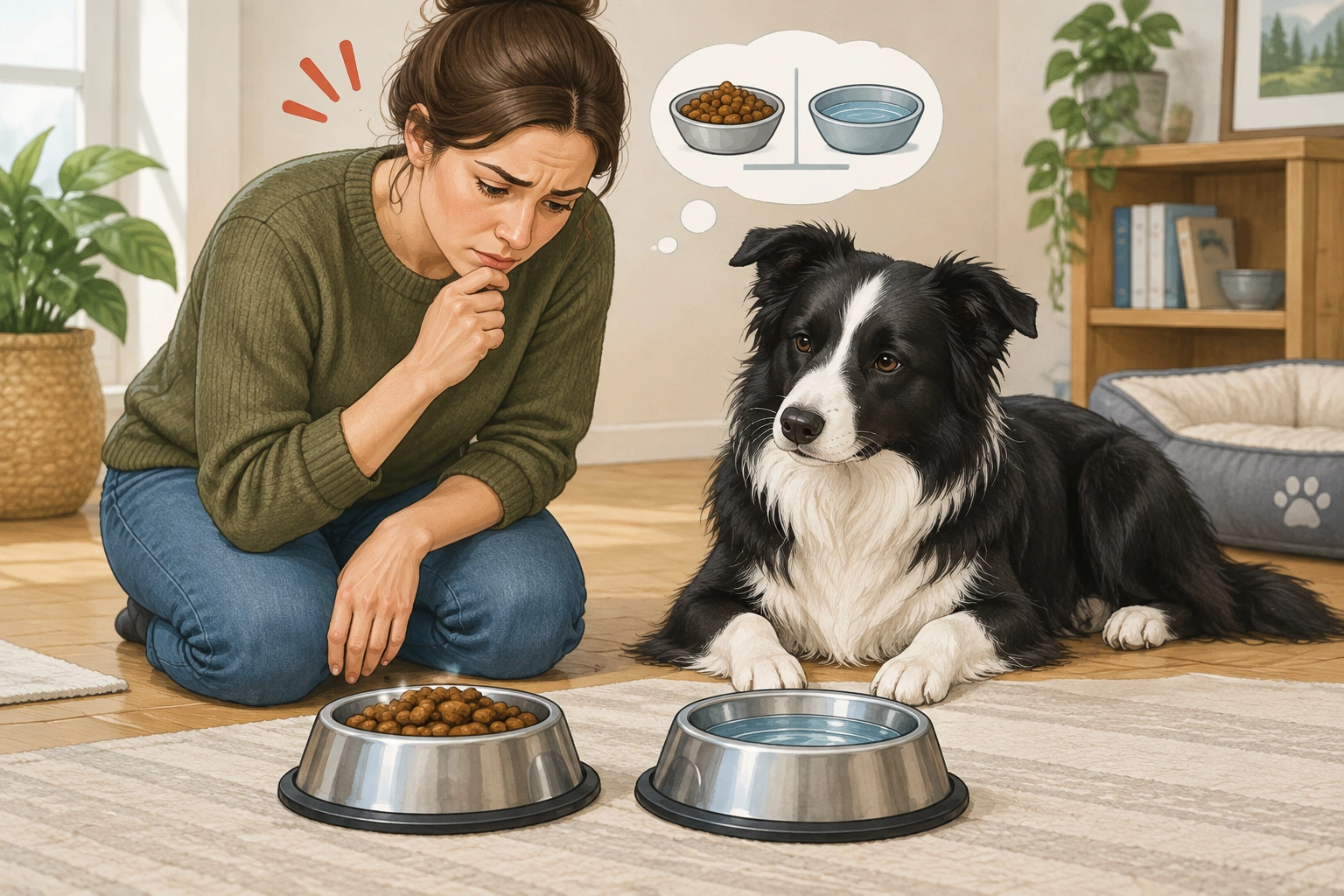
A useful way to think about this is survival time versus safe time. A dog might survive longer than it can safely wait at home, and those are not the same thing. If your dog is not drinking, acting weak, or showing signs of dehydration, the clock matters much more than the appetite.
| Situation | Food refusal | Water refusal | What to do |
|---|---|---|---|
| Healthy adult dog, missed one meal, still drinking, normal energy | Often less urgent | Usually not the issue | Monitor closely for a short period |
| Healthy adult dog, no food for a day but still drinking and acting normal | Concerning if it continues | More concerning if water also drops | Call a vet if it persists or worsens |
| Dog not drinking for most of a day, especially in warm weather | Less important than hydration | Urgent | Contact a vet the same day |
| Puppy, senior dog, or sick dog refusing food and water | Higher risk | High risk | Call a vet promptly |
| Dog with vomiting, diarrhea, lethargy, or collapse | Medical concern | Possible emergency | Seek urgent veterinary care |
How long can a dog go without food?
A healthy adult dog can sometimes go about a day or so without food and still appear relatively normal, especially if it is drinking water and otherwise bright, alert, and active. But that is only a rough estimate for a healthy adult dog, not a safe rule for every dog. A missed meal is not the same as a dog that has stopped eating because something is wrong.
The practical dividing line is this: missing one meal is often less urgent than refusing food for more than a day, or refusing food along with other symptoms. If your dog skips breakfast but still wants a walk, drinks normally, and acts like itself, that is a different scenario from a dog that turns away from food, lies down, and seems flat or nauseous.
Food refusal becomes more concerning when it is paired with:
– vomiting
– diarrhea
– obvious pain
– lethargy
– weight loss
– fever
– dental pain or difficulty chewing
– a sudden change in behavior
A dog that won’t eat because of nausea, infection, pancreatitis, dental disease, or another illness needs the cause addressed, not just more time.
If your dog has only missed a short fast and your vet says home care is reasonable, reintroduce food slowly: start with a small portion of bland food or the dog’s usual food in a smaller amount, then offer another small meal a few hours later if it stays down. Do not restart feeding this way without veterinary guidance if your dog is vomiting, has diarrhea, seems painful, may have eaten something toxic or a foreign object, or has not eaten for a prolonged period.
How long can a dog go without water?
A dog can become dehydrated much faster than it can become underfed. Not drinking is the more urgent problem, especially in warm weather, after exercise, or when a dog is losing fluid through vomiting or diarrhea.
A dog that has gone several hours without water may still be okay in some situations, but dehydration can progress quickly, and the timeline gets much shorter if the dog is a puppy, senior, or already sick. In those higher-risk dogs, dehydration can become dangerous within hours, not a full day.
Watch this very closely:
– hot weather
– heavy panting
– long walks, hikes, or fetch sessions
– vomiting
– diarrhea
– fever
– kidney disease
– diabetes
– heatstroke risk
Border Collies often make dehydration risk worse simply because they keep going. A dog that will still chase a ball in warm weather may be masking early fatigue. If the dog is panting hard and then stops drinking, do not assume it is just being picky.
For general dehydration warning signs, the ASPCA’s guidance on dehydration in dogs is worth a look, but if your dog is already weak or unable to keep water down, don’t spend time researching—call a vet.
Which is more dangerous: no food or no water?
No water is usually more dangerous, and it becomes dangerous faster. That is the key comparison most owners need. A dog can go longer without food than without water, but a dog without water can get into trouble quickly because dehydration affects circulation, temperature control, and organ function.
That said, food refusal is not harmless. If a dog stops eating because it feels sick, dehydrated, painful, or obstructed, the appetite loss is a symptom, not the main problem.
Here is the practical rule:
– No food, but drinking and acting normal: often monitor briefly
– No water, or can’t keep water down: call a vet sooner
– No food and no water together: treat as more urgent
– Any collapse, severe lethargy, or repeated vomiting/diarrhea: emergency
If you are deciding between “wait and see” and “call now,” water refusal pushes the decision toward calling now.
What changes the timeline: age, size, health, weather, and activity
The same clock does not apply to every dog. A healthy adult in a cool home is not the same as a puppy after diarrhea, or a senior dog with kidney disease, or a Border Collie that spent an hour sprinting in warm weather.
Puppies and seniors
Puppies have smaller reserves and can dehydrate or become weak faster. Seniors are also more vulnerable, especially if they have arthritis, kidney disease, dental pain, or other chronic issues. In both groups, a “wait until tomorrow” approach is riskier.
Sick dogs
If your dog already has vomiting, diarrhea, fever, kidney disease, diabetes, or dental pain, the safe window shrinks. A dog that is not eating because its mouth hurts may still drink; a dog that is vomiting may not keep water down. Those are different problems, but both need attention.
Heat and exercise
Heat makes dehydration progress faster. So does intense activity. A Border Collie on a long hike, a training day, or a fetch session in warm weather can lose fluid quickly through panting. If drinking drops after exertion, do not brush it off.
Small dogs vs larger dogs
Smaller dogs can be more fragile because they have less reserve. Larger dogs are not automatically safe; they can still dehydrate quickly if they are active, overheated, or ill. Size changes the risk, but it does not remove it.
Warning signs of dehydration, starvation, or underlying illness
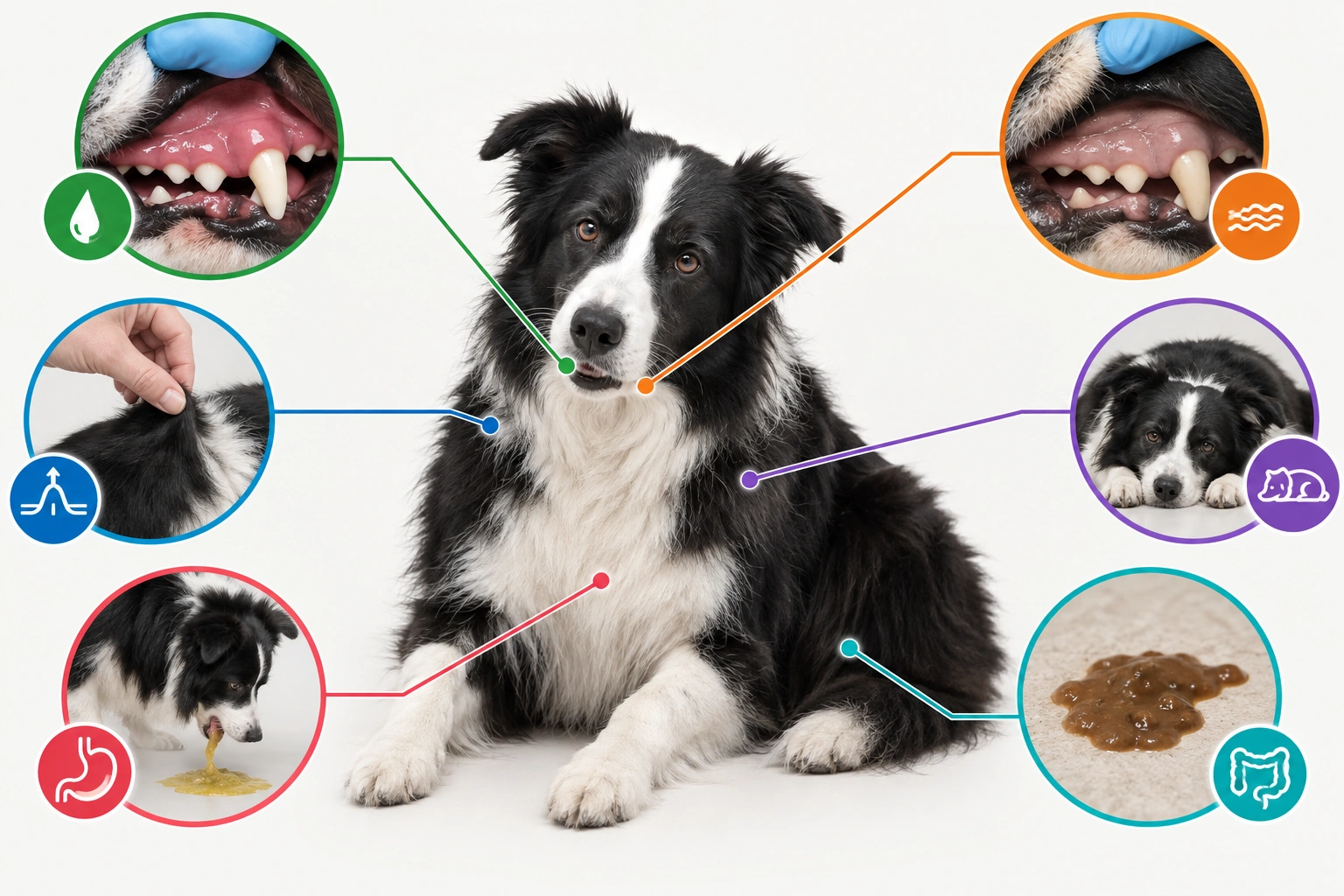
You do not need fancy equipment to spot trouble. A few quick checks can tell you whether the situation is turning serious.
Check the gums
Healthy gums are usually moist. Dry, tacky, or sticky gums suggest dehydration. Gum color also matters: pale, gray, blue, or very dark gums are concerning.
Check the skin tent test
Gently lift the skin over the shoulders or between the shoulder blades, then let it go. In a well-hydrated dog, it should settle back quickly. If it stays tented or returns slowly, that can suggest dehydration. This test is not perfect, but it is useful when combined with other signs.
Watch behavior
Red flags include:
– lethargy
– weakness
– wobbliness
– sunken eyes
– panting that seems excessive
– refusal to move
– collapse
Watch the gut
Vomiting and diarrhea matter because they drain fluid fast. A dog that is losing fluid and refusing water can go downhill quickly.
If you want a broader reference point, the VCA Hospitals resource on dehydration in dogs is a solid starting point. But again, if your dog is already weak, do not delay care to read more.
When refusal to eat or drink is an emergency
Some situations should not wait. Call your regular vet the same day if your dog:
– missed one meal and is otherwise normal, but the appetite loss continues
– is eating less than usual for more than a day
– is drinking less than usual but still acting normal
– has mild diarrhea or one episode of vomiting and otherwise seems okay
Go to an emergency clinic now if your dog:
– has not drunk water and is showing dehydration signs
– cannot keep water down
– is vomiting repeatedly
– has diarrhea plus lethargy
– seems weak, confused, or collapses
– has pale, tacky, or very dark gums
– is panting heavily after heat or exercise
– may have heatstroke
– is a puppy, senior, or chronically ill and has stopped drinking
A dog that refuses food alone may be monitored briefly if everything else is normal. A dog that refuses water, especially with vomiting or diarrhea, needs faster action. If you are debating whether it is “bad enough,” the presence of dehydration signs usually answers that question.
What to do in the first few hours if your dog won’t eat or drink
Your job in the first few hours is to gather useful information without making the problem worse.
1) Note the timeline
Write down when your dog last ate, drank, vomited, or had diarrhea. That gives the vet a starting point.
2) Offer water, but do not force it
Offer fresh water in a clean bowl. If your dog drinks on its own, that is helpful. If it refuses, do not pour water into its mouth or use a syringe unless a vet has told you to do so.
3) Pause hard exercise
Do not take a sick or dehydrated dog on a long walk “to work up an appetite.” Rest is the safer choice.
4) Check for obvious illness
Look for belly pain, drooling, bad breath, mouth injury, coughing, fever, or signs of distress.
5) Decide on the level of urgency
If your dog is bright, comfortable, and only skipped a meal, a short period of monitoring may be reasonable. If the dog is a puppy, senior, or sick, or if it has not drunk water for several hours, call a vet the same day. If the dog is not drinking, seems weak, or is vomiting, call a vet now.
How to offer water or food safely without making things worse
When a dog is nauseous, the wrong approach can backfire. The goal is to support hydration and avoid triggering more vomiting.
For water
Offer small amounts and let the dog choose. Fresh, cool water is fine. If the dog gulps and vomits, stop and call a vet. A dog that cannot keep even small amounts down may need medical treatment rather than home management.
For food
If your dog is otherwise stable and your vet has not told you to fast, a small amount of bland food may be reasonable after a short period of appetite loss. Keep the portion modest. A giant meal after a fast can upset the stomach.
What not to do
- do not force-feed
- do not shove water into the mouth
- do not give random human medications
- do not assume a hungry-looking dog is safe just because it wants to eat
If the refusal is caused by pain, nausea, or obstruction, pushing food is the wrong move.
When a dog can recover after not eating or drinking
A dog can often bounce back after a short period without food, especially if the issue was mild stress or a temporary upset stomach. Recovery is less predictable after water deprivation, and it becomes more complicated if the dog has been vomiting, has diarrhea, or is already weak.
A dog that has gone without water for too long may need:
– fluids
– electrolyte support
– anti-nausea treatment
– bloodwork
– imaging
– treatment for the underlying cause
That is why “my dog finally drank a little” is not always the end of the story. If the dog was clearly dehydrated, the underlying problem may still be active.
When to see a veterinarian or certified trainer
For this topic, the professional you need is usually a veterinarian, not a trainer. A trainer can help with routine feeding habits, but a sudden refusal to eat or drink is a medical question first.
Call your regular vet if:
- your dog missed one meal but is otherwise normal
- appetite is reduced but water intake is still happening
- you want guidance on whether to monitor or bring the dog in
Go to an emergency clinic if:
- your dog is not drinking and seems weak
- vomiting or diarrhea is ongoing
- your dog may have heatstroke
- gums are pale, tacky, or abnormal
- your dog collapses or cannot stand
- your dog cannot keep water down
If you are unsure, err on the side of urgency. It is better to hear “this can wait” from a vet than to miss the point where dehydration turns serious.
For owners who also need help separating a temporary appetite issue from a broader routine problem, my guide on what to feed your dog instead of dog food may help once your vet says it is safe to feed again. If your dog is also being left alone for long stretches, this article on how long a dog can be left alone can help you reduce some of the stressors that sometimes affect eating and drinking.
Bottom line
If you only remember one thing, make it this: not drinking is more urgent than not eating. A healthy adult dog may miss a meal and be fine for a short time, but water refusal, especially with vomiting, diarrhea, heat exposure, or lethargy, can become an emergency quickly. When in doubt, call your vet early.
FAQs
How long can a dog go without food?
A healthy adult dog may sometimes go about a day or so without food, but that is not a safe rule for every dog. Puppies, seniors, and sick dogs need faster attention.
How long can a dog go without water?
Much less time than without food. If a dog has not been drinking for most of a day, or sooner if it is hot or the dog is unwell, contact a vet.
Is it worse if my dog won’t eat or won’t drink?
Usually won’t drink. Water refusal creates dehydration risk much faster than food refusal.
Should I wait if my dog is still acting normal?
If your dog missed one meal but is drinking and acting normal, brief monitoring may be reasonable. If drinking stops, behavior changes, or vomiting/diarrhea starts, call a vet.
Can I give water by syringe?
Not unless a vet tells you to. Forcing water can cause choking or aspiration and can make vomiting worse.
When is it an emergency?
If your dog is weak, collapsing, vomiting repeatedly, has diarrhea plus lethargy, has abnormal gums, or cannot keep water down, seek urgent veterinary care.