
Does a Border Collie Need a Non Slip Bath Mat?

Quick Answer
Yes, a non-slip bath mat is strongly recommended for a Border Collie bathed in a smooth or slippery bathtub. It helps provide stable footing, reduces slipping hazards, and can make bathing less stressful. A separate mat is not essential if the bathing surface already provides dependable wet traction, but you should test that surface before every bath. The safest choice depends on your dog’s stability, the tub finish, and whether the mat stays firmly in place.
Border Collies are agile, athletic dogs, but those abilities do not automatically translate into good balance on a wet bathtub floor. Smooth acrylic, porcelain, and other bathroom surfaces can become difficult for paws to grip, particularly when shampoo and water are involved.
A non-slip mat provides an additional traction layer. However, choosing the right mat and securing it properly matter more than simply placing any bathroom rug inside the tub.
Why Is a Non-Slip Bath Mat Important for Border Collies?
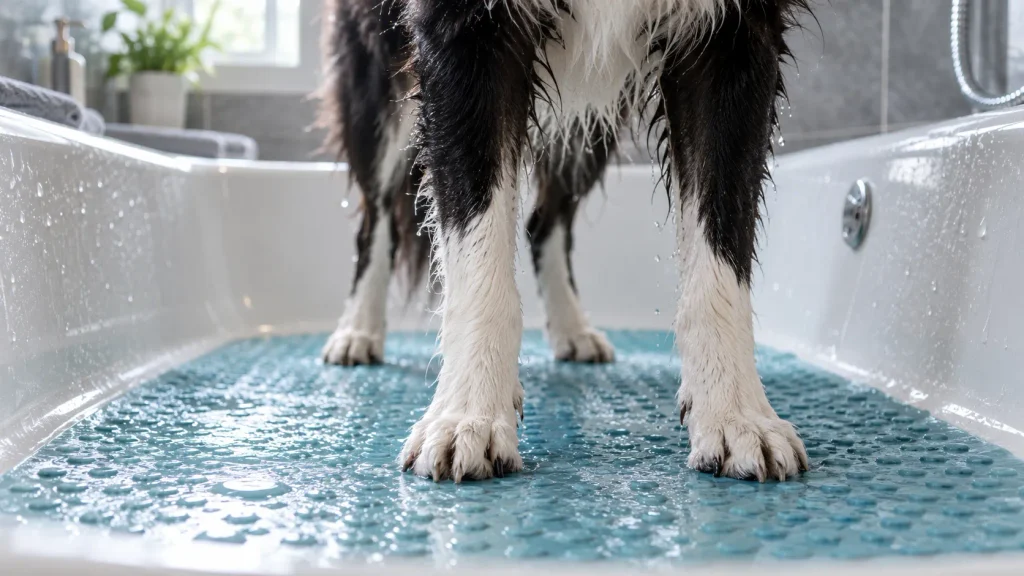
A non-slip bath mat is important because it helps a Border Collie maintain stable footing during washing, rinsing, and changes in position.
Dogs stand differently from humans, with their weight distributed across four paws. If a wet paw slides outward while the dog shifts its weight, recovering a comfortable stance can become difficult.
Veterinary-reviewed dog bathing guidance recommends providing a non-slip surface in the bathtub or shower to help prevent slipping.
Slippery surfaces can make dogs feel insecure
A Border Collie may appear nervous during bathing because it cannot maintain comfortable footing. You might notice spreading legs, frequent repositioning, stiff posture, or repeated attempts to leave the bathtub.
These behaviors do not prove that slipping is the only problem. Water noise, unfamiliar handling, and previous unpleasant experiences can also influence how a dog responds.
Nevertheless, improving traction removes one avoidable source of discomfort.
Active dogs may change position suddenly
Some Border Collies turn toward the water, step sideways during rinsing, or attempt to leave when uncomfortable. A stable surface becomes especially valuable when these movements happen unexpectedly.
A mat should give all four paws enough room to remain on a grippy surface during ordinary adjustments.
Does Every Border Collie Need One?
Not every Border Collie needs a separate bath mat, but every Border Collie needs secure footing during a bath.
The deciding factor is not simply breed or age. It is the combination of surface traction, your dog’s behavior, and physical stability.
The following situations help determine whether adding a mat is necessary.
| Bathing situation | Recommendation |
|---|---|
| Smooth bathtub with little wet traction | Use a secure non-slip mat. |
| Dog has previously slipped in the bath | Improve traction before another bath. |
| Textured shower floor with reliable grip | An additional mat may not be needed. |
| Older dog or dog with mobility difficulties | Prioritize stable footing and assistance; seek veterinary advice for mobility concerns. |
| Dog becomes frightened or scrambles in the tub | Check traction and address bathing stress. |
Even a young, confident Border Collie can slip. Likewise, an older dog may require more assistance than a mat alone can provide.
The practical rule is simple: judge the safety of the actual bathing surface, not the dog’s athletic ability.
What Makes a Bath Mat Safe for a Border Collie?
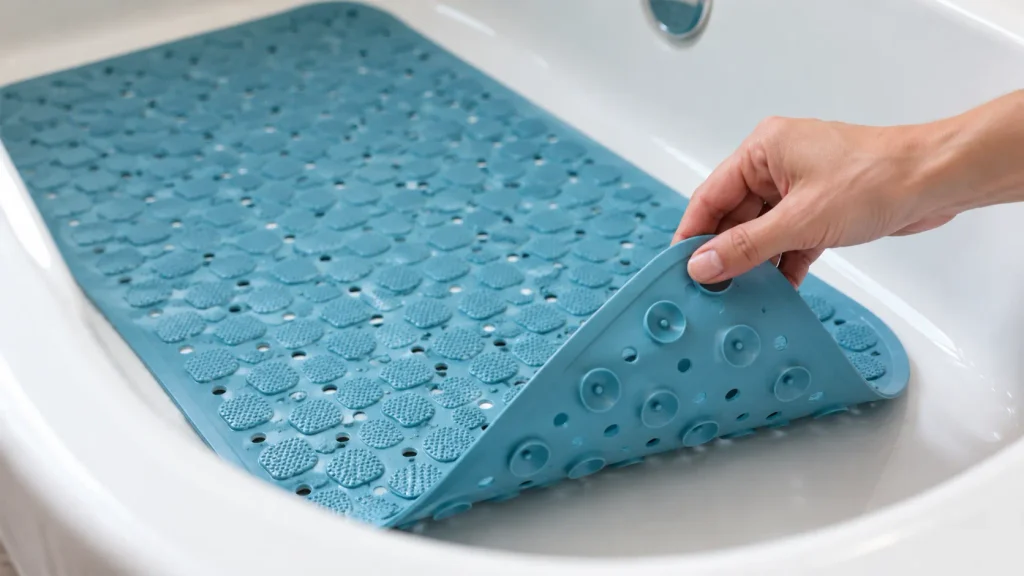
A suitable mat needs three essential qualities: reliable wet traction, a stable underside, and sufficient standing space.
1. A textured surface that grips wet paws
Look for a textured rubber or similarly suitable wet-area surface rather than a completely smooth top. The goal is to reduce sliding when your dog moves its feet.
Softness alone does not guarantee traction. A comfortable mat that becomes slippery when wet may not solve the problem.
2. A backing that matches your bathtub
Many bathtub mats rely on suction cups that attach to clean, smooth surfaces.
However, suction cups may not seal correctly against textured, uneven, or certain refinished tub surfaces. Always check the manufacturer’s compatibility instructions.
If the mat slides during your own stability check, do not assume your dog’s weight will hold it safely in place.
3. Enough room for four paws
Measure the usable flat area of the tub and consider how much space your Border Collie needs to stand naturally.
A narrow mat may fit the bathtub but still leave the hind paws on exposed slippery flooring.
The appropriate size depends on your dog’s build, stance, and bathing position rather than one universal breed-specific measurement.
4. Drainage and easy cleaning
A practical bathing mat should allow water to drain and should be easy to rinse, clean, and dry according to its care instructions.
Soap residue, hair, and trapped moisture can interfere with the mat’s grip or hygiene over time.
For a wider comparison of available designs, see our non-slip bath mat guide.
Can You Bathe a Border Collie Without a Non-Slip Mat?
Yes, provided the bathing surface already offers reliable traction and your dog can stand comfortably without sliding.
A purpose-designed textured shower floor may provide adequate grip. An appropriate non-slip bathing platform may also work, provided it is stable, correctly sized, and suitable for wet use.
If you have no mat available, a towel can sometimes offer temporary traction, but it must stay flat and secure. A loose, folding, or moving towel should not be considered a dependable substitute.
Do not improvise with an ordinary plush bathroom rug inside the tub. Many are intended for relatively dry floor placement rather than standing water.
Key Insight
The goal is secure footing, not owning a particular accessory. A stable, textured bathing surface may be sufficient; a poorly attached mat can introduce a new slipping hazard.
How Do You Check Whether a Bath Mat Is Secure?
Check the mat before your Border Collie enters the bath, rather than discovering a problem while your dog is standing on it.
- Clean the tub floor. Remove hair, shampoo residue, and anything that might interfere with the mat’s attachment.
- Position the mat correctly. Follow its instructions, including surface preparation and suction-cup placement where applicable.
- Press it into place. Make sure the edges lie flat without curling or bunching.
- Test movement. Push gently from different directions to see whether the mat slides or lifts.
- Repeat the check when wet. Confirm that water does not cause the mat or standing surface to become unstable.
- Prepare the exit. Ensure your dog has a secure, dry place to step onto afterward.
Never deliberately make your dog stand on an uncertain surface to test it. If a mat moves during inspection, correct the problem before bathing.
For detailed traction troubleshooting, our article on preventing bathtub slips explains the next checks to make.
Will a Non-Slip Mat Make Your Border Collie Less Afraid of Baths?
A non-slip mat may make bathing less frightening when unstable footing contributes to the dog’s discomfort. It does not automatically resolve every reason a dog dislikes water or grooming.
For example, a Border Collie that repeatedly scrambles on a slippery tub may become more willing to stand once the surface feels secure. Another dog that fears running water may remain distressed even with excellent traction.
Use the mat as one part of a calm bathing routine:
- Introduce the dry bathing area before starting a full wash.
- Reward calm approaches and voluntary cooperation.
- Keep the water comfortably lukewarm and the spray gentle.
- Avoid sudden spraying around the face and ears.
- Keep bathing sessions manageable and avoid forcing a panicked dog to continue.
If your Border Collie is especially uneasy around bathing, our Border Collie bathing tips cover gradual introductions and handling a double coat.
What If Your Border Collie Still Slips With a Mat?
If slipping continues, stop the bath and identify whether the problem comes from the mat, the surrounding surface, or the dog’s ability to stand.
First check whether the mat is shifting, only partially attached, or too small. Also inspect the exposed floor where your dog steps and turns.
Next consider whether long nails or excessive hair covering the paw pads could be affecting traction. Avoid cutting hair or nails beyond your grooming ability; ask a groomer or veterinarian for help when needed.
Pay closer attention if your Border Collie also slips on ordinary dry flooring, seems reluctant to bear weight, limps, or has difficulty standing. These signs justify a veterinary assessment rather than repeated attempts to bathe the dog.
Safety Warning
Do not continue bathing a dog that repeatedly falls, cannot remain standing, or becomes panicked. A bath mat cannot compensate for significant weakness, pain, or unsafe handling.
Don’t Forget the Floor Outside the Bathtub
A secure bathtub floor solves only part of the problem. A wet Border Collie still needs traction when stepping out onto bathroom flooring.
Tile can become slippery when water drips from the coat and paws. A backed, absorbent floor mat is useful for the exit area, provided it stays flat and does not move.
The material requirements differ: a mat inside the tub must work under running water, while an outside mat generally needs stable floor grip and moisture absorption.
Dry your dog’s paws and nearby puddles before allowing free movement across the bathroom. Our guide to wet bathroom floor safety explains how to manage the area beyond the tub.
Related Product: Non-Slip Dog Bathtub Mat
Textured Non-Slip Dog Bath Mat
A textured, wet-area bathtub mat can help provide more secure footing on a compatible smooth tub. Prioritize sufficient standing space, reliable attachment, drainage, and easy cleaning. Check your tub’s surface compatibility before choosing one.
Affiliate disclosure: As an Amazon Associate, we earn from qualifying purchases.
Frequently Asked Questions
Can a puppy Border Collie use a non-slip bath mat?
Yes. A properly secured, appropriately sized non-slip mat can help a puppy stand more comfortably during bathing. Introduce the bathing area gradually, supervise closely, and avoid expecting a young puppy to balance on slippery surfaces.
Are human bathtub mats safe for Border Collies?
Some human bathtub mats can work if they provide suitable wet traction, fit the dog’s standing area, attach securely, and have no hazardous loose parts. Confirm the manufacturer’s intended use and surface compatibility rather than assuming every human bath mat is appropriate for pets.
Is a rubber bath mat better than a towel?
A properly secured rubber bathtub mat is generally a more dependable reusable option than a loose towel. A towel may offer temporary grip, but it can fold, become saturated, or shift beneath the dog.
How often should I clean my dog’s bath mat?
Rinse away hair and bathing products after each use, then clean and dry the mat according to its care instructions. Inspect it regularly for residue, damage, unpleasant odors, or attachment problems before using it again.
Does an outdoor dog bath require a non-slip mat?
It depends on the surface. Stable, suitable flooring may already provide sufficient traction, while smooth concrete, plastic bathing stations, or wet platforms may need an additional non-slip layer. Also consider drainage, surface temperature, and safe footing around the bathing area.
Can a non-slip mat prevent every bathing accident?
No. A mat reduces one important hazard but cannot eliminate sudden movements, attempts to jump, improper lifting, water-related distress, or mobility problems. Supervision, calm handling, secure entry and exit, and an appropriate bathing environment remain essential.
Final Verdict
A Border Collie does not automatically need a separate bath mat when the existing bathing surface is genuinely secure. However, for ordinary smooth bathtubs, a properly fitted non-slip mat is a sensible safety precaution.
Choose dependable wet traction, confirm the mat stays attached, and prepare a safe exit area. If your dog still struggles to stand, address the underlying problem rather than relying on the mat alone.