

Quick Answer
If your Border Collie smells after a bath, trapped moisture, leftover shampoo, a dirty towel, or damp bedding is often responsible. A sour, yeasty, fishy, or rotten odor can also point to a skin, ear, dental, or anal-gland problem. Follow safe dog-grooming practices and check whether the smell disappears once the coat is completely dry.
What to check first
- Dry the undercoat: Moisture often remains beneath the apparently dry outer coat.
- Check for residue: Rub the coat with wet fingers and look for foam or a slippery feel.
- Smell each area: Check the ears, paws, neck, rear end, and skin separately.
- Replace damp fabrics: Use a clean towel, collar, bed cover, and blanket.
- Watch for irritation: Redness, itching, discharge, sores, or hair loss need veterinary attention.
Quick verification tip
- Wait until the coat is fully dry, then smell the skin rather than only the fur. A persistent localized odor helps identify the source.
When a Border Collie smells after a bath, another wash may seem like the obvious answer. In my experience, that often makes the problem worse by adding more moisture.
A Border Collie, sometimes described as a working sheepdog or farm collie, has a dense double coat. This guide explains how that coat traps odor and how to spot a possible health problem.
In This Guide
- Why Does My Border Collie Smell Worse After a Bath?
- How Does a Border Collie’s Double Coat Trap Odor?
- What Causes Post-Bath Odor in Border Collies?
- How Can I Find Where the Smell Comes From?
- How Do I Remove the Smell Safely?
- How Can I Prevent Odor After Future Baths?
- When Does a Bad Smell Need Veterinary Care?
- Frequently Asked Questions
- Final Takeaway
Why Does My Border Collie Smell Worse After a Bath?
A Border Collie may smell worse after bathing because water releases odor-producing compounds trapped in coat oils and debris. The damp double coat then holds those smells close to the skin.
This familiar “wet dog smell” should fade as the coat dries. It should not remain strong after both coat layers are dry.
What is post-bath dog odor?
Post-bath dog odor is a temporary smell created when water mixes with natural skin oils, microorganisms, dirt, and organic material in the coat. Moist air carries the released odor molecules toward your nose.
A healthy dog can have a mild earthy smell while wet. A powerful sour, musty, fishy, or rotten odor is different.
Why can bathing expose a hidden smell?
Water does not always create the underlying problem. It can reveal odor that was already present beneath the coat.
- Dried saliva: Licking leaves moisture and organic material around itchy areas.
- Outdoor debris: Mud, pond water, grass, and manure can remain in the undercoat.
- Coat oils: Natural oils collect around the neck, tail base, and behind the ears.
- Microbial growth: Yeast and bacteria can produce stronger odors when the skin stays warm and damp.
I once traced a lingering smell to one damp patch behind a dog’s ear. The rest of the coat had dried, so another full bath would not have solved it.
Section Takeaway: A mild smell while wet can be normal, but a strong odor after complete drying deserves closer inspection.
How Does a Border Collie’s Double Coat Trap Odor?
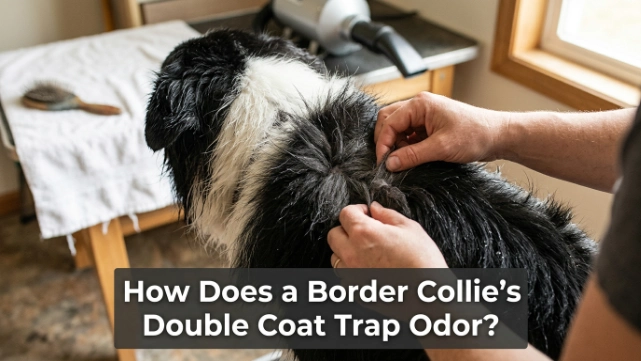
A Border Collie’s double coat contains a protective outer layer and a softer insulating undercoat. Water may leave the outer hairs while the dense layer near the skin remains damp.
Rough coat versus smooth coat
Rough-coated Border Collies have longer feathering around the chest, legs, belly, and tail. These areas can hold water, shampoo, dirt, and saliva.
Smooth-coated dogs have shorter outer hair, but they still carry a dense undercoat. Short fur does not guarantee fast drying.
- Outer coat: Coarser guard hairs help repel rain, dirt, and light debris.
- Undercoat: Soft, dense hair provides insulation but holds moisture close to the skin.
- Feathering: Longer hair can trap water around the ears, chest, rear legs, and tail.
- Mats: Tangled hair blocks airflow and creates damp pockets.
How long should drying take?
Drying time depends on coat density, room humidity, airflow, and the dog’s size. A towel-dried rough coat may remain damp near the skin for several hours.
Part the hair with your fingers at the neck, armpits, groin, tail base, and behind the ears. The skin and undercoat should feel dry and close to room temperature.
A cool undercoat usually still contains moisture. Pay special attention during humid weather.
Never place a damp dog in a closed crate or cover them with a heavy blanket. Restricted airflow extends drying time and may intensify odor.
Section Takeaway: The surface can look dry while the undercoat remains wet. Always check the hair close to the skin.
What Causes Post-Bath Odor in Border Collies?
Incomplete drying and shampoo residue are the most common grooming-related causes. Skin, ear, mouth, and anal-gland conditions become more likely when the smell is strong or localized.
Grooming and environmental causes
- Trapped moisture: A wet undercoat develops a stale or musty smell.
- Poor rinsing: Shampoo residue collects oil and dirt while irritating sensitive skin.
- Wrong shampoo: Human shampoo and harsh detergents can disrupt the canine skin barrier.
- Dirty equipment: Used towels, brushes, tubs, and drying mats can transfer odor back to the coat.
- Damp collar: A wet collar traps moisture around the dense neck fur.
- Unwashed bedding: A clean dog can regain an old smell after lying on a dirty bed.
- Outdoor contamination: Pond water, decomposing plants, animal waste, and skunk oil require targeted cleaning.
Possible health-related causes
- Yeast overgrowth: Often creates a musty, sweet, or corn-chip-like odor with itching or greasy skin.
- Bacterial infection: May cause a sour smell, redness, sores, crusting, or discharge.
- Ear trouble: Ear infections can smell yeasty or foul and may cause head shaking.
- Dental disease: Bad breath may seem like coat odor when the dog pants after bathing.
- Anal glands: Leaking anal-gland fluid produces a sharp, fishy smell near the rear end.
- Allergies: Itching and licking can damage the skin and allow secondary infections to develop.
The American Veterinary Medical Association’s allergy guidance lists odor among the signs that can accompany pet allergies. Allergic skin often needs veterinary management rather than repeated bathing.
Vet note: Do not diagnose yeast, bacteria, or allergies by smell alone. A veterinarian may need skin, ear, or other diagnostic tests.
How Can I Find Where the Smell Comes From?
Let the coat dry completely, then inspect one area at a time. The odor’s location, character, and timing can narrow the possible cause.
Use a simple smell map
- Start at the head: Smell the mouth, lips, chin, and both ears separately.
- Check the neck: Remove the collar and inspect the skin beneath it.
- Part the coat: Examine the shoulders, belly, armpits, groin, and tail base.
- Inspect the paws: Look between the toes for redness, moisture, or debris.
- Check the rear: Note any fishy smell, swelling, discharge, or scooting.
Use your eyes and hands as well as your nose. Look for flakes, grease, hair loss, redness, scabs, mats, swelling, or damp spots.
| Odor or timing | Likely source | What to check | Best next step |
|---|---|---|---|
| Mild earthy smell while wet | Normal wet-coat odor | Moist undercoat without irritation | Dry thoroughly and reassess |
| Soapy or stale smell | Shampoo residue | Slippery coat or foam during a water test | Rinse with lukewarm water |
| Musty or sweet smell | Damp coat or possible yeast | Greasy skin, itching, redness | Dry the coat; contact a vet if persistent |
| Foul smell near one ear | Possible ear problem | Discharge, redness, head shaking | Arrange a veterinary examination |
| Sharp fishy smell | Anal-gland fluid | Scooting, licking, rear-end swelling | Ask a vet to examine the area |
| Odor returns after resting | Bedding, collar, or towel | Smell each fabric item | Wash and dry all fabrics |
As of 2026, smell remains a useful clue rather than a diagnosis. The accompanying signs and veterinary findings matter more.
How Do I Remove the Smell Safely?
First confirm whether the coat is damp or coated with shampoo. Correct that problem before reaching for sprays, perfumes, or another cleanser.
Step-by-step post-bath rescue
- Move to fresh air: Choose a warm, ventilated room without a cold draft.
- Remove damp items: Take off the collar, harness, bandana, or coat.
- Press with towels: Use clean absorbent towels without rubbing the hair into tangles.
- Check for residue: Wet a small section and massage it gently between your fingers.
- Rinse if needed: Use lukewarm water until it runs clear and the coat no longer feels slippery.
- Dry in layers: Part the coat and direct cool or slightly warm airflow toward the undercoat.
- Brush gently: Use a pin brush or suitable slicker once tangles loosen and the coat is nearly dry.
- Clean the environment: Wash the bed cover, towels, collar, and washable grooming tools.
Keep a dryer moving and use its coolest practical setting. Never direct concentrated hot air at the skin, eyes, ears, or genitals.
What should I avoid?
- Human shampoo: It may irritate canine skin and strip protective oils.
- Perfume or air freshener: Fragrance masks the smell without removing its cause.
- Undiluted vinegar: It can sting irritated, broken, or infected skin.
- Essential oils: Some oils can harm dogs through skin contact, inhalation, or licking.
- A third quick bath: Repeated washing adds moisture and may worsen irritation.
- Ear probing: Do not push cotton swabs, liquid, or tools into the ear canal.
If the dog rolled in a known substance, use a dog-safe product made for that contaminant. Contact your vet if you cannot identify what touched the coat.
Section Takeaway: Remove moisture and residue first. Do not hide a persistent odor with fragrance.
How Can I Prevent Odor After Future Baths?
Brush before bathing, rinse longer than expected, and dry the undercoat completely. A consistent routine works better than frequent emergency baths.
Before the bath
- Brush out loose coat: Remove dead undercoat, debris, and small tangles.
- Separate mats: Water tightens many mats and makes drying harder.
- Prepare clean supplies: Set out washed towels, brushes, and a dry collar.
- Choose dog shampoo: Use a mild canine formula suited to your dog’s skin.
- Check the skin: Look for redness, sores, parasites, or tender areas before washing.
During the bath
Use lukewarm water and work in the direction of hair growth. Keep shampoo and running water away from the eyes and ear canals.
Massage gently down to the undercoat. Scrubbing in circles can create tangles in rough feathering.
- Use less product: Excess shampoo takes longer to rinse away.
- Rinse by sections: Check the neck, chest, armpits, belly, rear legs, and tail.
- Repeat the rinse: Continue until the water is clear and the coat feels clean rather than coated.
After the bath
Let your Border Collie shake in a safe area before towel drying. That natural shake removes a surprising amount of water.
Wash the dog’s bedding on the same day when possible. Place only a completely dry collar on a completely dry neck.
The American Kennel Club’s bathing guidance explains that coat type, lifestyle, and skin needs should shape bathing frequency. There is no single schedule for every Border Collie.
For many healthy indoor dogs, brushing and spot cleaning handle routine dirt between occasional full baths. Working dogs that encounter mud or livestock may need more frequent cleaning.
Section Takeaway: Clean equipment, thorough rinsing, and complete undercoat drying prevent most grooming-related odors.
When Does a Bad Smell Need Veterinary Care?
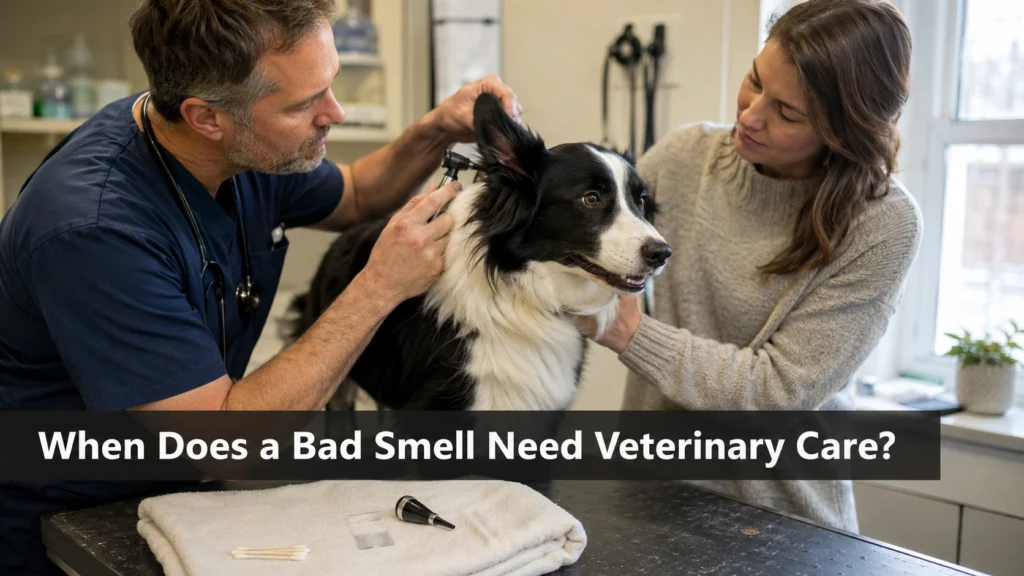
Contact a veterinarian when the odor remains after the coat is fully dry or returns quickly. Seek help sooner when smell appears with pain, inflammation, or behavior changes.
Warning signs to take seriously
- Persistent itching: Scratching, chewing, or licking can signal allergies, parasites, or infection.
- Skin changes: Redness, darkening, grease, flakes, pustules, crusts, or hair loss need assessment.
- Ear symptoms: Discharge, swelling, head tilting, pain, or repeated head shaking require an examination.
- Open sores: Wet, painful patches can spread quickly beneath a dense coat.
- Rear-end symptoms: Scooting, swelling, bleeding, or a fishy odor can involve the anal glands.
- Whole-body illness: Low energy, poor appetite, fever, vomiting, or unusual thirst should not be ignored.
The AKC’s veterinary overview of dog odor identifies secondary yeast and bacterial infections as common medical causes. These infections often develop alongside an underlying problem such as allergies.
A vet may examine the ears, mouth, coat, paws, and anal area. Skin cytology, ear samples, parasite checks, or allergy evaluation may be recommended.
Do not apply leftover antibiotics, antifungal cream, or medicated shampoo without guidance. The wrong treatment can delay diagnosis or irritate the skin.
Vet note: Seek urgent care for facial swelling, breathing trouble, collapse, severe pain, chemical exposure, or rapidly spreading skin damage.
Frequently Asked Questions
Is it normal for a Border Collie to smell when wet?
A mild earthy “wet dog” smell can be normal while the double coat remains damp. The odor should fade after complete drying. A strong sour, yeasty, fishy, or rotten smell that persists may come from residue, contaminated fabrics, or a health problem.
Why does my Border Collie smell like wet socks after bathing?
A wet-sock or musty odor often means moisture remains in the undercoat, collar area, paws, or bedding. It may also accompany yeast overgrowth. Dry every coat layer and seek veterinary help if the smell returns with itching, grease, redness, or hair loss.
Can leftover dog shampoo make the coat smell bad?
Yes. Shampoo residue can smell stale, collect dirt, and irritate the skin. Test a small area with lukewarm water. If it becomes slippery or foamy, rinse the entire coat carefully and dry it down to the skin.
Can I use human shampoo on my Border Collie?
Human shampoo is not a good routine choice because human and canine skin have different needs. Use a mild, dog-formulated shampoo. Ask your veterinarian for a suitable product when your Border Collie has allergies, recurrent odor, or sensitive skin.
How often should I bathe my Border Collie?
Bathing frequency depends on activity, coat condition, and medical needs. Healthy Border Collies often need full baths only when dirty or smelly. Regular brushing and spot cleaning can reduce unnecessary washing, while a veterinarian may prescribe another schedule for skin treatment.
Why does my Border Collie still smell after professional grooming?
The undercoat may still be damp, or odor may return from a collar, bed, ears, mouth, paws, or rear end. Contact the groomer about residue or drying concerns. Arrange a veterinary examination when the smell is strong, localized, or paired with symptoms.
Will shaving my Border Collie prevent the smell?
Shaving is not a routine odor solution and may alter the protective double coat. It also leaves the underlying cause untreated. Remove mats safely, improve rinsing and drying, and ask a veterinarian or qualified groomer about coat care for severe matting.
Final Takeaway
If your Border Collie smells after a bath, wait until the double coat is completely dry before judging the result. Check for moisture, shampoo residue, dirty fabrics, and a localized odor source.
Use dog-safe products and improve airflow around the undercoat. Avoid perfume, harsh home remedies, and repeated baths.
A persistent smell is information, not a failure of grooming. When it appears with itching, redness, discharge, pain, or behavior changes, let your veterinarian find the cause.