

Quick Answer
To remove mud from a Border Collie, let ordinary clean mud dry when practical, then gently brush out the loose dirt. Wipe the remaining marks with a damp towel. If the mud is sticky, widespread, contaminated, or packed into the undercoat, rinse or bathe your dog with lukewarm water and dog-safe shampoo. This approach also follows practical at-home dog grooming guidance.
Quick Mud-Cleanup Steps
- Check the mud: Rinse immediately if it contains road salt, chemicals, waste, or anything unknown.
- Let it dry: Ordinary garden or trail mud often brushes out more easily once dry.
- Brush gently: Remove loose dirt without pulling hard at tangled fur.
- Wipe residue: Use a damp towel on the legs, belly, chest, and paws.
- Bathe if needed: Use dog shampoo when a simple brush-and-wipe cleanup isn’t enough.
- Dry completely: Pay special attention to the thick undercoat and areas behind the legs.
One Important Rule
- Don’t give your Border Collie a full shampoo bath after every muddy walk when brushing, rinsing, or wiping will do the job.
Border Collies and mud seem to find each other. After enough wet field walks, I’ve learned that the quickest cleanup is rarely a full bath.
As of 2026, my approach is still simple: remove only as much dirt as necessary while protecting the Border Collie’s dense double coat. This guide covers everything from dried trail mud to a dog that looks like they’ve rolled through an entire puddle.
Definition: Mud removal for a Border Collie means getting soil and debris out of the outer coat, undercoat, paws, and feathering without unnecessary shampooing or aggressive brushing.
In This Guide
- What Is the Fastest Way to Remove Mud From a Border Collie?
- Should You Let Mud Dry Before Cleaning a Border Collie?
- How Do You Clean Muddy Paws, Legs, and Belly Without a Bath?
- When Does a Muddy Border Collie Need a Full Bath?
- Does Coat Type Change How You Remove Mud?
- How Do You Dry a Border Collie After Mud Cleanup?
- What Mud-Cleaning Mistakes Should You Avoid?
- Frequently Asked Questions
- Keep Mud Cleanup Simple
What Is the Fastest Way to Remove Mud From a Border Collie?
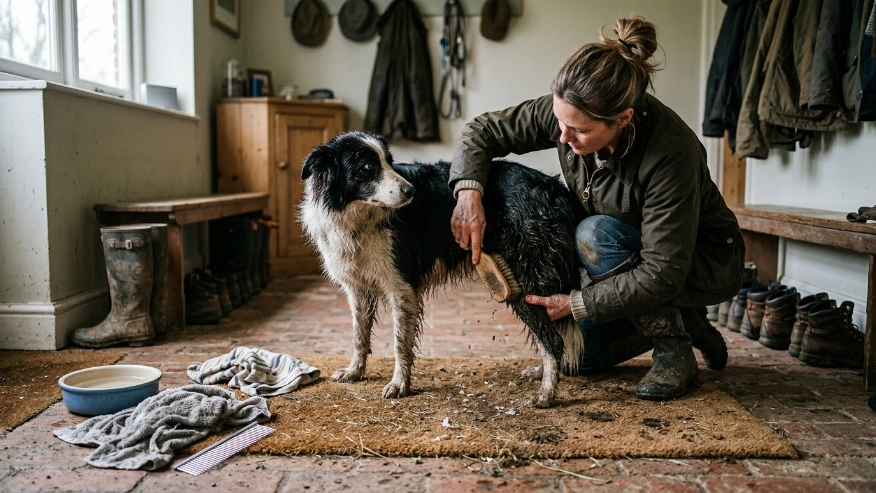
The fastest method is to deal with the mud in stages. Don’t automatically put your Border Collie in the bathtub.
I first check whether the dirt is normal soil or something that needs immediate rinsing. That one decision saves a lot of unnecessary washing.
- Inspect the coat and paws. Look for mud between the toes, under the belly, around the tail, and behind the legs.
- Remove sticks and debris. Pick out leaves, grass, and loose material before brushing.
- Let ordinary mud dry. Dry soil often releases from the outer coat with much less effort.
- Brush the coat in sections. Work with the direction of hair growth and avoid dragging through knots.
- Wipe remaining dirt. A warm, damp microfiber towel works well on light residue.
- Rinse dirty areas if needed. You can wash the paws and lower legs without soaking the entire dog.
- Dry and check again. Feel through the coat for trapped grit or damp areas.
A rough-coated Border Collie may hold dirt in the longer feathering around the chest, legs, and tail. I separate those areas with my fingers before brushing so I can see what I’m dealing with.
A smooth-coated Border Collie is usually quicker. There is less long outer hair for dried mud to cling to.
Should You Let Mud Dry Before Cleaning a Border Collie?
Yes, you can often let clean mud dry before removing it. Dried soil may crumble away from a Border Collie’s outer coat with gentle brushing.
This works best when your dog has simply run through an ordinary muddy field or garden. It isn’t the right approach for every mess.
When I let the mud dry
- The mud appears to be ordinary soil.
- The coat isn’t tightly matted.
- There is no strong or unusual smell.
- My dog is comfortable and isn’t licking the area.
- The dirt is mainly on the outer coat.
When I rinse it off immediately
- Mud is mixed with road salt or de-icing material.
- The puddle may contain fuel, cleaners, pesticides, or other chemicals.
- The coat is contaminated with feces or another unpleasant substance.
- Mud has entered the eyes, mouth, or a skin wound.
- Your dog keeps licking, scratching, or showing discomfort.
Don’t encourage your dog to lick unknown substances from muddy paws. Rinsing with clean lukewarm water is the safer first step when you’re unsure what they’ve walked through.
Vet note: If you suspect chemical exposure, notice a wound, or your dog develops ongoing skin irritation, contact your own veterinarian for advice.
How Do You Clean Muddy Paws, Legs, and Belly Without a Bath?
For most muddy walks, I use a targeted cleanup instead of washing the whole Border Collie. It takes less work and avoids soaking the entire undercoat.
The paws are where I start. Mud can hide between the toes and around the pads even when the top of the foot looks clean.
For muddy paws
- Set the paw in a shallow container or use a gentle sprayer.
- Rinse with lukewarm water.
- Use your fingers to loosen dirt around the toes.
- Check between the pads for grit, small stones, or plant material.
- Press the paw dry with an absorbent towel.
For muddy legs and belly
A wet towel handles light splashes. For heavier dirt, I rinse only the dirty sections and keep the back and shoulders dry.
Don’t scrub the coat hard in circles. That can twist longer hair together and turn a simple muddy patch into a tangle.
- Light splatter: Damp towel followed by a dry towel.
- Thick mud: Let safe mud dry, brush it out, then wipe.
- Wet packed mud: Use a targeted lukewarm rinse.
- Sticky contamination: Move to a proper bath with dog-safe shampoo.
This small-area approach is especially useful during rainy weeks. You don’t need to turn every muddy afternoon into bath day.
When Does a Muddy Border Collie Need a Full Bath?
A full bath makes sense when mud has reached large areas of the coat or won’t come out through brushing and rinsing. It also helps when the dog smells dirty after the visible soil is gone.
Border Collies have a double coat, so water and shampoo must reach through the outer hair without leaving residue behind. Dog-specific shampoo guidance from the AKC also recommends products designed for canine skin and coat.
My muddy-dog bath routine
- Brush first. Remove loose dirt, dead hair, and easy tangles.
- Use lukewarm water. Wet the coat gradually from the shoulders downward.
- Use dog shampoo. Work it through the dirty coat without aggressively scratching the skin.
- Protect the face. I use a damp cloth rather than spraying directly around the eyes and ears.
- Rinse thoroughly. Dense undercoat can hold shampoo longer than it appears.
- Squeeze out water. Press the coat gently before reaching for towels.
- Dry completely. Check the undercoat, belly, armpits, feet, and tail area.
Never use ordinary human shampoo just because it’s nearby. Products intended for people aren’t my choice for routine Border Collie bathing.
If the skin looks red, sore, swollen, or unusually irritated during cleanup, stop experimenting with grooming products. Pet owners can also use resources from the American Veterinary Medical Association alongside advice from their own veterinarian.
Vet note: Persistent itching, open skin, swelling, unusual odor, or painful areas deserve veterinary attention rather than repeated home bathing.
Does Coat Type Change How You Remove Mud?
Yes. Rough- and smooth-coated Border Collies have the same basic double-coat concept, but longer feathering changes where mud collects and how long cleanup takes.
The PetMD Border Collie care guide also notes the breed’s double coat and recommends regular brushing, with extra grooming when a dog gets muddy or dirty.
| Cleanup Point | Rough Coat | Smooth Coat |
|---|---|---|
| Outer hair | Longer with more feathering | Shorter and closer to the body |
| Common mud traps | Chest, tail, rear legs, belly, behind front legs | Paws, lower legs, belly, underside |
| First cleanup step | Separate feathering and remove debris before brushing | Brush or towel away surface dirt |
| Tangle risk | Higher in longer feathered areas | Lower, though the undercoat still needs checking |
| After rinsing | Check carefully for damp undercoat and tangles | Towel dry, then check dense areas near the body |
With my rough-coated dogs, the rear-leg feathering is usually the last area that looks dirty. Fine mud dries deep between those longer hairs.
I work through that hair in small sections instead of pulling a brush through the whole clump. It’s slower for a minute, but much kinder to the coat.
How Do You Dry a Border Collie After Mud Cleanup?
Drying matters because a Border Collie’s undercoat can remain damp after the surface looks dry. Start by pressing water from the coat rather than rubbing it hard.
I keep two towels near the door during wet weather. The first takes the mud and most moisture, while the second finishes the drying.
Use this drying order
- Blot the paws and lower legs.
- Press a towel around the belly and chest.
- Squeeze longer feathering inside the towel.
- Check behind the front legs and around the rear feathering.
- Use a dryer on a cool or low setting if necessary.
- Keep airflow moving instead of concentrating it on one patch of skin.
- Brush or comb gently once the coat is ready.
Don’t attack a soaking-wet tangle with a brush. I first separate it with my fingers and remove as much moisture as possible.
Areas behind the ears, beneath the collar, around the armpits, and in rear feathering deserve another check. These spots can hide damp hair even after the dog’s back feels dry.
What if dried mud caused a mat?
Don’t yank through it. Hold the hair near the skin to reduce pulling, then work from the outer edge of the tangle in small sections.
If a mat is tight against the skin, I would rather have a professional groomer handle it than cut blindly with scissors. Skin can sit much closer to a mat than it appears.
What Mud-Cleaning Mistakes Should You Avoid?
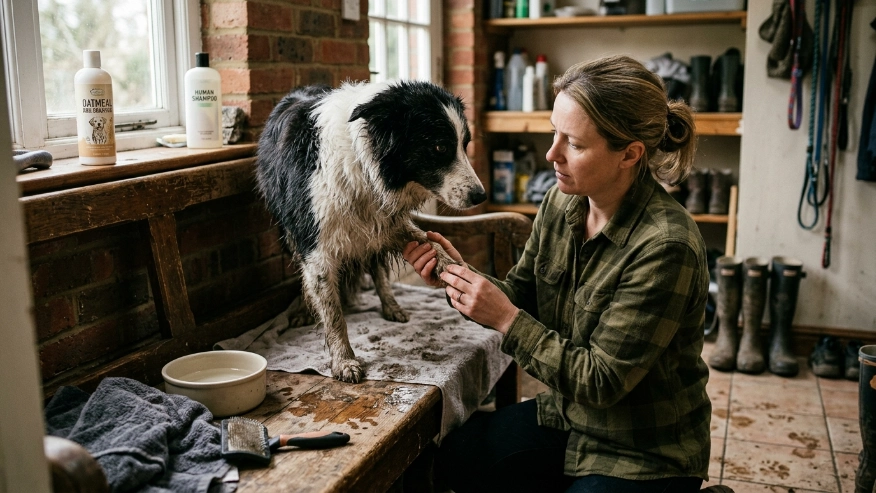
The biggest mistake is doing too much. A muddy Border Collie doesn’t automatically need shampoo from nose to tail.
The second is rushing. Aggressive scrubbing and brushing often create more work than the mud itself.
Common mistakes I avoid
- Bathing after every splash: Try brushing, wiping, or a targeted rinse first.
- Brushing sticky wet mud: This can smear soil deeper and pull at the hair.
- Using hot water: Choose comfortably lukewarm water instead.
- Using human products: Stick with grooming products intended for dogs.
- Rubbing with towels: Press and squeeze longer fur to reduce tangles.
- Ignoring the paws: Mud between toes can remain after the legs look clean.
- Leaving the undercoat damp: Check with your fingers rather than judging the surface alone.
- Shaving the coat for convenience: Routine mud management doesn’t require removing the Border Collie’s protective coat.
Build a simple muddy-walk station
Prevention makes the biggest difference in my house. I keep cleanup supplies together instead of hunting for them while a muddy dog waits at the door.
- Two absorbent dog towels
- A washable entrance mat
- A small container for paw rinsing
- A brush and wide-tooth comb
- Dog-safe shampoo for the occasional full bath
I also teach a simple wait at the door. A Border Collie usually learns this routine quickly when calm waiting is consistently rewarded.
That small habit prevents muddy paw prints through the house. More importantly, it gives me time to inspect each paw before my dog runs off.
Frequently Asked Questions
Can I just let mud dry on my Border Collie?
Yes, if it’s ordinary clean soil and your dog is comfortable. Dry mud often brushes from the outer coat easily, but rinse immediately when the mud contains road salt, chemicals, waste, or another substance you don’t recognize.
Do I need to bathe my Border Collie after every muddy walk?
No. Light or moderate mud often needs only drying, brushing, wiping, or a targeted paw-and-leg rinse. Save a full shampoo bath for widespread, sticky, smelly, or stubborn dirt that simpler cleaning can’t remove.
Can I brush wet mud out of a Border Collie?
You can remove loose debris, but brushing thick wet mud usually isn’t my first choice. If the mud is safe, letting it dry can make removal easier and reduce pulling on long feathering and tangled areas.
What should I use to wipe muddy Border Collie paws?
For ordinary dirt, clean lukewarm water and an absorbent towel are often enough. Rinse between the toes and around the pads, then dry carefully so grit and moisture aren’t left hidden between the paw pads.
Can I use human shampoo on a muddy Border Collie?
I wouldn’t use human shampoo for routine dog grooming. If shampoo is necessary, choose a product formulated for dogs and rinse it thoroughly from both the outer coat and dense undercoat.
Why does my Border Collie still look dirty after brushing?
Fine mud can remain in longer feathering or close to the undercoat after the loose dirt falls away. Use a damp towel or targeted rinse, then inspect the belly, chest, rear legs, tail, and areas behind the front legs.
What if my Border Collie’s skin looks red after getting muddy?
Rinse away remaining dirt with clean water and avoid trying several new grooming products. If redness, soreness, itching, swelling, or repeated licking continues, contact your veterinarian so the underlying irritation can be properly assessed.
Keep Mud Cleanup Simple
Removing mud from a Border Collie doesn’t need to mean a full bath every time. For ordinary mud, I start with drying, brushing, wiping, and targeted rinsing.
Save shampoo for the messes that genuinely need it. That approach keeps cleanup quicker while making it easier to care for the Border Collie’s double coat.
Check the paws, belly, feathering, and undercoat before calling the job finished. A few minutes at the door can prevent both stubborn tangles and muddy tracks through the house.
If your Border Collie loves fields, trails, puddles, or wet-weather adventures, keep a simple cleanup station ready. Then the next muddy walk can stay exactly what it should be: fun.