

Quick Answer
You can bathe a Border Collie with fleas, but the bath should be only one part of flea control. Use lukewarm water, a flea product made for dogs if your veterinarian or the label says it is appropriate, rinse the dense double coat thoroughly, and follow a complete dog flea control plan for your pet and home.
Safe Flea-Bath Steps
- Confirm the fleas: Look for live fleas or dark flea dirt with a flea comb.
- Check the product: Make sure any flea shampoo is labeled for your dog’s age and size.
- Brush first: Remove loose undercoat and tangles before getting the coat wet.
- Use lukewarm water: Wet the coat slowly while keeping water away from the eyes and ears.
- Rinse completely: Separate the double coat with your fingers until no shampoo residue remains.
- Treat the environment: Wash bedding and clean areas where your Border Collie rests.
Important
- Ask your veterinarian before combining flea shampoos, topical treatments, collars, sprays, or other parasite products.
When I need to bathe a Border Collie with fleas, I treat the bath as the first cleanup step, not the whole solution. A Border, sometimes called a working sheepdog, has a dense coat that can hide fleas surprisingly well.
The biggest mistake is focusing only on what you see crawling through the fur. Flea eggs and developing fleas may also be scattered through bedding, carpets, furniture, and other places your dog uses.
In This Guide
- Can You Bathe a Border Collie With Fleas?
- How Do You Know Your Border Collie Really Has Fleas?
- What Should You Prepare Before a Flea Bath?
- How Do You Bathe a Border Collie With Fleas Step by Step?
- Does a Flea Bath Get Rid of the Whole Infestation?
- What Should You Do After the Flea Bath?
- When Should You Skip the Bath and Call a Vet?
- Frequently Asked Questions
- Final Takeaway
Can You Bathe a Border Collie With Fleas?
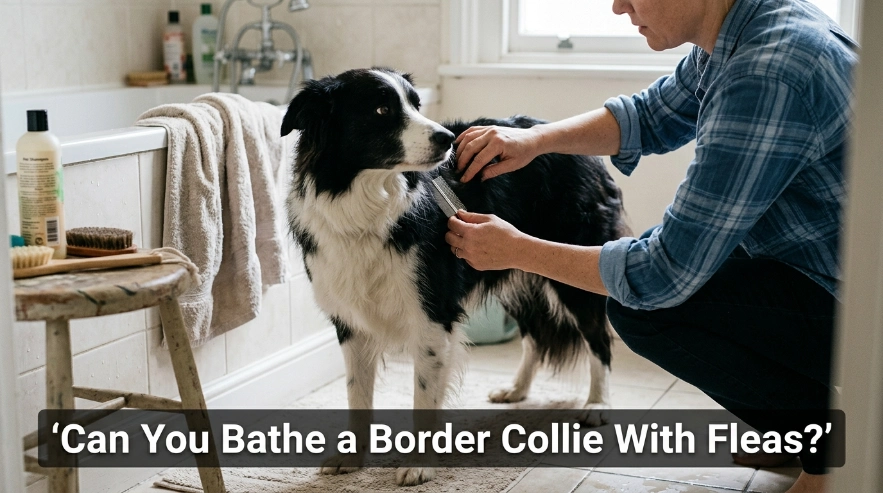
Yes. Bathing can remove dirt, flea debris, and some adult fleas from a Border Collie’s coat, especially when you combine washing with careful flea-combing.
A bath does not remove every flea stage from your home. That distinction matters because otherwise fleas can quickly appear on your dog again.
Definition: A Border Collie flea bath is a dog-safe wash intended to remove or kill fleas currently on the dog. It is not, by itself, a complete flea-control program.
Why the Border Collie coat needs extra care
Border Collies come in rough and smooth coat varieties. Both carry enough coat for parasites and flea dirt to become difficult to spot near the skin.
I part the fur instead of inspecting only the surface. I pay close attention around the neck, tail base, belly, groin, and rear legs.
- Outer coat: Can make it difficult to see what is happening at skin level.
- Undercoat: Needs to become wet enough for shampoo and rinsing water to reach the skin.
- Feathering: Longer fur may hide fleas or flea dirt around the legs and tail.
- Thick areas: Need extra rinsing and drying after shampooing.
As of 2026, I would not choose a flea treatment just because a bottle says it kills parasites. The dog’s age, health, other medications, and any flea products already being used matter too.
Vet note: Ask your veterinarian which flea-control products are appropriate for your individual Border Collie, especially for puppies, seniors, pregnant dogs, or dogs with health problems.
How Do You Know Your Border Collie Really Has Fleas?
Try to confirm fleas before reaching for flea shampoo. Scratching alone does not prove that fleas are responsible.
The most useful home tool is a fine-toothed flea comb. Comb close to the skin and examine anything caught between the teeth.
Look for fleas and flea dirt
- Live fleas: Small, fast-moving insects traveling through the coat.
- Flea dirt: Tiny dark specks produced from digested blood.
- Repeated scratching: Often focused around the back, neck, or tail area.
- Chewing or licking: Your dog may repeatedly work at irritated areas.
- Red skin: Bites and scratching can leave the skin irritated.
- Hair loss or scabs: More severe irritation may damage the coat and skin.
You can place dark specks from the comb on a damp white paper towel. Flea dirt may release a reddish-brown stain because it contains digested blood.
The CDC’s information about fleas explains that fleas feed on animal or human blood. Their bites can cause itching and irritation.
Don’t assume every itch is fleas
Border Collies can scratch because of allergies, dry skin, infections, parasites, or contact irritation. Repeated bathing can make some skin problems worse.
If you cannot find fleas or flea dirt, stop before applying several flea products at random. Getting the cause right is more useful than adding another chemical.
Vet note: Severe itching, widespread sores, hair loss, swollen skin, or recurring irritation deserves veterinary attention even if you find fleas.
What Should You Prepare Before a Flea Bath?
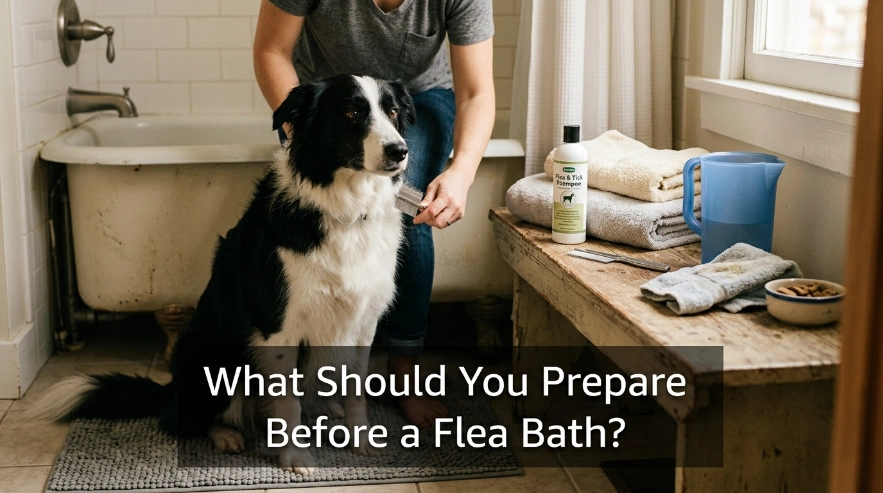
Prepare everything before your Border Collie enters the tub. A wet, energetic herding dog is not the ideal companion for a search through bathroom cabinets.
I keep the setup simple and place every item within arm’s reach.
- Flea comb
- Dog-safe shampoo or veterinarian-approved flea shampoo
- Several absorbent towels
- Nonslip bath mat
- Handheld sprayer or plastic pitcher
- Washcloth for the face
- Small treats for calm behavior
- Clean bedding for after the bath
Brush the coat before adding water
A good pre-bath brushing removes loose undercoat and lets you find tangles. The ASPCA’s dog grooming guidance also recommends brushing out dead hair and mats before bathing.
I avoid soaking a tight mat. Water can make an existing knot harder to work through and more uncomfortable against the skin.
Choose shampoo carefully
A regular dog shampoo can clean the coat but may not kill fleas. A flea shampoo may kill certain fleas, but its safety and directions depend on the specific product.
| Method | Main Job | Important Limitation |
|---|---|---|
| Dog shampoo | Cleans skin and coat | Not automatically a flea treatment |
| Flea shampoo | Targets fleas according to its label | Age limits, application, and contact time vary |
| Flea comb | Finds and physically removes fleas | Does not control fleas developing around the home |
| Preventive treatment | Provides ongoing parasite control | Must suit the individual dog and be used correctly |
| Home cleaning | Reduces flea stages in the environment | Must be combined with treatment of pets |
Never assume that using more products means faster control. Combining insecticide products without checking their labels or your veterinarian’s advice can expose a dog to unnecessary risk.
How Do You Bathe a Border Collie With Fleas Step by Step?
Use a calm, organized bath that reaches the skin without rough scrubbing. The dense coat makes thorough wetting and rinsing more important than speed.
1. Comb and inspect the dry coat
Run a flea comb through several areas before the bath. This confirms what you are dealing with and shows where flea activity appears strongest.
Remove loose coat and easy tangles with an appropriate brush. Stop if you find painful mats, bleeding skin, or large irritated areas.
2. Set comfortable lukewarm water
Test the water against your inner forearm. It should feel comfortably lukewarm rather than hot or cold.
Put a nonslip mat under your dog. Secure footing can make a major difference with a Border Collie that dislikes bath time.
3. Wet the coat down to the skin
Start around the shoulders and work over the body. Use your fingers to separate the coat so water penetrates beneath the outer hair.
Avoid spraying directly into the eyes, nose, or ear canals. I use a damp washcloth for the face instead.
4. Apply the appropriate shampoo
Use only the amount directed on the product label. Work it gently through the coat rather than aggressively scratching already irritated skin.
If you use flea shampoo, follow its directions exactly. Contact time, age restrictions, frequency, and rinsing instructions can differ between products.
5. Use the flea comb where practical
Carefully comb accessible areas while following the shampoo directions. Keep a bowl or container nearby so removed fleas do not simply return to the dog.
Be gentle around sore areas. A fine comb dragged through inflamed skin can cause more irritation.
6. Rinse longer than you think you need to
Rinse until the water runs clean and the fur no longer feels slippery. Separate thick areas with your fingers and check near the skin.
I spend extra time around the neck, chest, rear legs, belly, and tail feathering. Shampoo residue hidden in the undercoat can contribute to irritation.
7. Towel-dry the coat thoroughly
Press towels into the fur instead of rubbing hard. Replace a soaked towel with a dry one rather than spreading moisture around.
If you use a dryer, keep the airflow comfortable and moving. Avoid concentrating hot air on one patch of skin.
8. Comb again after the coat settles
A second flea-comb check helps you see whether live fleas remain. It also lets you inspect the skin more closely after washing.
Do not immediately add another chemical product because you spot one flea. First check the treatment instructions and your veterinarian’s plan.
Section Takeaway: A safe flea bath is gentle, thorough, and label-driven. Wet the double coat fully, avoid irritated skin, rinse completely, and never improvise combinations of flea-control chemicals.
Does a Flea Bath Get Rid of the Whole Infestation?

No. A bath mainly addresses what is on your Border Collie during that bathing session.
Fleas develop through egg, larva, pupa, and adult stages. Some of those stages can be present away from your dog.
Why fleas can return after a successful bath
Adult fleas feed on an animal, while eggs can fall into places where that animal rests. New adults can later emerge and find a host again.
This explains the frustrating pattern where a dog looks flea-free after washing but starts scratching again days later. The bath may have worked without ending the infestation.
Treat the home as part of the problem
- Wash bedding: Clean your dog’s bedding, blankets, and washable soft items regularly.
- Vacuum floors: Pay attention to carpets, floor edges, rugs, and upholstered furniture.
- Clean resting spots: Include crates, favorite chairs, and places where your dog naps.
- Check the car: Vacuum vehicle seats or cargo areas if your dog rides there often.
- Treat every pet correctly: One untreated animal can allow the flea cycle to continue.
- Stay consistent: Continue the veterinarian-recommended prevention schedule.
The AKC notes that established household flea infestations can take as long as three to four months to clear because developing stages must complete their life cycles. That is why one dramatic cleaning day is rarely enough.
Prevention matters after the visible fleas disappear
Discuss ongoing protection with your veterinarian. The AKC’s flea and tick prevention guidance describes options such as oral products, topical treatments, collars, shampoos, and sprays.
The right option depends on the dog. It can also depend on other pets in your household, especially when cats or other species share the home.
Section Takeaway: Bathing removes or kills some fleas on the dog, but lasting control requires attention to the entire flea life cycle. Treat the pet, clean the environment, and maintain appropriate prevention together.
What Should You Do After the Flea Bath?
Put your clean Border Collie in a clean resting area. Returning a freshly washed dog to flea-contaminated bedding defeats much of your effort.
Wash and dry the dog’s belongings
- Bedding and blankets
- Washable crate pads
- Soft toys
- Removable furniture covers
- Dog towels used during the bath
Vacuum the areas where your dog spends the most time. Continue cleaning rather than assuming one vacuuming session will remove every developing flea.
Check the treatment label before another bath
This is especially important if your Border Collie uses a topical flea product. Bathing too close to some topical applications may affect how the product is intended to work.
There is no single waiting period that applies to every brand. Follow your specific product label or veterinarian’s directions rather than using a generic rule.
Monitor the skin
Check for redness, swelling, excessive scratching, vomiting, weakness, tremors, or unusual behavior after using any parasite product. Stop using a product and seek veterinary guidance if you suspect a reaction.
I also keep flea-combing for several days. Finding occasional new fleas can tell you that the environmental cycle is still active.
Vet note: Contact your veterinarian promptly if your dog develops significant skin irritation or unusual symptoms after flea treatment.
When Should You Skip the Bath and Call a Vet?
Some flea situations need more than home grooming. A heavily affected dog can become medically unwell, especially when young, small, elderly, or already sick.
Get veterinary advice when you notice:
- Pale gums
- Marked weakness or unusual tiredness
- Heavy flea infestation on a puppy
- Open sores or infected-looking skin
- Severe hair loss
- Constant chewing that damages the skin
- Possible reaction to a flea product
- Repeated infestations despite consistent control
Fleas can contribute to skin disease and may be involved in tapeworm transmission. Heavy infestations can also cause serious blood loss in vulnerable dogs.
A flea-allergic dog may react strongly to relatively few bites. That means the number of fleas you see does not always match the amount of discomfort.
Be extra cautious with puppies
Do not assume an adult-dog flea shampoo is appropriate for a Border Collie puppy. Flea products often have minimum age or weight requirements.
Check the label before anything touches the puppy’s coat. Your veterinarian can recommend an age-appropriate approach when the puppy is too young for standard products.
Vet note: Pale gums, collapse, breathing changes, tremors, severe weakness, or suspected poisoning require prompt veterinary attention rather than another bath.
Frequently Asked Questions
Can I use regular dog shampoo if my Border Collie has fleas?
Regular dog shampoo can clean the coat and may help wash away some fleas, but it is not automatically a flea treatment. If active flea control is needed, use a veterinarian-recommended approach that is appropriate for your dog’s age, health, and current parasite products.
Can I use human shampoo to kill fleas on my Border Collie?
I would not use human shampoo as a routine flea solution. Products made for human skin can contain ingredients or fragrances that irritate dogs, while a dog-specific product is designed with canine skin and coat needs in mind.
Can I use dish soap for fleas?
Dish soap is not my choice for a routine flea-control program because repeated use can be harsh on the skin and does not provide lasting protection. Ask your veterinarian about a dog-safe shampoo, flea comb, and appropriate preventive treatment instead.
How often can I bathe a Border Collie that has fleas?
Do not repeatedly shampoo your Border Collie simply because fleas keep appearing. Bath frequency depends on the shampoo, skin condition, and flea treatment being used, so follow the product directions and veterinarian’s advice.
Why does my Border Collie still have fleas after a bath?
New fleas may be emerging from the home environment and jumping back onto your dog. Flea eggs, larvae, and pupae away from the dog are why cleaning bedding and floors plus ongoing pet treatment are necessary.
Should I shave my Border Collie to get rid of fleas?
Usually, no. Shaving does not solve the environmental flea cycle and can unnecessarily remove the protection provided by a Border Collie’s coat. A flea comb, proper bathing technique, effective parasite control, and environmental cleaning are better approaches.
Can I apply flea medicine immediately after the bath?
That depends entirely on the medication. Some topical products have specific instructions about bathing before or after application, while oral products work differently. Read the exact label or ask your veterinarian before combining treatment with bath day.
Final Takeaway
You can safely bathe a Border Collie with fleas when you use lukewarm water, an appropriate dog product, gentle handling, thorough rinsing, and careful drying. The double coat means you need to work all the way down to the skin.
Most importantly, don’t expect one bath to end an infestation. Flea control works best when you treat the dog appropriately, clean the environment, check other pets, and keep prevention consistent.
That complete approach has always made more sense to me than chasing each new flea with another bath. Solve the life cycle, not just the flea you can see.
rder Collie flea bath, fleas on Border Collie, flea shampoo for dogs, Border Collie grooming, dog flea treatment
*